


Everyone who has ever been scammed by a cryptocurrency scam has almost always done the same thing: called the police and waited for news.
This reaction is completely understandable, but in the blockchain world, it is also often the most costly decision. Crypto-fraud money moves up the chain in real time, and the speed at which fraudsters transfer money is measured in minutes or even seconds. Every hour that passes, the money moves through one more layer, making it exponentially more difficult to track down. Victims have to wait for the police to reply, sometimes for days, sometimes for weeks.
The really unexpected fact is that the money that was swindled is technically completely visible on the chain. Every transfer, every intermediary address, every cross-chain operation is permanently recorded on public blockchain data, which can be queried by anyone, completely free of charge, without any special technical background.
So why is it that most victims don't get their money back? The problem is not that there are no records in the chain, but that most people don't know where to start, which tools to use, and in what order. What this article is going to do is to putEncryption Fraud TrackingWe'll break down the complete process - from how to pinpoint the first fraudulent address, to how to visualize the flow of funds, to how to file a freeze request with the exchange. We'll also use a real-life fraud case study as a practical demonstration throughout the text, so you can see how these tools work in real-world scenarios.
Why Crypto Fraud Victims' First Reaction Is Often Wrong
The Root Cause of the Failure of Traditional Reporting Logic in the Crypto World
Before we can understand crypto-fraud tracking tools, there is a misconception that must be corrected.
The gut feeling of most victims is that this is a fraud, so reporting it to the police is the first step, and the police will be responsible for pursuing it. This logic is perfectly valid in traditional fraud cases - the police have the investigative tools, the legal authority, and the ability to ask the bank to freeze the account. But the mechanics of cryptocurrency fraud are fundamentally different.
The nature of blockchain is a double-edged sword. Its transparency means that all transfers are public and can be tracked by anyone, but its decentralized nature also means that no centralized organization can directly freeze transfers on the chain. Fraudsters know this, so they act as soon as they get their hands on the funds - splitting them across multiple relay wallets and eventually transferring them to a centralized exchange, where the cryptocurrencies are exchanged for cash or other assets and withdrawn.
Where is the real time window for freezing funds?
The window of time in which funds can really be frozen is after they have entered the centralized exchange and before they are withdrawn. Exchanges are centralized, regulated, and obligated to cooperate with lawful requests from law enforcement agencies. But in order for an exchange to take action, you have to provide full chain-of-custody evidence - where the funds went, to what address, and at what point in time they arrived.
That meansEncryption Fraud TrackingThe practical significance of this is not only to find out where the funds are going, but also to create a complete report of the evidence on the chain before reporting to the police. By taking this report to the police, the police can quickly issue a freeze notice, and by taking the freeze notice to the industry's counterparts, the exchange can take action as soon as possible. The whole process is intertwined, and the starting point is the victim's own initiative to follow up.
Waiting is the greatest loss.
The Basics of Chain Tracking Logic: Why Fraudsters Leave Traces Every Step of the Way
How Blockchain Transparency Makes Tracking Possible
Before learning about specific tools for crypto-fraud tracking, a basic cognitive framework needs to be established: why blockchain can be tracked.
Every major public chain (Ether, Coin, Tron, Solana, etc.) has a corresponding public ledger (Block Explorer), which records the details of every transaction on the network: sender's address, receiver's address, transfer amount, timestamp, and Transaction Hash (i.e., TxID). This information is open and transparent, and can be queried directly by anyone with a wallet address or TxID without any authorization.
Fraudsters know this, but they can't fundamentally erase these records. What they can do is create complexity - splitting through multiple relay addresses, transferring across chains, mixing coin services, and ultimately depositing funds on exchanges - making it more laborious and disorienting for the average victim to trace. This is why the choice of tools and order of operations is so important in crypto-fraud tracking: it determines how many layers you can see and how quickly you can build a complete chain of evidence.
Standard Money Laundering Patterns of Fraudsters: Fan-Out / Fan-In Structures
The pattern of funds transfer used by fraudsters is often referred to as the "Fan-Out → Fan-In" structure: funds are transferred from the victim's wallet directly into a master wallet (Fan-In), which is then split into multiple relay addresses (Fan-Out), creating confusion, and ultimately converting the dispersed funds (Fan-In) into one or more hot wallets on the exchange. The entire process can be completed in a matter of hours.
Understanding this model, you can see why each of the following three tools plays a different role: Etherscan for locking down the starting transaction, Metasleuth for visualizing the entire path of funds, and Arkham Intelligence for identifying the real identity behind the address.
A complete tutorial on how to use the three free tools
In the ecosystem of free tools for crypto fraud tracking, there are three entry-level combinations that are suitable for victims to work on their own. Their free versions are sufficient to complete a basic chain tracking report that can be recognized by both exchanges and the police.
Etherscan: the starting point for crypto-fraud tracking, locking down the first fraudulent address
Etherscan is the primary block browser for the Ether network and the first point of entry for the crypto-fraud tracking process. Other major public chains have corresponding browsers: BSCScan for CoinScan, Solscan for Solana, and Tronscan for Tron, with basically the same logic.
The steps are as follows. Go to Etherscan On the official website, enter your wallet address in the search box. Once you're on the address page, click on the "Transactions" tab and the system will list all the relevant transactions, including the time, amount, and address of the person you're dealing with. Find the transaction you think is fraudulent and write down two key pieces of information: the first is the "To Address", which is the first address of the fraudster, and the second is the Transaction Hash (TxID) of the transaction, which is a unique identifier for each transaction and will be needed for subsequent reports and freezing requests.
Of particular note, Etherscan's "Internal Txns" label is often more important than the main transaction log. Scammers often make internal transfers through smart contracts that appear to be normal interactions on the main transaction log, but the funds have actually flowed through the contract to another address. If you find that you can't find your withdrawals in the main transaction log, check this tab first.
Etherscan's official address labeling database flags known exchange wallets or malicious addresses. If you see a tagged address next to "To Address", such as "Binance: Hot Wallet" or "HTX 48", it means that the fraudulent funds have gone directly to a known centralized exchange, which is a key finding that can be used immediately in a freeze request.
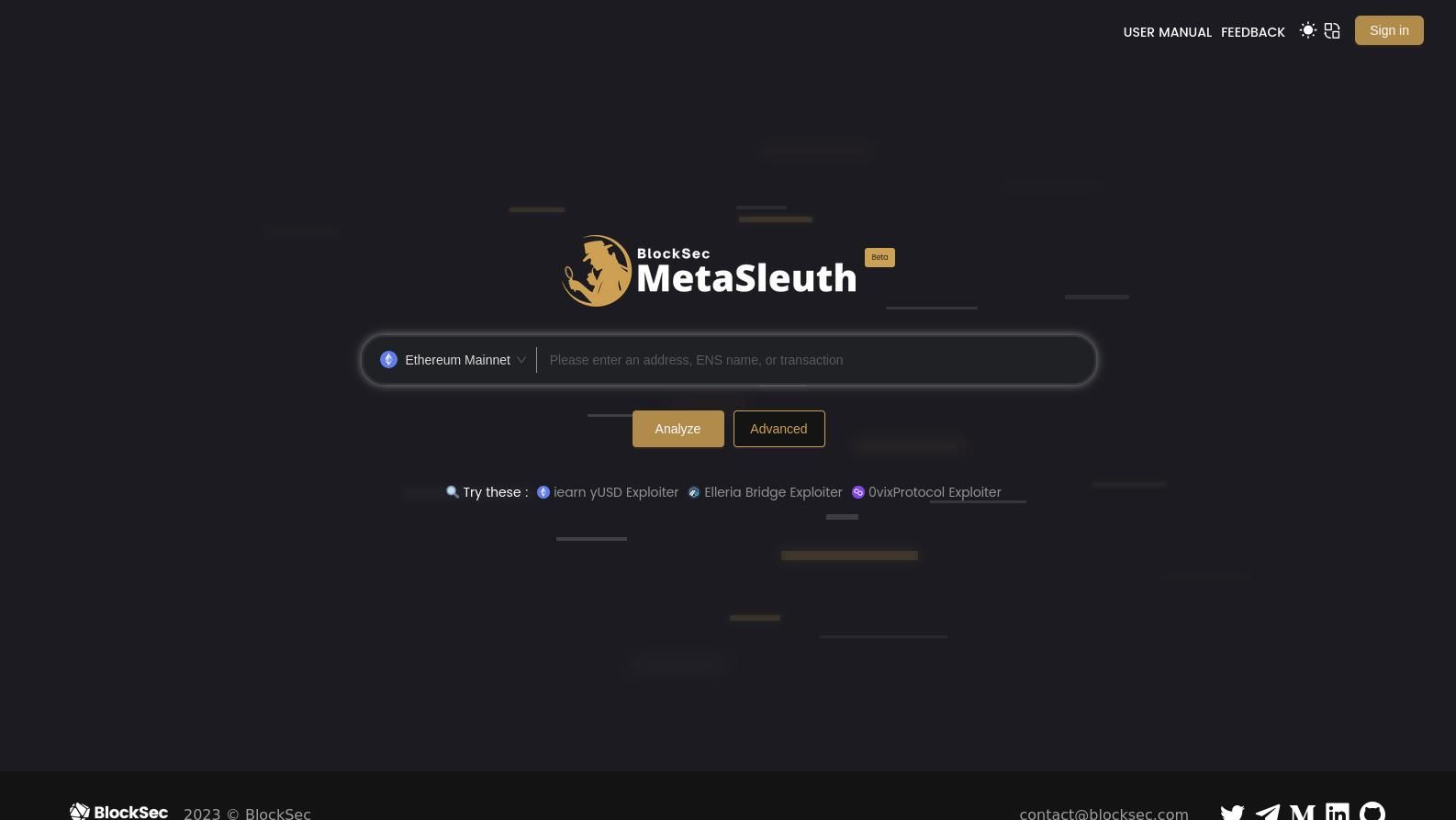
Metasleuth: Turning Crypto Fraud Tracking into a Visual Image
For those who have been scammed out of their cryptocurrencies, and were previously stuck searching for a needle in a haystack in the Etherscan blockchain browser, Metasleuth visualizes the data on the chain, allowing users to simply click down the gold stream to find out where their assets are currently located, and then pass that information on to the police when they file a police report.
Metasleuth is similar to TRM Labs, but optimized for user experience and ease of operation. The tool supports cross-chain analysis to track capital flows and identify high-risk addresses, and currently covers 13 blockchains, including Bitcoin, Ether, and Solana.
Enter Metasleuth After the platform, enter the fraud master address into the search box. The system automatically generates a flow chart that visualizes how money flows from this address to the next level and the next. Each node represents an address, each line represents a transfer, and the thickness of the line usually represents the size of the transfer.
When using Metasleuth for cryptographic fraud tracking, there are a couple of features that are worth noting. The first is the "Cluster", which represents a combination of addresses that the system determines are controlled by the same individual, which helps to identify a fraudster's strategy of using multiple wallets to spread out the tracking. The second is exchange entry markers. When funds flow to a known centralized exchange, Metasleuth automatically displays the corresponding label, allowing you to see at a glance where the funds end up. Third is cross-chain tracking. If a scammer uses a cross-chain bridge to move funds from Ether to CoinSmart or another chain, Metasleuth can automatically recognize and track the address of the new chain without requiring you to manually switch platforms to search again.
The screenshot of the money flow generated by Metasleuth is the most powerful visual evidence when reporting a crime and submitting a freeze request to an exchange. This screenshot should be used as a core attachment to your crypto fraud tracking report.

Arkham Intelligence: Recognizing the Real Identity Behind a Chained Address
Arkham is a comprehensive intelligence platform that integrates a multi-chain browser, entity tagging, chart building, and real-time alerting capabilities. With a robust address and entity database, support for transaction filtering and visualization, Arkham allows users to perform in-depth analysis of more than 50 pieces of blockchain data using an API interface.
Read more Arkham Intelligence full profile:《4 Free Tools to Track Your Giant Whale's Wallet and Coin Flow》
Etherscan and Metasleuth can tell you where your money is moving, but Arkham Intelligence goes one step further: it tries to tell you which real entity is behind each address. arkham has built a huge database of address labels, and uses AI technology and publicly available on-chain data to map a large number of blockchain addresses to real Arkham has built a large database of address tags, using AI technology and publicly available on-chain data, to map a large number of blockchain addresses to real organizations, exchanges, projects, and even some known personal wallets.
Enter any suspicious address on the Fraud Master Wallet or Flow of Funds map into the search box at the top of Arkham and look for the corresponding "Entity" label. If the address has been labeled "Exchange: HTX" or "Exchange: Binance", this is critical evidence that can be used directly in a freeze request.
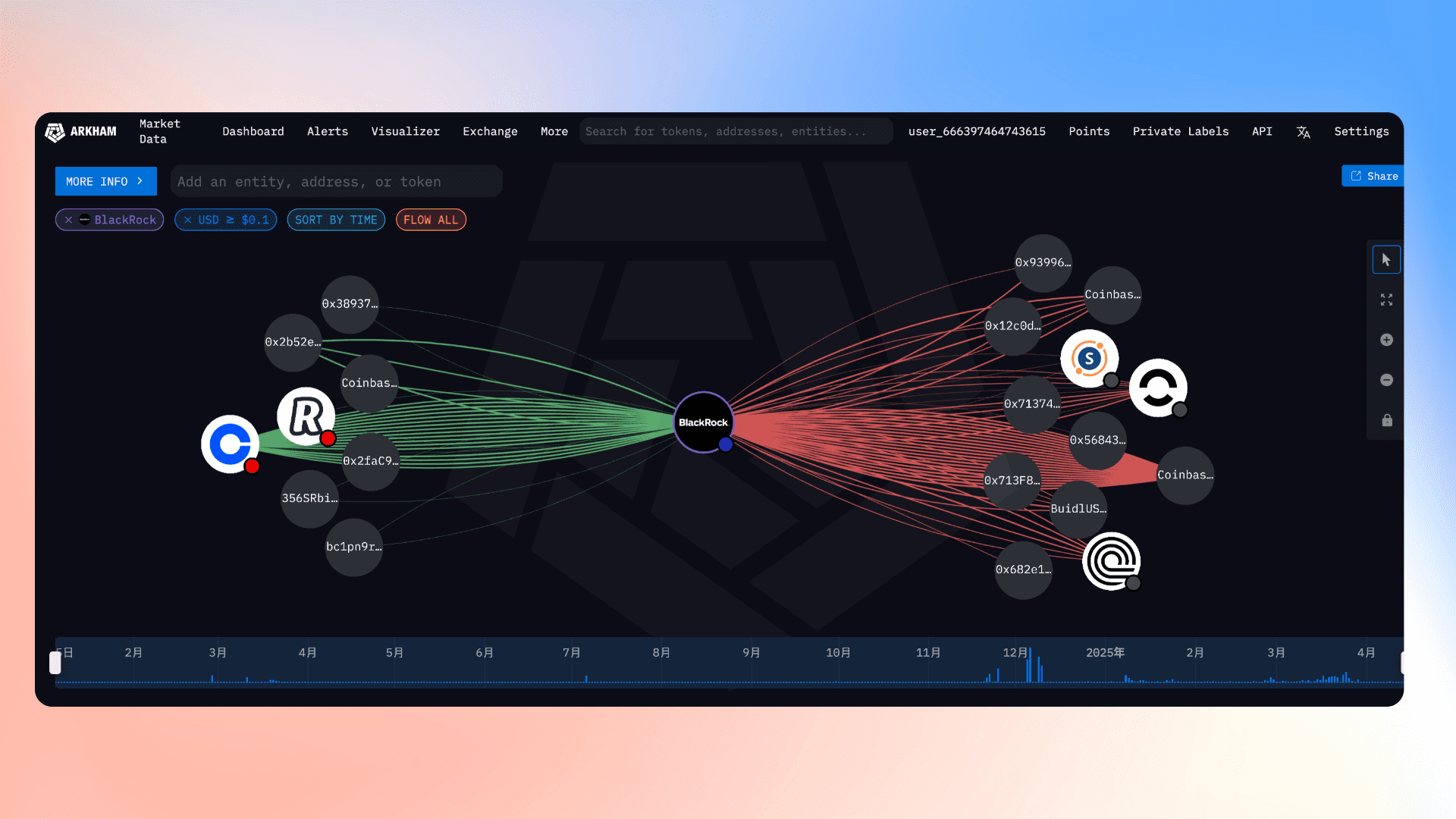
Arkham's Visualizer is similar to Metasleuth's image tracking, but incorporates Arkham's database of identity tags so that each node displays not only the address, but also the label of the entity that Arkham has inferred. In crypto-fraud tracking, Arkham Visualizer can be used as a complementary tool to Metasleuth, cross-checking the flow of funds from different perspectives.
Boundaries of Chain Tracking: Black Boxes After Funds Enter the Exchange
When learning about crypto fraud tracking, there is a practical limitation that must be faced before unrealistic expectations are placed on the tool. Crypto fraud tracking tools technically reach a boundary when fraudulent funds flow from addresses in the chain into the hot wallets of centralized exchanges like HTX, Binance or OKX.
Here's why: although the exchange hot wallet is a publicly visible blockchain address, behind it is the exchange's centralized database. Once the funds enter the exchange, all movements within the exchange are recorded on private servers, not uplinked, and cannot be observed by any blockchain tracking tool.
This limitation does not mean that crypto-fraud tracking is futile. On the contrary, tracking to an exchange's hot wallet provides all the critical information needed for law enforcement and the exchange to act: the Transaction Hash of the inflow, the time stamp of the inflow, the amount of the inflow, and the full identity of the fraudulent master wallet. With this, the exchange's compliance department will be able to internally locate the corresponding user accounts, freeze the assets, and cooperate in the disclosure of the information upon receipt of a formal law enforcement request.
How to Break Out of the Black Box: Police Freeze Notification and Industry Docking are Key
Once the crypto-fraud trace is complete, the next step is to turn the chain of evidence into real action. In this process, it's not enough to rely on yourself.
The correct process is to go to the police with your chain trace screenshot and a complete list of Transaction Hash and ask for an official freeze notice from the police. This document is the key point in the process, because without it, the exchange cannot legally initiate a freeze, even if it intends to cooperate.
However, with only freeze notifications but no industry connection, the whole process will also be seriously delayed. The reason for this is that the exchange's public customer service channels are not designed for emergency freeze requests, and submitting a case via regular customer service emails can often take several days or even longer. During this time, it is entirely possible that the fraudster may have already made the withdrawal.
The only way to shorten the time window is to have direct access to the compliance or legal departments of the exchanges through industry insiders. These channels are usually not open to the public and rely on people who have a network of resources in the currency community to assist them. This is also Monsterblockhk The support that the community can provide - we know colleagues in the industry on the major exchanges and, subject to a freeze notice, can assist victims in getting their material directly to a counterparty who can take action.
The whole process can be summarized into three steps. The first step is to use three cryptographic fraud tracking tools to create a complete chain tracking report, including the address of the fraud master, all Transaction Hash, a screenshot of the flow of funds, and the address of the exchange where the funds ultimately flowed. The second step is to report the case to the police with this material and get a formal freeze notice. The third step is to find an industry interlocutor who can deliver the freeze notice and the chain tracking report to the compliance department of the exchange, so that the freeze application can be executed as soon as possible.
The faster these three steps are completed, the more likely the funds will be frozen. Every hour of delay may give a fraudster the opportunity to complete a withdrawal before the freeze is activated.
Real Advice for Fraud Victims: Frameworks Are More Important Than Tools
After going through the complete process and tools for crypto fraud tracking, there is one thing that deserves to be singled out at the end of the article.
The tool itself is not complicated: Etherscan queries the address records, Metasleuth visualizes the flow of funds, and Arkham identifies the address. Together, these three steps can be completed in an hour or two by an ordinary user with no technical background after a serious study.
The real gap is in the framework. Victims who don't have the right framework spend the first few precious hours waiting for the police to call them back, contacting the scammer to "negotiate", or getting into an emotional meltdown. Victims with the right framework know that their first action is to open Etherscan, find the withdrawal transaction, write down the address, and start the tracking process immediately.
One of the brutal features of the crypto world is that it demands a high level of speed of action. The currency moves, the chain moves, the fraudster's money moves, and the time window is real. In almost all crypto fraud tracking cases, it is the victims who are successful in recovering funds or freezing assets, almost without exception, who have started to act within hours of being scammed.
What this article can give you is the knowledge of the tools, the understanding of the process, and the establishment of the framework. But the final step still requires you to make your own choice at the moment you need it most: whether to continue to wait, or immediately start tracking.
If you or someone close to you has experienced a crypto scam and needs further guidance or assistance in connecting to an exchange, you are welcome to join the MB Telegram community. We have community members who are constantly tracking these cases, as well as teams in the industry with resources to assist where appropriate.
Recent Recent Posts:
2026 Latest 6 Free Coin Ring Tools Inventory|Where to find the data on the chain?
2025 Latest OKX Web3 Wallet Tutorial: Does it work? How to create it? A Guide to Safe Operation, Multi-Link Support, and Time-Limited Airdrops
2026 Latest Polymarket Tutorial|How to find out the insiders and realize the high win rate!
2025 New DeFi Beginner's Guide|Teaching you to earn stable money passive income! Introducing 3 popular programs, DeFiLlama tool tutorial!
Disclaimer
The content of this article is for reference only, investors should exercise independent judgment, invest prudently and at their own risk, this article does not provide or attempt to persuade the audience to do trading or investment basis, the content is for sharing purposes only, and should not be regarded as investment advice.It does not represent the views and position of Monsterblockhk.All information and opinions are current as of the date of the judgment. In addition, if a judgment is rendered on aIn this siteAny content related to virtual asset trading platforms that have not yet obtained a license to operate virtual asset trading platforms in Hong Kong, including but not limited to text introductions, pictures, offers, events, etc., are only available to users outside the Hong Kong Special Administrative Region.
According to the Hong Kong Anti-Money Laundering and Counter-Terrorist Financing (Amendment) Ordinance 2022, after June 1, 2023, all centralized virtual asset trading platforms operating in Hong Kong or actively promoting their services to Hong Kong investors will be licensed and regulated by the SFC, and any related unlicensed activities will be a criminal offence. For more information and details of the legislation, users may refer to the SFC website.