

In May 2022, the world's third-largest stablecoin, the UST, fell from US$1 to US$0.13 in just four days. More than $40 billion in market capitalization was wiped out, and hundreds of thousands of holders were left with virtually zero assets. This was no ordinary market decline; it was a systemic collapse in broad daylight.
What is more disturbing, however, is not the scale of the event itself, but what happened afterward.
The cryptocurrency community did not really learn from the UST incident. 2023 saw USDC briefly delinked from the Silicon Valley Bank collapse, dropping to $0.87 at one point, and in April 2026, the Bank for International Settlements (BIS) issued a public warning stating that the behavioral characteristics of USDT and USDC were closer to securities than to cash, and that there was a systemic financial risk. That same month, the total size of the stablecoin market surpassed US$320 billion.
These stablecoins have been used by hundreds of millions of people as a "safe haven". But are they really safe?
The answer is not simply "safe" or "unsafe", but depends on what type of stablecoin you hold and in what market environment. The three main types of stablecoins - fiat-collateralized, overcollateralized and algorithmic - each harbor very different risk structures. Understanding these differences is a must for anyone involved in DeFi in the cryptocurrency world. This article is designed to put that into perspective.
What is "Stabilization Risk"? Let's establish a correct cognitive framework
"Shouldn't the stabilized currency stay at $1?" This is the gut reaction of many newcomers. This understanding is not wrong, but it misses the most crucial question: What is the basis for the stablecoin to stay at $1?
The "stability" of a stablecoin never comes out of thin air, it requires some kind of backing mechanism. The design of this mechanism determines under what circumstances the coin will lose its stability and how fast it will lose its stability. In other words, the risk of every stablecoin is hidden in the way it maintains its stability.
To assess the true risk of a stablecoin, you need to ask three questions. First, if I were to exchange this stablecoin for $1 right now, is there enough liquidity for me to do so? Second, can the assets behind this stablecoin maintain enough value to support its face value in the worst market conditions? Third, is there a fatal design flaw in the stabilization mechanism under stress testing?
The answers to these three questions are very different for the three main types of stablecoins. Here's a comparison table to give you an overview before you dive in.
These three types of risk are not simply a matter of ranking "which is more risky". Their risks manifest themselves very differently in different market environments. The fiat-collateralized type is relatively stable in the event of a crypto market crash, but may bear the brunt of a crisis in the traditional financial system. The overcollateralized type can withstand most market declines, but is relatively vulnerable to liquidation waves at extreme speeds. Algorithms, which look elegant and efficient in a bull market, can be reduced to nothing in a matter of days.
Understanding this framework, let's dissect the true risk structure of each type individually.
Fiat Collateralized Stablecoins: The Real Risks of USDT and USDC
The Most Misunderstood "Safe" Stable Currency
Fiat-collateralized stablecoins are currently the most widely used type, with USDT having a market capitalization of over $187 billion and USDC having a market capitalization of about $79 billion, which together account for more than 90% of the entire stablecoin market. Most people use these two stablecoins with the basic assumption that they are backed by real US dollars, so they should be fine.
There is a fair amount of truth in this assumption, but it masks several dimensions of risk that most people ignore.
Centralization Risk: The Switch, Not in Your Hands
The core design of fiat-collateralized stablecoins is highly centralized by nature - Tether issues USDT, Circle issues USDC - which means that there is one entity that has control over whether or not each stablecoin you hold can be redeemed properly.
This is not just a philosophical debate about decentralization. It implies several very real risks: first, these companies could technically freeze assets at a particular address in accordance with government directives or their own judgment; second, if the company has operational problems, goes bankrupt, or is subject to serious legal sanctions, the redemption mechanism could be blocked; and, third, changes in regulatory policy could directly affect the availability of these stablecoins in a particular market.
USDT's track record in this regard is particularly noteworthy: Tether was fined $41 million by the CFTC in 2021 for past misrepresentations of reserves, and in the same year, an investigation by the New York State Attorney General revealed that USDT's reserves did not match its issuance volume, and Tether ultimately settled and ceased operations in New York State for $18.5 million. Tether eventually settled for $18.5 million and ceased operations in New York State.
Reserve transparency: what you believe may not be true
This is the central risk concern with fiat-collateralized stablecoins. These stablecoins are claimed to be backed 1:1 by US dollars or equivalent assets, but there has historically been a considerable information asymmetry in the definition of "equivalent assets" and the true quality of these assets.
USDC has a relatively good track record of transparency; Circle is fully audited annually by Deloitte and publishes monthly third-party assurance reports, and its reserve assets are primarily cash and short-term U.S. Treasuries, managed by BlackRock.
The situation is more complex for USDT, whose reserve disclosures have long been presented in the form of quarterly "attestations" rather than full audits, a significant difference in legal significance. As of the most recent disclosure in March 2026, more than 82% of USDT's reserves consisted of cash and equivalent assets, including U.S. Treasuries, which is a significant improvement over the earlier composition of the reserves. It is worth noting that Tether announced in 2026 that it had hired a "Big 4" accounting firm to conduct its first-ever full audit, the results of which have not yet been released.
However, in April 2026, Pablo Hernandez de Cos, President of the Bank for International Settlements (BIS), issued a stark statement stating that the characteristics of USDT and USDC were closer to "securities-like" than to cash. His reasoning is that redemption frictions and price deviations in the secondary market for these stabilizers make them behave more like exchange-traded funds (ETFs) than true currency substitutes, and therefore pose systemic risk. This is the sharpest public criticism of fiat-collateralized stabilizers to date from the world's top monetary regulator.
USDC's Silicon Valley Banking Moment
In March 2023, USDC, long considered a "safe and stable currency," fell to $0.87 in a matter of hours for a reason no one expected: the collapse of Silicon Valley Bank (SVB).
The story goes like this: Circle deposited part of its USDC reserves at Silicon Valley Bank (SVB), amounting to about $3.3 billion. When SVB announced its collapse on March 10th, the market immediately panicked, fearing that this part of the reserves could not be retrieved in full, leading to a massive sell-off of USDC, with a temporary delinking of close to 13%. Eventually, the U.S. Federal Deposit Insurance Corporation (FDIC) announced that it would provide full protection for SVB's deposits, and USDC was restored to $1 within a few days.
The implications of this event are much deeper than they seem. A stablecoin labeled as "fully backed by U.S. dollar-denominated assets" can be unraveled by problems at the traditional banks that house its reserves. This illustrates that the risks of fiat-collateralized stablecoins are not only inherent in the crypto market itself, but are also deeply tied to the risks of the traditional financial system.
Risk Summary of Fiat Collateralized Stabilized Currency
The risk of fiat-collateralized stablecoins is essentially "the risk of trusting the intermediary". It requires that you trust the issuing company to manage its reserves honestly on an ongoing basis, that the regulatory environment will not suddenly tighten to the point of affecting its availability, and that the financial institution with which it deposits its reserves is sufficiently robust in its own right. These are not unreasonable trusts, but they are not unconditional.
Overcollateralized Stablecoins: Design Logic and Liquidation Risks of DAIs
The Price of Decentralization: The Sacrifice of Capital Efficiency
The emergence of over-collateralized stablecoins is a response to the risk of fiat-collateralized centralization. Its core concept is to buffer the price fluctuation risk of crypto assets by using the crypto assets in the chain as collateral instead of relying on any centralized institution, and the value of the collateral must be more than the nominal value of the stablecoin minted, thus cushioning the price fluctuation risk of the crypto assets themselves.
The DAI issued by MakerDAO is the most representative example of this type. To acquire DAI, you need to deposit ETH or other accepted crypto assets into MakerDAO's smart contracts at a collateralization rate usually between 150% and 200%. Meaning, if you want to cast $100 in DAI, you may need to deposit $150 to $200 worth of ETH as collateral.
This design brings a built-in safety cushion: even if the price of ETH drops by 30%, your DAI still has enough collateral to back its face value. But it also means that the entire system is capital inefficient - in order to circulate $1 of stablecoins, the market needs to lock up $1.50 to $2 of crypto assets.
Liquidation Mechanisms: Understanding the Axe Hanging Over Your Position
The most critical risk associated with overcollateralized stablecoins is liquidation risk.
When you cast a DAI using ETH as collateral, your collateralization rate fluctuates in real time with the market price of ETH. If the price of ETH falls, causing your collateralization rate to fall below the system's liquidation threshold, the smart contract automatically triggers a liquidation process: your ETH collateral is sold to a liquidator at a discounted price, and the proceeds of the sale are used to pay off your DAI debt before the remaining assets (if any) are returned to you.
This mechanism operates quite smoothly in a quiet market. However, under extreme market conditions, the clearing mechanism itself can become an amplifier of market volatility. When ETH falls rapidly in a short period of time, a large number of positions are triggered to be liquidated at the same time, and the liquidator needs to quickly sell a large amount of ETH in the market to dispose of these positions, which in itself further depresses the price of ETH, leading to more positions being liquidated - a chain reaction similar to a "liquidation waterfall".
The "Black Thursday" of March 12, 2020 is the most realistic historical demonstration of this scenario. ETH plummeted by nearly 50% in a few hours, and a large number of positions in the MakerDAO system were triggered to liquidate at the same time, but due to the Gas fee of the Ether network soaring to a very high level in this period of time, some of the liquidation robots were not able to process the liquidation orders in a timely manner, causing MakerDAO to accumulate about $5.6 million in system bad debts (liquidation auctions traded at 0 DAI), which eventually required the issuance of MKR tokens to fill the gap. MakerDAO accumulated about $5.6 million in system bad debt (liquidation auctions traded at 0 DAI), and eventually needed to issue MKR tokens to fill the gap.
The Evolution of DAI: From Pure Decentralization to Hybrid Models
It is worth noting that today's DAI is no longer the original version that was solely overcollateralized by ETH. In order to improve capital efficiency and stability, MakerDAO has gradually introduced fiat-collateralized stablecoins, including USDC, as part of the collateral in recent years.
This evolution presents an interesting paradox: DAI, originally designed to replace centralized stable-currency risk, has to some extent introduced the very kind of centralized risk it seeks to avoid. the collateral composition of DAI also reflects the practical trade-offs that decentralized finance has to face in its quest for practicality.
Currently available through DefiLlama's Stablecoin Data Tool Viewing the collateral composition and circulation changes of DAI and other stablecoins in real-time is one of the most straightforward tools for tracking the health of the DeFi stablecoin. You can also check out our previous article on DefiLlama Tool TeachingLearn how to use this platform for on-chain data analysis.
Risk Summary of Overcollateralized Stabilized Currency
The risks associated with overcollateralized stablecoins are concentrated at two levels. In normal markets, the risk is relatively manageable as the overcollateralization itself provides a buffer; however, in extreme and fast falling markets, the liquidation waterfall effect may still cause losses in a technically efficient system. Holders of such stablecoins need to understand not just "whether it is collateralized or not", but "whether this collateral can be efficiently executed for liquidation in the worst possible market scenario".
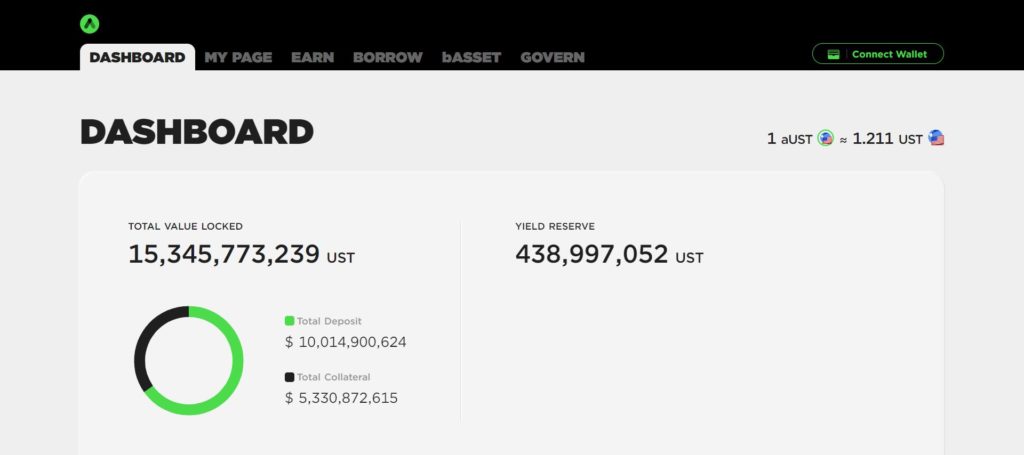
Algorithmic Stability Currency: How UST's Collapse Reveals a Fatal Design Flaw
The most elegant design, the most tragic ending.
The emergence of algorithmic stablecoins represents the cryptocurrency world's quest for a "perfect stablecoin". If fiat-collateralized types rely on centralized institutions and over-collateralized types waste capital efficiency, can a stablecoin be designed that is both decentralized and capital efficient?
Algorithmic Stabilized Currency attempts to answer this question. The core idea is to keep the price of a stablecoin anchored through algorithms and arbitrage mechanisms, rather than actual collateral. When the market price of a stablecoin is higher than $1, the system allows more stablecoins to be minted to increase the supply and keep the price down; when the market price is lower than $1, the system induces holders to destroy the stablecoins in order to reduce the supply and increase the price. This process is fully automated through smart contracts and does not require the intervention of any centralized organization.
In theory, the design is elegant. But UST's $40 billion vaporization taught the industry a profound lesson about confidence.
Death Spiral: When Arbitrage Machines Become Accelerators of Collapse
The Terra/LUNA system is designed to have a two-way destruction and casting mechanism between LUNA and UST. The assumption behind this design is that as long as the LUNA has a market value, the UST anchor can be maintained.
Late in the evening of May 7, 2022, multiple unidentified giant whales began a massive sell-off of the UST on the market. the initial sell-off exceeded normal arbitrage capacity, and the price of the UST began to de-peg slightly, coming in at around $0.98. the price of the UST was not as high as it should have been, but it was as high as it could have been.
Under normal market conditions, this delinking should have triggered an arbitrageur to step in: they could have bought UST for $0.98 and exchanged it for $1 of LUNA through the agreement mechanism, earning the difference while allowing the supply of UST to diminish and the price to go back up.
But what happened next exceeded everyone's expectations. As the delinking of USTs continued to expand, the market began to shake its confidence in the entire system, and holders began to sell their USTs out of panic, rather than waiting for the arbitrage mechanism to work. A large number of USTs were converted to LUNAs, leading to a rapid expansion of LUNA supply and a rapid collapse of the market value of LUNAs themselves. the collapse of LUNAs in turn further weakened the confidence in USTs, forming an irreversible vicious cycle: USTs decoupled → panic selling → LUNA issuance → LUNAs collapsed → USTs unsupported → even more serious decoupling.
By May 13, the UST, once the world's third most stable currency, had fallen to $0.13, and the LUNA had fallen from over $80 to nearly $0. The whole process took less than a week. The whole process took less than a week.
This is the true nature of the "death spiral": a fatal flaw in the system's design that requires only one initial shock of sufficient magnitude to detonate. Instead of stabilizing the market when the system collapses, the arbitrage mechanism becomes an amplifier of the speed of the collapse.
Anchor Protocol's 20% Annualized Rate: A Number That Should Raise Eyebrows
Looking back at the collapse of UST, there was a key early warning signal that most people ignored.
The Anchor Protocol in the Terra ecosystem offers a stable 20% APR to all UST depositors. This rate is much higher than any traditional financial product, and much higher than the market rate for most decentralized lending agreements. The problem is that this 20% rate is not generated organically by the market, but is artificially maintained by the Terra Foundation through subsidies.
Artificially subsidized high interest rates can attract large inflows of capital in the short term, creating the illusion of "healthy system growth". But this growth is unnatural, and it has pushed the size of the UST far beyond the actual upper limit of what LUNA can support without triggering a systemic collapse. When the expectation of unsustainable subsidization began to emerge, and the overall sentiment of the market shifted in the opposite direction, capital fled much faster than any of the architects had anticipated.
In DeFi, any sustained rate of return that is far above the market average should make you stop and ask the question: where is this money coming from and how long will it last?
Algorithmic Stabilized Coin in 2026
The collapse of UST basically reshaped the entire industry's perception of algorithmic stablecoins; FRAX, a stablecoin that used to adopt a partially algorithmic mechanism, voluntarily shifted to a fully fiat-collateralized model after the collapse of UST; and several other algorithmic stablecoin projects have successively scaled down or given up their purely algorithmic stabilization routes.
According to KuCoin's market report, the share of algorithmic stablecoins in the global stablecoin market has shrunk dramatically in the wake of the UST collapse and will be subject to increasingly restrictive wording in the 2026 regulatory environment. The U.S. GENIUS Act (passed in 2025) and the European Union's MiCA regulation have both set stricter requirements for the definition and operation of algorithmic stablecoins, effectively excluding purely algorithmic designs in the UST style from the mainstream regulatory compliance framework.
Algorithmic Stablecoin Risk Summary
The risk of an algorithmically stabilized currency is fundamentally "confidence risk". Rather than relying on physical assets that can be liquidated, its stability depends on the market's continued confidence that the system is working. When this confidence is broken, there is no mechanism to stop the collapse. This is why algorithmic stablecoins are the most asymmetrically risky of the three types: when they are working properly, you don't feel the risk at all; but once the collapse begins, you may only have a few hours to react.
V. Actual performance of the three risks in different market environments
After understanding the individual risks of the three types, we need to think further: which stabilized currencies are under the most pressure in different market scenarios?
When Crypto Markets Crash
Fiat-collateralized stablecoins (USDT, USDC) are usually the most defensive in a general downturn in the crypto market (e.g. the 2022 bear market). They are backed by fiat currencies and U.S. Treasuries and will not be directly impacted by a crash in BTC or ETH.
Overcollateralized stablecoins are under liquidation pressure in this scenario, but as long as the decline is not extreme (beyond the buffer set by the collateralization rate), the system can still function normally.
Algorithmic stablecoins are most vulnerable to market crashes.UST was the one that collapsed in the general bear market environment of 2022 - market pessimism dramatically reduced the confidence base needed for arbitrage mechanisms.
When the traditional financial system is in crisis
This is the weakness of fiat-collateralized stablecoins, and the USDC's SVB moment clearly demonstrates the vulnerability of a stablecoin that relies on the conventional banking system to hold reserves in the event of conventional financial turbulence.
Overcollateralized stablecoins have relatively low direct exposure to traditional banking crises due to their primary reliance on chained crypto assets.
The performance of algorithmic stablecoins in traditional financial crises depends on whether their sister tokens are pressured by market risk aversion, which is usually not optimistic.
When regulatory policies are suddenly tightened
The centralized nature of fiat-collateralized stablecoins makes them the most sensitive to regulation, as is already the case in the European Union where USDT is facing restrictions due to MiCA requirements.
Overcollateralized stablecoins, due to their decentralized design, are relatively more resistant to the regulatory pressures of a single jurisdiction, but are not completely immune.
Algorithmic stablecoins have been virtually eliminated as a compliance option by the mainstream market in the 2026 regulatory environment.
Recent Recent Posts:
2026 Latest 6 Free Coin Ring Tools Inventory|Where to find the data on the chain?
2025 Latest OKX Web3 Wallet Tutorial: Does it work? How to create it? A Guide to Safe Operation, Multi-Link Support, and Time-Limited Airdrops
2026 Latest Polymarket Tutorial|How to find out the insiders and realize the high win rate!
2025 New DeFi Beginner's Guide|Teaching you to earn stable money passive income! Introducing 3 popular programs, DeFiLlama tool tutorial!
A Practical Judgmental Framework for Holders: Where Should You Put Your Assets?
After understanding the risk structure of the three stablecoins, let's get back to the most practical question: as a DeFi participant, how should you allocate your stablecoin position?
No stablecoin is completely risk-free. The more meaningful question is: which stablecoin's risk is easier for you to manage in your specific usage scenario and risk tolerance?
Here are a few dimensions that can help you make a judgment.
purpose of use: If you primarily trade on a centralized exchange (CEX), the liquidity advantage of USDT is most likely to be critical in most cases. If you are primarily depositing and lending on DeFi, USDC's transparency and compliance may be favored by mainstream DeFi agreements. If you are looking for true on-chain self-sovereignty, an overcollateralized stablecoin such as DAI is a more DeFi-spirited option, but you need to understand the management of liquidation risk.
Holding SizeThe diversification of small positions is of limited significance and may result in management costs that exceed the benefits of risk hedging; large positions, when conditions permit, are appropriately diversified across different types of stable currencies and can reduce the concentrated exposure to a single type of risk.
DurationFor stabilizers held for short-term use (a few days to a few weeks), liquidity is usually the most important consideration; for stabilizers held for the long term, the importance of reserve transparency and regulatory compliance rises significantly.
The most important principle is not to let convenience overshadow your judgment of risk. One of the most common mistakes in the currency world is to treat all stablecoins as having the same risk because they all have the same face value of one dollar. Just because they have the same denomination does not mean they have the same risk.
For those who want to learn more about DeFi operations on the chain, check out this article DeFi Beginner's GuideInside.A complete introductory resource for teaching the tool is provided.
Risk in the crypto market is never where you can see it, but where you choose not to. Understanding the true risk structure of your holdings is essential for long-term survival in this market.
Frequently Asked Questions FAQ
What is the fundamental difference between holding USDT and USDC?
Both are fiat-collateralized stablecoins, with the main differences being transparency and regulatory compliance; USDC is issued by Circle, publishes monthly Deloitte-audited reserve reports, and is generally regarded as being more transparent than USDT, which has a more liquid market with deeper counterparties on a wider range of exchanges. Both have the same core risk nature, which is the credit risk of a centralized institution.
DAI is a decentralized stablecoin, is it safer than USDT?
It is not possible to generalize. Decentralization removes the credit risk of centralized institutions, but introduces liquidation risk and smart contract risk. the safety of DAI depends largely on the ability of its collateral to be effectively liquidated in times of high market volatility. Under normal market conditions, DAI has a robust operational history; however, under the extreme circumstances of Black Thursday in 2020, the system still experienced millions of dollars in bad debt. In addition, the DAI now includes some USDC as collateral and therefore indirectly assumes some of the risks of centralization.
Is the algorithm Stablecoin still working?
Against the backdrop of the UST collapse and global regulatory tightening in 2025-2026, purely algorithmic stablecoins are almost out of the core mainstream DeFi scene. projects such as FRAX, which once used a partially algorithmic mechanism, have shifted to a fiat-collateralized model. The use of algorithmic stablecoins in the 2026 market will require a very deep understanding of their specific mechanism design and is not recommended for active participation by the average user.
What should I do after the stabilized currency is delinked?
The first step is to stay calm and not follow the panic selling in the first place. Many temporary breaches (such as USDC's SVB event) return to normal within a few days, and if you sell at the lows, you realize your losses permanently. The second step is to determine the root cause of the dislocation: is it a temporary market panic, or is there a fundamental systemic problem? If it is the latter (as in the case of UST), get out of the market as soon as possible. The third step is to observe official announcements and reserve data in the chain, rather than making decisions based on market sentiment alone.
What should Hong Kong users pay attention to when using stablecoins?
Starting from August 2025, Hong Kong formally implemented the Stable Money Ordinance, which requires institutions issuing or actively promoting stable money within Hong Kong to hold an HKMA license. For individual investors, there are currently no explicit legal restrictions on the holding and use of stablecoins such as USDT, USDC, etc. However, there are compliance risks associated with transactions conducted through unlicensed channels (e.g., some OTC dealers).
It is recommended to use licensed exchanges for deposit/withdrawal operations. For detailed guidelines on deposit/withdrawal in Hong Kong, please refer to this article.Complete instruction of Hong Kong cryptocurrency deposit/withdrawal》。
If you're wondering about the basic transfer operations of stablecoins, we've written a USDT Transfer Complete TutorialThe guide provides hands-on instructions from deposit to transfer!
Disclaimer
The content of this article is for reference only, investors should exercise independent judgment, invest with caution and at their own risk, this article does not provide or attempt to persuade viewers to trade or invest on the basis of the content of this article is for sharing purposes only, and should not be regarded as investment advice, and does not represent the Monsterblockhk viewpoints and positions, all information and views of the specific date of the judgment of the time-limited nature. In addition, if any content in this website involves virtual asset trading platforms that have not yet obtained a license to operate virtual asset trading platforms in Hong Kong, including but not limited to text introductions, pictures, promotions, events, etc., they are only available to users outside of the Hong Kong Special Administrative Region.
According to the Hong Kong Anti-Money Laundering and Counter-Terrorist Financing (Amendment) Ordinance 2022, after June 1, 2023, all centralized virtual asset trading platforms operating in Hong Kong or actively promoting their services to Hong Kong investors will be licensed and regulated by the SFC, and any related unlicensed activities will be a criminal offence. For more information and details of the legislation, users may refer to the SFC website.