

In the Polymarket prediction market, insider information often shapes the course of a bet. A Google team member is rumored to have made around $1 million in one day directly on the Polymarket with early leaks, and many users are becoming more and more interested in how to track these 'big players'!
In this article, we will take the recent Lighter project of TGE as an example, and demonstrate step-by-step how to use various chaining tools to track the wallet connections of suspected insiders in Polymarket, and verify whether these big players have insider information or not!
Step 1: Lock the account and get the address on the chain
The first step is to start tracking a predictive market that may have insider behavior, and you can start by opening a market that interests you.
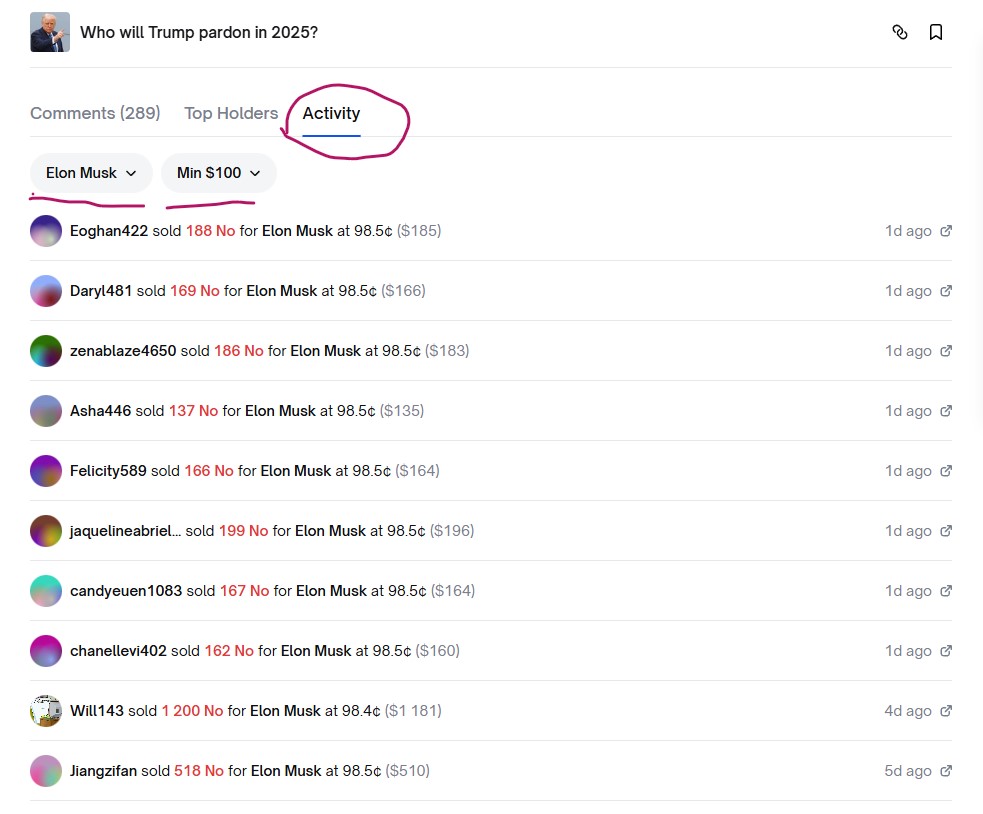
On the Polymarket market page, after scrolling down to the 'Activity' section, it is recommended that you set some filters, such as a minimum bet size (e.g. $10 or $100), to filter out small orders and focus on users who are betting more. Next, you can look specifically at accounts that are betting large amounts of money on low odds options (e.g. 30% or lower).
These options usually mean that the odds are high but the risk is also high, and if someone is betting a lot, they may have 'extra knowledge' of the outcome. Sometimes these dubious bets will be single large bets, or they may be a series of small bets placed at the same address in an attempt to stay out of sight.
When you come across these accounts, it's a good idea to open a new page and look at their betting history. It's a time-consuming process, and you may even have to click through 10, 20, or even 50 wallets, but it's the first step in finding out what's going on.If it were that easy to find out what's going on inside, there wouldn't be so many alpha's on the market that would be missed!
After identifying these suspicious accounts, you can further compile a tracking list. When you open each of these accounts, there are a few key features you can look for. Were the accounts created recently? Are they focused on one or two markets? In fact, in order not to be too obvious, many people will deliberately place small bets on several unrelated markets to confuse the eye, but in fact the main capital is still pressed on a core market.
You can also look at the way the bets are placed and how they are structured. If an account bets between $5,000 and $10,000 on the same option in a single bet, or if they repeatedly place multiple small bets (e.g., $50, $100, $500) on the same outcome, it's worthwhile to wonder if they're sure of the outcome behind the bets.
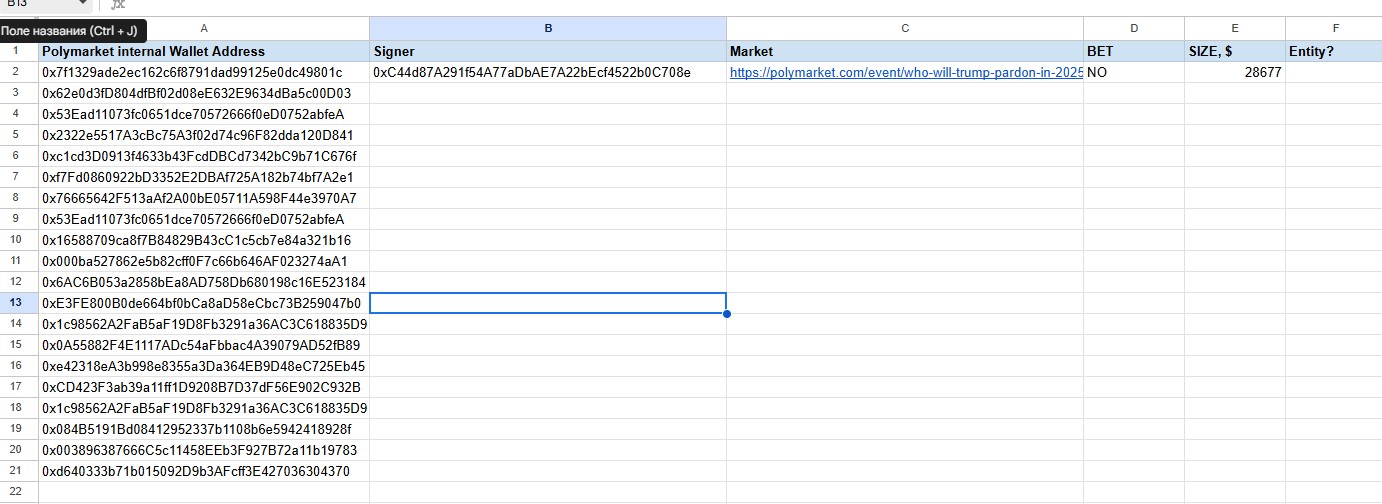
Once you've locked down a few suspect accounts, you can organize their Polymarket addresses, betting history, betting amounts, and so on, and throw them into a Google Sheet, so you'll have a good list to follow up on. This is where we get to the fun part.
Of course, if there are specific clues like the recent Lighter case, we can directly pinpoint the accounts that made unusual bets. In this case, for example, a netizen found that two Polymarket accounts wagered a total of more than $125,000 on the $LIGHTER coin-opening related market, and the direction of wagering was highly consistent with the results that had not yet been announced by the official authorities at that time.
These two accounts have bought heavily into the Yes option in the 'Lighter Next Day Market Cap' market, betting that Lighter will be able to issue the coins on time and reach a high level of market capitalization. If Lighter fails to coin by the end of 2025, the market will rule No and all Yes bets will be lost. Therefore, the only people who would dare to place such a bet would be insiders who have a good grasp of what's going on.
But these accounts are just the surface of Polymarket's identity.We need to find out more about the real operator behind the Polymarket account.What's really important is to find out which external wallet is linked behind them. Because the Polymarket account is actually controlled by a Gnosis Safe multi-signature contract address, we can use the Safe Wallet feature to look up its "Signer", which is the main wallet address that actually controls the account!
The method is simple:
- open up https://safe.global/app Click "Launch App", enter and select "Watch Any Account".
- Paste the address of the Gnosis Safe Proxy you just copied from Polymarket.
- Then select the appropriate link and click "Next" to go to the account information page.
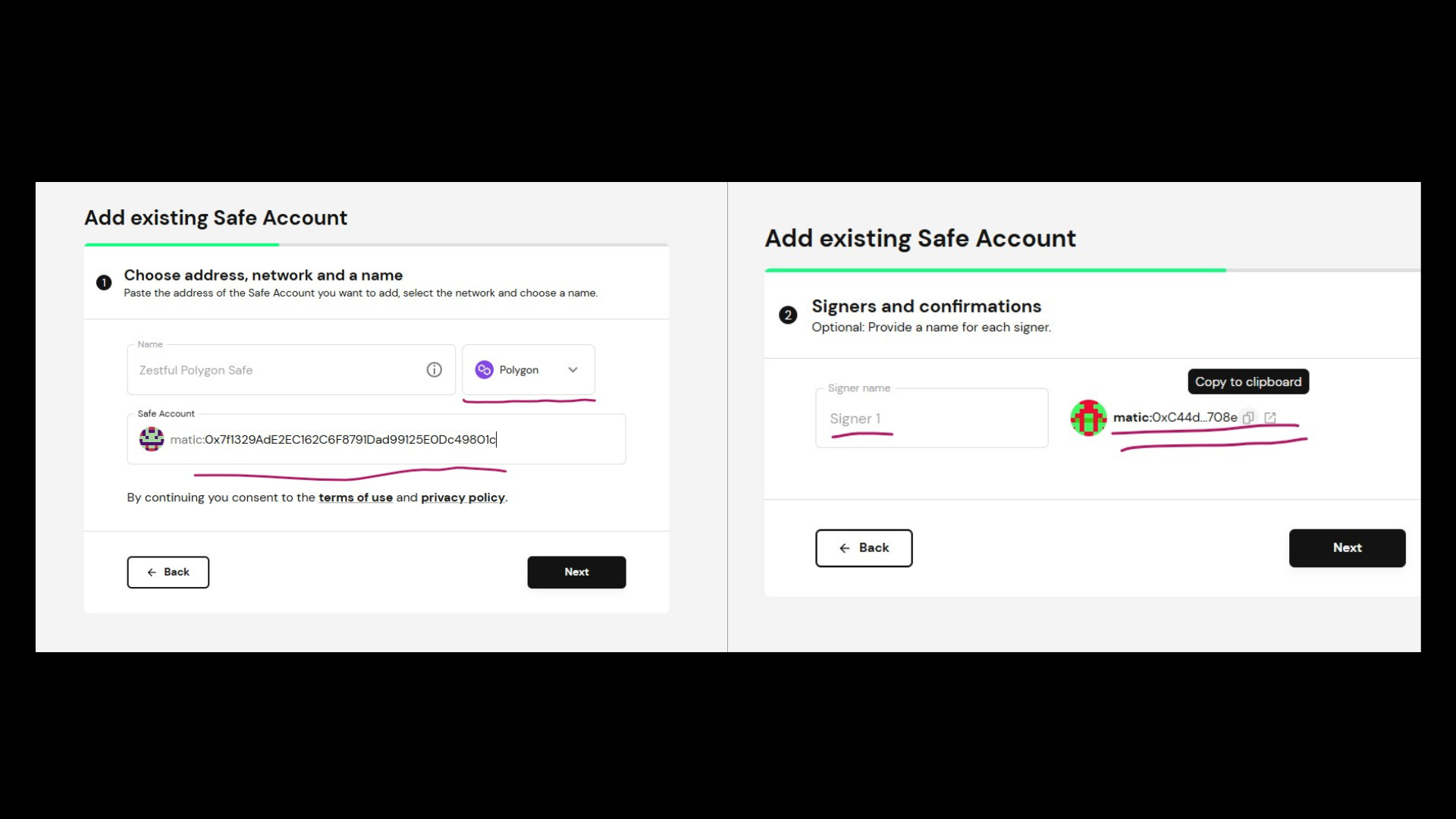
On the right hand side, the signer field of the Safe (usually "Signer 1") is displayed, and this address is the real external wallet that controls the Polymarket account, which is the address that analytics tools like Arkham will later extend their lookups from. So you can record this Signer address and put it in your Google Sheet, so that you can start tracing the chain from there!
Finally, we found the result:
- The external wallet corresponding to account @k13florist is 0x64Afae...A6352 (hereafter referred to as Wallet A)
- The external wallet corresponding to account @0x1E9c..409c is 0x809834..433B8 (referred to as Wallet B below)
These two external wallet addresses are the starting point for all subsequent chain tracking. As long as we have this starting point, we can then use the tools to dig upwards, find out the source of their top-ups, the targets of their transactions, and even the items and addresses that they have interacted with, and slowly piece together a complete picture of the chain's behavior.
Step 2: Track Wallet Interactions with Arkham
Open Arkham Intelligence and start to do the link diagram analysis. Let's take the Lighter case as an example. Since we have already obtained two external wallet addresses, Wallet A (0x64A...) and Wallet B (0x809...), we only need toGo to Arkham's "Tracker" tool and paste the addresses of wallets A and B into the search field. The system will automatically create a map of your chain interactions. This map looks like a spider's web, with the wallet you entered in the center, surrounded by all the wallet addresses or contract nodes with which you have interacted.
Arkham is a powerful free chain analysis tool for people with no programming background. Its biggest strength is its ability to visualize the interactions between different wallets, helping you to quickly see the connections. We have written an article about Arkham before, if you are interested, please click here.《4 Free Tools to Track Your Giant Whale's Wallet and Coin Flow》Take a look.
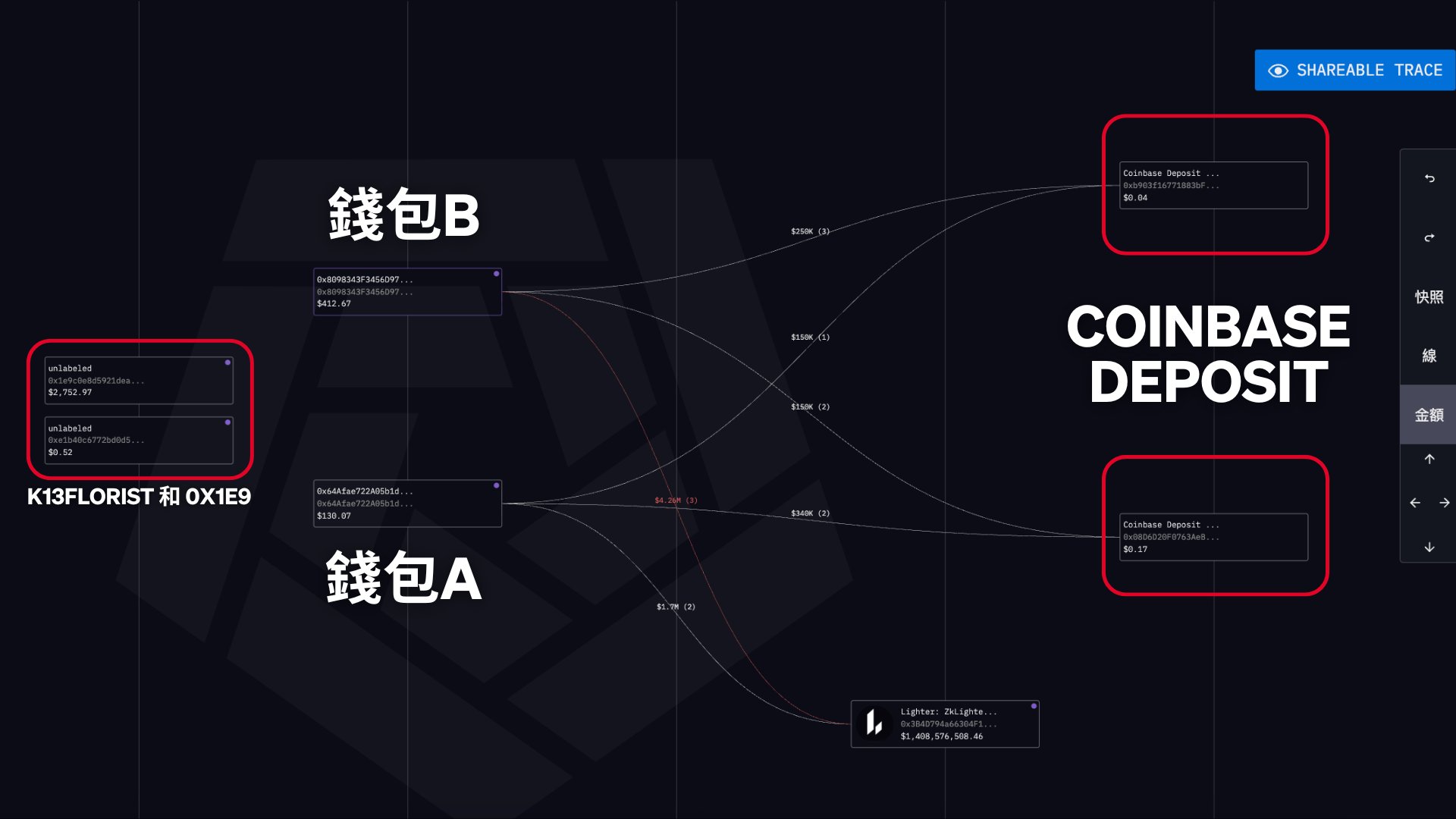
Then click on each node and press the "+" button on the right side of Arkham to reveal more upstream and downstream addresses for that node, such as who transferred money in and where the money went. The key point here is to find out if there is a node that interacts with both wallets A and B at the same time. If so, it is very likely that this shared node is the common controller or source of funds behind these two wallets. We have found such a connection in the analysis below, and we will now explain how to determine what entities these nodes represent, and how to extend the full story of the chain from this clue.
Step 3: Identify the common top-up address
When we enter the addresses of wallets A and B into Arkham, we quickly see one of the key nodes: a reload address linked to both A and B appears in the image, and this node is labeled as a "Coinbase deposit address". This is by no means a random coincidence. Because in Coinbase, each user's replenishment address is independent, if two seemingly unrelated external wallets have both transferred funds to the same Coinbase deposit address, it means that they are the same person's account, or at least controlled by the same person.
More specifically, in this case, we find that both Wallet A (external address @k13florist) and Wallet B (external address @0x1E9) have sent funds to the same address 0xb903f1...7A817Ee9, which is explicitly labeled as Coinbase's reload address.
Such an intersection not only allows us to deduce that the two wallets are actually controlled by the same person, but also dramatically increases the credibility of our explanation of their betting behavior.
After all, in order for someone to bet a total of $125,000 on TGE to happen using two accounts, in addition to being extremely confident in the outcome, he must also have a gap in information, and that gap, most likely, comes from the fact that he is an insider!
Recent Recent Posts:
JPEX Lazybones|Over 1.6 billion dollars fraud case revealed, 80 people arrested, KOLs such as Hayashi Saku are involved in the storm.
2025 Latest OKX Web3 Wallet Tutorial: Does it work? How to create it? A Guide to Safe Operation, Multi-Link Support, and Time-Limited Airdrops
Jay Chou's friend on behalf of hundreds of millions of Bitcoin investment "sudden people evaporate" can not bear to sue!
Bitcoin Amsterdam 2025 The World's Strongest Bitcoin Speaker Lineup Revealed!
Step 4: Verify Insider Trading Timeline
The final step is to move to a more advanced stage of analysis, finally identifying other operations in the chain of these wallet addresses.This may include whether the address is a well-known entity, which protocols it has interacted with in depth, whether it overlaps with certain project wallets, etc. If you are lucky, you can even find out the entity behind the wallet, such as a fund, development team, or KOL! If you're lucky, you can even find out who's behind the wallet, such as a foundation, development team, or KOL!
Of course, this trick is not foolproof, and there will still be some wallets that cannot be identified, but the percentage of hits is actually higher than expected!
This part may be a bit of a hurdle for the general public, as it involves the integration of chained data and identity deduction. However, there are existing tools that can help, and one of the most recommended is Nansen's "Deep Research" feature. This is an advanced feature of Nansen that can only be used with a paid account, but the threshold for using it is not too high, so even if you are not familiar with the program, you can operate it easily.
Just go to the Nansen website, find the Deep Research area, then paste in the Signer Address you just found from Safe, click Start Analyzing, and within a few minutes you'll run a full chained footprint report for that address.
If you haven't registered for Nansen yet, you can use the HERE This link adds the Pro version to receive Nansen Points (NXP).
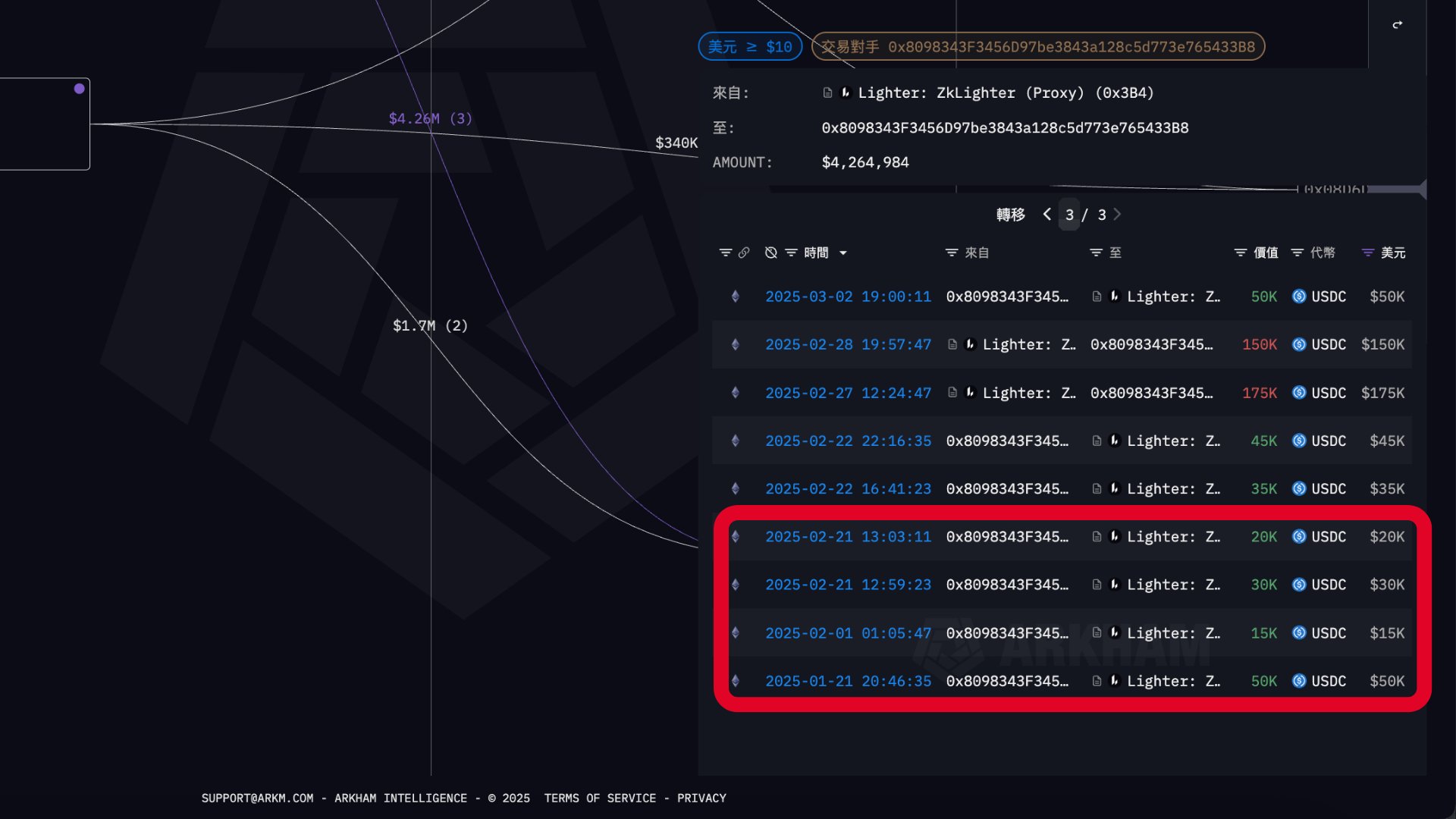
However, even without the use of paid tools, the analysis in the previous steps is actually enough to reveal a lot of key evidence. For example, if we take Lighter as an example, the Arkham chart above shows a key point in time where Wallet B sends money to the Lighter smart contract on January 21, 2025.
It doesn't seem like much at first glance, but a quick check of the official message reveals a lot:Lighter opened for registration on January 24th!That is, Wallet B was able to operate on the contract before it was opened, almost certainly to an address controlled by an insider or team member.This timeline evidence, together with the common Coinbase charging address we found earlier from Arkham, echo each other and make it almost certain that the people behind these Polymarket accounts are insiders of the Lighter project.
They knew ahead of time that TGE was going to happen and bet over $125,000 that they would win in the open market. This is not only a fascinating example of chain tracking, but a real-world demonstration of how anyone can disentangle seemingly anonymous money movements and behavior patterns from public data if they use the right tools.
Conclusion
Through Arkham trace analysis, we were able to confirm the connection between the two suspicious accounts and an insider within Team Lighter. The fact that wallets A and B share a Coinbase address proves that they are under the control of the same person, and the early deposit to Lighter reveals that this person has an insider's identity. This suggests that Lighter is likely to coin before the end of 2025.
This case demonstrates the power of chain analysis: even if an operator tries to hide his identity, as long as there is a record of the transactions, the tool can still detect the clues. For investors, mastering such techniques can help them recognize market information as genuine. Follow the steps in this article to investigate the signs before placing a bet on a predictive market and gain confidence in your decision.
I hope this tutorial will help you make good use of tools like Arkham to uncover more valuable clues in the blockchain world!
As a newbie, you should keep learning and pay attention to the market dynamics, if there is anything you do not understand, welcome to join our Telegram Community Networking is also a great way to share and discuss the latest DeFi information, airdrop campaigns, and revenue strategies!
Related Post:
Best Cryptocurrency Trading Platform for Hong Kong Users?2025 Latest Bitcoin Tips for Beginners
2025 Coin Ring Newbie Guide Lazybones|Chained Ecology Entry Guide
2025 Must Read for Newbies! Use these six data indicators to learn how to judge buying opportunities.
Disclaimer
The content of this article is for reference only, investors should exercise independent judgment, invest prudently and at their own risk, this article does not provide or attempt to persuade the audience to do trading or investment basis, the content is for sharing purposes only, and should not be regarded as investment advice.It does not represent the views and position of Monsterblockhk.All information and opinions are current as of the date of the judgment. In addition, if a judgment is rendered on aIn this siteAny content related to virtual asset trading platforms that have not yet obtained a license to operate virtual asset trading platforms in Hong Kong, including but not limited to text introductions, pictures, offers, events, etc., are only available to users outside the Hong Kong Special Administrative Region.
According to the Hong Kong Anti-Money Laundering and Counter-Terrorist Financing (Amendment) Ordinance 2022, after June 1, 2023, all centralized virtual asset trading platforms operating in Hong Kong or actively promoting their services to Hong Kong investors will be licensed and regulated by the SFC, and any related unlicensed activities will be a criminal offence. For more information and details of the legislation, users may refer to the SFC website.