


Every time you book a flight or a hotel, are you just spending money—or are you also earning cryptocurrency? This article introduces a strategy that many people overlook: using Laguna (the crypto version of ShopBack) alongside your crypto credit card to trigger two separate cryptocurrency cashback rewards for the same travel purchase, resulting in an effective cashback rate ranging from 7% to 8% —whereas the travel cashback cap for standard Visa credit cards is typically only 1% to 2%.
The core logic behind this strategy is simple: Laguna tracks “which entry point you used to access the merchant,” while the encrypted card tracks “which payment method you used.” The two are independent of each other, so they can be used simultaneously. Starting with the mechanisms of these two tools, this article explains the principles behind the stacking strategy, calculates estimated cashback amounts, demonstrates the complete process, and lists the restrictions you really need to be aware of. If you regularly spend money on travel, this article is worth reading from start to finish.
Why is travel spending the most efficient way to accumulate cryptocurrency?
What's the cap on credit card rewards points?
For most people, the process of booking flights and hotels goes like this: they go directly to Trip.com or Agoda, complete the booking, pay with a Visa or credit card, and that’s it. Travel rewards from banks are typically issued in the form of miles or points, which amount to roughly 1% to 2% of the total spending. Converting these into usable discounts or airline tickets often involves a lengthy wait.
This rewards structure has several inherent limitations: First, you must accumulate enough miles to reach a certain threshold before you can use them; second, the redemption value of miles depreciates over time; third, the miles themselves have no potential for appreciation—the 1,000 miles you earn today will still be 1,000 miles a year from now. In an inflationary environment, this is equivalent to your rewards quietly losing value.
Concentrated tourism spending is the scenario where the benefits of the layering strategy are greatest.
Travel spending has one distinct characteristic: it involves large, concentrated amounts. A single transaction—such as an international flight ticket plus a few nights at a hotel—can easily total several thousand dollars. Compared to everyday, scattered small-amount purchases, travel spending better maximizes the absolute monetary benefits of cashback strategies. Take the 7% cashback rate as an example: when applied to a HKD 200 purchase, it yields only HKD 14, but when applied to a HKD 5,000 travel purchase, the absolute cashback amount is HKD 350.
What is Laguna? How does it convert travel spending into cryptocurrency?
How does Laguna differ fundamentally from ShopBack in terms of how it operates?
Laguna is a cryptocurrency cashback platform built on the Kaia blockchain. It operates similarly to traditional cashback platforms such as ShopBack and Rakuten: Users click on Laguna’s links to shop at partner merchants; Laguna collects a commission from the merchants and returns a portion of that commission to users in the form of cryptocurrency. For users, the entire process is identical to their usual shopping experience—the only differences are the entry point and the form of the cashback.
We onceThis Detailed TutorialThat article introduces Laguna’s basic operations, including registration, selecting cryptocurrencies, order tracking, and withdrawals. Readers interested in the details for getting started can refer to that article first. This article builds on the basics covered in Laguna and explains in more detail how to stack the Crypto Card to earn a second layer of cashback.
The fundamental difference between Laguna and traditional cashback platforms is:The rebate is in the form of cryptocurrency, not Hong Kong dollars in cash.. This means that if you choose BTC or another non-stablecoin as your cashback currency, the cashback itself has the potential to appreciate in value—though, of course, there is also a risk of depreciation. For users seeking zero risk, Laguna offers the USDC (U.S. dollar-pegged stablecoin) option, where the cashback amount is pegged 1:1 to the U.S. dollar.
What is the cashback rate for travel merchants at Laguna?
Based on the current data from the official homepage, Trip.com’s cashback rate can be as high as 8.64%, Agoda offers discounts of up to 6.72%(Source: Laguna.network official website, July 2026).
It’s important to note that these are “up to” figures; the actual cashback rate depends on the cryptocurrency you choose, the merchant’s current promotional status, and the order type. Taking the USDC stablecoin option as an example, the actual cashback rate displayed on Trip.com is typically lower than the maximum value. We recommend checking the real-time figures directly on the platform before each transaction and using the platform’s display as the definitive reference; do not rely on figures from any articles as a basis for your expectations.
Another characteristic of travel-related businesses is:It takes a long time for the cashback to be credited to my account. Flight and hotel bookings are classified as travel orders, and Laguna will not begin processing them until you have actually completed your trip; the entire settlement cycle typically takes 30 to 120 days. This is not a platform issue, but rather an industry standard—merchants will only release commissions after confirming that an order has been completed and not canceled. This has a direct impact on your cash flow expectations and must be fully understood before using the service.
How to Choose the Rebate Currency: USDC, BTC, or Tokenized Assets?
Laguna currently supports cashback in the following currencies: BTC, USDC, SOL, XAUt (tokenized gold), and recently launched tokenized stocks, such as Apple (AAPL) and SpaceX (SPCX).
Choosing a cryptocurrency is essentially choosing the “value characteristics of the rewards.” USDC is a U.S. dollar-pegged stablecoin; 1 USDC = 1 U.S. dollar, with a fixed value, making it suitable for users who do not want to bear the risk of crypto price volatility. BTC and SOL have historically outperformed inflation, but they are subject to significant short-term volatility, making them suitable for users who are bullish on crypto assets in the long term. Tokenized stocks, on the other hand, allow users to indirectly hold equity exposure in real companies, which holds a certain appeal for users looking to diversify beyond crypto assets.
Regarding tokenized assets, if your referrer is also receiving a rebate, their commission will still be calculated based on the actual cryptocurrency you earn. The official Laguna blog explicitly states: Even if you choose to receive your cashback in the form of tokenized shares of NVIDIA, Tesla, or Google, your referrer will still receive the corresponding 10% shares (Source: blog.laguna.network, April 30, 2026).
How Does the EtherFi Cash Crypto Card Serve as a Second-Tier Cashback Program for Travel Spending?
What are the key advantages of non-custodial crypto cards?
EtherFi Cash is a Visa credit card built on a non-custodial architecture. "Non-custodial" means that your crypto assets are always stored in a wallet under your own control, and the EtherFi platform cannot access your assets. This is fundamentally different from crypto cards issued by some centralized exchanges—the latter typically require you to first deposit your assets into the exchange, which then manages and spends them on your behalf.
The EtherFi Cash card supports Apple Pay and Google Pay and can be used anywhere in the world that accepts Visa, including online and in-store. MB atA Complete Guide to the EtherFi Cash Crypto CardThe article provides detailed information on the application process, funding methods, and everyday use cases for this card. We recommend that readers who are not yet familiar with this card read it first.
Cashback Rate Structure: A Detailed Explanation of the Core and MEXC Co-branded Card and Foreign Currency Fees
EtherFi's rebate rate structure isStep-by-step... rather than a fixed percentage. Here is the latest information from the official Help Center (last updated in July 2026):
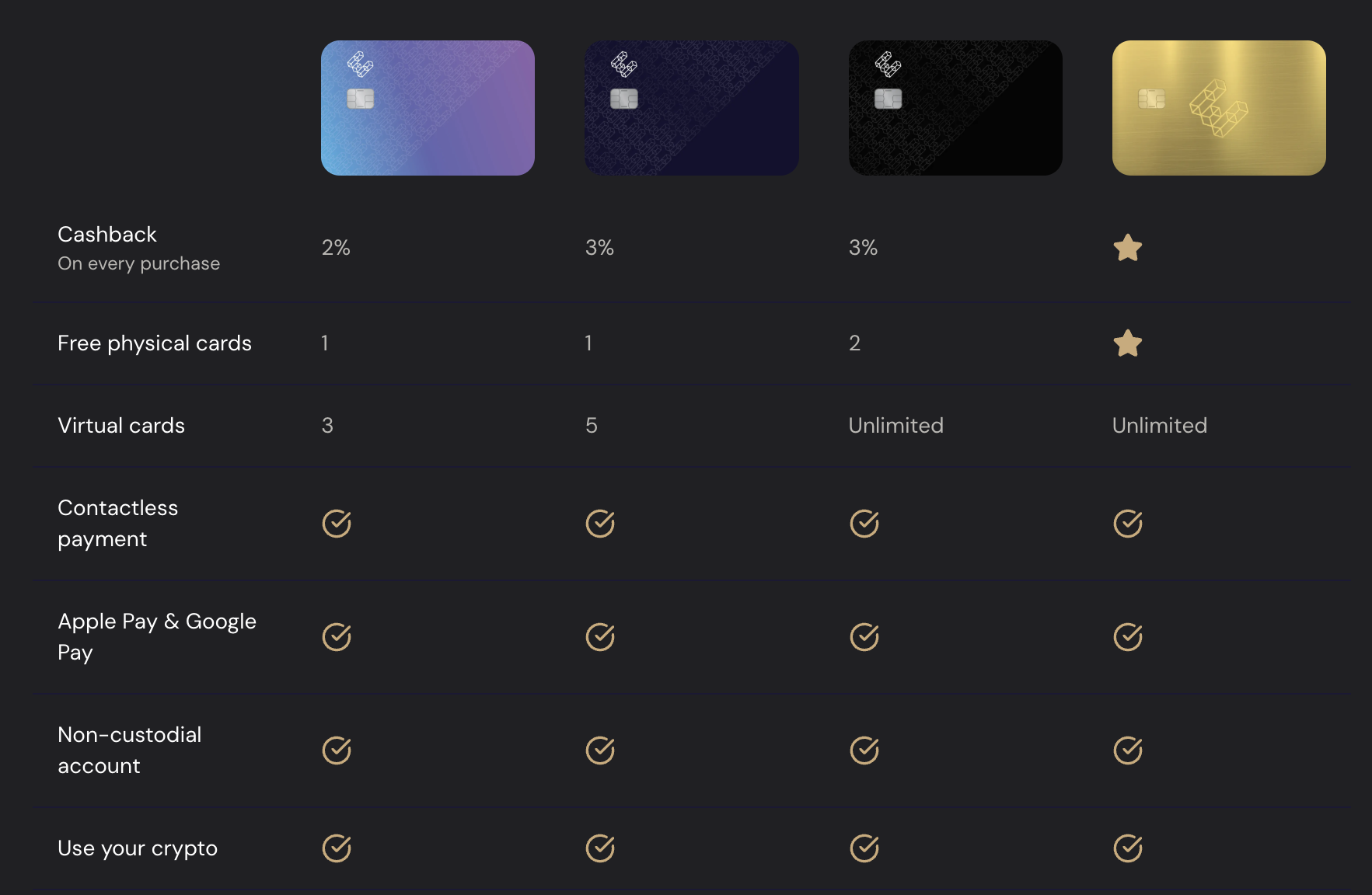
Core Tier (default for all new users):
First $2,000 spent each month on $:3% rebate
$$2,001 to $$3,000:1% rebate
Over $ $3,000:0.5% rebate
MEXC Co-branded Card Users:
EtherFi and MEXC have launched a co-branded card program; users who hold the MEXC co-branded card can receive additional benefits on top of the Core package. +1%, meaning that for the first $2,000 spent each month, you’ll enjoy 4% Total Rebate. This program is currently open only toOpen a New Account on MEXCExisting EtherFi account holders may not be eligible to apply (Source: help.ether.fi, July 2026).
Foreign Currency Conversion Fees (Core Tier):
When making purchases denominated in currencies other than the U.S. dollar, EtherFi charges a foreign currency conversion fee based on Visa’s base exchange rate. For Core tier accounts, the foreign currency fee ranges from 0 to 0.51 TP3T; The Luxe tier ranges from 0 to 0.25%; the Pinnacle tier is 0% (Source: help.ether.fi fees page, last updated July 2026).
In general travel itineraries, when settling payments in non-U.S. dollar currencies such as Hong Kong dollars or Japanese yen, this foreign currency fee affects the actual net cashback rate. Taking the Core tier as an example, the 4% cashback is subject to a foreign currency fee of up to 0.5%, resulting in an actual net cashback of approximately 3.5% to 4%.
Important Note:EtherFi has launched its exclusive Travel feature (travel.ether.fi), which offers better rates at partner hotels than some major booking platforms; cardholders may use this as an additional reference.
Which travel expenses are eligible for EtherFi cashback?
Direct purchases of airline tickets and hotel stays are typically eligible for cashback, as the MCC classifications for travel merchants fall under the applicable categories. However, the following categories are not eligible: ATM withdrawals, cash advances, P2P transfers, gift card purchases, gambling-related expenses, and any transactions classified as financial services. If you have any questions, you can check the specific cashback status on the “Transactions” page in the EtherFi app.
Killing Two Birds with One Stone: How Can You Stack Two Layers of Cashback at the Same Time?
The Core Logic of Overlay: Two Systems Track Different Things
When many people first hear about “Laguna + Crypto Card stacking,” they may wonder: Do these two cashback offers conflict with each other? The answer is no, because they track completely different things.
Laguna tracksYour Shopping Portal: Did you click through to Trip.com via a Laguna link and complete your order during the same session? Laguna doesn't care which card you use to pay; it only cares about the source of the purchase itself.
EtherFi Card tracksYour Payment Activity: When you make a purchase using your EtherFi Visa card, the platform calculates your cashback based on the purchase amount and your membership tier. EtherFi doesn’t care which website you shop on—it only cares about the act of using the card.
The two systems operate completely independently, so a single travel booking can trigger both cashback offers at the same time without affecting each other.
Sample Calculation: Using a Single Trip as an Example
The following is an illustrative estimate; the figures are in U.S. dollars for the convenience of readers in different regions. Suppose you are planning a five-day, four-night trip to Japan. The total cost for airfare and three nights’ hotel accommodations is approximately USD 700(Approximately 5,500 HKD or 22,000 TWD), which falls within the typical range for a standard travel itinerary at the EtherFi Core tier, priced at $2,000 per month.
Layer 1 — Laguna (USDC):
Taking Trip.com’s current USDC cashback rate of approximately 4% to 5% as an example (please refer to the platform’s real-time display for accuracy), a purchase of USD 700 would yield approximately USD 28 to 35 in USDC cashback.
Level 2 — EtherFi MEXC Card:
USD 700 × 4% (MEXC Card) = USD 28; after deducting a foreign currency fee of up to 0.5%, the net rebate is approximately USD 24 to 28.
Total for both floors:
Approximately USD 52 to 63, or 7.4% to 9%... and recorded as crypto assets.
In comparison, a purchase of the same USD 700 made with a standard credit card would earn only about USD 7 to 14 (1% to 2%) in miles or points.
If you are using a standard EtherFi Core card (not the MEXC version):
USD 700 × 3% = USD 21; after deducting foreign currency fees, the net amount is approximately USD 18 to 21
Plus Laguna: USD 28 to 35
A total of approximately USD 46 to 56, or 6.6% to 8%。
The above estimates are for reference only; actual rebates are subject to Laguna’s real-time rebate rate, EtherFi tier, settlement exchange rate, and order status.
Watch the full video demonstration
Written instructions can explain the logic, but the actual process is easier to understand through a video. Below is the complete demonstration video we filmed, which covers the entire process—from logging into Laguna to placing an order on Trip.com, selecting a currency, paying with the EtherFi card, and confirming the status of both cashback rewards:
How does it work? A step-by-step guide from signing up for Laguna to confirming both rebates
Step 1: Log in to Laguna, select a merchant and the cashback currency
Go to laguna.network and log in to your account (if you don’t have an account, you can sign up for free using your email or LINE account). Find Trip.com in the merchant list, select the currency you want to receive (USDC, BTC, or other options) in the “Select cashback token” field, check the real-time cashback rate for that day, and then click “Shop Now.”
Laguna will automatically redirect you to Trip.com's official website. From this moment on, Laguna will begin tracking your shopping session in the background.
Step 2: Important Notes for Completing Your Order on Trip.com
After being redirected to Trip.com, search for flights or hotels as usual, select the options you want, add them to your cart, and proceed to checkout. There is one important thing to note during this process:Do not click on any links to other cashback platforms or coupon code websites. Once you click on a third-party link, your browser session may be overwritten, which will interrupt Laguna's tracking, and the cashback for that purchase will not be calculated.
Additionally, we recommend booking rooms and flights at regular prices. Some Trip.com flash sales or non-refundable bookings may have special rules, so we suggest checking the refund policy before making a purchase.
Step 3: Check out using the encrypted card and track the status of both cashback offers
On the Trip.com checkout page, select "Credit Card" as your payment method, then enter the EtherFi virtual card number, expiration date, and CVV, or select the EtherFi card via Apple Pay to complete the payment.
After payment is complete, check the status of each of the two rebates to see if they have been triggered:
Once you log in to your Laguna account, you should see the order listed as “Cashback Pending Confirmation.” This means tracking was successful, and Laguna has identified this order. The actual cashback amount will be unlocked 30 to 120 days after your trip is complete.
Open the EtherFi app. On the Transactions page, you should see entries for Cashback and MEXC Cashback corresponding to your purchase; the sum of these two amounts is the crypto rebate triggered by this payment.
What precautions should you be aware of before using this product?
Why does it take so long to process travel-related rebates?
The reason the cashback cycle for travel orders is much longer than for general online shopping is that hotels and flights are subject to cancellations and changes. Merchants will only release commissions to Laguna after the trip is completed and confirmed as not canceled, and Laguna will only distribute the cashback to users after receiving the commission. Therefore, the total waiting period from the time you place your order until the cashback becomes available for withdrawal is typically 30 to 120 days.
This means that if you plan to use this strategy for your August trip, the cashback from Laguna may not be available for withdrawal until November through January of the following year. EtherFi’s card cashback is settled relatively quickly, typically confirmed within a few days after the transaction is settled, but there is still a waiting period between the “Pending” status and when the funds are actually available.
Under what circumstances might a rebate be revoked?
The following situations may result in the cashback not being awarded or being revoked: clicking on other third-party links after being redirected from Laguna (session interruption); a refund or cancellation occurring after the order is completed; As for EtherFi, if a transaction is determined to be an ineligible transaction type (e.g., MCC classified as financial services), the cashback will not be issued.
Both Laguna and EtherFi clearly state that rebates that have already been issued will be revoked or deducted in the event of a refund or order cancellation (Source: laguna.network FAQ; help.ether.fi Rebate Rules page, July 2026).
Risks Associated with Fluctuations in the Value of Cryptocurrencies Used for Cashback
If you choose USDC as the reward currency for Laguna, the USD value of the reward remains stable throughout the waiting period and is not affected by market fluctuations. If you choose BTC or other non-stablecoins, you must accept that market prices may fluctuate significantly during the 30- to 120-day period while waiting for the reward to unlock. The amount of the reward is fixed at the time of crediting, but the market price at the time of withdrawal may be higher or lower than at the time of crediting. This is an inherent risk of choosing a non-stablecoin reward, and users should make their decision based on their own risk tolerance.
Three Perspectives on This Strategy from the X (Twitter) Community
Supporters' Perspective: Let the Actual Cashback Figures Speak for Themselves
Active Laguna users generally report that this strategy offers a level of cashback on everyday travel expenses that traditional credit card rewards simply cannot match. Laguna’s official website features real testimonials from several travel-oriented users, including a tweet from @abscondedme1 in June 2026, in which they shared their surprise at seeing their cashback amount double after three months of accumulation, and @bitcoinmalaya, who shared that they accumulated over USD 100 in crypto cashback through Laguna within a single month—the latter primarily from travel bookings (Source: laguna.network homepage, July 2026).
"Seeing is believing—I'll always use @laguna_network for my trips!"
— @abscondedme1,Link to the tweet
Critics' Perspective: Foreign Currency Fees Diminish the Advantages of Crypto Cards for Travel
Some crypto card reviews and analyses have expressed reservations about EtherFi’s actual benefits in travel scenarios, arguing that foreign currency conversion fees for non-dollar transactions would erode the cashback rewards. A 2026 crypto card comparison article by CoinStats directly highlights this point, stating that foreign currency fees make EtherFi “significantly diminishes its appeal as a travel card.”
"That foreign exchange fee makes it a poor travel card."
— CoinStats,Top 5 Best Crypto Cards in 2026
This criticism does hold some merit when evaluating EtherFi on its own. However, when Laguna’s first-tier cashback (approximately 4% to 5% USDC) is factored in, the impact of the 0 to 0.5% foreign transaction fee on the overall cashback rate becomes relatively negligible, and the overall crypto cashback rate remains far higher than that of traditional credit card rewards.
Analyst's Perspective: The combination of these two tools fills the gaps in their respective applications
Paymentscan’s Crypto Card Comparative Analysis Report (2026), after evaluating all major crypto cards on the market, points out that EtherFi’s unique advantage lies in the combination of its non-custodial architecture and “Borrow Mode,” which allows users to spend their assets flexibly while retaining self-custody.
"EtherFi [stands out] for its great cashback and unique 'borrow-to-spend' feature"
— Paymentscan,Crypto Card Comparison 2026
From a combination strategy perspective, Laguna addresses the question of “which merchant portal to use for purchases,” while EtherFi addresses the question of “which payment method to use at checkout.” The two fill different gaps in the consumer chain, so using them together is more efficient than using either one alone.
Current Promotions
Laguna: $5 USDC Two-Way Rewards + Permanent 10% Cashback Stream
Use a Referral Code MBHK Or use the Laguna referral link directly bit.ly/42XwiB5 After completing your Laguna account registration and making your first purchase (of at least USD 5), both you and the person who referred you will each receive USD 5 USDC Rewards.
Even more noteworthy is the long-tail effect of the referral program: once you start shopping through Laguna, your referrer will permanently receive a percentage of all your cashback amounts. 10%...and this 10% is paid entirely by Laguna; your cashback amount will not be affected in any way. This mechanism means that the more often the friends you refer travel or shop, the higher your passive income will be (Source: blog.laguna.network Referral Program Guidelines, April 30, 2026).
EtherFi: Open an Account via a Referral Link
Through the EtherFi referral link ether.fi/refer/2400a653 Activate your card now. Please note that the terms of EtherFi’s referral program have been updated effective May 2026. For the current terms and any welcome offers, please refer to the latest information on EtherFi’s official website. We’ve provided a detailed explanation of the application process in our comprehensive guide to EtherFi, which you may find helpful.
Frequently Asked Questions
Q1: Can the rebates from Laguna and EtherFi be stacked at the same time without canceling each other out?
They can be combined without canceling each other out. Laguna tracks your entry point (whether you accessed the merchant through a Laguna link), while EtherFi tracks your payment method (whether you paid with an EtherFi Visa card). The two systems operate completely independently, so a single purchase can trigger both cashback rewards.
Q2: If I don’t have the EtherFi MEXC co-branded card, but only the standard Core card, can I still use this strategy?
Yes. Generally, the base cashback rate for the Core Card is 3% on the first $2,000 USD in monthly spending, with a foreign currency fee capped at 0.5%, resulting in an actual net cashback rate of approximately 2.5% to 3%. When combined with the Laguna offer, the overall effective cashback rate can still reach 6% to 8%, which is still far higher than traditional credit card rewards. The additional 1% from the MEXC co-branded card is a bonus, but it is not a prerequisite for this strategy.
Q3: If I place an order on Laguna and then switch browser tabs or refresh the page, will the cashback still be valid?
Laguna's tracking relies on tracking cookies in the browser session. After being redirected, you should complete your order on the same tab and within the same session. Avoid closing and reopening the tab, switching to another device, or clicking on any other third-party cashback links. If tracking is interrupted, Laguna will be unable to identify this order and will not issue the cashback.
Q4: How can I meet Laguna’s $15 USDC withdrawal threshold?
You can only initiate a withdrawal to your crypto wallet once your Laguna account has accumulated at least USD 15 in USDC. Cashback for travel orders is typically unlocked 30 to 120 days after the trip is completed; once unlocked, the amount is added to your withdrawable balance. If you complete the referral program and earn a $5 USDC reward, this amount will be added to your cumulative balance, helping you reach the withdrawal threshold faster.
Q5: What kind of people is this strategy suitable for?
Best suited for people who travel regularly: those who take at least one or two long-distance trips each year, or who frequently book domestic and international accommodations and flights on Trip.com or Agoda. The higher the amount spent on a single trip, the more substantial the absolute cashback amount from the two-tier cashback program will be. For users whose daily spending consists mainly of small, scattered transactions—Laguna still offers benefits (with partners such as iHerb and Shopee)—but the concentrated spending typical of travel makes this strategy most effective for travel-related expenses.
Disclaimer: Neither EtherFi nor Laguna is a licensed virtual asset platform in Hong Kong; the relevant content does not apply to users in Hong Kong. This article is for informational purposes only and does not constitute investment advice. Cryptocurrencies and tokenized assets carry market risks; please make your own assessment before making any decisions. Rebate rates, fee structures, and referral program terms are subject to change at any time; please refer to the official information provided by each platform.