


What is Claude Code? How does it differ from the Claude web version?
Claude Code is an AI programming assistant launched by Anthropic. It doesn’t just answer questions—it can directly read and modify files, execute terminal commands, and run tests right within your project folder, making it an “agentic” programming tool. Click Claude Code Official Installation DocumentationIt can be used in environments such as the terminal, desktop applications, VS Code, and JetBrains, and supports macOS, Windows, and Linux.
Key Differences from the Claude Web Version
- Claude Web Version (claude.ai): Chat directly in your browser—great for writing, analysis, and general Q&A. You'll need to copy and paste your code yourself.
- Claude Code: Directly manipulate files and commands on your computer—ideal for writing code, fixing bugs, refactoring projects, and automating repetitive tasks.
- Both share the data allowance of the same subscription. Click Claude Code Cost DocumentThe seat quotas for Team and Enterprise are shared among Claude Chat, Claude Code, and Cowork.
What kind of account is required to use Claude Code?
According to the official documentation, Claude Code requires a Pro, Max, Team, Enterprise, or Console (API) account; the free claude.ai plan does not include Claude Code. It can also be accessed through cloud platforms such as Amazon Bedrock, Google Cloud’s Agent Platform (formerly Vertex AI), or Microsoft Foundry.
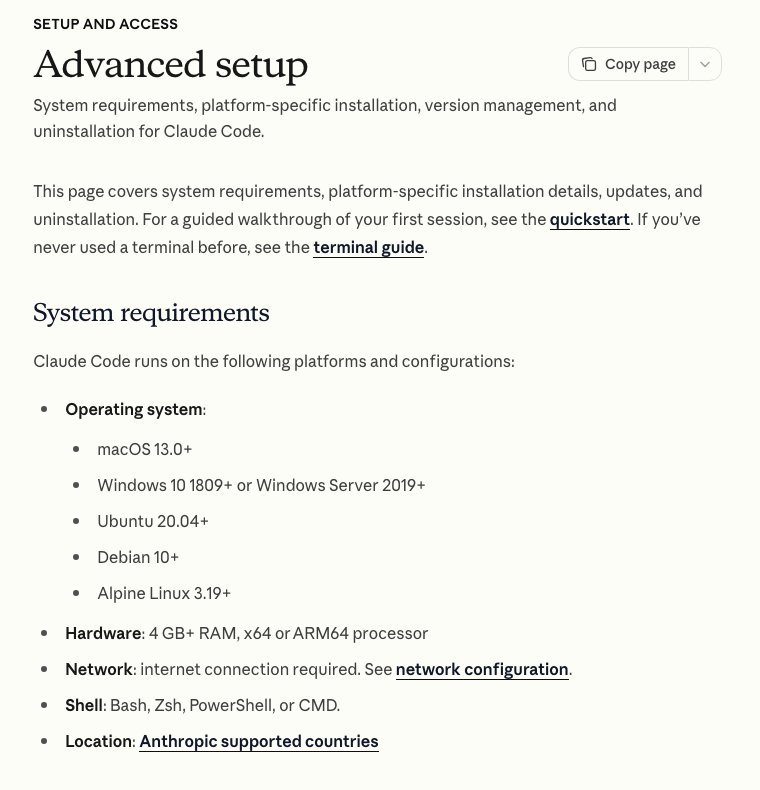
It is worth noting that in the “System Requirements” section of the same document, “Location” is listed as one of the requirements and links directly to Anthropic’s list of supported regions. In other words, regional restrictions are one of the basic conditions for using Claude Code, as will be explained in detail in the next section.
Can Claude Code be used in Hong Kong?
Straight answer: As of October 14, 2026, Hong Kong is not included in Anthropic’s officially supported regions; therefore, using Claude Code in Hong Kong is not an officially supported use case.
Current Status of Anthropic's Officially Supported Regions
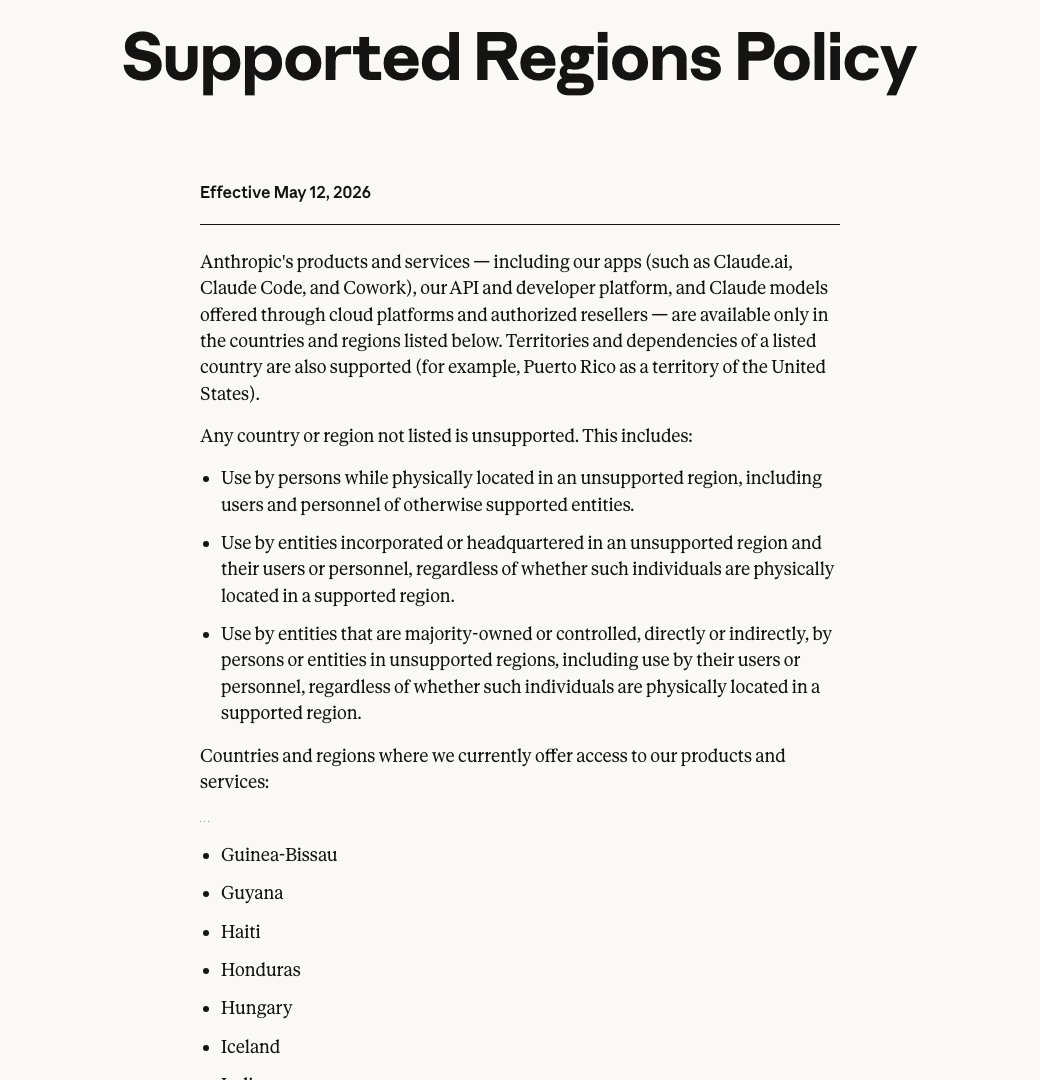
Anthropic Support Regions Page(Version effective May 12, 2026) lists approximately 185 countries and regions; the page states that any country or region not included on the list is unsupported. In Asia, Japan, South Korea, Taiwan, Singapore, Malaysia, Thailand, Vietnam, the Philippines, and India are all included on the list, but Hong Kong, Macau, and mainland China are not.
What channels does the policy cover?
Many people assume that “it doesn’t apply to the web version, and it’s fine as long as it’s accessed through other platforms,” but the scope of the official provisions is actually quite broad. The introduction to the region-specific page clearly states that the following products and services are limited to use only in the regions listed:
- Anthropic's own apps, including Claude.ai, Claude Code, and Cowork
- Claude API and Developer Platform (Claude Console)
- Claude models provided through cloud platforms such as Amazon Bedrock, Google Cloud, and Microsoft Foundry
- Claude models provided by authorized resellers
In other words, calling the Claude model in Hong Kong via AWS, Google Cloud, or other reseller channels does not make it a supported use case simply because the channel has changed.
Both “where you live” and “your company background” can have an impact
The Supported Regions page lists three categories of unsupported cases:
- People located in unsupported areas, even if their organization is in a supported area
- Organizations incorporated in or headquartered in unsupported regions, along with their employees—even if the employees are located in supported regions—
- Organizations in which individuals or entities from non-supported regions hold a majority stake or exercise control, either directly or indirectly, together with their employees
Anthropic had already, in September 2025,Tighten sales restrictions on such institutions, including cases where the shareholding exceeds 50%. Published on October 8, 2026,Update to the Terms of UseTo reiterate the three points above, the revised usage policy and regional support policy will take effect on November 12, 2026. For Hong Kong companies, this means that even if employees are assigned to overseas offices to use the service, the company itself—if registered in Hong Kong or controlled by a Hong Kong headquarters—will still fall within the scope of the restrictions.
Registration and Payment Requirements
按 Claude Official Help Center, Paid plans are available only to users located in supported regions, and creating an account requires a phone number from a supported region. Regarding payment,Online subscriptions are accepted only via credit card or debit card.;Page Explaining Payment DeclinesThe billing address and the country of issuance for the payment card must be in a supported billing region, and both must match.
Therefore, the issue of “unable to make payments with a Hong Kong credit card” is not due to a bank or technical problem, but rather because Hong Kong itself is not included among the supported billing regions.
What legal options are available to users in Hong Kong?
Provided that the terms are not violated, users in Hong Kong can actually consider the following four options, listed in descending order of compliance:
- Switch to open-source AI programming tools that support Hong Kong: for example, the open-source Cline, which allows you to choose your own model provider and even run local models on your own computer.
- When in a designated support area, follow the official guidelines: This applies only to individuals who actually live, work, or study in the designated support area and can provide accurate local information.
- Using OpenRouter with a non-Anthropic model: While this can reduce costs, the Claude Code software itself is also listed in the supported regional policies, placing it in a gray area.
- Corporate users should consult their legal department first: the organization’s place of registration and equity structure may also affect whether it can be used.
Option 1: Switch to open-source AI programming tools that support Hong Kong
If you're in Hong Kong, the safest approach is to use tools that have no regional restrictions and pair them with models that are legally available in Hong Kong. For example, Cline For example, it is an open-source AI programming agent licensed under the Apache 2.0 license that can be used in VS Code, JetBrains, the terminal, and desktop applications. It supports OpenRouter, any OpenAI-compatible interface, and local models running on your own computer via Ollama or LM Studio.
There are two things to keep in mind when choosing this route:
- Just because a tool is open-source doesn’t mean the models have no restrictions. Although Cline also supports Anthropic models, if you choose the Claude model in Hong Kong, you’ll still be subject to the regional support policies mentioned above; you should instead select a model provider that specifically serves users in Hong Kong.
- Each model provider has its own service area and privacy policy; be sure to review the provider’s most recent terms before using their services. For example, List of Regions Supported by the OpenAI API和 List of Regions Where the Gemini API Is AvailableHong Kong is also excluded, so the developer APIs from OpenAI and Google are not compliant options for users in Hong Kong.
Running a local model on your own computer means the code never leaves your computer, making it particularly suitable for company projects with high privacy requirements. The trade-off is that it requires better hardware, and the computational capabilities of local models generally fall short of those of top-tier cloud models.
Option 2: Use the official method while in a supported region
If you live, work, or study in a supported region on a long-term basis and have a local phone number and billing address, you can subscribe and install the software through official channels. The installation steps are as follows (using macOS and Linux as examples):
- Option: Go to Claude Pricing PageSubscribe to Pro or Max, or add credit to your Claude Console account to switch to API-based billing.
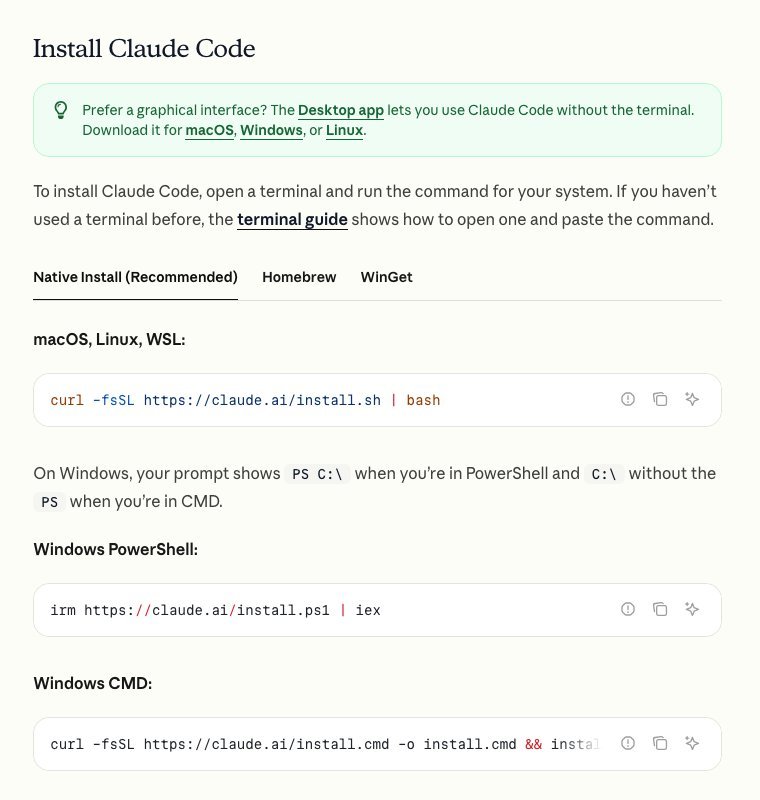
- To install Claude Code: Open the terminal and enter the official native installation command: `curl -fsSL https://claude.ai/install.sh | bash`. Windows users should enter `irm https://claude.ai/install.ps1 | iex` in PowerShell; they can also install it using Homebrew or WinGet.
- Verify the installation: Open a new terminal window, type `claude –version`, and if you see the version number, the installation was successful.
- Log in to your account: Enter `claude` in the project folder and follow the browser's instructions to log in to your Claude account.
Please note that the terms and conditions are based on your location at the time of use. Once you return to Hong Kong and continue using the same account there, you will once again fall outside the supported regions.
Option 3: Using OpenRouter with a non-Anthropic model
Claude Code can point the API address to OpenRouter, Switch to free or low-cost plans on OpenRouter. For complete setup instructions, a list of free plans, and daily data limits, see MB's OpenRouter Setup Guide for Claude Code。
However, readers in Hong Kong should be aware of two limitations of this route:
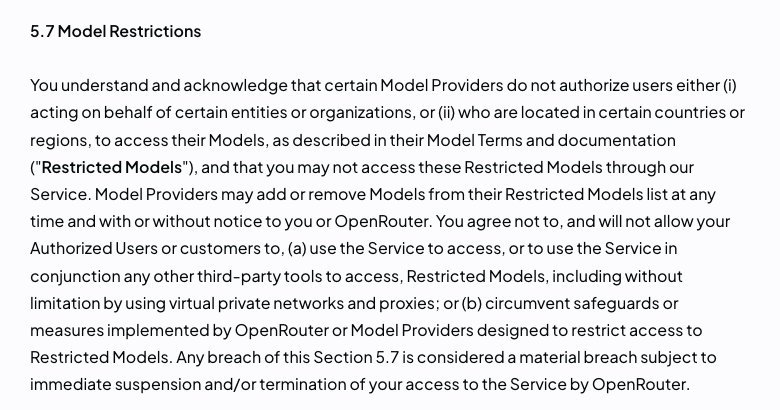
- When OpenRouter calls upon the Claude series of models, it is also subject to Anthropic’s regional policy restrictions.OpenRouter Terms of ServiceSection 5.7 also states that some model providers do not allow users in certain regions to use their models.
- Anthropic's regional support pages classify Claude Code itself as a product subject to regional policies. Even if you only switch models and do not use the Claude model, running the Claude Code software in Hong Kong is still not considered an officially supported use under the terms of service, and users assume all risks associated with such use.
Therefore, this approach is suitable for those who want to get a low-cost introduction to the AI programming workflow, but it should not be considered a “fully compliant” solution. If you’re looking to avoid any legal risks, Option 1 is a safer starting point.
Option 4: Corporate users should consult their legal department first
Companies registered in Hong Kong, or overseas subsidiaries controlled by a Hong Kong headquarters, are subject to the restrictions outlined on the Supported Regions page, even if their employees are located in a supported region. Companies planning to introduce AI programming tools to their teams are advised to have their legal or compliance departments review Anthropic’s terms of service and supported regions policy before deciding which type of tool to adopt.
Claude Code Pricing Plans at a Glance
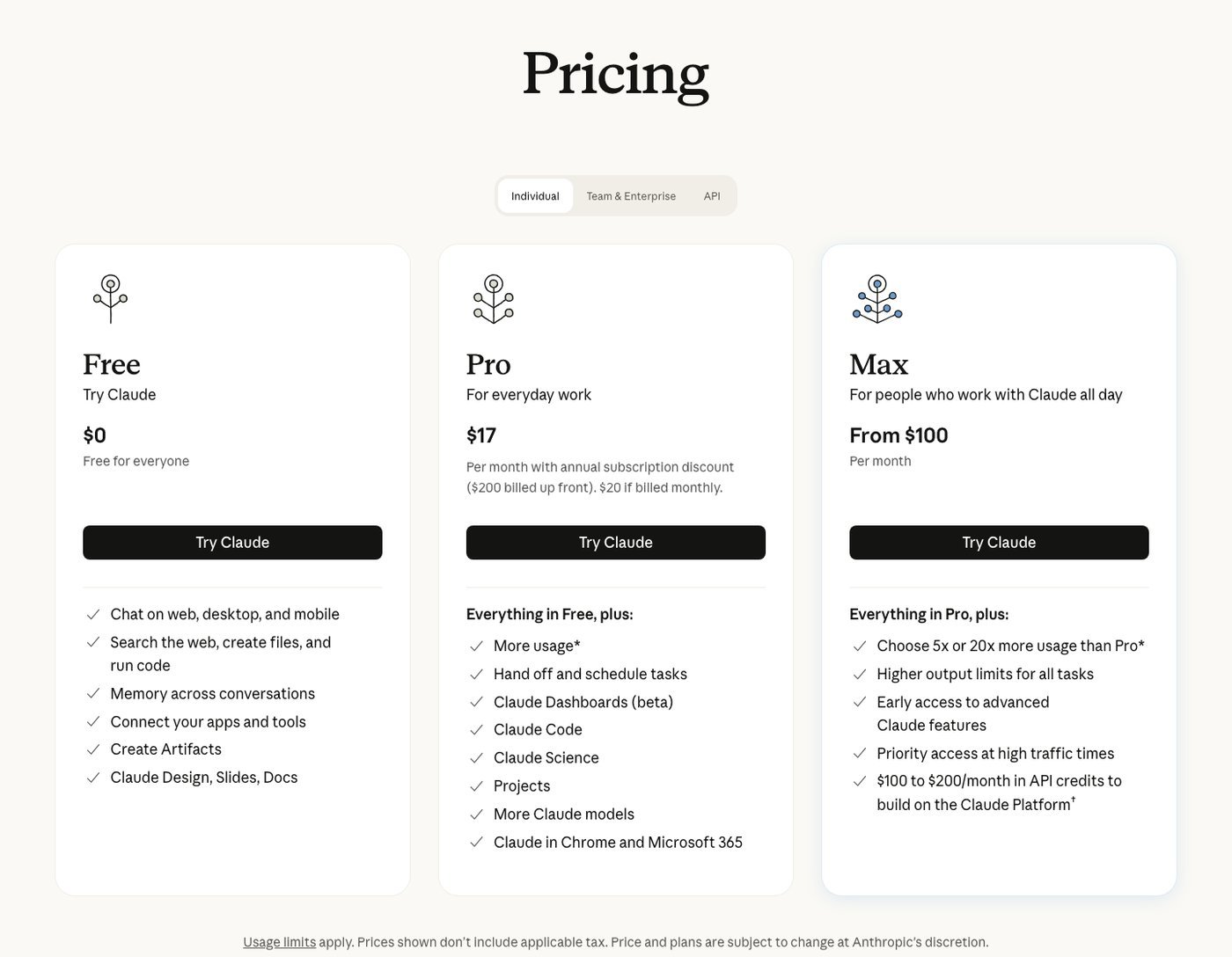
The following prices are from October 14, 2026: Claude Official Pricing Page, all prices are in U.S. dollars and apply only to users in supported regions. Claude Code does not have a separate pricing structure; instead, it is included in Claude subscription plans or billed based on API usage.
Subscription Plans: Pro, Max, Team, and Enterprise
| Plan | Price | Including Claude Code | Dosage |
|---|---|---|---|
| Free | Free | Excludes | Recommended Dosage |
| Pro | $20 per month; annual payment works out to $17 per month (a one-time payment of $200) | Including | More than Free |
| Max 5x | $100 per month | Including | 5 times that of Pro |
| Max 20x | $200 per month | Including | 20 times that of Pro |
| Team Standard Seating | $25 per person per month; $20 per person per month when paid annually | Including | More than Pro |
| Team Premium Seats | $125 per person per month; $100 per person per month when paid annually | Including | 5 times that of a standard seat |
| Enterprise | $20 per person per month (billed annually, minimum of 20 people) + usage billed at API rates | Including | Based on usage |
See the price of the Max 20x Max Program Description. For most individual users, the Pro plan is sufficient; only those who use Claude Code all day long and frequently hit their usage limits need to consider the Max plan.
API Pay-as-You-Go: Model Pricing
If you don't subscribe, you can log in to Claude Code using your Claude Console API key and pay based on your actual token usage. Here's Official Claude API Pricing(Per million tokens, in U.S. dollars):
| Model | Enter | Output | Positioning |
|---|---|---|---|
| Claude Opus 5.5 | 4 | 20 | Extended-Duration Agent-Based Programming and Knowledge Work |
| Claude Sonnet 5.5 | 2 | 10 | The Balance Between Speed and Ability |
| Claude Haiku 5.5 | 0.10 (Hint: within 100,000 tokens) | 0.50 (Note: Up to 100,000 tokens) | A large number of simple tasks that require speed |
按 Claude Model OverviewIn addition, there is Claude Fable 5.1, which is designed for highly complex reasoning and long-duration agent-based tasks (input: $10, output: $50), while Haiku 4.5 has been classified as an older model. For Haiku 5.5, when the prompt exceeds 100,000 tokens, the price increases to $0.50 for input and $2.50 for output.
How much does it actually cost each month, on average?
Claude Code Cost DocumentAccording to data from enterprise deployments: the average cost per developer per active day is approximately $13, or about $150 to $250 per month, with 90% of users costing less than $30 per active day. Individual usage varies widely, depending primarily on the model selected, project size, and whether multiple tasks are running simultaneously.
Here are a few official recommendations for controlling costs:
- Sonnet is sufficient for most programming tasks; Opus is used only for complex architectural decisions.
- When switching to another unrelated task, type /clear to clear the chat history and avoid being charged for the old content each time.
- Enter /usage to view your current usage; if you're billed via the API, you can set a spending limit for your workspace in the Claude Console.
Can free users use Claude Code?
No. The free claude.ai plan does not include Claude Code. According to the official pricing documentation, new API users receive a small amount of free credit for testing, but this is also only available to users in supported regions.
Risks to Be Aware of Before Use
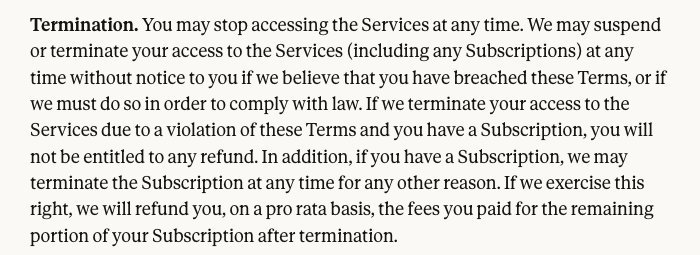
Violations of these terms may result in account suspension, and no refunds will be issued.
Anthropic Terms of Service for ConsumersUsers are required to use the service in accordance with the policies of their region and to provide accurate, up-to-date, and complete account and billing information. The Terms also state that Anthropic may suspend or terminate the service at any time without notice; if termination is due to a user’s violation of the Terms, subscription fees already paid will not be refunded.
Risks Associated with VPNs, Virtual IP Addresses, and Proxy Accounts
There are many online tutorials that mention using VPNs, foreign phone numbers, virtual credit cards, or proxy purchasing accounts to access Claude, but MB does not provide such methods. The common risks associated with these practices are:
- Violating Anthropic's terms requiring the provision of accurate account and billing information may result in account termination without a refund.
- The terms of service for third-party platforms also prohibit circumventing restrictions; for example, OpenRouter’s terms of service explicitly prohibit bypassing regional restrictions using VPNs or proxies.
- If you use a proxy buyer or share an account—that is, if you let someone else manage your account—your chat history and codes may be viewed, and the account may be revoked at any time.
Corporate Codes and Privacy Considerations
AI programming tools read the files in your project and send the content to the model provider for processing. Before handing over your company’s code to any AI tool, verify whether your company’s policies permit it and whether the provider will retain your data or use it to train models. Be especially cautious when using free models; some providers of free models use the input data to train their models.
If you want to use an AI assistant for everyday tasks beyond programming, you can check out Openclaw Lobster AI Beginner's Guide。
Frequently Asked Questions
Can I use Claude Code in Hong Kong?
Hong Kong is not included in Anthropic’s officially supported regions. According to the official supported regions page, Claude.ai, Claude Code, the API, and Claude models provided through cloud platforms and resellers are limited to use in the listed countries or regions; therefore, using them in Hong Kong is not an officially supported use case.
How much does Claude Code cost?
Claude Code is included in Claude's paid plans: Pro is $20 per month, Max is $100 per month (5x usage) or $200 per month (20x usage), and Team and Enterprise are billed per seat. You can also switch to pay-as-you-go API pricing: Sonnet 5.5 costs $2 per million tokens for input and $10 per million tokens for output.
Why can't I pay Claude with my Hong Kong credit card?
Claude's paid plans require users to be located in a supported region, and the billing address and country of issue for the payment card must also be within a supported billing region. Hong Kong is not included in the supported regions, so the payment being declined is due to policy restrictions, not a banking or technical issue.
Are there no regional restrictions when using Claude via AWS Bedrock or Google Cloud?
No. Anthropic’s regional support page states that the policy also applies to Claude models provided through cloud platforms and authorized resellers. Changing distribution channels does not alter the regional restrictions.
Is there a free version of Claude Code?
No. The free claude.ai plan does not include Claude Code. If you want to try an AI programming tool at no cost, you can consider using an open-source AI programming tool paired with a free model, or refer to the setup instructions for OpenRouter’s free models—but be sure to note the terms and restrictions mentioned above.
Next Step
First, choose a path based on your situation: If you’re in Hong Kong and want to completely avoid legal risks, you can start by using open-source AI programming tools paired with models that support Hong Kong; if you want to try out the Claude Code workflow at a low cost first, you can read OpenRouter Setup Guide for Claude Code, and have a clear understanding of the gray areas involved. Regional policies and prices on each platform are subject to change at any time; please refer to the latest official announcements before use.
If you'd like to learn about another popular AI tool, you can also read A Comprehensive Analysis of GPT Image 2.5。