

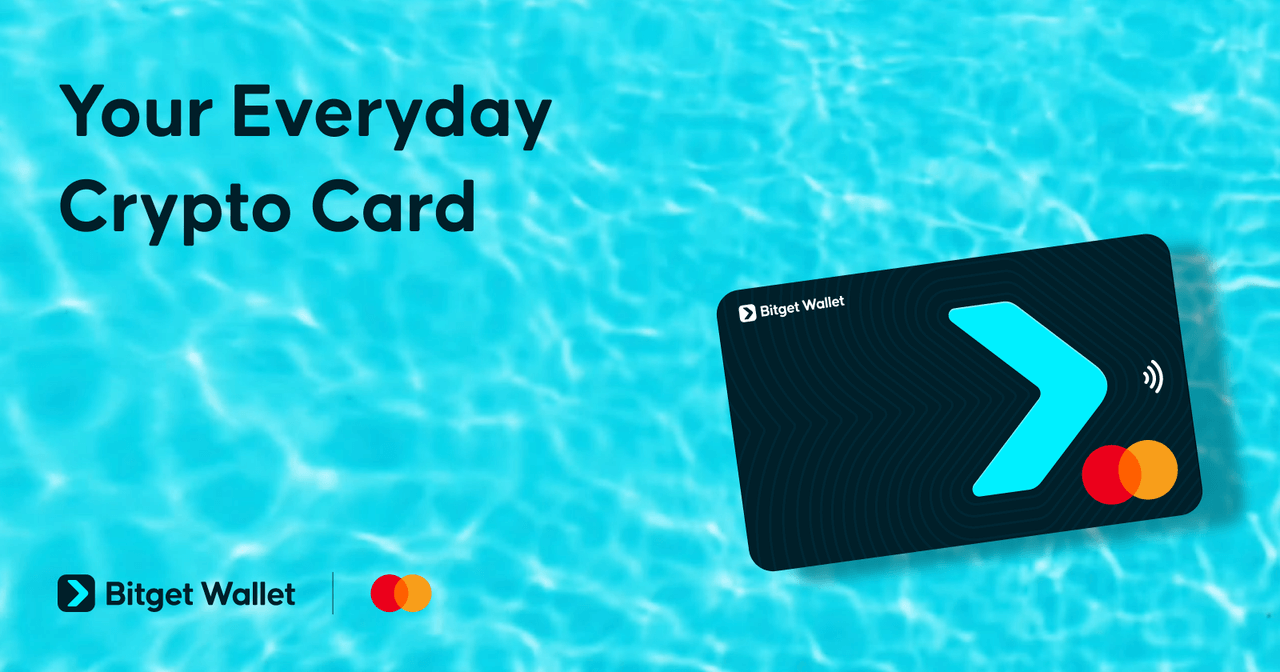
The Bitget Wallet Card is a cryptocurrency debit card issued by Bitget Wallet. Effective August 1, 2026, the company has completely replaced its original “zero-fee” system with “Assetback,” Users can earn up to 3% in rewards on their purchases, and the rewards are not in cash but in the assets of their choice: Bitcoin, gold, tokenized U.S. stocks, or USDC.
This change deserves serious consideration because it directly links “credit card spending” to “asset accumulation.” However, the official terms also specify that cashback does not guarantee a net profit; the actual amount received must first be adjusted to account for currency exchange and conversion fees. This article will break down, in order, the eligibility requirements and regional restrictions, the actual mechanics of the asset cashback program, the real return rate after adjustments, and the complete steps for opening the card.
If you want to earn Bitcoin and other assets while making purchases, you can apply for a Bitget Wallet Card using MB’s referral link. New users can receive up to $20 in rewards when they activate their card:
What is the Bitget Wallet Card? How is it different from the Bitget exchange?
What is the basic operating mechanism of the Bitget Wallet Card?
The Bitget Wallet Card is a cryptocurrency debit card that partners with the Visa or Mastercard payment networks. Users first deposit crypto assets such as USDT and USDC into Bitget Wallet, then transfer funds to their card balance via the app. At the time of purchase, the system instantly converts the crypto assets into local fiat currency to settle the payment with the merchant; for the merchant, the entire process is no different from a standard debit card transaction.
Why do so many people confuse the Bitget Wallet Card with the Bitget exchange?
Bitget Wallet and the Bitget exchange are two separate apps: the former is a self-custody wallet, while the latter is a centralized exchange that requires you to open an account and complete KYC verification. You do not need a Bitget exchange account to apply for a Bitget Wallet Card, and assets between the two platforms are not interchangeable. This is a common misconception in online guides—one that is frequently overlooked but can easily lead newcomers to waste their time.
Will Bitget Wallet's past security controversies affect the security of Card?
Bitget Wallet, formerly known as BitKeep, experienced two security incidents in 2022: one involved an exploit of its Swap feature, resulting in a loss of approximately $1 million; the other was an attack by a fake app, with cybersecurity firm PeckShield estimating the loss at approximately $8 million. At the time, BitKeep promised to compensate affected users in installments via USDT.
It was subsequently acquired by Bitget in 2023 and underwent a rebranding. While this history does not imply that Card itself has any security concerns at present, it is worth honestly disclosing it as a point of reference for readers to assess the platform’s credibility, rather than glossing over it.
Once you understand how it works, if you’d like to try the asset cashback feature right away, you can open an account using MB’s referral link—the system will automatically apply the referral code:
Who is eligible to apply for the Bitget Wallet Card? What are the eligibility requirements and regional restrictions?
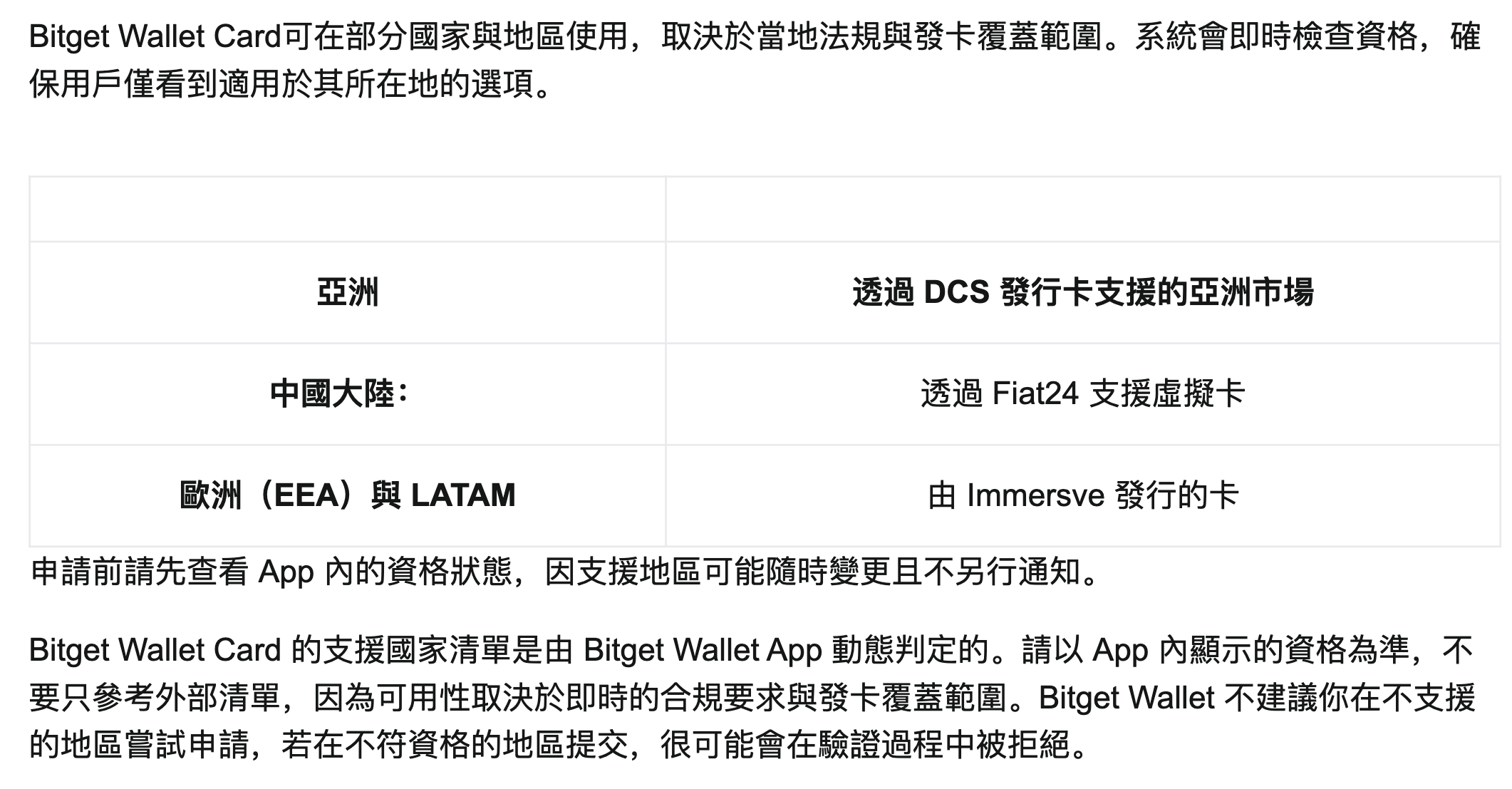
In which regions is the Bitget Wallet Card currently available for application?
According to the list of eligible regions published on the official website, applications are currently open in Europe (the European Economic Area and the United Kingdom), ten countries in Latin America, the Asia-Pacific region (Singapore, South Korea, Japan, Vietnam, Malaysia, Mainland China, Taiwan, Australia, Thailand, and the Philippines), South Africa, as well as Pakistan and Bangladesh. The official announcement states that “more regions will be opened in the near future.” Whether you can actually apply will depend on the results displayed within the app; lists compiled through other channels are for reference only.
What are the differences between card issuers in different regions?
The Bitget Wallet Card is not a single, global product; instead, it is issued by different card issuers depending on the region: In the Asia-Pacific region, Visa cards are primarily issued by DCS Card Centre in Singapore; in mainland China, they are issued through Fiat24, a fintech company regulated by Switzerland’s FINMA; and in Europe and Latin America, they are issued by Immersve. Since the issuing institutions differ, the card network, fee structure, and spending limits may vary. Be sure to refer to the terms and conditions displayed in the app before applying.
What documents do I need to apply for a Bitget Wallet Card?
Before applying, you must first complete the identity verification (KYC) process for Bitget Wallet. Generally, you’ll need to provide a valid government-issued ID; in some regions, only passports are accepted. Please note that only mnemonic phrase wallets or MPC wallets are eligible to apply for the Card. Wallets imported via private keys are not currently supported. If your wallet falls into this category, you will need to create a new wallet before proceeding with your application.
How does the Bitget Wallet Card Assetback mechanism work?
How does asset cashback differ from traditional cashback?
Traditional credit card rewards typically come in the form of cash, frequent flyer miles, or points, which can easily lose value due to inflation, expiration rules, or redemption requirements. Assetback, on the other hand, distributes rewards directly as assets of the user’s choice: Bitcoin, gold (XAUT), tokenized U.S. stocks (NVIDIA, Tesla, Google, S&P 500 products), or USDC, turning every everyday purchase into a small-scale accumulation of assets.
How are the thresholds calculated for the Basic Rewards (2%) and Bonus Rewards (3%)?
All cardholders automatically receive a 2% cashback rate on eligible purchases, and can upgrade to a 3% enhanced cashback rate by meeting the monthly spending threshold. The threshold varies by region: $200 per month for Europe, the United Kingdom, Singapore, South Korea, Japan, Malaysia, Taiwan, Australia, and mainland China; and $100 per month for Latin America, Vietnam, Thailand, the Philippines, South Africa, and Pakistan.
How long does it take to receive the asset cashback? Is there a limit?
Asset cashback is not credited immediately; according to the official guidelines, it becomes redeemable T+7 business days after the purchase, and you must accumulate at least $1 worth of USDC before you can withdraw it. Cashback is also subject to a monthly cap, exclusion rules for specific merchant categories (MCCs), and risk control reviews; refunded, reversed, or canceled transactions are not counted toward the total.
Once you've confirmed that you meet the eligibility requirements, you can apply for the card directly via the link below and claim the new user bonus at the same time:
3%—The rewards sound great, but what’s the actual return you’ll receive?
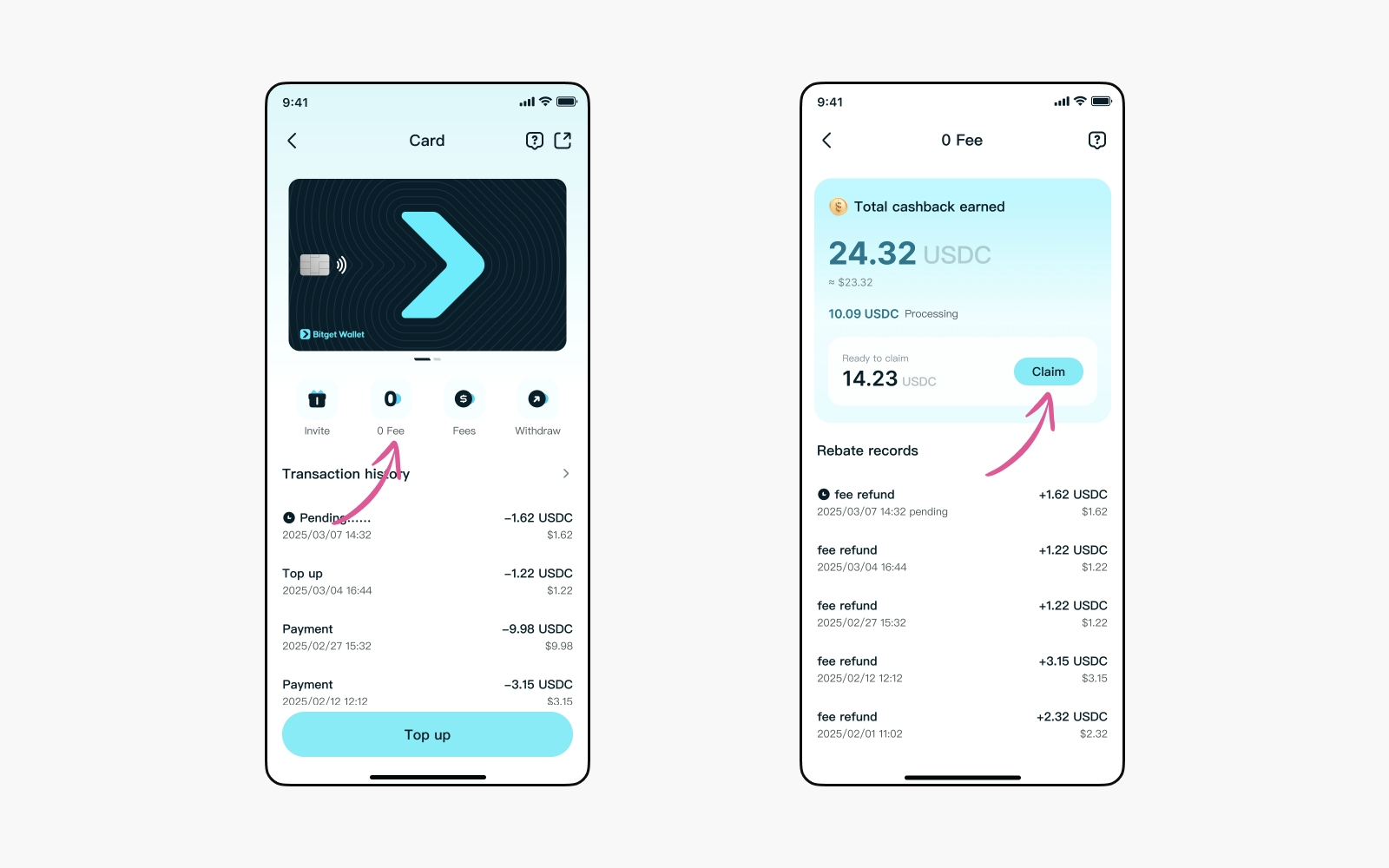
How much of the cashback will be eaten up by fees?
The Bitget Wallet Card charges a foreign exchange fee of approximately 1.7% for non-U.S. dollar transactions, plus a conversion fee of about 0.53%; these costs directly offset a portion of the cashback. The independent review platform Card Pilled once ran a simulation based on $500 in monthly spending, finding that the foreign exchange spread cost was approximately $7.50. After deducting this, the net cashback amounted to about $2.50 per month, which translates to about $30 annually—far lower than the initial impression given by the “3% cashback” claim.
When calculated as an annualized rate of return, is the Bitget Wallet Card a good deal?
If your spending falls within the fee-waiver limit (the old monthly quota of $400 to $600, which has now been converted to the Assetback eligible spending cap), the actual net cashback will be closer to the officially announced range of 2% to 3%; Once this limit is exceeded, the standard rate applies, and the actual cashback rate will be significantly reduced. This means the card offers better value for users whose spending is concentrated within the limit, while high-spending users will need to do their own calculations.
Does asset cashback itself carry any price volatility risk?
Since the rewards are distributed in the form of Bitcoin, gold, or tokenized U.S. stock assets, these assets themselves fluctuate with market conditions and do not constitute a fixed cash rebate. The independent media outlet crypto.news specifically notes that the terms allow for various conversion and foreign exchange fees, and Assetback should not be viewed as a guaranteed net return—this represents a fundamentally different risk structure compared to typical cashback cards.
How do I apply for and activate the Bitget Wallet Card?
What preparations do I need to make before activating my card?
Before you begin the application, make sure you are using the latest version of the Bitget Wallet app, that your wallet type is a mnemonic phrase or MPC wallet, and that you have prepared identification documents that meet local requirements. We also recommend that you have USDT or USDC available in your wallet so that you can activate your card and make your first deposit immediately after passing KYC verification.
What are the detailed steps of the application process?
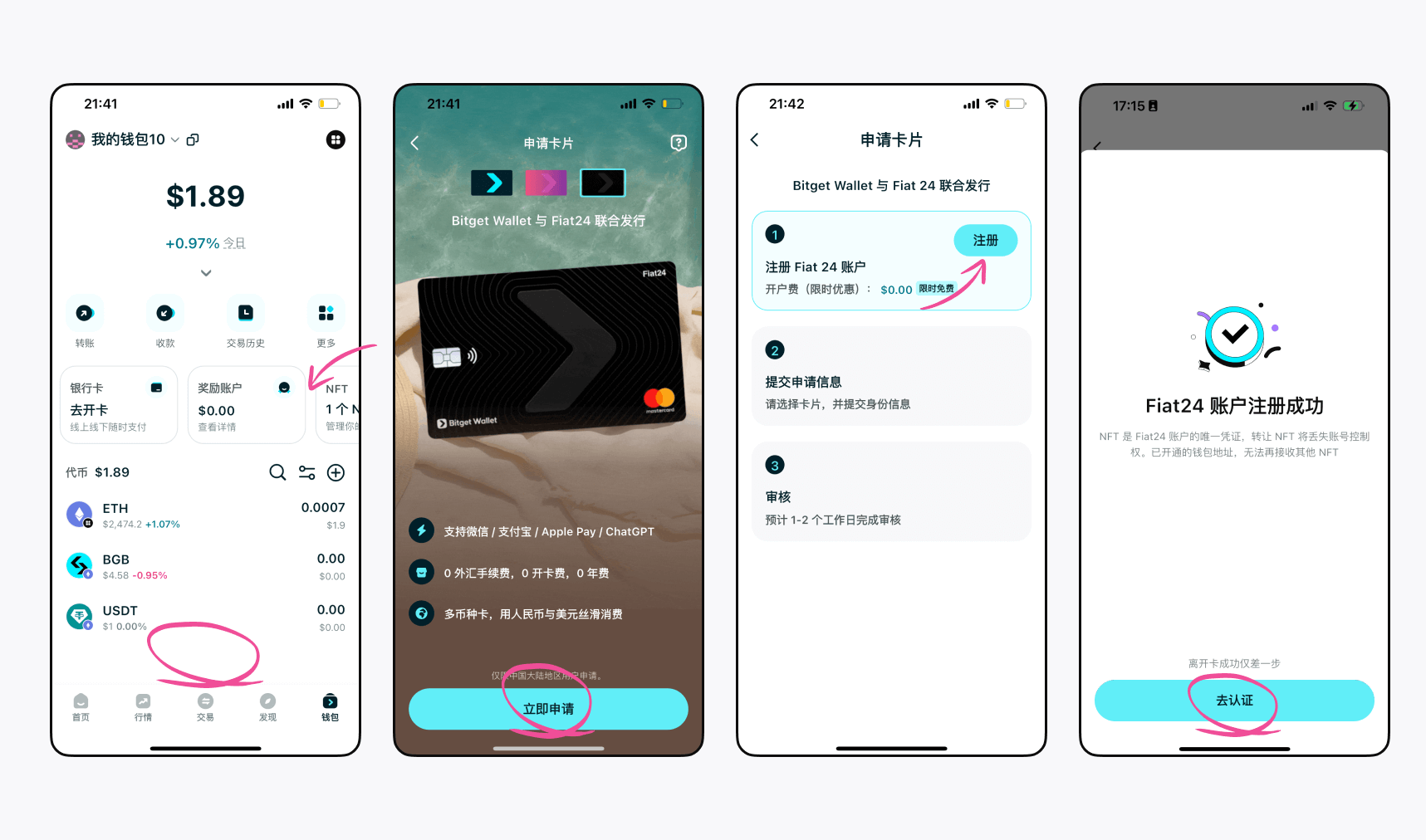
Open the Bitget Wallet app, tap “Wallet” in the bottom navigation bar, then tap “Bank Card” to access the application page. The system will automatically display the card types available for application based on your location. After completing identity verification, provided all required information is submitted, the review process can be completed in as little as 1 minute. Once approved, you can choose between a virtual card or a physical card to proceed with activation.
Virtual cards must be activated by paying 0.1 USDC within 72 hours of passing KYC; if this deadline is exceeded, the activation fee will increase to 10 USD; Physical cards require a payment of $49 (including international shipping), and applications are currently open in nine markets: Singapore, South Korea, Japan, Vietnam, Malaysia, Taiwan, Australia, Thailand, and the Philippines.
How do I claim the up to $20 bonus for new users?
The Bitget Wallet Card is currently running a limited-time promotion. New users who activate their card and make a few qualifying purchases can automatically receive up to $20 in rewards. The actual amount and conditions are subject to the official promotion rules; we recommend checking the latest terms published on the official website before applying. If you’d like to use MB’s referral link to complete the binding process directly, you can do so viaClick the link at the end of the article to sign up for a card, Once you log in, the system will automatically link the invitation code.
Follow the steps above to activate your card. Remember to log in via MB’s referral link—the system will automatically apply the referral code, so you won’t miss out on any rewards:
What other risks and restrictions should I be aware of before using the Bitget Wallet Card?
Does the term “non-custodial” still apply in the context of card transactions?
The Bitget Wallet itself is indeed self-custodial, with users retaining control of their private keys. However, once funds are transferred from the wallet to the card balance, they become part of a separate account managed by the corresponding card issuer. The official FAQ also states that if the wallet is compromised due to the loss of the mnemonic phrase, activated cards can still be used for purchases, but users will no longer be able to top up, withdraw funds, or recover the card account. This means that, at the card level, there is actually a certain degree of third-party custody involved, and it is not 100% self-custody.
What are the mixed reactions to the Bitget Wallet Card in the market?
On the day Assetback went live (July 30, 2026), the official Bitget Wallet account (@BitgetWallet) posted a promotional message on X, emphasizing that users could receive up to 3% tokenized asset rewards on all eligible purchases (Quoted from a report by crypto.news). An independent review agency, however, pointed out from another perspective that the terms and conditions allow for various fee deductions, meaning the actual net rewards are far lower than the stated figures.
Third-party investigations have also indicated that Bitget, the parent brand of the exchange, has faced controversies in the past regarding margin calls during extreme market conditions and complaints about withdrawal delays. While these issues primarily occurred on the exchange side rather than with the Wallet Card itself, as they are products of the same group, readers may wish to take them into account when assessing the level of trustworthiness.
Under what circumstances will asset rebates not be posted to the books?
The official guidelines state that transactions involving specific restricted merchant categories (MCCs), as well as refunded, voided, or canceled transactions, are not eligible for cashback. Amounts exceeding the monthly spending cap will not qualify for the additional cashback rate. We recommend reviewing these details carefully within the app before applying to avoid discovering after making a purchase that the actual cashback is lower than expected.
Conclusion: Understanding the Direction of the Encrypted Payments Sector Through a Single Card
The crypto debit card sector has been growing rapidly in recent years. According to a report by crypto.news, global monthly transaction volume for crypto cards reached $656 million in May 2026, more than doubling from $271 million a year earlier. The Bitget Wallet Card replaces cashback with a choice of assets, which, to some extent, reflects the industry’s shift toward the concept of “spending as investing.”
However, this also means that users need to take asset volatility into account—rather than simply comparing the percentage of rewards. The key factor in determining whether this card is a good deal has never been the surface-level “3%” figures, but rather whether your actual spending habits fall within the fee-waiver threshold and whether you can accept the price fluctuations of the rewards assets themselves.
After evaluating the risks and limitations, if you decide this card is right for you, you can apply for it here and receive a new-user bonus of up to $20:
Frequently Asked Questions (FAQ)
Q1: Is the Bitget Wallet Card the same as the Bitget Exchange credit card?
A1: No. The two are issued by different apps, and their funds and accounts are not linked. Starting in August 2026, new applications will be uniformly directed to the Bitget Wallet Card.
Q2: Can users in Hong Kong apply for a Bitget Wallet Card?
A2: As of the time of this update, Hong Kong is not listed on the officially published list of eligible regions. Please refer to the application portal displayed within the app for the most up-to-date information.
Q3: Is Assetback asset rebates always a better deal than cashback cards?
A3: Not necessarily. Reward assets fluctuate with the market, and transaction fees will offset a portion of the rewards, so the actual net value can only be determined after calculating your individual spending amount.
Q4: Do I have to use my passport to apply for a Bitget Wallet Card?
A4: Some regions only accept passports, but the actual requirements depend on your location and the card issuer. We recommend checking local eligibility requirements within the app before applying.
Q5: If I lose my wallet's mnemonic phrase, can I still use the card?
A5: Activated cards can still be used for purchases, but you can no longer top them up, withdraw funds, or recover the card account. Be sure to keep your mnemonic phrase in a safe place.
This article is intended solely to explain product mechanisms and share information; it does not constitute investment advice. The prices of crypto assets and tokenized assets are highly volatile. Please assess the risks on your own before applying for or using these services, and refer to the latest terms and conditions displayed in the Bitget Wallet app.
Apply Now
Apply for the Bitget Wallet Card via the link below. Once you log in, the referral code mbhkcrypto1 will be automatically applied. New users who activate their card and complete eligible purchases can receive up to $20 in rewards (subject to the latest official terms and conditions):