

What is an AI Agent? Why is it linked to cryptocurrency?
ChatGPT and other chat-based AI tools operate on a question-and-answer basis: you ask a question, it gives you an answer, and whether or how you act on that answer is still up to you.
What sets an AI Agent apart is that it “gets things done.” You give it a goal, and it breaks down the task on its own, finds the necessary tools, calls on external services, and completes the entire process within the scope of your authorization.
Let's take booking a flight as an example:
| Steps | Chat AI | AI Agent |
|---|---|---|
| Search Flights | possible | possible |
| Compare Prices and Time | possible | possible |
| Calling Multiple Ticket Booking Systems | I can't do it | possible |
| Pay within the budget | I can't do it | Ability to Pay |
| Add the flight to your itinerary | I can't do it | possible |
The problem lies in the payment step. AI doesn’t have a credit card, and it’s not feasible to have a human log into online banking, enter a verification code, and accept the terms every single time a payment is made. If, in the future, there are millions of AI agents operating autonomously online—purchasing data, renting GPUs, paying API fees, and even buying and selling assets—they will need a system of bank accounts, payment networks, identity verification, and trading markets designed specifically for “machines.”
Cryptocurrencies happen to offer several of these:
- wallet: Anyone can open one—no ID card or branch office required.
- Stabilized Currency: Tokens like USDC, which are pegged to the U.S. dollar, allow machines to make payments using a stable unit of value.
- On-chain settlement: Even small payments of just a few Mei Xian can be processed instantly, without going through traditional card networks.
- On-Chain Identity and Records: Every transaction is publicly verifiable and can be used to establish an Agent's credit history.
So the real theme of this sector isn’t “a new batch of tokens with ‘AI’ in their names,” but rather AI Agent Economy (Agent Economy): AI has evolved from a tool for answering questions into an economic participant capable of managing budgets, purchasing services, managing assets, and conducting business with other agents.
A Question More Important Than “Which AI Coin Will Rise?”
Throughout the entire article, the discussion keeps circling back to the same question:Which essential component of the agent economy does this project control? And can its token retain the revenue generated by that component?
Product success and token appreciation are two separate things. Even if a protocol’s usage increases tenfold, the token may not necessarily benefit from it unless there is a clear mechanism in place—such as buybacks, token burns, staking requirements, or fee sharing—to return value to the token. Each of the following case studies will be analyzed from this perspective.
Set up your trading account first so you can track the tokens mentioned in this article as you read:
How to Participate in the AI Agent Track: Steps from Opening an Account to Placing an Order
Among the key token examples mentioned in this article, VIRTUAL, TAO, GRASS, PAYAI, PONS, IO, and others are MEXC All platforms offer USDT spot trading pairs (confirmed on September 25, 2026). Here are the basic steps from opening an account to placing an order.
First, decide how you want to participate.
There are roughly three ways to get involved in this sector, ranked from lowest to highest risk:
- Large-Cap Representatives: For example, TAO and VIRTUAL have relatively good liquidity; while price volatility remains high, it’s not to the point where you can’t sell after buying.
- Medium-sized projects with revenue-generating mechanisms: For example, with PONS and GRASS, you need to track your revenue data yourself.
- Small-Cap Eco-Projects: With a market capitalization of only a few million dollars or even less, daily trading volume may be as low as a few hundred dollars; they are easy to buy but difficult to sell.
We recommend that beginners start with only the first category and invest only an amount they can afford to lose in its entirety.
Five Steps from Opening an Account to Placing an Order
- Sign up for MEXC: Through MEXC Registration Link Open an account and complete identity verification as instructed.
- Prepare USDT: Use one of the deposit methods supported on the platform’s “Buy Cryptocurrency” page, or transfer USDT from your own wallet. Available deposit methods vary by region; please refer to the platform’s real-time display for details.
- To obtain a deposit address (e.g., when transferring from a wallet): On the "Assets" page, tap "Deposit," select USDT and the same network as your wallet, then copy the address. Start by transferring a small amount first; once the funds have been credited, transfer the remainder.
- Confirm Funds Have Been Credited: On the "Assets" page, verify that USDT has been credited to your spot account.
- Search and Place an Order: Search for the token name on the spot trading page (for example, enter “VIRTUAL”), select the USDT trading pair, and use a limit order to set the price you’re willing to pay. Not every token has a spot trading pair, so be sure to check the search results before placing an order.
Once you're done, we recommend adding the token name to your watchlist and regularly checking its data against the “Watchlist” section later in this article, rather than just looking at the price.
Before placing an order, do two things:
- View 24-Hour Trading Volume: Tokens with very low trading volume may have to be sold at a significant discount.
- Examining the Gap Between Market Capitalization and Fully Diluted Valuation (FDV): The larger the gap, the more tokens will be unlocked and enter the market in the future.
For more details on cryptocurrency conversions, please refer to USDT Transfer Guide。
Once you've opened an account, you can follow the checklist in this article to gradually build your watchlist:
A Six-Layer Market Map of the AI Agent Economy
These projects are not in competition with one another; rather, they each contribute different types of infrastructure to the concept of “AI as an economic participant.” This can be understood through a six-layer framework:
| Level | Issues to Be Addressed | Representative Projects | Tradable tokens |
|---|---|---|---|
| disbursement | How does AI pay for itself? | x402, PayAI | PAYAI (x402 does not have its own token) |
| Business and Collaboration | How do Agents find other Agents, jobs, and clients? | Virtuals, Olas | VIRTUAL, OLAS |
| On-Chain Finance | How does AI hold and manage financial assets? | Robinhood Chain, Pons | PONS (The chain itself does not have a native token) |
| Smart | Who provides the "brain" for AI? | Bittensor | TAO |
| Computing Power | Where does the agent run? | Akash, io.net | AKT, IO |
| Data | Where does AI get its data? | Grass, Sahara AI | GRASS, SAHARA |
The rightmost column in the table is particularly important:Many popular narratives do not have their own tokens.. x402 is an open payment standard with no official token; Robinhood Chain uses ETH for gas fees and also has no native token representing the entire chain. After identifying a promising narrative, you still need to pinpoint the specific point in the process where you’ll actually receive the money.
The following six case studies are all analyzed using the same framework:
- Facts That Have Already Occurred: Revenue, Users, Transaction Volume, Partnerships.
- The Future the Market Is Buying: Becoming a standard, becoming a settlement asset, becoming a data provisioning layer, etc.
- Value Capture Paths: How is product revenue converted back into tokens?
- Confirmation Signal: What data indicates that the story is shifting toward fundamentals?
- Failure Conditions: When this situation arises, it means the original logic no longer holds.
All market capitalization, trading volume, and revenue figures in this article are based on a snapshot taken on September 25, 2026. Market conditions change rapidly; please refer to real-time data before placing an order.
Payment Layer: x402 and PayAI—How Can AI Pay for Itself?
What is x402?
x402 is an open payment standard spearheaded by Coinbase, named after the “402 Payment Required” status code—a code that has never been widely used in web protocols. It works by embedding payment requests directly into communications between software systems: an AI agent requests a service, the service responds with “Payment of $0.01 required,” and the agent receives the result immediately after paying with a stablecoin—all without the need for accounts, subscriptions, or manual checkout.
This makes pay-per-use micro-transactions feasible and serves as the starting point for the entire Agent economy narrative.
Facts That Have Already Occurred
According to the September 2026 report from x402stats, a website that tracks x402 data:
- Total payments over the past 30 days amounted to approximately $1.4 million, of which approximately $1.2 million was classified as organic transactions.
- Only 78 sellers met the criteria for genuine merchants, a decrease of 46 from the previous month.
- There are approximately 3,100 payment agents per day, but the top 10 wallets by transaction volume account for about 79%.
- In terms of settlement facilitators, Coinbase accounts for approximately 46%, while PayAI accounts for approximately 23%.
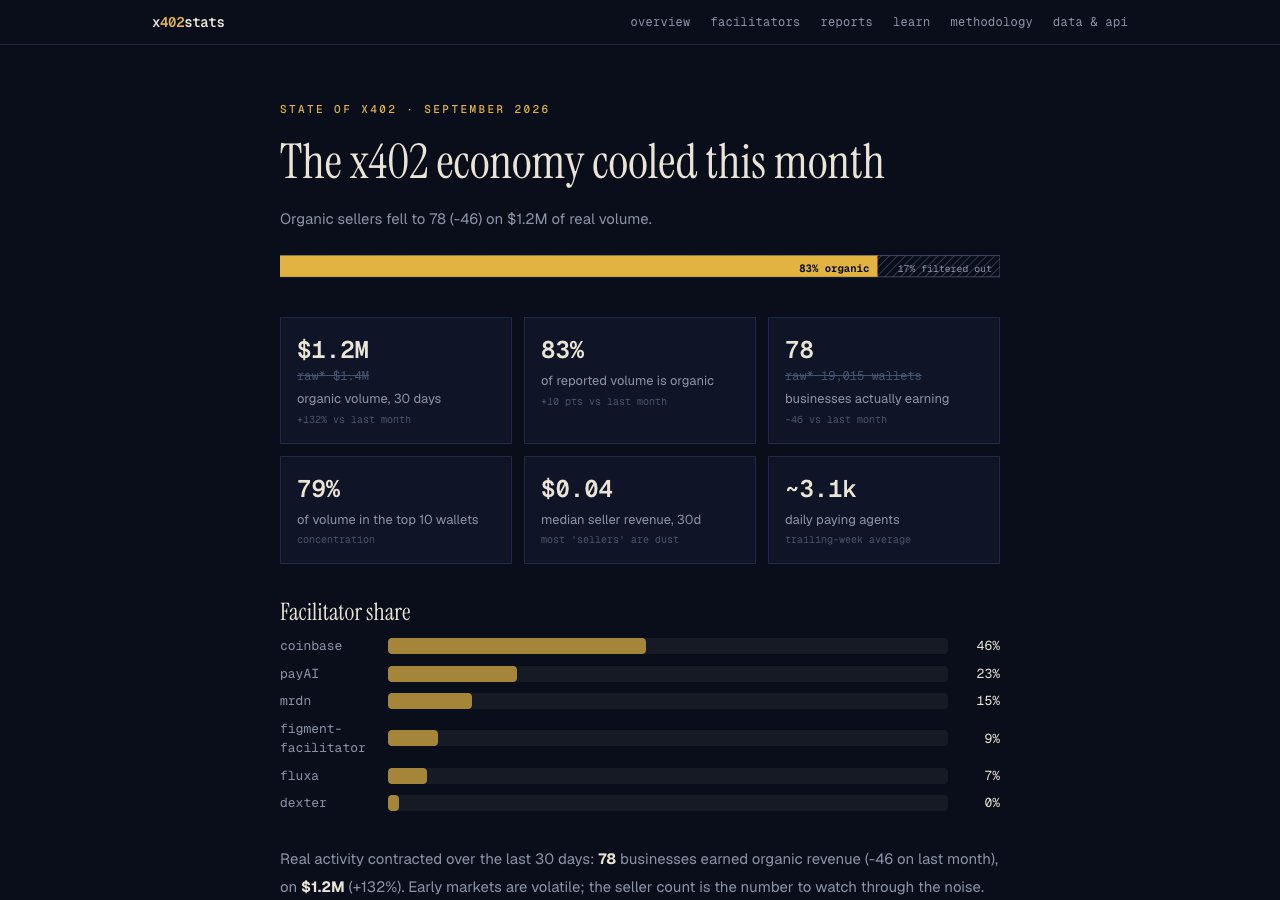
In other words, while there is genuine payment activity on x402, the number of merchants is declining and transactions are highly concentrated. At present, it resembles an early stage of market exploration, and it has not yet been demonstrated that a large number of AI agents have a sustained, indispensable need for payments.
PayAI: One of the few tokens in the x402 category that can be studied directly
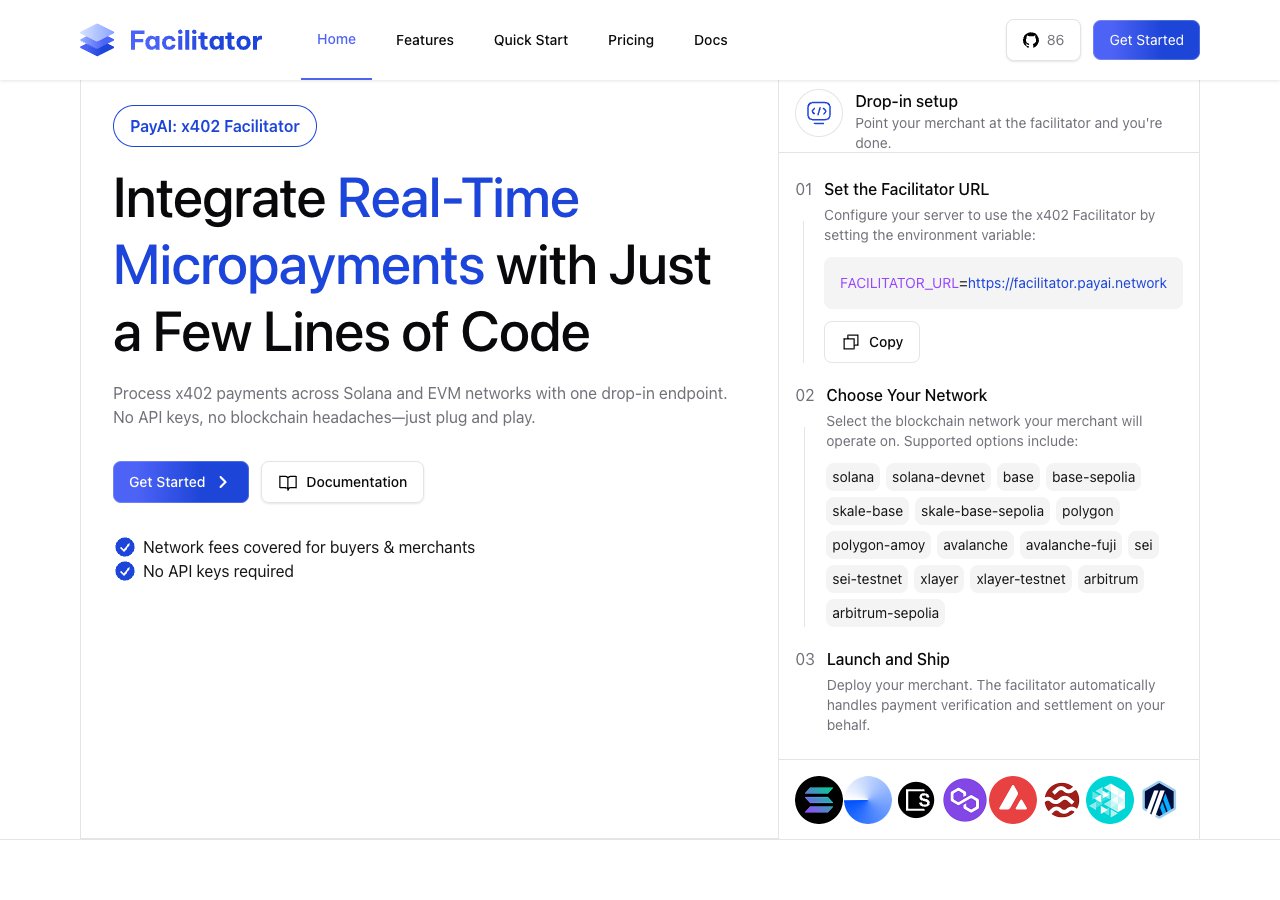
PayAI is x402’s settlement processor; it is responsible for verifying payments on behalf of payment collection services and submitting on-chain settlements, supporting multiple blockchains including Solana, Base, Polygon, and Arbitrum. It does not merely borrow the x402 name but is truly integrated into the payment process.
- market value: Approximately $11.5 million; the circulating supply is already close to 1 billion of the total supply, so future unlocking pressure is relatively low.
- Value Capture Paths: More x402 merchants → More settlement options → PayAI charges a processing fee → PAYAI tokens are used in the fee structure.
- Points to Note: PayAI’s early pricing model charged $0.001 per transaction, with discounts available when purchasing credit using PAYAI; however, the latest developer page has switched to a pricing model based on “actual gas costs plus a processing fee.” The importance of the token under this new pricing model requires ongoing verification.
What Are the Bulls Really Betting On?
Bulls aren't buying into the current monthly payment volume of over $1 million; rather, they're buying into an option: if AI agents ultimately do require native payments, and PayAI can maintain a double-digit market share outside of Coinbase, then every machine payment processed through it could generate revenue for the company.
Confirmation Signals and Failure Conditions
- Confirmation Signal: The number of genuine merchants has rebounded; the proportion of agents with duplicate payments has increased; the market share of the top ten wallets has decreased; and PayAI’s settlement share has remained stable.
- Failure Conditions: A decline in genuine merchants, duplicate payments, and payment revenue for several consecutive quarters; or an increase in PayAI usage, but a new pricing model that no longer requires PAYAI tokens at all, resulting in a scenario where “the product succeeds, but the token fails.”
I want to check PAYAI's trading volume and liquidity on the exchange before deciding whether to add it to my watchlist:
Business Level: Virtuals and Olas—How Do AI Agents Conduct Business with Each Other?
What Are Virtuals?
Virtuals began as a platform for issuing AI Agent tokens and later expanded to facilitate commercial collaboration among Agents by launching the Agent Commerce Protocol (ACP), which enables Agents to purchase services from other Agents.
The roles of the VIRTUAL token within the ecosystem include: liquidity pools for each Agent token are paired with VIRTUAL; trades of Agent tokens are routed through VIRTUAL; and VIRTUAL can be staked as veVIRTUAL to gain governance rights and eligibility for ecosystem rewards.
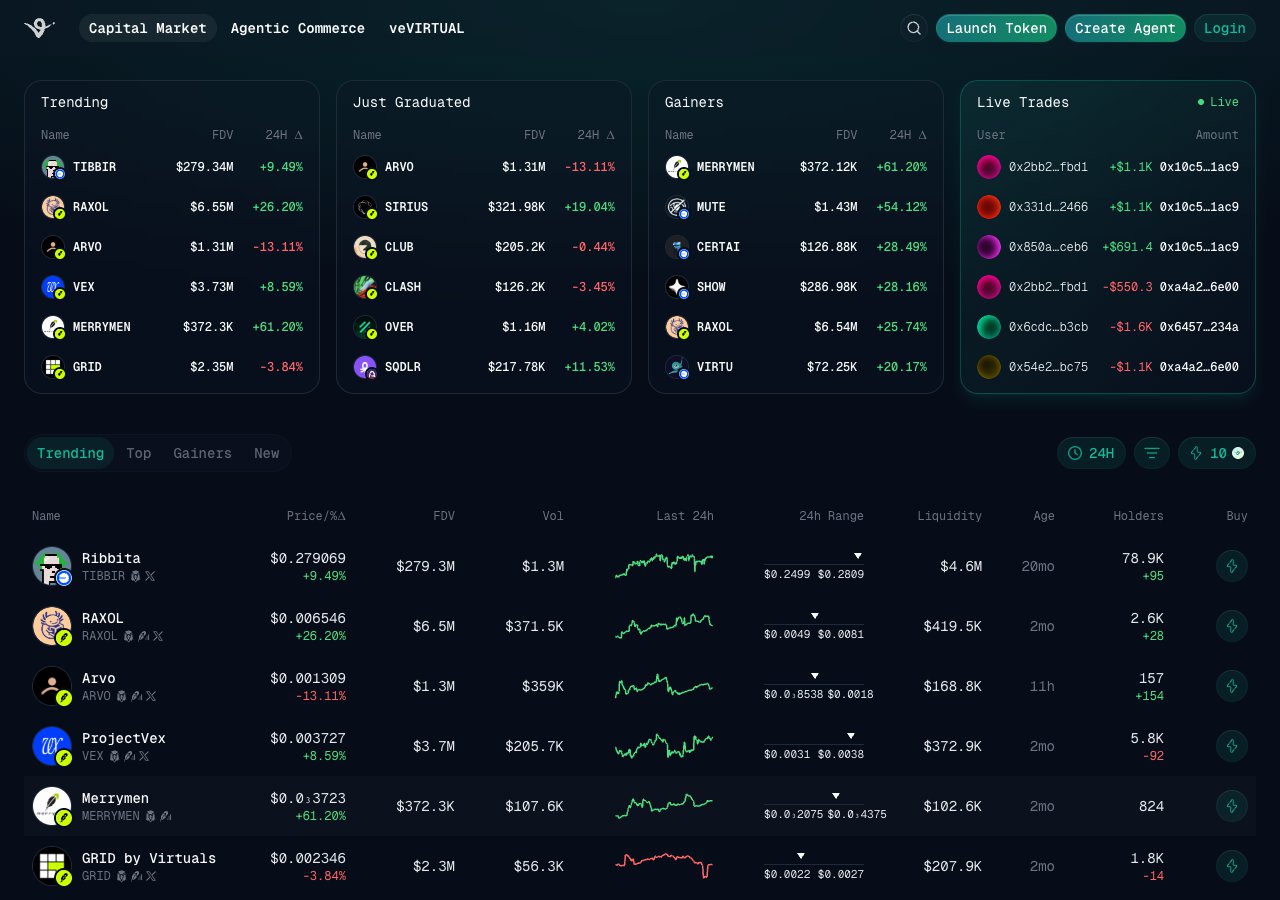
- market value: Approximately $525 million, with an FDV of approximately $798 million and a 24-hour trading volume of approximately $120 million.
- Contract Revenue: According to DefiLlama, approximately $668,000 over the past 30 days, with a cumulative total of approximately $74.1 million, primarily from Robinhood Chain and Base.
Just because a protocol generates revenue does not mean that token holders receive income.
DefiLlama currently reports “token holder revenue” for Virtuals as zero. This does not mean that VIRTUAL has no utility, as it still serves as a pairing asset and routing currency; however, readers should keep the following in mind:Making Money Through Agreements和VIRTUAL holders receive payments directly...are not the same thing at this time.
The value of VIRTUAL stems primarily from the network effects of “ecological currency”: the more Agent tokens, Agent services, and transactions between Agents that pass through VIRTUAL, the greater the market demand for it.
What Are the Bulls Really Betting On?
The market is not buying a token issuance platform; rather, it is buying VIRTUAL as the base currency and coordinating asset of the Agent economy. This requires two conditions to be met simultaneously: revenue must gradually shift from “issuing new tokens” to genuine Agent business activities; and within these activities, VIRTUAL must remain an essential payment or routing asset.
Confirmation Signals and Failure Conditions
- Confirmation Signal: An increase in the proportion of non-token-related revenue, growth in ACP trading volume, an increase in the number of users who repurchase services, and a rise in the proportion of tokens locked as veVIRTUAL.
- Failure Conditions: If revenue continues to rely on new Agent token issuances, the valuation framework should be downgraded from “Agent economic infrastructure” to “token issuance platform”; or, if ecosystem transaction volume grows but payments and routing gradually shift to USDC, VIRTUAL’s value capture will need to be reassessed.
Counterexample: How much are Olas's 14.7 million transactions worth?
Olas is another protocol that enables Agents to deploy, collaborate, and trade services; its Mech Marketplace allows Agents to purchase services from other Agents. Its statistics are well-suited to illustrate a common misconception:
| Indicators | Numbers |
|---|---|
| Agent's Cumulative On-Chain Transactions | Approximately 20.65 million entries |
| In particular, Agent-to-Agent transactions | Approximately 14.7 million entries |
| Total Historical Payments on Mech Marketplace | Approximately $109,000 |
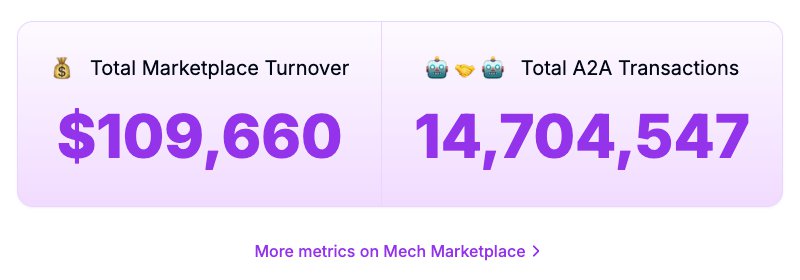
With over 10 million transactions, the actual payments involved were only in the range of $100,000. Transactions between machines can naturally be very frequent, butThe number of transactions does not equal economic value...Ultimately, what matters is the actual amount of money changing hands.
Olas has significantly reduced the annualized return on staked emissions from over 1,001 TP3T in the early days to approximately 51 TP3T, and has begun charging market fees; a portion of the fees denominated in OLAS will be burned. OLAS has a market capitalization of approximately $11.9 million, with 24-hour trading volume of only about $170,000; its liquidity is far lower than that of VIRTUAL. Key metrics to watch include whether market payments grow faster than the number of transactions and whether the amount burned can offset emissions.
If you want to track the price movements of VIRTUAL and other Agent tokens on an exchange:
On-Chain Finance Layer: Robinhood Chain and PONS—Is AI Starting to Manage Assets?
Why Did Robinhood Chain Enter the AI Agent Space?
Robinhood Chain is an Ethereum Layer 2 network launched by Robinhood, with a focus on tokenized stocks, DeFi, and AI-native financial applications. If AI agents are to move beyond simply purchasing via APIs to holding, trading, and managing assets on their own, they will need an environment that includes stablecoins, tokenized stocks, lending, and exchanges—and Robinhood Chain is designed precisely with this in mind.
Robinhood Chain has released some impressive figures: cumulative DEX trading volume of approximately $34.6 billion, 576 million trades, 12.3 million addresses, and over 190 tokenized stocks (as of early September 2026). These figures were released by company sources; however, some of the statistical methodologies have not been fully disclosed, and the data has not undergone an independent audit. Additionally, gas fee subsidies were in place during the platform’s early launch phase. Therefore, these figures should be viewed as “early-stage activity” rather than confirmed long-term demand.
Robinhood Chain uses ETH for gas fees and has no native token. If you’re bullish on this chain, areas worth exploring include HOOD stock, ETH, the Arbitrum tech stack, and on-chain utility tokens. Beginners can start by checking out The Complete Beginner's Guide to Robinhood Chain。
PONS: One of the Most Direct Examples of Value Capture
Pons is a token issuance platform on the Robinhood Chain. While it is not a purely AI-based protocol, because the Robinhood Chain encompasses both on-chain finance and AI agent narratives, Pons has become the primary gateway to the wealth effects of the entire ecosystem.
- market value: Approximately $452 million, with 24-hour trading volume of approximately $60 million. The data sources for circulating supply and FDV are not consistent; please verify the figures yourself before placing an order.
- Revenue for the Third Quarter of 2026(DefiLlama): Total protocol revenue was approximately $172 million, gross profit was approximately $31.9 million, and net revenue for token holders was approximately $18.9 million.
A project with a market capitalization of $450 million and quarterly revenue of $172 million—this ratio seems unusual, so we need to break it down first:
- Total Revenue Is Not Profit: The $172 million represents the total transaction fees processed by the platform, the majority of which will be distributed to token issuers and liquidity providers or used to cover costs; the gross profit actually retained by the protocol is approximately $31.9 million.
- Revenue from the cryptocurrency boom: These fees are primarily generated by new token offerings and speculation, and Robinhood Chain is currently experiencing a peak in popularity during its early launch phase. As popularity wanes, revenue will decline accordingly.
- Buyback and destruction is a genuine mechanism: DefiLlama shows that approximately 80% of revenue was used to repurchase and burn PONS, representing the most direct conversion of product revenue into tokens among all the examples in this article.
Value Capture Paths:
Increased Activity on the Robinhood Chain
→ More on Token Issuance and Trading
→ Pons charges a service fee
→ Proceeds from the agreement will be used to repurchase PONS
→ PONS was destroyed, resulting in a decrease in supply
What Are the Bulls Really Betting On?
Bulls are betting that Robinhood Chain’s popularity will endure once the subsidies and initial novelty wear off, and that PONS will be able to maintain its market share in the token issuance platform sector. PONS is a case of “strong value capture, but also strong cyclicality”: its cash flow is not guaranteed under all market conditions.
Confirmation Signals and Failure Conditions
- Confirmation Signal: On-chain activity remains stable following the end of the gas subsidy; Pons' token issuance volume remains consistent with 30-day transaction fees; buybacks and burns continue; and the return rate of token issuers is on the rise.
- Failure Conditions: Activity on the Robinhood Chain remains high, but Pons' market share is being eroded by other platforms; or, if Pons' trading volume is cut in half, buybacks will decrease accordingly.
Comparison: VIRTUAL and PONS
VIRTUAL is closer to a pure agent economy, but the direct income for token holders is unclear; PONS isn’t quite as “AI”-driven, but the path from transaction fees to buybacks and burning is very straightforward."More AI" does not mean "tokens are better at capturing value."。
Intelligence Layer: Bittensor (TAO)—Who Provides the “Brain” for AI?
What is Bittensor?
Bittensor aims to create a marketplace for buying and selling “digital intelligence.” The network consists of multiple subnets, each of which provides a specific type of AI capability—such as model inference, data processing, or specific tasks—and the subnets compete with one another to distribute rewards. TAO serves as the reserve and coordination asset for the entire subnet economy, and each subnet also has its own alpha token.
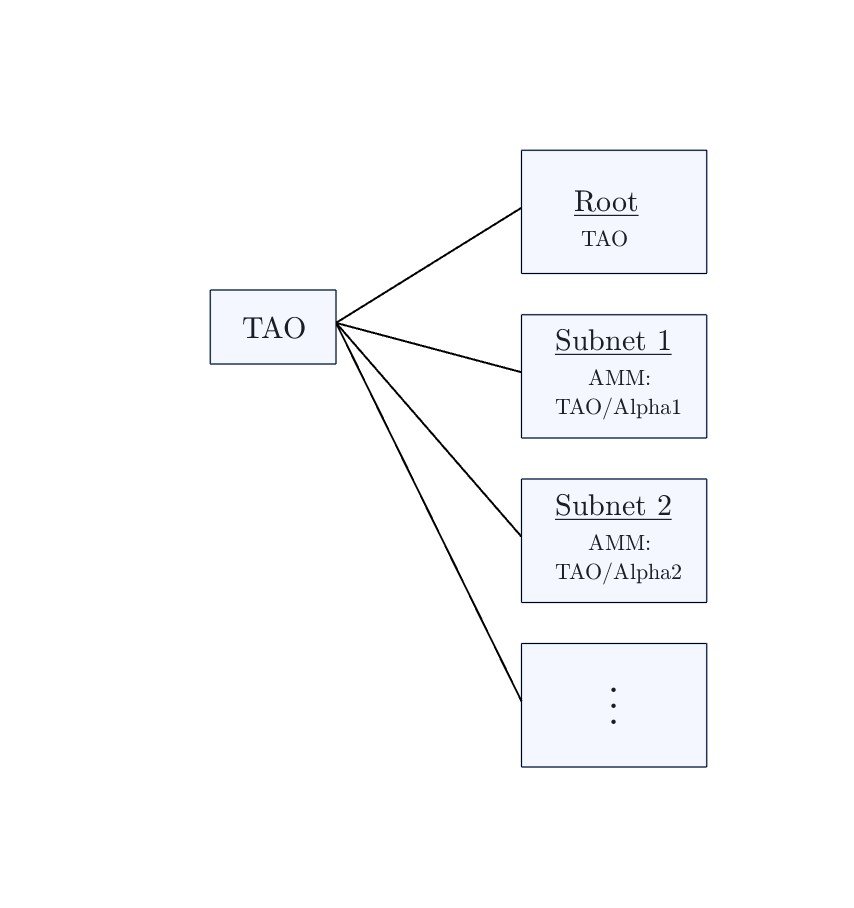
- market value: Approximately $3.6 billion, with an FDV of approximately $6.67 billion and a 24-hour trading volume of approximately $367 million; it is the crypto asset with the largest market capitalization among all the examples in this article.
Changes in the Token Economy in 2026
- Dynamic TAO: The allocation of emissions to subnets will shift from being based on the subjective weightings of past validators to relying more heavily on the market price of the subnet’s token.
- Emissions Standards Tightened: Emissions from weaker subnets are reduced more rapidly, thereby minimizing cases where rewards are claimed purely for holding a position.
- Root Reborn Upgrade: TAO staked on the Root Network is closer to productive capital. As of July 2026, approximately 5.4 million TAO were staked on the Root Network, accounting for about 47.9% of the TAO minted at that time.
What Are the Bulls Really Betting On?
Bulls aren’t betting on the idea that “the AI market is huge, so TAO will rise”; rather, they’re betting that if decentralized intelligence ultimately does form a market where different subnets compete to provide valuable AI capabilities, TAO will become the reserve asset for the entire subnet economy.
The biggest challenge in this research is:Of the current valuation of the subnet, how much is supported by actual payments from external customers, and how much is supported by internal circulation through emissions, staking, and token speculation?
Confirmation Signals and Failure Conditions
- Confirmation Signal: Increased public or verifiable external revenue in leading subnets, growing demand for paid APIs, less concentration of emissions, and high-valuation subnets maintaining usage levels even after rewards decline.
- Failure Conditions: While the price and supply of Subnet tokens have been rising over the long term, there has been no corresponding revenue from external customers. This suggests that Bittensor is closer to a highly financialized rewards market than to a mature decentralized AI economy.
Before you get ready to study TAO, set up your trading account first:
Computing Power Layer: Akash (AKT) and io.net (IO)—Where do Agents run?
Akash: The Clearest Example of Value Capture in Hashrate
Akash is a decentralized computing power marketplace that allows users to rent computing resources distributed across various providers.
- market value: Approximately $209 million, with a 24-hour trading volume of approximately $10 million.
- Real-world use: According to the official Q1 2026 report, the network’s cumulative computing power expenditures exceeded $5 million. Given a market capitalization of $200 million, the market is clearly pricing in future demand rather than current revenue.
The most significant change for Akash in 2026 is the Burn-Mint Equilibrium (BME) mechanism, which went live on March 23. Previously, users could pay computing power fees directly with stablecoins, which was convenient but meant that an increase in usage did not necessarily drive up demand for AKT. The BME mechanism now works as follows:
Users Purchase Computing Power
→ The system retrieved the AKT and destroyed it
→ Minting ACT computing power quotas pegged to the U.S. dollar
→ ACT is used for settlement
→ Suppliers receive a stable value
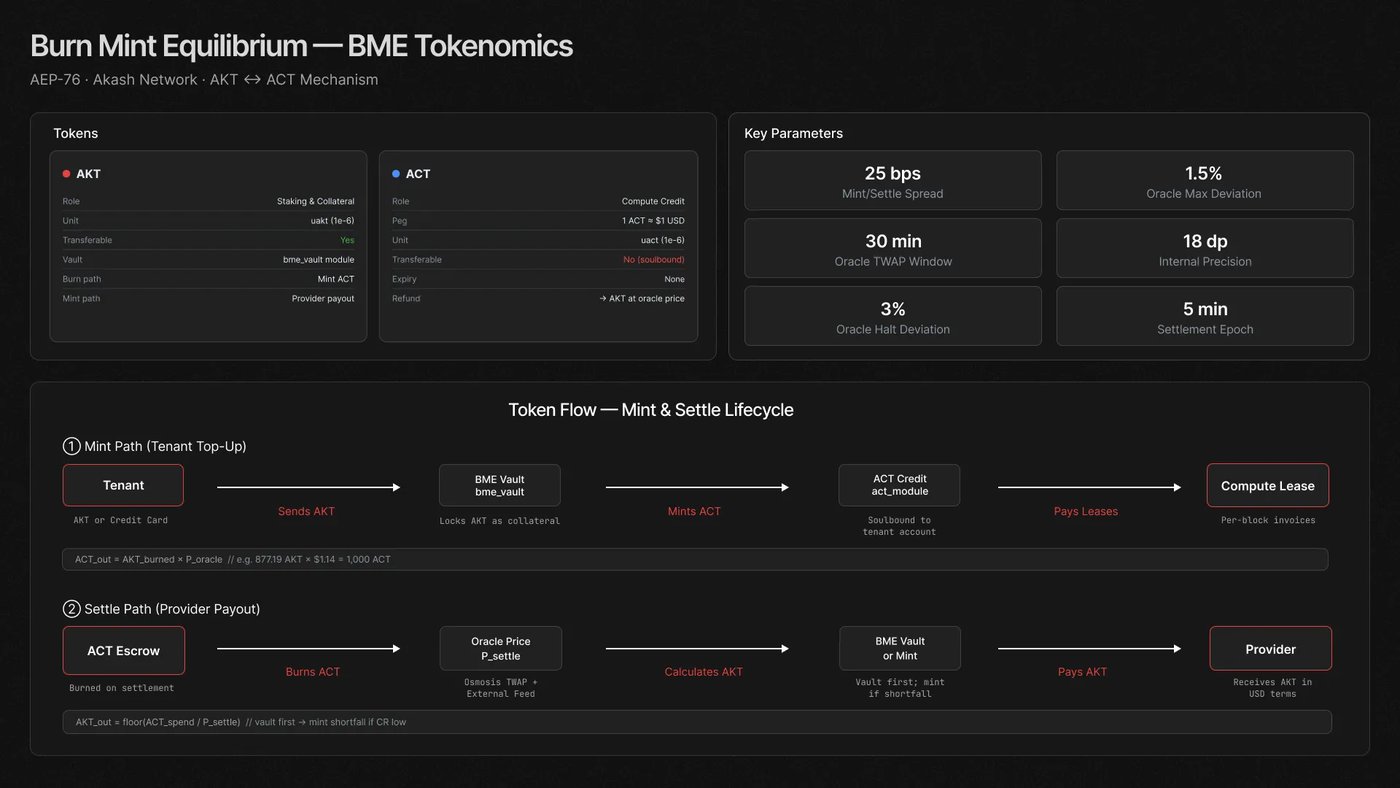
The official definition of BME is "directly linking network demand to AKT scarcity." Every dollar spent on computing power will have a more direct impact on AKT.
Please note: As of September 25, 2026, AKT does not have a spot trading pair on MEXC. If you wish to trade it, you should first check whether it is listed on other exchanges.
io.net: as a control group
io.net also provides decentralized GPU computing power, with a focus on AI workloads and enterprise needs.
- market value: Approximately $66.7 million, with an FDV of approximately $134 million.
- Business Data: According to an official review in June 2026, the platform's cumulative corporate revenue totaled approximately $8 million.
The division of labor between the two is clear: AKT is used to understand “how to return computing power usage to the token,” while IO is used to assess “whether another computing power network has stronger corporate demand.”
What Are the Bulls Really Betting On?
Decentralized computing power can capture genuine paid demand, and BME ensures that every dollar spent translates into demand for AKT. The counterargument is equally important: Growth in AI computing demand does not necessarily mean that decentralized computing power will be able to take customers away from AWS, Google Cloud, and Azure. Enterprises will still prioritize stability, GPU supply, latency, and service guarantees.
Confirmation Signals and Failure Conditions
- Confirmation Signal: Monthly computing power expenses are accelerating; paid GPU hours and utilization rates are rising; the number of repeat customers is increasing; and BME’s AKT burn volume and ACT minting volume are growing in tandem.
- Failure Conditions: Computing power expenditures have plateaued. No matter how well BME is designed, it merely channels a very small revenue stream more efficiently into tokens.Token economy design cannot replace product demand。
Data Layer: GRASS—Who Feeds the AI Its Data?
What is Grass?
Grass collects data from public web pages through a decentralized network of users, organizes it into data products, and sells them to AI companies and enterprise clients. This addresses a very traditional business problem: AI requires vast amounts of data, and there are people willing to pay for it.
- market value: Approximately $357 million, with an FDV of approximately $527 million and a 24-hour trading volume of approximately $70 million.
Facts That Have Already Occurred (Disclosed by the Company Itself)
The following figures are from Grass’s July 2026 tokenholder meeting; they are voluntary disclosures by the company and do not constitute audited financial statements:
- Clients include large private AI companies and Fortune 100 companies.
- Revenue from training data alone is projected to reach approximately $65 million to $75 million in 2026.
- Monthly cash expenditures are approximately $2 million to $3 million, and the business is already profitable.
- Contributor rewards in Phase 2 will be distributed in USDC, funded by network revenue, rather than through the issuance of additional GRASS.
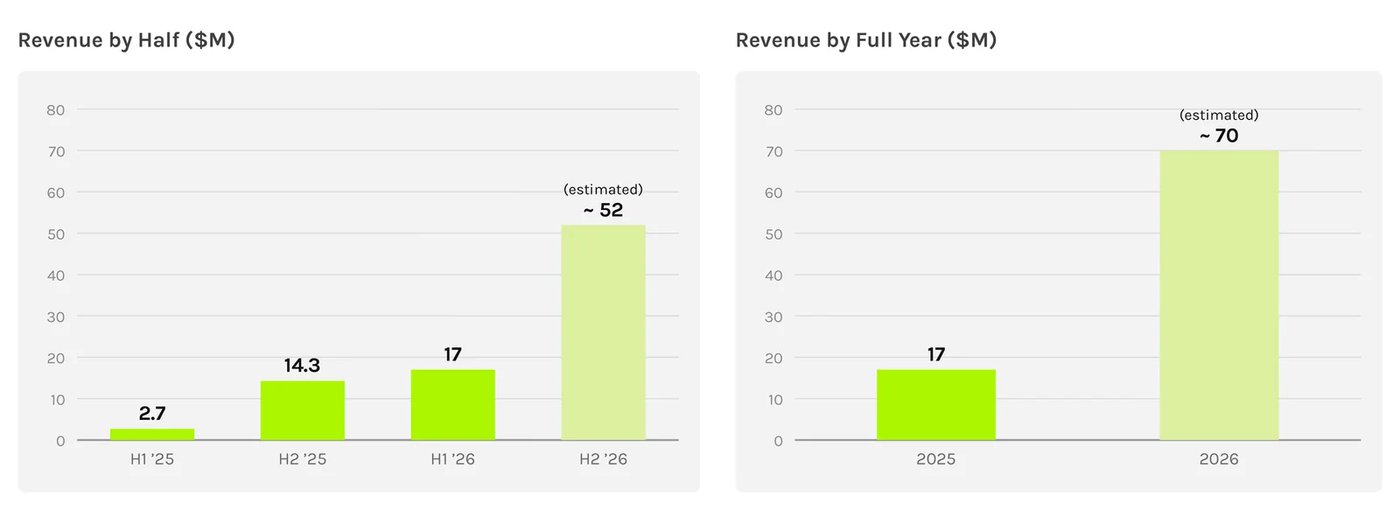
One final point worth noting: The network can now pay contributors out of its own revenue, rather than relying on subsidies from newly issued tokens.
A good business does not necessarily mean a good token
GRASS supports staking and delegation, but there is currently no direct correlation between “GRASS’s revenue growth” and “how much GRASS holders can directly receive.”
Comparison: AKT and GRASS
| AKT | GRASS | |
|---|---|---|
| Business Scale | Smaller (total computing costs of approximately $5 million) | Larger (the company expects annual revenue in the tens of millions of dollars) |
| Token Value Capture | Clear (BME Destruction Mechanism) | Weaker (primarily based on pledges and coordination) |
High revenue and a strong token economy are two distinct factors....When conducting research, you need to consider both.
Confirmation Signals and Failure Conditions
- Confirmation Signal: Actual revenue meets official forecasts; an increase in repeat purchases by corporate customers; a decrease in customer concentration; and tokens gaining more direct economic utility.
- Failure Conditions: The business continues to thrive, but the token remains largely confined to its role in coordinating staking and rewards. The market may eventually price “good companies” and “good tokens” separately.
Further Reading: Sahara AI (SAHARA)
Sahara AI operates in the areas of data services, an AI asset marketplace, and agent infrastructure. According to the company, it already has more than 40 enterprise clients and has generated cumulative revenue in the tens of millions of dollars. SAHARA is designed for use cases such as data licensing, model access, computing power, and pay-per-inference models, making it more practical than a pure governance token.
However, with a market cap of approximately $36 million, an FDV of approximately $98.3 million, a circulating supply of approximately 3.66 billion tokens, and a maximum supply of 10 billion tokens, significant dilution is expected in the future. The key question is: How much of the existing company’s revenue will ultimately be transferred onto the blockchain and require the use of SAHARA? If revenue remains entirely at the traditional corporate level, the token will simply be an asset attached to an AI company.
If you want to create your own watchlist based on the framework in this article:
Other small-scale projects worth keeping an eye on, but which carry higher risks
The following projects are related to AI Agent narratives, but their scale and liquidity are entirely different from those of the core cases discussed earlier:
| Project | market value | 24-Hour Trading Volume | Positioning |
|---|---|---|---|
| Daydreams (DREAMS) | Approximately $4.26 million | Approximately $200,000 | Agent framework, an early ecosystem project related to x402 |
| Heurist (HEU) | Approximately $370,000 | About $2,300 | AI Infrastructure, Extremely Low Liquidity |
| Aurra (AURA) | Approximately $130,000 | About $175 | Virtuals Ecosystem Experiment, classified as an ultra-low-market-cap stock |
| Questflow (SANTA) | There is no reliable data available. | There is no reliable data available. | Multi-Chain x402 Settlement Processor: Insufficient Token Data |
The most important thing to remember about these types of projects is:Just because a theme is a good fit doesn't mean it's a good investment.. Liquidity, real income, token utility, holder concentration, and ongoing development are equally important. For tokens with daily trading volumes of only a few hundred dollars, you may not be able to sell them at a reasonable price after purchasing them.
Being mentioned in this article does not imply that the product is worth buying; this section is intended solely for observational purposes.
Entry and Exit: Using Conditions Instead of Price Levels
In the early stages of this market, making decisions based solely on price is a recipe for error. Saying, “It’s down 50%, so it’s cheap,” is meaningless; if the investment logic has already failed, the price could still fall further even after dropping 90%. A better approach is to use specific conditions to make judgments.
Three Entry Points
- Narrative Period: The protocol has just been launched, the ecosystem is beginning to take shape, and the first users are emerging, but the data does not yet substantiate demand. At this stage, you’re essentially buying an option, which carries the highest risk.
- Confirmation Period: What was once merely a projection is now beginning to materialize as data—such as real users, revenue, repeat usage, declining concentration, and actual demand for tokens. While there may be limited upside potential, uncertainty is also decreasing.
- Repricing Period: The investment rationale remains unchanged, but a market pullback, token unlocking, or liquidity events have brought valuations back to reasonable levels. This requires a separate valuation analysis.
Three Reasons for Withdrawal
- Logical Failure: Key assumptions have been disproven, such as the long-term decline in genuine merchants and duplicate payments for x402.
- Value Capture Failure: The product is successful, but the token is no longer necessary—for example, after a protocol update, the token no longer needs to be held, staked, or burned.
- Overvalued: Both the product and the token are great, but the price already reflects a very optimistic outlook for the future. A good project and a good price are two different things.
Five Questions to Determine Whether a Project Is Just Riding the AI Craze
- If you take away the words “AI,” is there still a genuine need for the product?
- Can the product function properly without tokens?
- If product usage increases tenfold, does that necessarily mean the tokens will be purchased, locked up, consumed, or repurchased?
- Are users actually using the product, or are they just creating activity to earn token rewards?
- Who's really paying?
Make decisions based on conditions rather than price, and start by practicing with small amounts:
AI Agent Industry Watchlist
After this article is published, the data will continue to change. Rather than trying to remember which specific token to watch, it’s better to remember which metrics to look at for each project:
| Project | The Most Important Metrics to Track | What Needs to Be Proven Most at This Time |
|---|---|---|
| x402 | Number of Genuine Merchants, Duplicate Payment Rate, Actual Payment Amount, Concentration Ratio | Will Machine Payments Generate Widespread Commercial Demand? |
| PAYAI | Settlement Share, Number of Paid Settlements, Percentage of Tokens Used in Payments | Can tokens be retained within the tolling system? |
| VIRTUAL | Non-token issuance revenue, ACP trading volume, VIRTUAL routing volume | Can a token issuance platform be upgraded to an Agent economic layer? |
| Robinhood Chain | DEX trading volume (after subsidies), tokenized asset trading volume, and application revenue | Do on-chain activities persist after the hype dies down? |
| PONS | Transaction Fees, Market Share, Buyback and Burn Volume, Issuer Retention Rate | Whether high earnings are sustainable, rather than just short-term speculation |
| TAO | Revenue from Outside the Subnet, Staking, and Emissions Concentration | Do these smart solutions stem from actual external customers? |
| AKT | Computing Power Expenditures, GPU Utilization, AKT Burn Volume | Can BME Truly Strengthen Its Token Economy as Demand Grows? |
| GRASS | Actual Revenue, Duplicate Corporate Clients, Client Concentration | Can a robust data business return to a token-based economy? |
| OLAS | Market Payments, Transaction Fees, and Destruction and Emission Ratios | Can a large volume of Agent transactions be converted into real economic value? |
Revenue and protocol data can be viewed on DefiLlama; x402 data can be found on x402stats; and market cap and supply data can be found on CoinGecko. If you want to track the activity of high-net-worth wallets, you can refer to Nansen On-Chain Analysis Tutorial。
Key Risks of Investing in AI Agent Tokens
- Narrative Comes First, Demand Unconfirmed: Most valuations in this sector are based on "potential future events," and there is often a significant gap between proven revenue and market capitalization.
- Protocol revenue is not the same as token revenue: VIRTUAL, GRASS, SAHARA, and IO all generate revenue, but it has not yet been fully demonstrated whether that revenue flows back to token holders.
- The number of trades can be misleading: The example of Olas illustrates that a large volume of algorithmic trading can correspond to very little economic value.
- Recurring Revenue: For projects like PONS that generate strong revenue, income is highly dependent on the intensity of market speculation; when that intensity subsides, both revenue and buybacks will decline simultaneously.
- The token economy will change: PayAI has changed its fee model, Bittensor has adjusted its emission rates, and Akash has launched BME. The rules governing early-stage protocols can change drastically in a short period of time, so research conclusions need to be updated regularly.
- Liquidity and Dilution: Trading volume is thin for small-cap tokens, and tokens with an FDV significantly higher than their market capitalization also face ongoing unlocking pressure.
Frequently Asked Questions
What is the difference between an AI agent and ChatGPT?
Chatbots like ChatGPT are primarily designed to answer questions; AI agents, on the other hand, are given a goal, break down the task on their own, use tools, call upon external services, and complete the entire process—including making payments—within the scope of their authorization.
x402 Are there any tokens available for purchase?
No. x402 is an open payment standard driven by Coinbase; it does not have an official token. If you want to get involved in this narrative, you should research projects involved in the payment process—such as the settlement processor PayAI (PAYAI)—and verify whether their tokens are truly tied to the fee mechanism.
Will all AI Agent coins benefit from the AI boom?
Not necessarily. Even if product usage increases, the token will only benefit directly if there are mechanisms in place—such as buybacks, burns, staking requirements, or fee sharing—along the way. In the examples discussed in this article, PONS’s buyback and burn mechanism and AKT’s minting-and-burning balance represent relatively clear value capture mechanisms; while VIRTUAL and GRASS generate revenue from their products, their ability to capture token value remains to be proven.
Which AI token should beginners start researching?
We recommend starting with projects that have a larger market capitalization and better liquidity, such as TAO or VIRTUAL, and using the tracking list in this article to understand their data. Small projects with a market capitalization of only a few million dollars and extremely low daily trading volume carry far greater risks than the core examples and are not suitable for beginners.
Does Robinhood Chain have its own token?
No. Robinhood Chain uses ETH for gas fees and does not have a native token representing the entire chain. To assess this chain, you need to research HOOD stock, ETH, and the tokens of on-chain applications (such as PONS) separately, as each has a different relationship with on-chain activity.
Where can I buy AI tokens like VIRTUAL and TAO?
Tokens such as VIRTUAL, TAO, GRASS, PAYAI, PONS, and IO all have USDT spot trading pairs on MEXC (confirmed on September 25, 2026). See Section 2 of this article for instructions on opening an account and placing orders.
Next Step
If the AI Agent economy takes hold, there won’t be just one winner in the market. Each layer will generate different economic flows, and what’s truly worth studying is which token can retain that flow. It’s more practical to pick one or two key projects and regularly check their data using the tracking list in this article than to buy ten AI tokens at once. If you’re particularly interested in Agent-based on-chain finance, you can continue reading The Complete Beginner's Guide to Robinhood Chain。
Disclaimer
The content of this article is for reference only, investors should exercise independent judgment, invest with caution and at their own risk, this article does not provide or attempt to persuade viewers to trade or invest on the basis of the content of this article is for sharing purposes only, and should not be regarded as investment advice, and does not represent the Monsterblockhk viewpoints and positions, all information and views of the specific date of the judgment of the time-limited nature. In addition, if any content in this website involves virtual asset trading platforms that have not yet obtained a license to operate virtual asset trading platforms in Hong Kong, including but not limited to text introductions, pictures, promotions, events, etc., they are only available to users outside of the Hong Kong Special Administrative Region.
According to the Hong Kong Anti-Money Laundering and Counter-Terrorist Financing (Amendment) Ordinance 2022, after June 1, 2023, all centralized virtual asset trading platforms operating in Hong Kong or actively promoting their services to Hong Kong investors will be licensed and regulated by the SFC, and any related unlicensed activities will be a criminal offence. For more information and details of the legislation, users may refer to the SFC website.