


SpaceX filed a confidential S-1 application with the U.S. Securities and Exchange Commission (SEC) on April 1, 2026, targeting a June 2026 IPO, with plans to raise up to $75 billion and a target IPO valuation of $1.75 trillion. This figure is not just the subject of the largest IPO in history - it signifies a massive reallocation of liquidity, and the cryptocurrency market, is sitting right in the middle of this deluge.
Bitcoin and Ether are not in SpaceX's prospectus. But they share the same liquidity pool as SpaceX, and that's the core logic you need to figure out.
I. Where did SpaceX get the money for its $1.75 trillion valuation?
Funding structure of the largest IPO in history
To understand the impact of the SpaceX IPO on the crypto market, it's important to look at the size and source of the money.
According to several media reports, SpaceX plans to raise about $75 billion. For reference, Saudi Aramco's 2019 IPO raised $29 billion, which at the time was the largest IPO in history, and SpaceX is more than twice that size. PitchBook's analysis suggests that if SpaceX, OpenAI, and Anthropic complete their IPOs in the second half of 2026 as planned, they will collectively draw more than $240 billion from the market. If SpaceX, OpenAI and Anthropic go public in the second half of 2026, they will collectively draw more than $240 billion from the market, surpassing the total amount raised in all venture-backed IPOs in the U.S. since 2000.
Where does this money come from? The answer is: reallocation from existing risk asset pools.
Mechanics of Organizational Rebalancing
When a company goes public at a valuation of $1.75 trillion, index constructor MSCI noted in its February 2026 simulation analysis that such mega-IPOs could trigger index-driven capital flows of billions of dollars in global benchmark indices, as well as cross-sector capital rotation.
For institutional investors, this process is called "rebalancing." When SpaceX enters a major stock index, institutional passive funds must hold it proportionately, meaning they need to sell their existing positions to make room for SpaceX. When SpaceX enters major stock indices, institutional passive funds will have to hold a proportional share, which means they will need to sell their existing positions to make room for SpaceX. this structural release of capital will flow out of existing high-risk assets - including tech stocks, AI concepts, and cryptocurrencies.
According to an analysis by CoinDesk, about 30% of the SpaceX IPO program's quota (i.e., about $22 billion) will be allocated to retail investors, which is three times the usual quota for an IPO of the same size. The $22 billion is money that could have gone into Bitcoin and VCs.
SpaceX itself is a bitcoin holder.
In another noteworthy facet of the story, SpaceX disclosed in its IPO filing that the company holds 8,285 Bitcoins through its Coinbase Prime custodian, which is about $600 million at current market capitalization. This makes SpaceX the fourth-largest corporate Bitcoin holder in the world.
This is the first time in history that a company with a large position in Bitcoin has gone public at a valuation of over a trillion dollars. How this Bitcoin position is priced by the market after the IPO will be a new dimension to watch.
Historical Case: How did Bitcoin perform during large IPOs?
Lessons from Coinbase's IPO
The most direct reference case for anticipating the impact of the SpaceX IPO on the crypto market is the April 2021 Coinbase IPO.
At the time, many market participants viewed Coinbase's IPO as a milestone in the institutional recognition of cryptocurrencies, anticipating a massive influx of capital. Bitcoin hit a high of around $64,800 on the day of Coinbase's IPO (April 14, 2021), which many believed was the beginning of an accelerating bull market. However, the reality was quite the opposite - Bitcoin fell about 50% in the following six weeks.
In retrospect, Coinbase's IPO coincidentally marked the liquidity apex of that bull market, rather than the start of a new upswing.
Bloomberg's historical data also shows that other cases, such as Rivian's IPO in 2021, have seen significant declines in cryptocurrency trading volume, reflecting the fact that capital does get reallocated before and after large IPOs.
Cross-Asset Liquidity Revealed for Tesla (TSLA)
While Tesla is not an IPO IPO case, the capital impact of its inclusion in the S&P 500 in 2020 provides a powerful analogous framework.
Before and after Tesla's official inclusion in the S&P 500 in December 2020, there was a brief period of volatility across risk assets. In order to accommodate Tesla's weighting, passive funds had to sell existing constituents to finance them-an index-driven mechanical flow of capital. once SpaceX is included in the major indexes, the same mechanism will be set in motion again, only on a larger and faster scale.
"Market Implications of the IPO Super Cycle
In a recent market commentary, Renaissance Capital co-founder Kathleen Smith noted that the IPO market in 2026 is entering a mega-cycle not seen since the late 1990s.
As the market enters an IPO mega-cycle, history has shown that large liquidity absorption events are often not a catalyst for a market rally, but rather a signal that liquidity is peaking. Investment banks focus on boosting sentiment during IPO-intensive periods in order to complete pricing at a high level, and once an offering is completed, capital rotation often follows.
Bitcoin Delinking Signal: What Indicators to Look For?
This is the central question of this article: Will the SpaceX IPO hurt Bitcoin? The answer depends on one variable - whether Bitcoin has been decoupled from traditional risk assets.
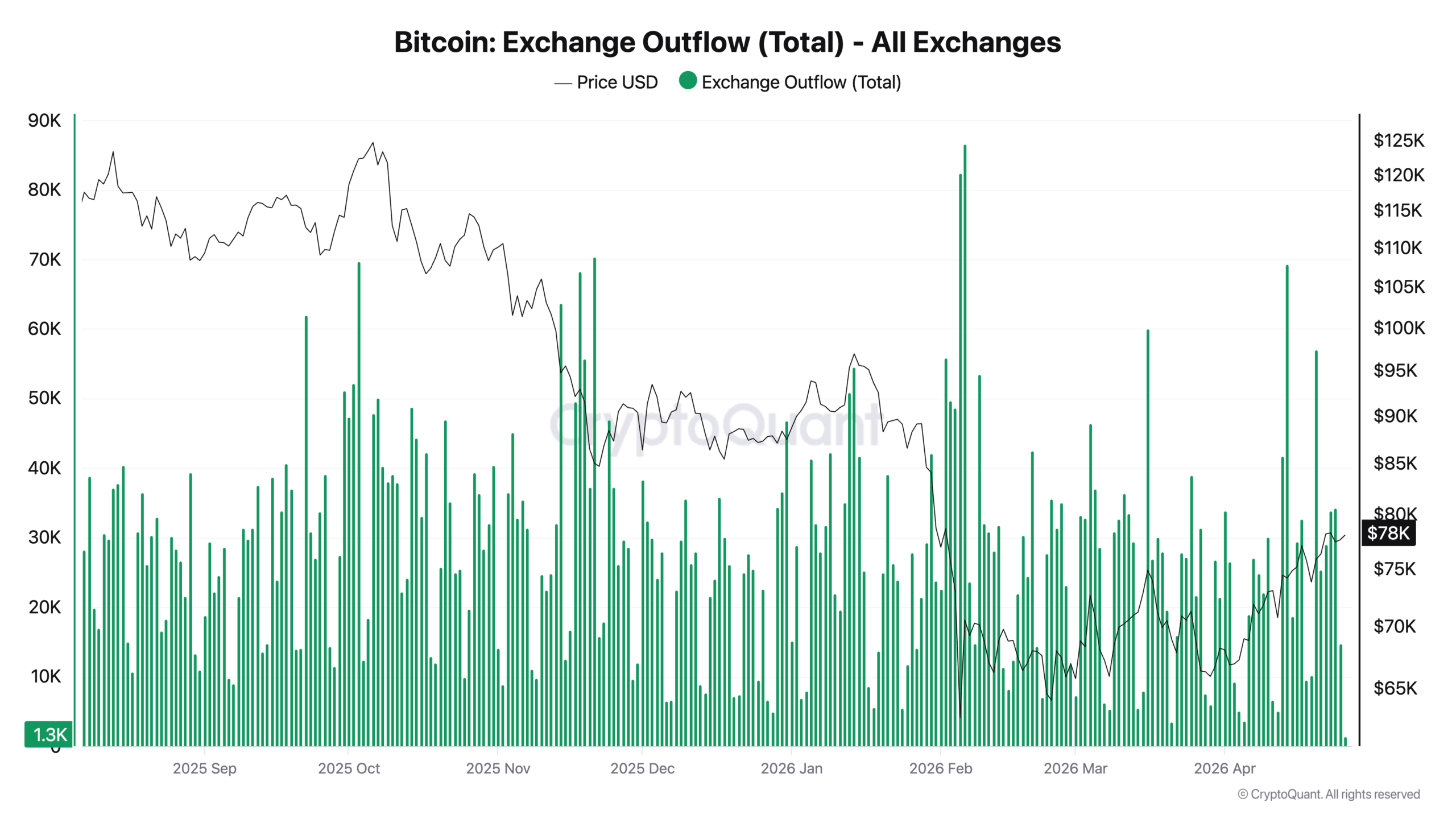
Indicator 1: Exchange Outflow
The continued outflow of Bitcoin from centralized exchanges (e.g. Binance, Coinbase) indicates that holders are choosing to move their assets to cold wallets to hold them for the long term, rather than preparing to sell them. This is a chain signal of institutional coin hoarding behavior.
If Bitcoin exchange balances continue to decline during the SpaceX roadshow (expected May-June 2026), it suggests that ETF buyers and long-term holder absorption are fighting the liquidity drawdown and the delinking signal is positive. Conversely, a significant rise in exchange inflows would suggest selling pressure is building.
Recommended tracking tools: CryptoQuant's Exchange Netflow indicator, Glassnode's Exchange Inflow/Outflow data.
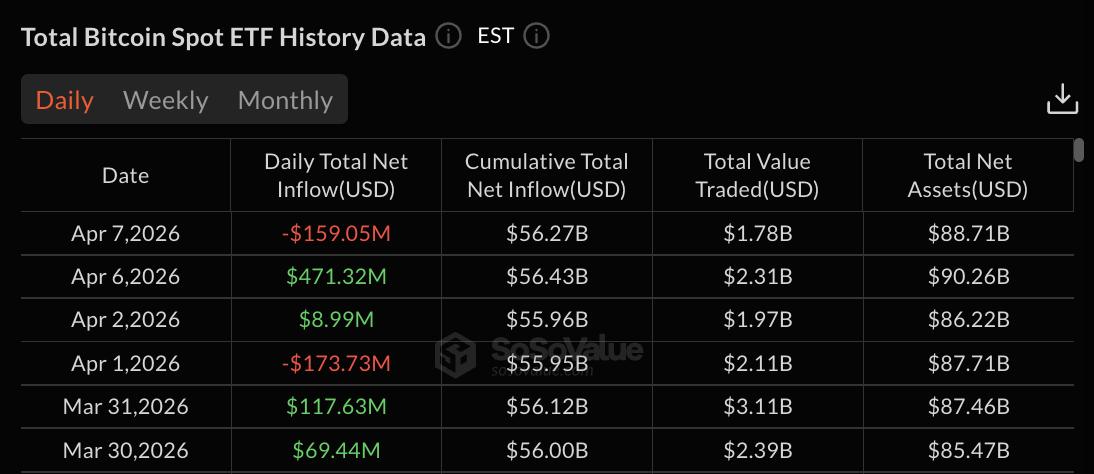
Indicator 2: Change in Spot Bitcoin ETF Positions
Since 2024, U.S. spot Bitcoin ETFs (represented by BlackRock's IBIT) have introduced a whole new class of institutional buyers to Bitcoin. These buyers behave very differently from traditional crypto market participants - they do not need to hold Bitcoin directly through an exchange and are not directly affected by crypto market sentiment cycles.
Based on available data, as of April 2026, IBIT's options open position has surpassed Deribit to become the world's largest Bitcoin derivatives market, reflecting the rapidly expanding depth of institutional participation in the crypto market through regulated channels.
During the SpaceX IPO period, the daily flow of the Spot Bitcoin ETF will be the most direct leading indicator of whether or not institutions are choosing to exit crypto in exchange for a position in SpaceX. If the ETF continues to have net inflows, it means that this group of institutional funds does not view crypto and SpaceX as a zero-sum game.
Recommended Tracking Tools: Bloomberg ETF Data Terminal, Farside Investors Daily ETF Flows Tracker.

Indicator 3: Polymarket Forecast Markets
Polymarket traders are currently estimating the probability of SpaceX going public in June at 65%, and the probability of closing the first day with a market capitalization of more than $2 trillion at 53%. These prediction market numbers aren't just gambling, they reflect the best-informed market participants voting with real money.
When these probabilities move significantly, they often reflect changes in the IPO timetable several days earlier than traditional media reports, which in turn affects the market's expected pricing of the liquidity withdrawal.
Polymarket Related Articles:
For a hands-on tutorial on how Polymarket works, check out our previous article on the subject.What is the Polymarket, the most promising forecast market for 2026? An all-inclusive guide from introductory tutorials to advanced strategies》。
5 Key Monitoring Actions for Retail Investors
Action 1: Tracking the Publication of SpaceX's S-1 Prospectus
According to current information, SpaceX plans to make public a full prospectus in late April to early May 2026, followed by an investor roadshow (Roadshow), with an official IPO expected in June-July.
When the prospectus goes public, you'll be able to see key information such as how the company's 8,285 Bitcoin position was accounted for, Starlink's actual profitability numbers (reported EBITDA margins of more than 60% in 2025), and the size of the losses in the xAI business (which is reported to be burning through about $1 billion per month). These figures will have a direct impact on the market's judgment of SpaceX's valuation.
Action 2: Watch the Bitcoin price closely during the roadshow.
The roadshow period is when liquidity withdrawal pressures are most concentrated. The need for capital to be ready in advance of an official listing means that May-June is the core window in which the market feels rebalancing pressures.
What you should be looking at is not just the direction of Bitcoin's price, but more importantly, its "behavior" - is it showing relative resilience when the stock market and other risky assets are under pressure? This resistance is the most convincing form of a delinked signal.
Action 3: Tracking Arbitrum and major L2 flows
The nature of SpaceX's xAI and Starlink businesses has led some market analysts to suggest that SpaceX's IPO could lead to an uptick in the decentralized AI and decentralized data infrastructure narratives. Keeping an eye on changes in the TVL of the L2 and DeFi agreements before and after the roadshow and IPO can help you determine if capital is being concentrated in the more narrative sectors.
Action 4: Observe the market supply of stabilized coins
The amount of stablecoins (USDT, USDC, etc.) in circulation is a key indicator of "dry powder" in the crypto market. If the supply of stablecoins continues to increase during the SpaceX roadshow, it indicates that new money is entering the crypto market's orbit, which is a structurally bearish signal. According to available data, the USDT market added $5 billion in inflows in April 2026, which is one of the key sources of support for the recent bull market.
Action 5: Watch out for the institutional rebalancing effect after SpaceX goes public.
The SpaceX IPO is an event in itself, but more important is the institutional rebalancing process that occurs in the three to six months following the IPO. Mechanical selling by passive funds will really begin when SpaceX is officially included in major indices. This window of time is when the crypto market is under the most concentrated systemic liquidity pressure.
Fifth, this is not purely negative: rationally look at both sides of the signal
When analyzing the impact of the SpaceX IPO on the crypto market, an easy cognitive trap to fall into is to characterize the event as purely negative. In fact, it is a two-sided event, depending on the strength of Bitcoin's decoupling.
The fact that SpaceX holds 8,285 Bitcoins will be visible to millions of new shareholders through the financial disclosure mechanism after the IPO. This could be a catalyst for more companies to follow Tesla and MicroStrategy's lead and put Bitcoin on their balance sheets.
Another way to look at it is that the success of the SpaceX IPO has brought a lot of new capital into the public markets - and that capital, after the lockup period ends, is likely to look for the next asset class with a higher risk-reward ratio, of which crypto markets have historically been one.
The real question has never been whether the SpaceX IPO was good or bad for the crypto market, but rather: in this process of reallocating liquidity, are you making your decisions in the most lucid state or are you being led by market sentiment?
Disclaimer
The content of this article is for reference only, investors should exercise independent judgment, invest prudently and at their own risk, this article does not provide or attempt to persuade the audience to do trading or investment basis, the content is for sharing purposes only, and should not be regarded as investment advice.It does not represent the views and position of Monsterblockhk.All information and opinions are current as of the date of the judgment. In addition, if a judgment is rendered on aIn this siteAny content related to virtual asset trading platforms that have not yet obtained a license to operate virtual asset trading platforms in Hong Kong, including but not limited to text introductions, pictures, offers, events, etc., are only available to users outside the Hong Kong Special Administrative Region.
According to the Hong Kong Anti-Money Laundering and Counter-Terrorist Financing (Amendment) Ordinance 2022, after June 1, 2023, all centralized virtual asset trading platforms operating in Hong Kong or actively promoting their services to Hong Kong investors will be licensed and regulated by the SFC, and any related unlicensed activities will be a criminal offence. For more information and details of the legislation, users may refer to the SFC website.