

What are the three compliant pathways for fund transfers to and from Hong Kong in 2026?
Following the tightening of regulations, the options available to Hong Kong residents for exchanging Hong Kong dollars for cryptocurrency (or converting cryptocurrency back into Hong Kong dollars) have been narrowed down to three distinct paths:
- Path to Becoming a Licensed Broker-Dealer (Main Focus of This Article): Open an account with Futu Securities, deposit funds via bank transfer, buy BTC and ETH directly, and then withdraw the coins to your own wallet. With the lowest entry barrier and funds regulated throughout the entire process, this is suitable for the vast majority of Hong Kong investors.
- Path to Becoming a Licensed Exchange: Open an account on an SFC-licensed virtual asset trading platform, such as OSL, to buy and sell approved tokens like BTC and ETH in Hong Kong dollars. Please note that retail accounts currently cannot directly buy or sell USDT; stablecoin trading is limited to professional investors.
- OTC Money Exchange / Over-the-Counter: As the licensing system is currently being implemented, compliant stores will gradually emerge; however, at this stage, the market is a mix of good and bad operators, and scams are frequent. We recommend that only those with experience and a clear understanding of their counterparts’ backgrounds use these services.
Each of the three methods is suitable for different situations. Below, we’ll break down the procedures, costs, and risks for each one. If you just want to use the safest method for your first deposit or withdrawal, simply follow the main tutorial.
Step-by-Step Guide: Opening an Account with Futu and Withdrawing Funds—Four Steps to Depositing and Withdrawing Funds
Futuhui Securities is a broker-dealer licensed by the Hong Kong Securities and Futures Commission (Central Number AZT137). Starting in 2024, it has been authorized to provide cryptocurrency trading services, allowing users to manage Hong Kong stocks, U.S. stocks, and cryptocurrency assets within a single account. For beginners, its biggest advantage is that the "bank transfer" step follows the exact same process as opening a traditional securities account, eliminating the need to deal with any unregulated channels.
Step 1: Open a Futu account (invitation code: MBHKFT)
Prepare your ID card and proof of address, and submit them via Link to Open an Account with Futu Download the Futu Niuniu app and enter the referral code when opening an account MBHKFT You can claim the new customer reward right away. The entire account opening process is completed online and is typically approved within one to two business days.
After opening an account, be sure to enable cryptocurrency trading permissions within the app (simply complete the risk assessment questionnaire). For detailed steps, please refer to our A Complete Guide to Deposits and Withdrawals for Futu Cryptocurrency。
Step 2: Bank Transfer Deposit
Futuhui supports FPS (Faster Payment Service), eDDA, and bank transfers. You can simply transfer Hong Kong dollars into your Futuhui account from a Hong Kong bank account in your name. FPS transfers are typically credited on the same day; the entire process takes place within the regulated banking system, involves no cash settlement, and does not raise any issues regarding “unidentified sources of funds.”
Step 3: Buy BTC or ETH
Once your funds have been credited to your account, you can buy BTC or ETH directly with Hong Kong dollars in the cryptocurrency section of the Futu Bull App; the process is almost identical to buying stocks. Please note that Futu offers BTC and ETH spot trading to retail investors, while USDT trading is currently limited to professional investors.
Step 4: Withdraw the coins to your own wallet
After purchasing, you can transfer your BTC or ETH to your on-chain wallet and then exchange it for stablecoins such as USDC on-chain as needed. We recommend using a brand-new personal wallet address for withdrawals. Step-by-step instructions are also available at Futuhui Deposit and Withdrawal Guide It contains a complete demonstration.
Withdrawal: Sell cryptocurrency to convert it back to Hong Kong dollars
The withdrawal process is exactly the opposite: transfer the cryptocurrency back to Futu to sell it, convert it to Hong Kong dollars, and then withdraw the funds to your linked bank account. Since the entire flow of funds takes place between licensed institutions and banks, the records are clear and well-documented, providing a solid basis for future tax filings or explaining the source of funds to your bank.
Alternative Method: OSL Licensed Exchange (USDT available to professional investors only)
If your goal is to “buy USDT directly with Hong Kong dollars,” you should first be aware of an important restriction: on licensed platforms such as Futu and OSL, retail accounts are currently unable to buy or sell USDT directly. The Securities and Futures Commission (SFC) only approves retail investors to trade large-cap, approved tokens such as BTC and ETH; stablecoin trading is generally restricted to professional investors.
OSL is one of the first virtual asset trading platforms in Hong Kong to be licensed and open to retail investors. It supports deposits in Hong Kong dollars via FPS or bank transfer, allowing users to directly buy and sell approved tokens such as BTC and ETH, which can then be withdrawn to their own wallets; proceeds from sales can also be withdrawn to local bank accounts. Although the USDT/HKD trading pair has been launched on OSL, trading is currently limited to professional investors; retail accounts are not yet available. The platform is regulated by the Securities and Futures Commission (SFC), and client assets are subject to custody and segregation arrangements.
The trade-off is a stricter KYC process, a limited selection of cryptocurrencies, and trading depth that falls short of major international exchanges. Retail investors who need to obtain USDT typically have to first purchase BTC or ETH on a licensed platform, withdraw the coins to their personal wallets, and then exchange them on-chain, or use regulated OTC channels. OSL account opening is available OSL Registration Promotion Link, For detailed instructions, please refer to OSL Account Opening and Deposits/Withdrawals Guide。
OTC Money Exchange Shops in 2026: Can They Still Operate Under the Licensing System?
In the past, the most common way for people in Hong Kong to buy USDT was to visit over-the-counter (OTC) currency exchange shops in areas like Mong Kok and Kwun Tong to exchange cash for USDT on the spot—without the need for bank transfers or questions about the source of funds. That era is coming to an end.
The government has finalized the licensing framework for over-the-counter (OTC) virtual asset trading services, and the relevant bill is expected to be submitted to the Legislative Council in 2026: entities engaged in OTC spot trading of virtual assets (including brick-and-mortar exchange shops and online services) will be required to apply toCommissioner of CustomsApply for a license and comply with the requirements under the Anti-Money Laundering Ordinance, including customer due diligence, reporting of large transactions, and record-keeping. The regulations also restrict the types of cryptocurrencies that OTC outlets may trade to those available for retail investors on SFC-licensed platforms; furthermore, they are prohibited from providing investment advisory or referral services.
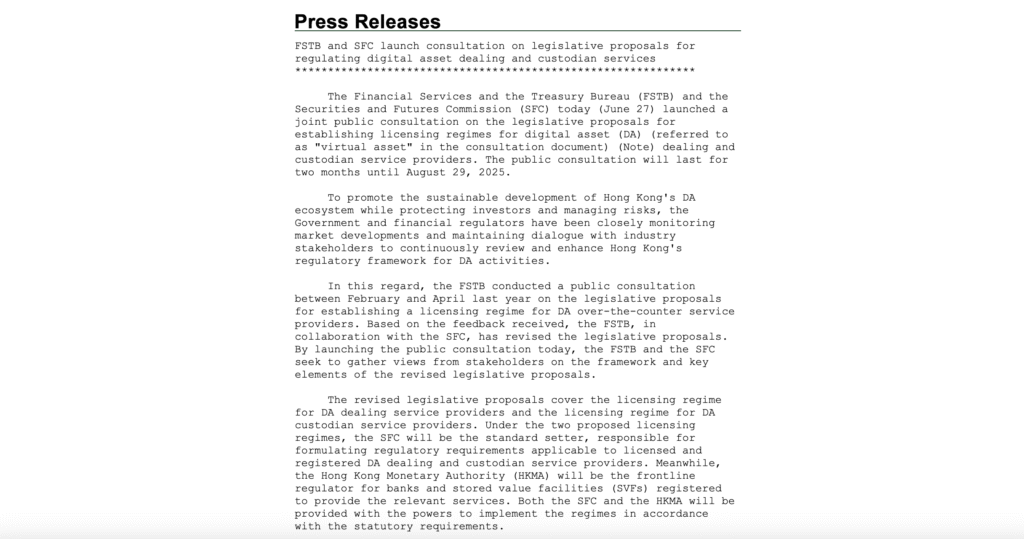
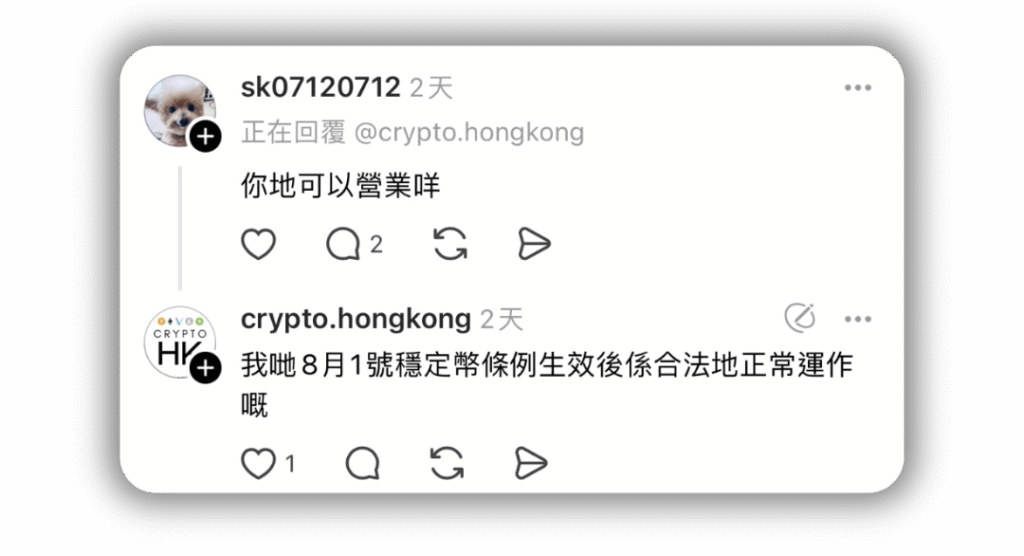
In accordance with the *Stablecoin Ordinance*, which took effect on August 1, 2025—under which stablecoin issuers must be licensed by the Hong Kong Monetary Authority, and unlicensed entities are prohibited from actively promoting stablecoins to the Hong Kong public—the scope for unlicensed OTC shops to sell USDT to the public has been significantly reduced. Of the more than 200 physical OTC outlets and numerous online service providers that originally operated throughout Hong Kong, it is expected that only a handful will be able to obtain licenses and continue operations, while the rest will either close or go underground.
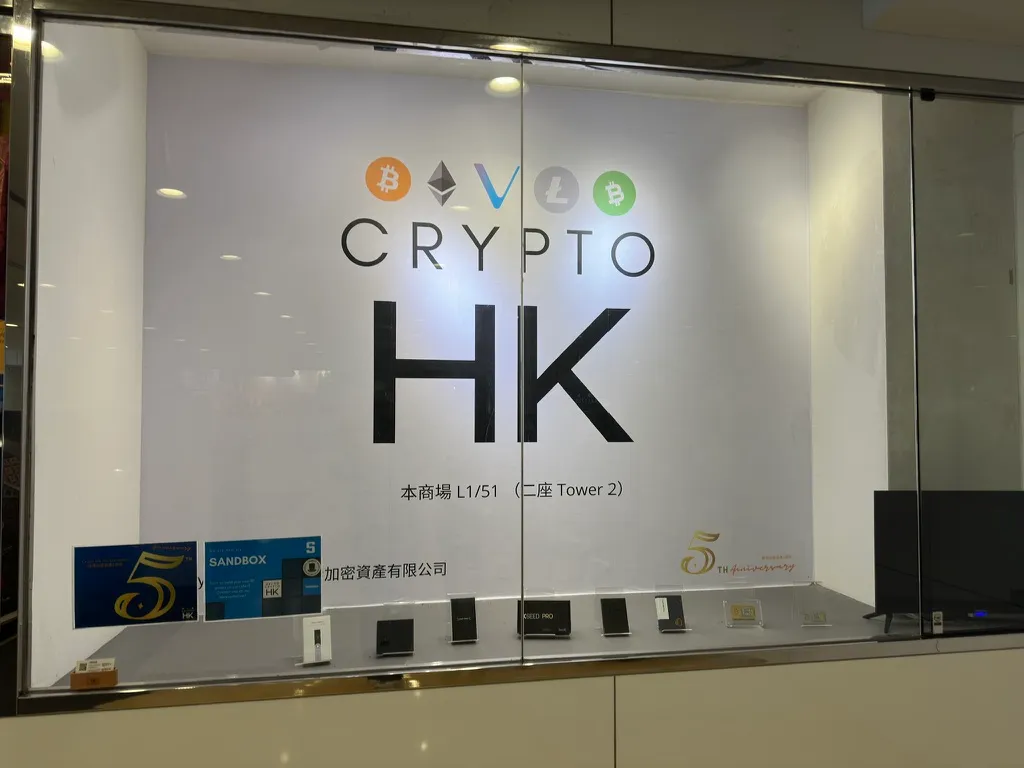
The reality is that, at this stage, some well-known OTC operators are still in business, but they have generally become more low-key, and trading arrangements must be inquired about privately. Before the licensing system is fully implemented, this transitional period is precisely when things are most chaotic and when fraud cases are most prevalent—which is the main focus of the next section.
OTC Scams and Risks: What You Must Know Before Trading
If you are still considering using OTC for deposits and withdrawals, please first take a close look at the types of cases that have actually occurred in Hong Kong in recent years:
- Fake Money-Changing Shop Scam: Scammers rent short-term storefronts or offices and set them up to look like professional currency exchange shops. In April 2025, a victim brought 1 million Hong Kong dollars in cash to a currency exchange shop in Kwun Tong to exchange it for USDT. A staff member falsely claimed the transfer had been completed but refused to return the cash, and the funds were taken away by an accomplice. In June 2026, another man was defrauded of 1.6 million USDT (worth approximately 14 million Hong Kong dollars) by a scammer posing as a currency exchanger.
- Fake Screenshots of Bank Transfers: At the handoff location, the scammer will show you a fake transaction record or wallet screenshot, and then disappear once you hand over cash or send the coins. For on-chain transactions, you must verify that the funds have been received in your own wallet; never trust any “screenshots as proof.”
- Personal Risks Associated with Cash Transactions: Carrying large amounts of cash to an unfamiliar location for a transaction is, in itself, a high-risk situation for robbery and mugging. The larger the amount, the less you should rely on cash payments.
- Illegal Funds and Money Laundering Risks: The Hong Kong dollars received by OTC may be proceeds from fraud. If your bank account receives illicit funds, the consequences could range from having your account frozen by the bank to being drawn into a money laundering investigation. In June 2026, the Hong Kong District Court handed down a sentence in a case where the defendant opened multiple bank accounts to receive fraud proceeds, then withdrew the funds at currency exchange shops to purchase cryptocurrency. The case involved HK$9.29 million, and the defendant was sentenced to nearly four years in prison. Even if you are innocent, the time and legal costs involved in unfreezing your account are by no means worth it.
In a nutshell: OTC in Hong Kong in 2026 isn’t “unusable,” but ratherThe risk is completely out of proportion to the fees you save.. Transferring funds via bank wire to Futu or OSL—with transparent costs and guaranteed fund security—is the path retail investors should take.
How to Choose Among the Three Deposit and Withdrawal Methods? A Comparison Chart

| Comparison Criteria | Futuhui Securities (Main Channel) | OSL Licensed Exchange | OTC Money Exchange |
|---|---|---|---|
| Regulatory Status | SFC-Licensed Brokerage Firms | SFC-Licensed VATP | Customs Licensing System Is Being Implemented |
| Available-for-sale assets | BTC, ETH (Retail) | Approved tokens such as BTC and ETH (USDT is available only to professional investors) | Depending on the merchant, it's usually USDT |
| Deposit Methods | Bank Transfer / FPS | Bank Transfer / FPS | Cash-Based |
| Key Advantages | Centralized Management of Stock Accounts—The Simplest Process | Licensed platform; records of Hong Kong dollar deposits and withdrawals | Instant Cash Settlement |
| Key Risks | Limited selection of currencies | Fewer cryptocurrencies and limited liquidity | Fraud, Illegal Funds, Personal Safety |
| Who This Is For | The vast majority of novice and long-term investors | Users who need USDT spot funds | Not recommended for general retail investors |
Frequently Asked Questions: Is it illegal to deposit or withdraw funds through overseas exchanges?
Many readers ask: Is it legal to deposit and withdraw funds directly via P2P on international exchanges like Binance that are not licensed in Hong Kong?
Currently, there are no explicit provisions prohibiting Hong Kong retail investors from using overseas platforms or holding stablecoins on their own. Regulation targets institutions that “provide or actively promote” such services to the Hong Kong public “in a commercial capacity,” rather than individual users. The personal holding or trading of USDT is not, in itself, illegal.
But the gray area doesn’t mean it’s safe: With P2P transactions, the counterparties are unknown, and receiving illicit funds can lead to your bank account being frozen; overseas platforms aren’t protected by the Securities and Futures Commission, making it difficult to recover losses if something goes wrong. If the counterparty is physically located in Hong Kong and operating without a license, the transaction itself may also raise compliance issues. This route is only suitable for seasoned traders who clearly understand what they’re doing; beginners should stick to the mainstream.
Next Step: You’ve bought some cryptocurrency—now want to trade futures?

Making deposits and withdrawals is just the first step. If you’ve already purchased BTC or ETH on Futu and withdrawn them to your own wallet, the next step is to convert those assets to USDC on-chain, transfer them cross-chain to Arbitrum, and deposit them into the decentralized exchange Hyperliquid—no KYC required, fully transparent on-chain, and using MBHK Referral Link Sign up to receive a 4% discount on processing fees.
For a complete guide to deposit methods and an overview of the platform, please see What Is Hyperliquid? A Complete Guide. If you want to review the basics of on-chain USDT transfers, see USDT Transfer Complete Tutorial。
Frequently Asked Questions
What is the safest way to buy USDT in Hong Kong in 2026?
The safest approach is to go through a licensed institution: First, buy BTC and ETH on Futu or OSL, withdraw the coins to your own wallet, and then exchange them for stablecoins on-chain (retail accounts on licensed platforms currently cannot purchase USDT directly). Funds for both methods are transferred via bank transfer, with a complete audit trail throughout the process, eliminating the risk associated with cash transactions.
Can I buy USDT directly on Futu?
Not at this time. Futu offers BTC and ETH spot cryptocurrency trading to retail investors, while USDT trading is limited to professional investors. This restriction also applies to retail accounts on licensed exchanges such as OSL. If you need USDT spot, you can purchase BTC or ETH, withdraw the coins to your wallet, and then exchange them on-chain.
I bought USDT from an unlicensed OTC platform a while back. Is it still safe?
Existing USDT holdings will not be confiscated, and it is not illegal to hold cryptocurrency as an individual in Hong Kong. However, it is recommended that you transfer your assets to a self-custody wallet or a licensed platform as soon as possible. In the future, all withdrawals should be made through bank channels to avoid further unlicensed OTC transactions.
Are all OTC money changers illegal?
Not all of them, but they are currently in a transitional licensing period: Under the published regulatory framework, existing operators will be required to apply for licenses from Customs and comply with anti-money laundering regulations; those who fail to obtain a license will be phased out. The problem is that it is very difficult for retail customers to distinguish between compliant stores and those that are merely fronts for scammers; therefore, at this stage, ordinary users should avoid using these services.
How much are the fees for depositing and withdrawing funds through Futu?
Futuhub’s cryptocurrency trading fees are calculated based on the platform’s current fee schedule; bank FPS deposits are generally free of charge. Actual commissions and withdrawal fees are subject to the latest announcements within the Futuhub app. For more details, please refer to our guide on depositing and withdrawing funds on Futuhub.
Will my bank account be frozen if I sell cryptocurrency and withdraw the funds?
Withdrawing funds to your own bank account after selling cryptocurrency through Futu or OSL ensures a clear source of funds, and under normal circumstances, this should not pose a problem. Funds are typically frozen when P2P or OTC transactions involve payments of unknown origin—which is precisely why we do not recommend that retail investors use OTC for deposits and withdrawals.
Want to follow along step by step? Check out the next step A Complete Guide to Deposits and Withdrawals for Futu Cryptocurrency...with step-by-step screen-by-screen demonstrations covering everything from opening an account and depositing funds to withdrawing coins.
Disclaimer
The content of this article is for information sharing only and does not constitute any form of investment, legal or financial advice, nor should it be considered as an invitation or solicitation to readers to make any trading decisions. All information and opinions expressed herein reflect the current situation on the date of writing and are current in nature. Monsterblockhk does not guarantee their completeness or future applicability, nor does it represent the official position of this platform. The cryptocurrency market and regulatory regime are constantly changing, readers should exercise prudent judgment and risk on their own and consult a qualified legal or financial advisor for professional advice before proceeding with any deposit/withdrawal operations, platform usage or investment behavior. In addition, if this article or any content of this website involves a platform that has not yet obtained a license to operate a virtual asset trading platform in Hong Kong, including but not limited to textual descriptions, pictures, offers or events, the relevant information is for general reference only by persons residing outside the Hong Kong Special Administrative Region and does not constitute any promotion or recommendation to Hong Kong residents.