

In December 2024, Google announced that its latest quantum chip, Willow, had taken less than five minutes to complete a computational task in a benchmark test that would have taken a traditional supercomputer 10²⁵ years to solve. Upon the news, the cryptocurrency community quickly split into two voices: deep panic over the threat of quantum computer bitcoins on one side, and a confident "it's all an exaggeration" on the other.
There is nothing wrong with either sound, but neither sound is complete.
The question of the threat of quantum computers to Bitcoin cannot be answered with emotion, nor can it be dismissed with a "it's okay now". It requires a more precise framing: what is the mechanism of the threat, where are the vulnerabilities, how far is the current technology from that tipping point, and whether the Bitcoin protocol itself is prepared.
This article will take apart the real contours of the quantum computer Bitcoin threat from the principles of Shor's algorithm, analyze what specific windows of vulnerability exist in the Bitcoin architecture, illustrate the scale of the real-world technology gap, and organize the progress of post-quantum crypto responses. After reading this book, you won't necessarily need to make any decisions right away, but you'll be equipped with a more sober basis for judgment.
I. Why Quantum Computers Make the Bitcoin Community Nervous
Fundamental differences between quantum bits and traditional computers
To understand the quantum computer Bitcoin threat, it is important to clarify exactly in what way quantum computers differ from traditional computers.
Traditional computers use "bits" as the basic unit of operation, and the state of each bit can only be one of 0 or 1. No matter how fast the processor is, it is essentially operating on these binary states, and the speed increase comes from advances in parallel processing power and chip manufacturing processes, not from a fundamental change in computational logic.
Quantum computers use "qubits". The uniqueness of a qubit is its "superposition": instead of being 0 or 1, it can be a superposition of 0s and 1s at the same time until it is measured. This allows quantum bits to explore a large number of possible computational paths in parallel before they are measured. In addition to superposition, entanglement allows multiple quantum elements to form correlations with each other, resulting in an exponential increase in the computational power of the system as a whole. This means that for specific types of mathematical problems, quantum computers can find answers in a time frame that conventional computers cannot.
The key is the word "type-specific". Quantum computers are not faster at all tasks, but their strengths are focused on certain types of problems that have a specific mathematical structure. ECDSA falls within this structure.
Shor's Algorithm: The Mechanism at the Heart of the Quantum Computer Bitcoin Threat
Bitcoin uses the Elliptic Curve Digital Signature Algorithm (ECDSA) to protect wallets and transaction authorizations.ECDSA's security is based on the "Elliptic Curve Discrete Logarithm Problem": back-projecting the corresponding private key from a known public key would take close to the age of the universe on a conventional computer, and is practically equivalent to an impossibility.
However, in 1994, mathematician Peter Shor proposed the famous Shor's algorithm, which allows quantum computers to solve integer decomposition and discrete logarithm problems in polynomial time. The elliptic curve discrete logarithm problem is exactly the type of problem that Shor's algorithm can effectively solve.
This means that if a quantum computer has enough fault-tolerant quantum bits to execute the Shor algorithm in its entirety, it could theoretically compute the corresponding private key directly from the public key, and thus take control of any Bitcoin address that exposes the public key.
This is at the heart of the quantum computer Bitcoin threat: not because quantum computers can violently break hashes, but because the Shor algorithm can fundamentally breach the mathematical underpinnings on which the ECDSA rests.
Google Willow chip: What does the 105 qubit breakthrough mean?
Google's Willow chip has demonstrated incredible speed in random circuit sampling tests, bringing the quantum computer bitcoin threat back into the spotlight. But in this context, there are a few points that need to be clarified.
First, random circuit sampling is a benchmark test used to validate the computational power of quantum computers, and it is designed to be particularly favorable to quantum computers, but it is a completely different type of task than the calculations required for Shor's algorithm.Google's breakthrough in this test does not translate directly to the ability to crack Bitcoin.
Second, the Willow chip currently has 105 physical quantum bits. But in order to execute the Shor algorithm, which is a threat to Bitcoin, it requires "logical quantum bits" rather than raw physical quantum bits. Logical quantum bits require a large number of physical quantum bits to construct, with estimates ranging from millions to more than a billion. 105 and a billion are not multiples of each other, but several orders of magnitude different.
Quantum Computer Bitcoin Attacks: Where is the Real Vulnerability?
Having understood the mechanics of Shor's algorithm, it is then necessary to pinpoint more precisely: where in the entire Bitcoin system would a quantum computer Bitcoin attack specifically target? The answer is a very specific window, not all of it.
9-minute public key exposure window
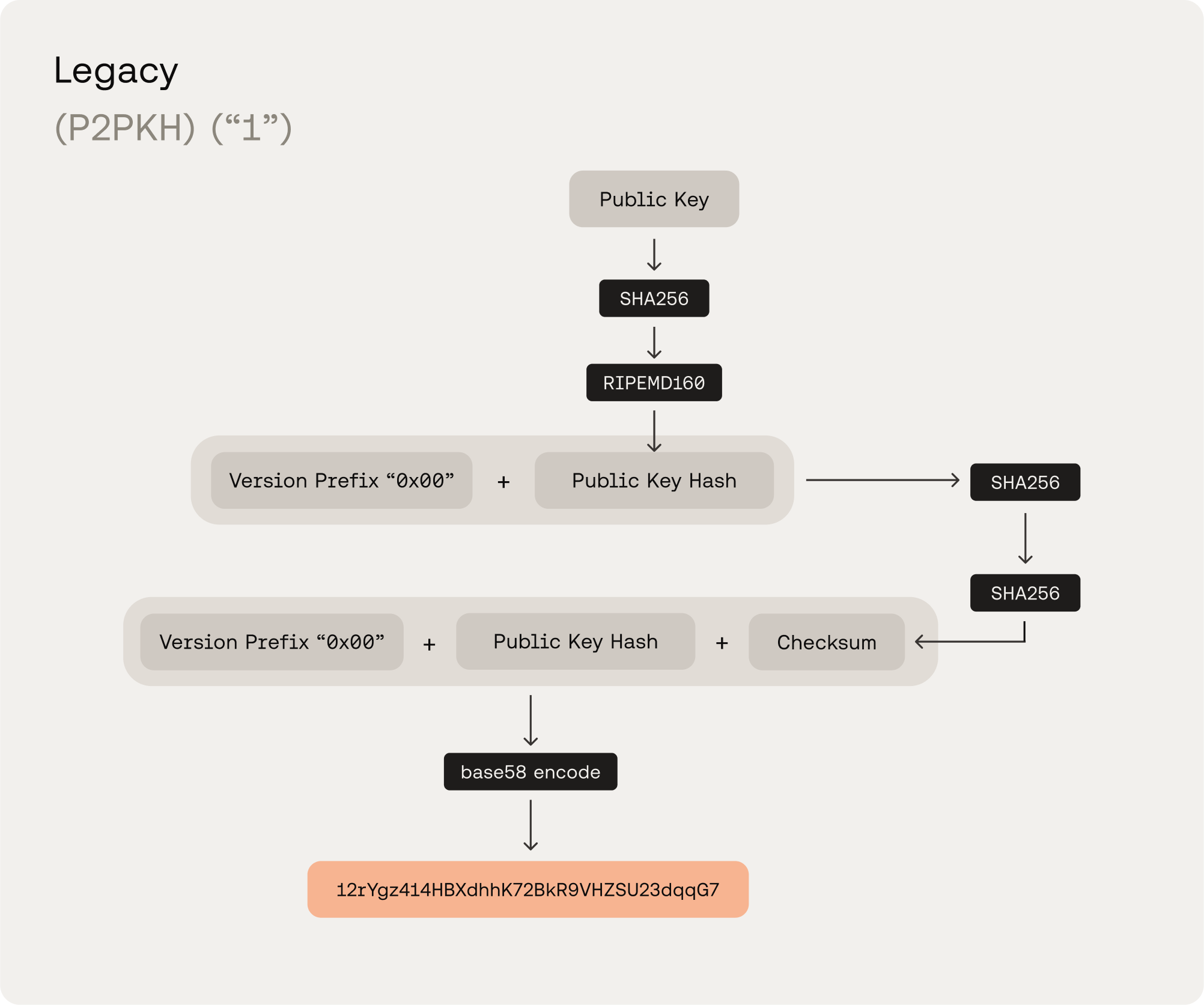
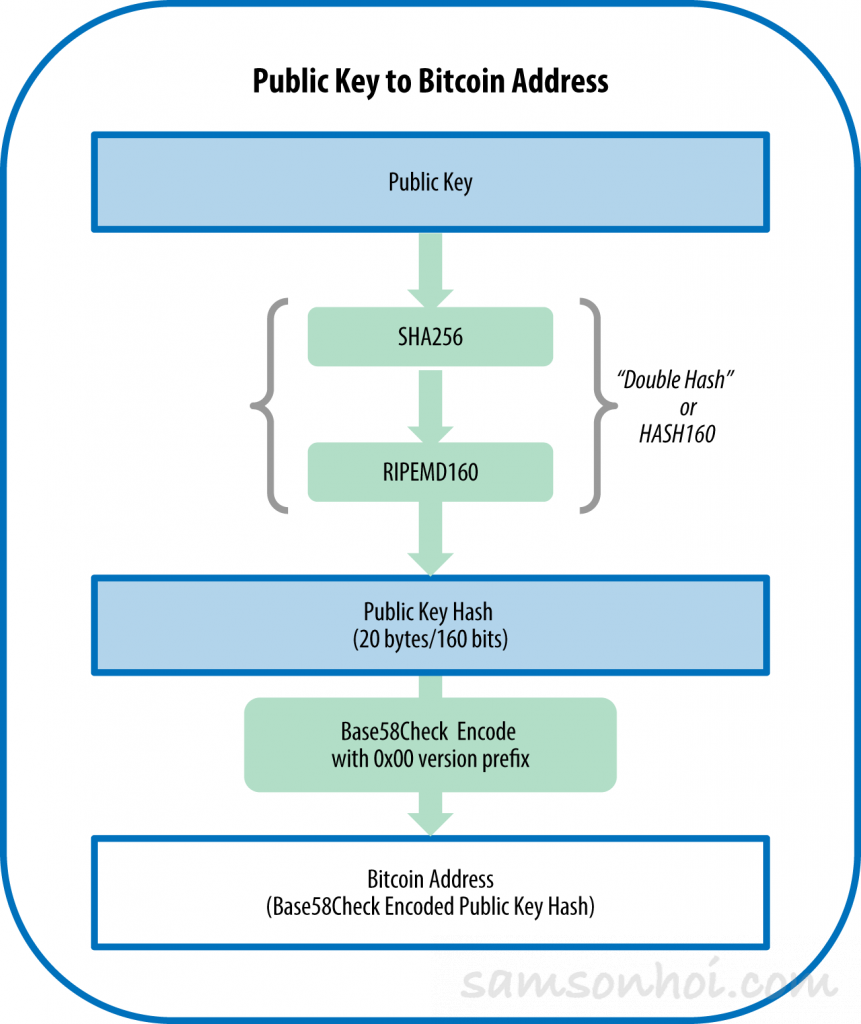
Bitcoin is designed with an important security feature: under normal circumstances, the public key is not directly exposed. When a user receives Bitcoin, what is disclosed to the public is the address, which is the result of the public key after double hashing by SHA-256 and RIPEMD-160. Even if a quantum computer is able to deduce the private key from the public key, if it cannot access the public key at all, there is no way to attack it.
However, when a user sends Bitcoin from an address, he must broadcast a transaction containing a digital signature, and this process simultaneously exposes the public key on the chain. From the time the transaction is broadcast until it is packaged into a block by a miner, there is a waiting window of about 10 minutes during which the public key is visible to the entire chain.
This 9- to 10-minute window is the most meaningful attack surface for a quantum computer Bitcoin attack in practice. If a quantum computer can extrapolate a private key from a public key and broadcast a competing transaction within this window of time, it could theoretically steal the funds before the original transaction is recognized.
Current research estimates that even with significant advances in quantum computing, the arithmetic power required to complete this attack in 10 minutes is still well beyond current technology and is unlikely to be realized for another 10 to 20 years.
The Long-Term Risk of 7 Million Bitcoins
In addition to the transaction window, another, more persistent risk to the quantum computer Bitcoin comes from the "historical legacy" left by Bitcoin's early adopters: the use of Pay-to-Public-Key (P2PK) format addresses.
In the early days of Bitcoin design, some address types would store and expose the public key directly on the chain, rather than just displaying the hash result as modern addresses do. Bitcoins in these addresses, if quantum computers reached a sufficient level of power, could be directly attacked without waiting for any transaction window, since the public key was already permanently recorded on the blockchain.
Researchers estimate that about 7 million Bitcoins are currently stored on the chain in addresses that have been exposed to the public key in this way, containing a large number of mining rewards from the early days of the Bitcoin network, as well as a portion of well-known addresses that are dormant. This portion of the assets carries a higher long-term risk in the context of a quantum computer Bitcoin threat.
It is worth noting that a significant portion of these 7 million Bitcoins may belong to addresses that are no longer in anyone's possession or that have been lost privately, including the widely-discussed address cluster of Satoshi Nakamoto. This complicates the moral and political dimensions of the issue, and is why the Bitcoin community continues to face strong controversy when discussing the direction of "blocking quantum vulnerable addresses.
Taproot Promotion and Public Key Exposure Issues
In 2021, Bitcoin completed its Taproot upgrade, bringing with it more efficient multi-signature, enhanced privacy and smart contract capabilities. However, some of Taproot's design details have sparked a new round of analysis in the quantum computer Bitcoin debate.
Bitcoin using a Taproot (P2TR) address exposes the public key slightly differently than a traditional P2PKH address in some usage scenarios. There is still discussion in the technical community as to whether this poses a higher quantum risk, but the prevailing consensus tends to be that the overall increase in security brought about by Taproot is much greater than the slight change in its quantum exposure, and that this difference will have limited impact in a practical sense until the threat of a quantum-computerized Bitcoin becomes a real reality.
The reality gap: 105 qubit vs. 1 billion qubit.
Having understood the vulnerability of quantum computers to Bitcoin attacks, a crucial question emerges: how far away are existing quantum technologies from posing a real threat? The answer is much more conservative than most media headlines imply.
Quantum Error Correction: The Hardest Bottleneck to Cross
The fundamental challenge facing quantum computers is the extreme fragility of quantum bits, which are susceptible to errors due to fluctuations in ambient temperature, electromagnetic interference, or any weak external influences, a characteristic known as "decoherence". Quantum bits must operate at extremely low temperatures close to absolute zero in order to be stable, and even then, the error rate in the computation process is much higher than that of conventional computers, making it impossible to use them directly for precision calculations.
In order for a quantum computer to perform complex algorithms, quantum error correction must be introduced, whereby a large number of physical quantum bits are used to construct a fault-tolerant "logic quantum bit". Depending on the design of the error correction code, from 1,000 to more than 10,000 physical quantum bits may be required to construct a stable logical quantum bit.
Google's Willow chip has indeed made an important breakthrough in quantum error correction: it has demonstrated for the first time in an experiment the ability to "super-threshold error correction," meaning that increasing the number of quantum bits can actually reduce the rate of logical errors, rather than making more of them. This is a milestone in the history of quantum computing, but it is still several orders of magnitude away from being able to run Shor's algorithm on the scale required.
Cracking Bitcoin's Quantum Resource Requirements
According to research published in AVS Quantum Science in 2022, it would take about 300 million physical quantum bits to break a Bitcoin ECDSA signature in one hour, and the computation would have to be stabilized in a very short period of time.
Another 2023 study further estimates that the number of physical quantum bits required to complete a quantum computer Bitcoin attack within Bitcoin's 10-minute transaction confirmation window could exceed 1.3 billion.
In comparison, the most advanced quantum processors, including Google's Willow (105 quantum bits) and IBM's latest chip (over a thousand physical quantum bits, but very few fault-tolerant logic quantum bits), are still 4 to 6 orders of magnitude short of the above requirements.
This order-of-magnitude gap means that even with major breakthroughs in quantum technology every year, on the current trajectory of technological evolution, the quantum computer bitcoin threat will remain theoretical rather than realistically operational until 2030. More researchers believe that the mid-to-late 2030s is the window of time where attention really needs to be focused.
Recent Recent Posts:
2026 Latest 6 Free Coin Ring Tools Inventory|Where to find the data on the chain?
2025 Latest OKX Web3 Wallet Tutorial: Does it work? How to create it? A Guide to Safe Operation, Multi-Link Support, and Time-Limited Airdrops
2026 Latest Polymarket Tutorial|How to find out the insiders and realize the high win rate!
2025 New DeFi Beginner's Guide|Teaching you to earn stable money passive income! Introducing 3 popular programs, DeFiLlama tool tutorial!
How will the agreement respond to the threat of quantum computer Bitcoin?
The Bitcoin community is not waiting around for a technological threat that could emerge in 10 to 20 years. There has been clear progress in both post-quantum cryptography standardization and protocol upgrades.
NIST Post-Quantum Cryptography Standard
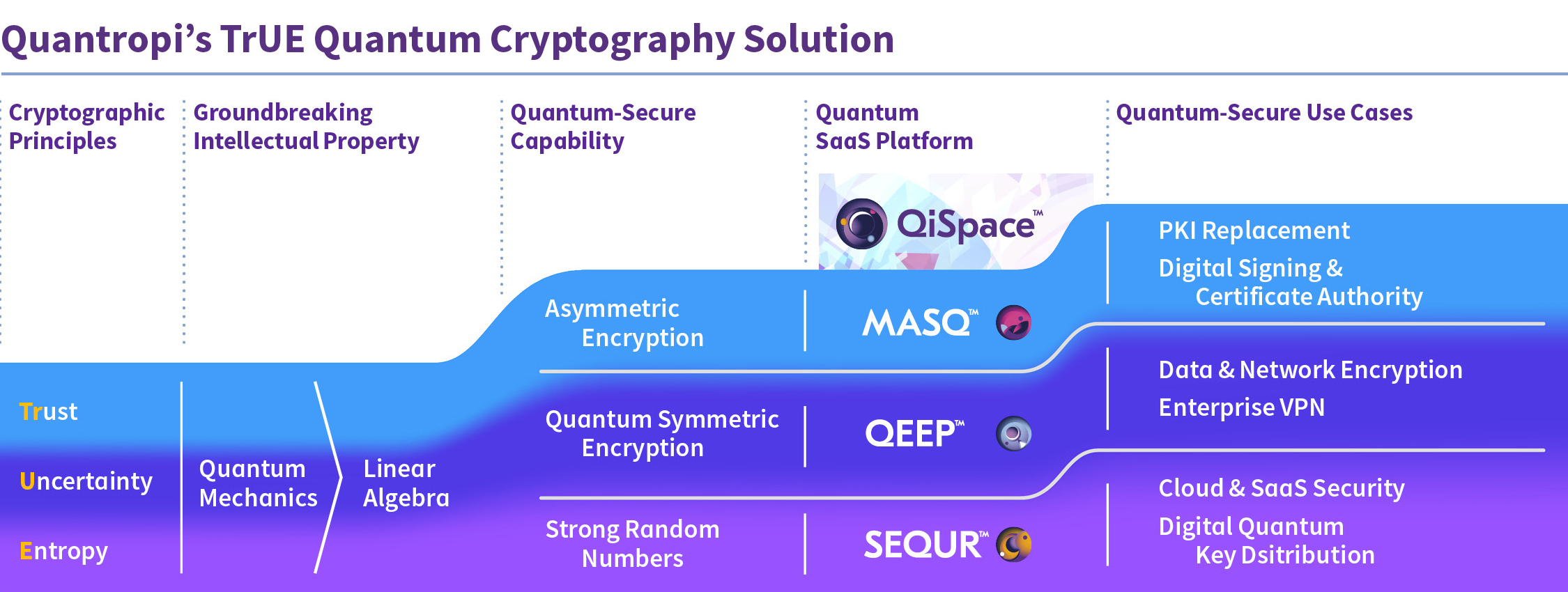
In 2024, the U.S. National Institute of Standards and Technology (NIST) officially released three post-quantum cryptography standards, the result of years of public competition and review. These standards include:
ML-KEM (formerly known as Kyber) for key exchange, ML-DSA (formerly known as Dilithium) for digital signatures, and SLH-DSA (formerly known as SPHINCS+), a hash-based alternative digital signature algorithm.
The security basis of these algorithms is quite different from that of ECDSA. They rely on mathematical puzzles (e.g., lattice code problems, hash function puzzles) that no known quantum algorithms are able to solve in polynomial time, and are therefore considered to be resilient to quantum attacks.
The establishment of the NIST standard is significant to the discussion of the threat of Bitcoin for quantum computers: the industry has a clear reference point for post-quantum cryptography, and the Bitcoin protocol upgrade has a technical direction it can draw on, rather than starting from scratch.
Bitcoin Upgrade Process (BIP) and Post-Quantum Paths
Upgrades to the Bitcoin protocol are carried out through the Bitcoin Improvement Proposal (BIP) process, which requires broad consensus among developers, miners, and the community to implement. There are three main directions being discussed in the community regarding post-quantum upgrades.
First, a hash-based signature scheme is introduced to replace the existing ECDSA. hash functions themselves are naturally more resistant to quantum attacks, and even if Grover's algorithm allows quantum computers to achieve quadratic speedups on search problems, it only reduces the effective security number from 256 bits to 128 bits, which is still within the acceptable security range.
Second, designing new address types that allow users to voluntarily migrate to post-quantum secure addresses. This direction would allow the upgrade to progress gradually without forcing everyone to act immediately, and is one of the most practicable paths in the current technical discussion.
Third, the most controversial discussion concerns how to deal with "quantum vulnerable addresses" that have been exposed to the public key. Proposals include freezing or disabling these addresses after a set period of time, but this directly touches on the core principles of Bitcoin's "immutability" and "personal property sovereignty," and remains the most difficult issue to reach consensus on.
Common Misconception: Bitcoin Won't Die a Silent Death
There is a very common misconception in the quantum computer Bitcoin debate: that once quantum computers become powerful enough, the cryptography of Bitcoin will collapse overnight, leaving no time to respond. This is technically untenable.
The growth of quantum computing power can be continuously observed and measured. Quantum computers are not going to suddenly jump from the current few hundred quantum bits to a billion overnight. Every step along the way, from the current state of the art to the scale needed to truly threaten Bitcoin, will be publicly documented and published in the world's research institutions and leading journals.
This means that the Bitcoin community will have enough lead time to observe the protocol upgrades as they move forward. Just as the Taproot upgrade took several years from technical proposal to official activation, the post-quantum upgrade, while more complex, is technically feasible with enough lead time.
V. Holders' and Investors' Judgmental Frameworks
Having understood the full context of the quantum computer Bitcoin threat, a practical question arises: how should this issue be put into a decision-making framework for the average Bitcoin holder or investor?
The schedule is the most important baseline variable.Existing studies generally agree that the likelihood of quantum computers reaching the scale needed to truly threaten Bitcoin by 2030 is extremely low, with more assessments pointing to the mid-to-late 2030s. On this timeline, there is ample room for the Bitcoin community to push forward with post-quantum upgrades. The timeline itself may be compressed by technological breakthroughs, but there is currently no indication that a disruptive jump is imminent.
Media headlines do not equal technical reality.Every advance in quantum computing triggers "Bitcoin is doomed" reports, but every careful dismantling reveals a huge gap between the state of the art and the real threat. The quantum computer threat to Bitcoin is a serious, long-term technical proposition, but it is not a crisis of today or tomorrow.
Holding behavior allows for basic risk management.For long-term holders, using modern address formats and not reusing addresses that have already broadcast transactions is currently the most reasonable practice in the quantum security dimension. Avoiding the use of early P2PK-formatted addresses for storing large amounts of assets reduces the indirect market risk associated with the 7 million quantum vulnerable bitcoin problem.
The probability of success of a post-quantum upgrade is relatively optimistic, but not inevitable.The history of Bitcoin's upgrades shows that communities have the ability to coordinate in the face of real technological pressures, but each upgrade requires time, controversy, and political gaming. If the timeline of the quantum threat becomes more compressed than currently predicted, the pressure on the community to coordinate will increase dramatically, and with it the difficulty of upgrading. This is a variable that needs to be tracked on an ongoing basis, not a background noise that can be ignored all at once.
Recent Recent Posts:
2026 Latest 6 Free Coin Ring Tools Inventory|Where to find the data on the chain?
2025 Latest OKX Web3 Wallet Tutorial: Does it work? How to create it? A Guide to Safe Operation, Multi-Link Support, and Time-Limited Airdrops
2026 Latest Polymarket Tutorial|How to find out the insiders and realize the high win rate!
2025 New DeFi Beginner's Guide|Teaching you to earn stable money passive income! Introducing 3 popular programs, DeFiLlama tool tutorial!
Conclusion
The quantum computer Bitcoin threat is a long-term technological proposition that deserves to be taken seriously, but it shouldn't be oversimplified into a media narrative of "the emergence of quantum computers equals the collapse of Bitcoin".
The quantum error-correction breakthrough in Google's Willow chip is a real milestone, but the gap between 105 physical quantum bits and the more than one billion logical quantum bits needed to crack Bitcoin is a gap that will take at least 10 to 20 years to cross on the current technological trajectory. the Shor algorithm's threat mechanism is real, but the conditions for its realization are still very far away.
Meanwhile, the standardization of post-quantum cryptography has reached a mature stage, with three NIST standards providing clear technical references for post-quantum upgrades to Bitcoin. Cryptography, Bitcoin developers, and the global technology community have a window of opportunity to respond to the threat before it becomes a reality.
For Bitcoin holders, understanding the true contours of the quantum computer Bitcoin threat is of more practical value than believing extreme narratives in either direction. Neither should we make irrational decisions based on scaremongering media reports, nor should we be completely indifferent to the issue because the threat is still far away. Technology never waits, but it's never as dramatic as the headlines make it out to be.
Disclaimer
The content of this article is for reference only, investors should exercise independent judgment, invest prudently and at their own risk, this article does not provide or attempt to persuade the audience to do trading or investment basis, the content is for sharing purposes only, and should not be regarded as investment advice.It does not represent the views and position of Monsterblockhk.All information and opinions are current as of the date of the judgment. In addition, if a judgment is rendered on aIn this siteAny content related to virtual asset trading platforms that have not yet obtained a license to operate virtual asset trading platforms in Hong Kong, including but not limited to text introductions, pictures, offers, events, etc., are only available to users outside the Hong Kong Special Administrative Region.
According to the Hong Kong Anti-Money Laundering and Counter-Terrorist Financing (Amendment) Ordinance 2022, after June 1, 2023, all centralized virtual asset trading platforms operating in Hong Kong or actively promoting their services to Hong Kong investors will be licensed and regulated by the SFC, and any related unlicensed activities will be a criminal offence. For more information and details of the legislation, users may refer to the SFC website.