

Welcome back to Monsterblockhk's Currency News. This week's market atmosphere is like a powder keg that has been ignited. $MYX surged by more than +1000%, driving $AVAX, $DOGE, $SPX and other cottage currencies to soar, and the overall liquidity is surging, with the speculative sentiment reaching a rare high point. Meanwhile, the inflow of funds into the chain and ETFs continues, but the fear and greed indices are approaching "greed", reminding investors of the potential volatility behind the soaring atmosphere. The market may be on the eve of a wild ride with both opportunities and risks. This issue of the Weekly Bulletin will take you through a quick review of the data on the chain and the market dynamics, helping you to be disciplined in your pursuit of higher returns while prudently locking in a portion of your profits, so as to prepare for the bigger picture and the potential for a sharp correction ahead.

ETF inflows continue, market momentum picks up significantly in the short term
According to SoSoValue, as of September 10th, the Bitcoin Spot ETF recorded a net inflow of US$757 million, the largest one-day inflow in the last two weeks, bringing the total asset size to US$147.83 billion, while the price of Bitcoin closed at US$113,574. Looking back at the past two weeks, there were significant fluctuations in capital flows: a net outflow of US$120 million was recorded on August 29th, followed by inflows of over US$200 million on September 2nd and 3rd, and then net outflows on September 4th and September 5th. The net outflows turned positive again on September 4 and September 5, and then returned to positive direction on September 8 and broke through on September 10, indicating a short-term influx of capital back into the market. ETF flow data shows that market sentiment is gradually picking up amidst the turbulence, echoing the unexpected rapid strengthening of the market this week. However, huge inflows on a single day often imply a concentration of short-term high-flying capital, and if there is insufficient follow-through, volatility and the risk of a pullback will be quickly magnified. In light of the current pattern of Bitcoin and Torrent rally, investors should recognize that this volatility could be an accelerating phase at the end of the bull market, and reduce their positions appropriately to lock in some of the gains, so as to avoid being trapped in the market when the sentiment is too hot. Looking ahead to the next quarter, the capitalization environment is still supportive of the continuation of the market, but disciplined profit-taking and continued attention to ETF flows will be key to ensuring a full recovery before the final frenzy.

Liquidation Pressure Heats Up, ETH and BTC Are Hardest Hit
According to the data, as of September 11, a total of 114,599 traders were liquidated in the past 24 hours, with a total size of $347 million, of which $232 million was liquidated in short orders, much higher than the $115 million in long orders. In terms of asset distribution, ETH liquidation amounted to US$94.54 million, BTC recorded US$83.92 million, SOL also recorded US$35.78 million, the remaining assets totaled about US$28.26 million, and DOGE recorded US$13.96 million alone. The largest single liquidation occurred in the Bybit BTCUSD contract with a size of $5 million. The overall data shows that leveraged positions are concentrated in mainstream currencies, and short-term fluctuations have had a significant impact on market participants. The fact that the liquidation was dominated by short orders indicates that some leveraged funds betting on the downside have been squeezed by the recent unexpected uptrend in the market. However, the total liquidation amount is still high, which also means that both the long and short sides are playing intensely in the high volatility zone. Combined with this week's rise in both bitcoin and torrents, the market appears to be booming, but the potential for leverage risk is accumulating. For investors, this data is a reminder of the importance of taking profits and reducing leverage at a time of "unexpected prosperity". As the latter part of the bull market frenzy approaches, only by exiting well in advance before sentiment gets out of control can we truly capitalize on gains and avoid being part of the next wave of liquidations.
Most Popular Cryptocurrency Trading Platforms
Hong Kong People's Top Choice for Bitcoin and Ether Trading 》 【2025 Introduction】OSL Registration Benefits, Security, Deposit and Withdrawal, Special Features
Suitable for traditional Hong Kong investors to buy and sell stocks and currencies at the same time. [2025 Introduction] What is Victory Securities? Security, Deposit and Withdrawal, Features
More choices of contract currencies, suitable for buying fake coins in cash. Trade on MEXC and enjoy 500x leverage and many other benefits!
Related Post:
Best Cryptocurrency Trading Platform for Hong Kong Users?2025 Latest Bitcoin Tips for Beginners
2025 Coin Ring Newbie Guide Lazybones|Chained Ecology Entry Guide
2025 Must Read for Newbies! Use these six data indicators to learn how to judge buying opportunities.

Market Confidence Continues to Recover as Sentiment Rises to Neutral
According to CMC data, as of mid-September, the Crypto Fear and Greed Index is at 50, which is in the "neutral" range, up from yesterday's 47 and last week's 41, but still lower than last month's 60. As seen in the chart, the index has gradually recovered from the lows over the past two weeks and has been accompanied by the recovery of Bitcoin from the $110,000 line to the top of the $120,000 range, with volume not yet increasing significantly, but sentiment and prices are improving simultaneously, showing signs of capital flow back into the market. Although turnover has not increased significantly, sentiment has improved in tandem with price, indicating a return of capital to the market. The recovery in sentiment suggests that investor confidence has picked up, and market sentiment has strengthened with the rebound in the mainstream and cottage currencies. However, the fact that the index is stuck in "neutral" territory means that the market has not yet fully entered the greed phase, reflecting the short-term uncertainty that still exists. Against the backdrop of this week's "unexpected exuberance", over-optimism is not the order of the day, and it would be more appropriate to lock in some profits gradually. As the latter part of the bull market frenzy draws closer, treating fear and greed as risk management tools, and decisively taking out pockets when things get too hot is the key to securing gains and retaining room to move forward and backward in the next rotation.

Main Chain Capital Returns, Profit Taking Pressure Hidden Under Market Prosperity
According to Artemis data, as of mid-September, Ethereum recorded an inflow of more than US$7.5 billion and an outflow of more than US$4 billion over the past month, and finally topped the list with a net inflow of about US$3 billion, indicating that the main chain is still the core of capital acceptance. WorldChain, Solana, BNB Chain and Sei Network all recorded positive net inflows, with Solana and BNB Chain continuing to show high beta, attracting short-term capital allocation. In contrast, Layer 2 players such as Polygon PoS, Base and Arbitrum recorded net outflows of nearly US$1 billion, indicating that some hot money chose to withdraw after this round of rapid uptrend. This structure suggests that the market is in the midst of a 'redistribution of capital in the midst of a boom'. While the main chain continues to absorb liquidity, outflows from side chains and second tier solutions mean that some investors have locked in their profits in advance, echoing the pressure of profit-taking after this week's sharp market rally. Historical experience has shown that markets tend to enter a short-term consolidation period when there are strong inflows into the main chain but outflows from high beta areas. For investors, this is a good time to reduce positions and lock in gains to help maintain defenses against potential pullbacks, while retaining flexibility to wait for structural upside opportunities in the next quarter.

Cross-chain flows continue at high levels, with accelerated interaction between main and emerging chains
According to deBridge data, as of mid-September, Ethereum is still the core of inter-chain flows, showing large-scale two-way transfers, with funds mainly exported to Base, BNB Chain and Arbitrum, while continuing to receive large inflows from Solana and Base. solana became the main exporter again in the current period, with a clear shift to Ethereum and Arbitrum, indicating that some funds are being reallocated across chains after the recent high. Ethereum and Arbitrum were again the major exporters this period, with obvious flows to Ethereum and Arbitrum, indicating that some funds have been reallocated across chains after the recent highs, while Arbitrum remained highly active, receiving stable inputs from Ethereum and Solana, while exporting to Base and other emerging chains, highlighting the characteristics of its Layer 2 rotation, and Base continued to be a strong receiver, with funds coming from Ethereum and Arbitrum. Base continues to be a strong recipient, with funding sources including Ethereum and Arbitrum, further consolidating its position as a hub in the cross-chain ecosystem. Structurally, this round of cross-chain migration continues the pattern of "main chains allocating liquidity and emerging chains taking high beta capital", with Ethereum as the core hub continuing to ensure market stability, while emerging chains such as Base and Arbitrum are taking risk-averse capital and driving up the heat on the chain, and large outflows from Solana suggesting that some investors are choosing to lock in gains after the recent strong upturn. The large outflow from Solana suggests that some investors are locking in their gains after the recent strong rally, echoing the current unexpected boom but slowing momentum in the market. This structure reminds investors to take profits and control exposure in the near term to counter potential pullback pressures, but overall fund flows remain supportive of continued structural activity over the next quarter.

Chain funding remains high, TVL maintains $158B level
According to DefiLlama, as of mid-September, DeFi's Total Locked Position (TVL) reached $158.327B, which is slightly higher than two weeks ago and has stabilized in the high range. Over the past 14 days, TVL has been oscillating sideways, with only a short drop in early September, followed by a gradual recovery. During the same period, the total market capitalization of the stable currency was $287.24B, maintaining a healthy supply. The 24-hour trading volume of DEX and Perps was $15.931B and $18.284B respectively, indicating that although the market has cooled down a little bit, there was no systematic withdrawal of capital. From a structural perspective, the current TVL trend echoes the recent theme of "unexpected prosperity" in the market. Capital remains aggressively allocated to the chain, but the slowdown in momentum towards the end of the week reflects the fact that some investors are choosing to lock in profits at higher levels. This healthy consolidation implies that the bullish mood has not changed, but is merely entering a technical digestion phase. The current strategy should be to gradually reduce high volatility and retain liquidity to cope with potential retracements. At the same time, a combination of structural capital retention and broad market rotation can still be expected to provide the potential for a sustained push higher in the next quarter. This will ensure that investors can retain their bargaining position in a pullback and capture the larger gains to come.
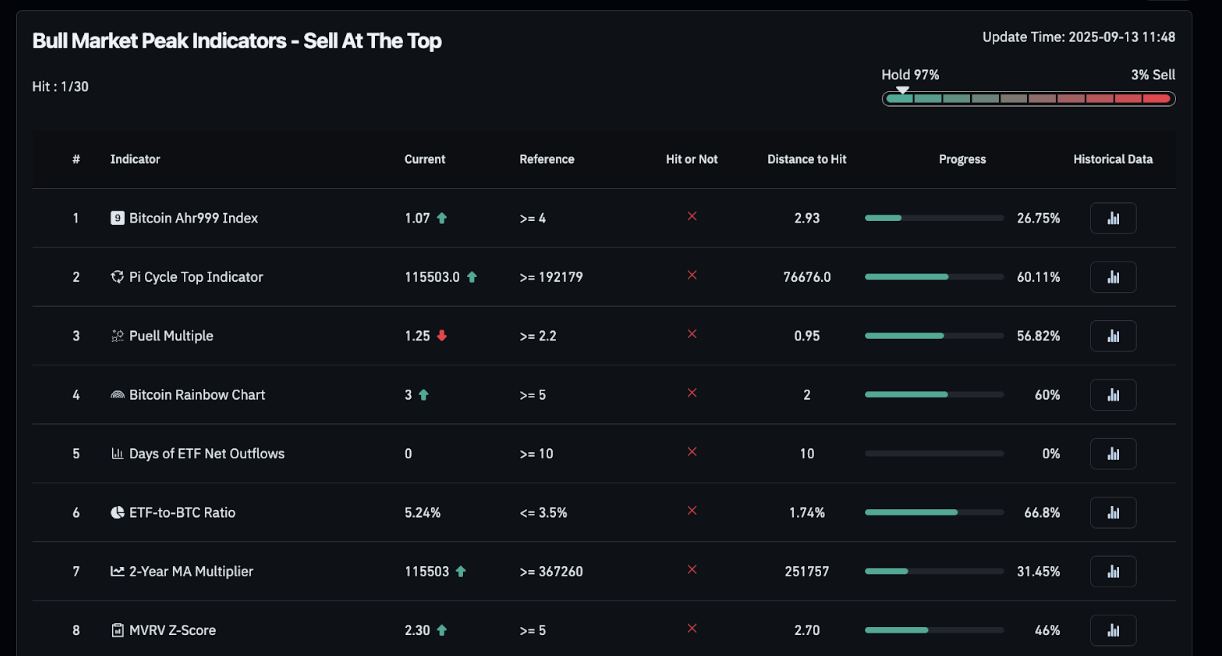
High signals not yet fully illuminated: Market booming but caution needed
According to the latest Bull Market Peak Indicators data, as of September 13th, only 1 of the 30 Peak Indicators has been triggered, and the system is still showing 97% "Hold" and 3% "Sell". For example, the Altcoin Season Index has reached 78, exceeding the threshold of 75, indicating that the torrents are in a strong cycle, while the Bitcoin Dominance Ratio remains at 56.7%, one step away from the high of 65%, with a progress of 87.24%. Other key indicators such as the Pi Cycle Top (60.11%), the Puell Multiple (56.8TP3T), the Pi Cycle Top (60.8TP3T), and the Puell Multiple (56.8TP3T), have all been triggered, Puell Multiple (56.82%), and RSI (68.65%) are approaching, but have not yet triggered alert levels. Overall, the market is still in a healthy uptrend pattern and the prosperity continues. However, the distribution of indicators suggests there is no immediate risk of a crash in the short term, but a number of signals are steadily approaching the warning line, implying typical characteristics of a mid-to-late-stage bull market. In particular, the start of the cottage season in full swing often signals that capital is entering the final phase of its frenzied rotation. In light of this week's "unexpected boom", while investors can enjoy the gains from the momentum, it is important that they gradually put their money in their pockets during the uptrend, so as to reserve their chips for a possible pullback. After all, the end of a bull market is not an immediate turnaround, but a gradual process. Whether or not you can lock in profits before sentiment and technical indicators overheat will determine who maintains the initiative in the next market.
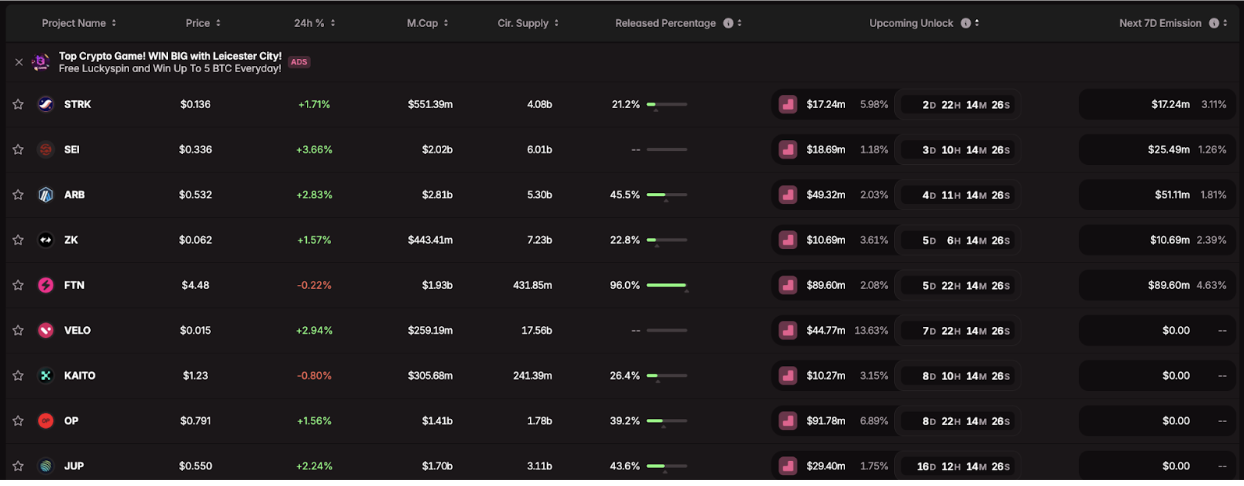
Unlocking Pressure Gradually Rises: Team Cash-Out Window Approaching
According to the data, a number of mainstream items will be unlocked in large amounts this week, potentially affecting market sentiment. ftn will unlock $89.6 million worth of tokens in 5 days, accounting for $4.63% of the outstanding market capitalization, and becoming the biggest source of pressure. op will unlock $91.78 million in 2 days, accounting for $6.9% of the outstanding market capitalization. other items such as ARB ($49.32 million in 4 days), SEI ($18.69 million in 3 days), ZK ($10.69 million in 5 days), etc., although the amount of money unlocked is not enough for the market, it is not enough for the market. Others, such as ARB (US$49.32m to be unlocked after 4 days), SEI (US$18.69m to be unlocked after 3 days) and ZK (US$10.69m to be unlocked after 5 days) are relatively small in amount, but also increase the risk of sell-offs after the recent price hike. The majority of these upcoming releases are concentrated in teams and early stage investors and are highly correlated to their lock-up ratios. Notably, unlocking tends to occur at high points following market rallies, suggesting that teams and investors tend to cash in when token valuations are at a relative advantage to ensure maximum returns. While the market continued to be unexpectedly buoyant this week, the scale of the unlocking suggests that potential selling pressure is building. This is not an immediate signal for a full-blown downturn, but it is a reminder that investors should gradually take profits on the upside to avoid a short-term pullback in unlocking pressure eroding realized gains. When a bull market enters its final phase, price momentum and unlocking rhythms tend to resonate, and locking in a portion of your profits early is the best strategy to ride out the volatility.
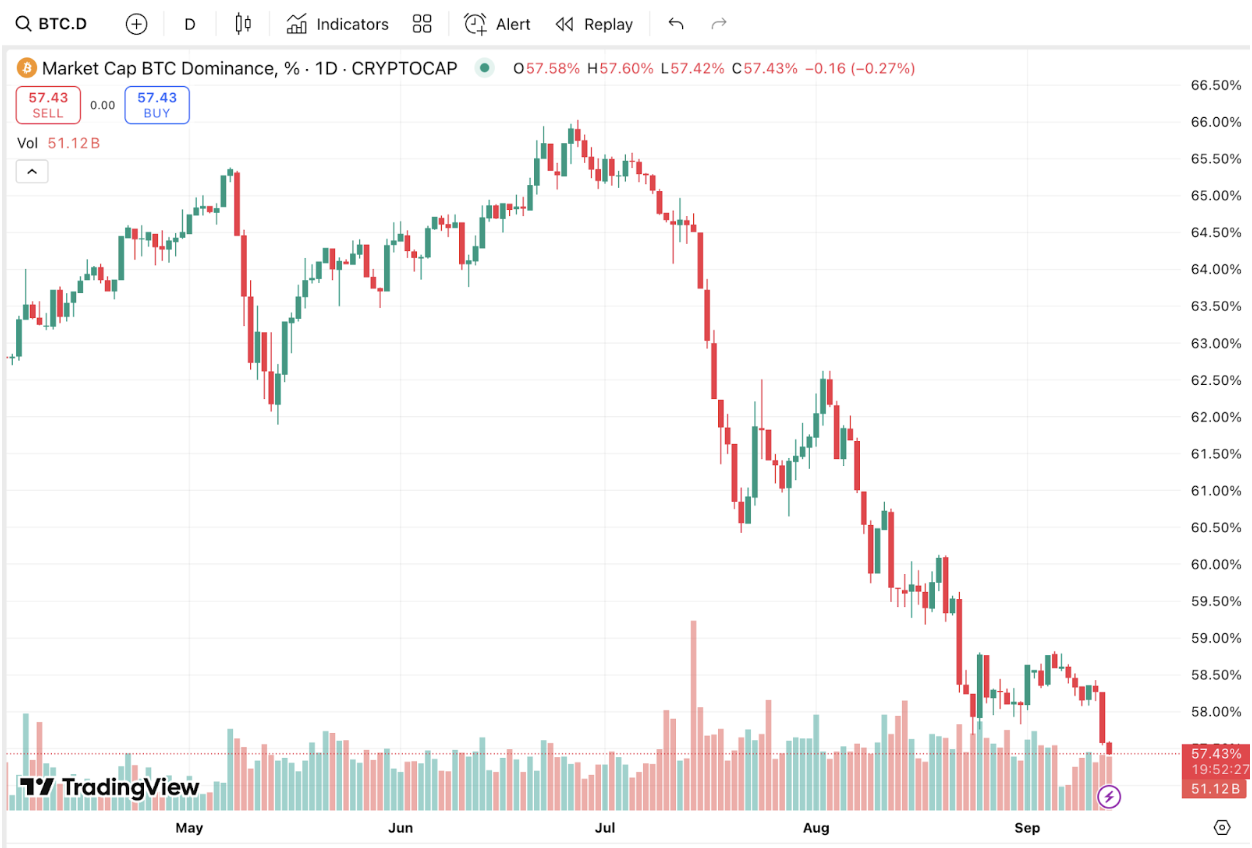
Bitcoin's Leadership Slips Sharply, Market Hot But Risky
According to TradingView data, BTC Dominance has fallen to 57.43% as of mid-September, and has been on a downward trajectory since 58.5% over the past week, hitting a nearly two-month low. The trend continues the pattern of weakness seen since July, with a gradual retreat from the highs above 66%, suggesting that Bitcoin's gold-absorbing effect on the market continues to diminish. Volume remained around $51.12B, suggesting that capital is not flowing out of the market, but is moving to other sectors, confirming that capital rotation is accelerating. Structurally, the downward movement in BTC Dominance means that torrents are taking over the reins of the market, officially entering what is often referred to as the "Alt Season". This state of affairs is usually accompanied by high rallies and volatility, making it very attractive to short-term traders. However, in conjunction with this week's theme of "unexpected prosperity", the current environment also carries potential risks: on the one hand, profit-taking pressure will gradually build up; on the other hand, as capital is dispersed, the risk of security breaches and hacking incidents also requires vigilance. Strategically, it is advisable for investors to gradually pocket part of their profits while chasing high returns, and retain liquidity to cope with possible retracements at any time.

The cottage craze is in full swing, all profits are in the clouds.
According to Crypto Bubbles data, there was a rare overall explosion in the market over the past week, with MYX being the brightest spot with a weekly gain of +1,017%, leading to a surge in capital sentiment. Other strong targets also took turns to attack, with WLD up +83.2%, M up +44.1%, IMX +26.6%, BONK +30.7%, and PEPE +23.6%, showing that capital is not only focused on a single track, but is also pouring into a full range of tokens at different market capitalization tiers. In contrast, mainstream currencies such as ETH +9.9% and BNB +11.1% have not risen as much as small- and mid-cap currencies, but still maintained a steady pace, reflecting the rapid rise in market risk appetite. However, this surge is both an opportunity and a high risk. The crypto market is inherently volatile, and unrealized gains are nothing more than a cloud, with price reductions becoming even more violent in the event of a return of capital or a black swan event. For investors who have already realized multi-fold or even life-changing gains, avoiding greed is a priority. The only way to ensure that you don't miss out on long-term advantages due to short-term greed is to stay calm in times of exuberance, and to be disciplined about dividing your money into smaller lots. The current frenzy is worth participating in, but the only thing that can really cut through the cycle is discipline and rationality.

Bitcoin Evangelist Kirk Assassinated, World Loses Coin Leader
The sudden death of Charlie Kirk once again highlights the fragility and unpredictability of life. As one of the most influential promoters of Bitcoin in the United States, he brought the idea of "Bitcoin as free money" to thousands of campuses and influenced millions of young people in just a decade. TPUSA reportedly has branches in over 3,000 high schools and colleges across the U.S., with over 650,000 lifetime members. However, while he was at Utah Valley University discussing social issues with students, he collapsed in an instant, leaving an unfillable void in the field of crypto-communication. This incident illustrates that even a central figure with a large network and influence can disappear in a day, shaking an otherwise solid narrative structure to its core.
This reality has not only sent shockwaves through society, but has also had a profound impact on the crypto market. The sudden black swan event has once again shown investors how "uncontrollable risk" can cause huge swings in market sentiment. Just like the fall of Kirk, it reminds market participants that there is no absolute safety for individuals or assets. If one chooses to go in and out of the market on a "one shot" basis due to sentiment, it is very easy to lose control of the market in the midst of a massive shock. For the crypto market, true resilience lies not in blind gambling, but in diversification and prudence, and Kirk's death is both a wake-up call to the vagaries of life and a profound reminder that investors should maintain a flexible strategy in an uncertain market.
HYPE's robust business model highlights its advantages, but the risk of chasing high in the short term should not be overlooked
Hyperliquid is expanding its ecosystem, most recently by attracting Ethena to bid on its stablecoin offering, which, if adopted, would be backed by USDtb, a stablecoin issued by Anchorage Digital and fully guaranteed by BlackRock's tokenized money market fund, BUIDL, an institutional-grade asset management product. The stablecoin is issued by Anchorage Digital and fully guaranteed by BlackRock's tokenized money market fund BUIDL, making it an institutional-grade asset management product. More importantly, Ethena has committed to returning the net proceeds of 95% to the Hyperliquid ecosystem, as well as covering the cost of migrating existing USDC pairs to USDH. This not only demonstrates HYPE's strength in attracting partners, but also highlights the fact that it has a sustainable and efficient business model. However, despite the strong fundamentals, the Hyperliquid token price has risen rapidly due to market speculation, and investors may be exposed to greater risk in pursuing the price at the current position. HYPE has established a significant advantage over its peers by strengthening its revenue sharing mechanism, but overheated capital sentiment may cause the price to fall away from fundamental support in the short term. For investors, a more rational strategy would be to recognize the long-term potential of HYPE and avoid taking long positions at high levels due to FOMO, so as to find a better entry point during a market pullback or stabilization period, in order to balance risk and return.

Hacking is just a symptom. Sui's real crisis is in the revenue.
The hack of Sui's public chain DeFi protocol, Nemo, during a system update resulted in a $2.4 million loss of funds and a one-time loss of $4.83 million in TVLs, demonstrating the shaky trust of its users. This is Sui's second major security incident this year, alongside the hacking of Cetus, which has raised doubts in the market about its underlying security. Beyond security, however, the bigger challenge for Sui is the sustainability of its revenue and business model. According to DeFiLlama, Sui's agreement revenues are still low, far below those of its Hyperliquid counterpart, which is also an emerging trading platform but has already generated significant revenues due to its strong transaction depth and fee structure. This comparison highlights the fact that if Sui relies solely on a "TVL narrative" and lacks an effective realization model, it will be difficult to attract sustained participation from institutions and developers in the long term. Analyzing further, while a blockchain security incident may cause a short-term trust crisis, it is the economic structure and revenue capacity of the public chain ecosystem that ultimately determines whether it can develop in the long run, and the case of Hyperliquid illustrates that only by establishing a stable cash flow and a clear business model can a project withstand hacking risks and market fluctuations, and remain attractive to investors. For Sui, simply solving the hacking problem is not enough to restore market confidence; it must be accompanied by improvements in protocol design, fee allocation and capital utilization efficiency to avoid marginalization. For investors, this is a reminder that when assessing the value of a public chain, it is important to look beyond the size of the assets to see if they can be translated into real revenues and network effects.
Sudden Surge in M-Bucks, Is Cottage Season Beginning?
Recently, the price of MemeCore has suddenly doubled in 7 days, soaring from $0.036 to a high of $2.13, with its market capitalization exceeding $3.2 billion, entering the top 60 in the world, and the cryptocurrency market has become significantly more heated. The cryptocurrency has risen by as much as 2,76% in a single week, with daily volume reaching $61 million, and technical indicators suggesting that capital momentum is still building. However, the RSI is in extreme territory, the Money Flow Index is above 80, and the 30-day volatility is 35%, all of which indicate that the asset is in a highly speculative state. This short-term burst is a typical characteristic of a cottage-currency bull market, and means that the "cottage season" is now in full swing. However, cottage season is often accompanied by sharp volatility and rapid rotation. Historical experience shows that when market sentiment is over-exuberant due to a surge in prices, a deep pullback from 20% to 30% often ensues. Investors should emphasize capital management at this stage and take profits in a timely manner in a highly volatile environment to avoid missing out on gains due to retracement of gains. If we look at MemeCore's unusual surge as a microcosm of market sentiment, it is not difficult to deduce that we are indeed at the peak of the cottage season. At this point, selective position reduction and dynamic stop-gapping are the rational strategies for long-term survival and preservation of gains.

3.1 Billion Repurchase Ignites ENA Rally, Capital Signals Strongly Unleashed
Ethena Labs has announced that it will invest $310 million in ENA token buybacks, supplemented by $530 million in new financing to support StablecoinX, bringing total funding to $895 million. The program uses price triggers as its core mechanism, with a daily buyback of $5 million if the ENA is above $0.70, and an increase to $10 million if it is below $0.70 or falls by more than 5% in a single day. Based on the current valuation, this will effectively recover about 13% of circulating supply, indicating that the project authority has intervened in the supply and demand structure on a large scale to stabilize the market and boost confidence. This is tantamount to establishing a "price floor" in the secondary market, which is both a direct contraction of supply and an indirect signal of strong bearishness. For the crypto market, large-scale buybacks are often seen as a mapping of traditional financial "share buybacks," often triggering further capital inflows and valuation repricing. More importantly, this trend may have a demonstrative effect: other agreements may adopt similar strategies as they seek capital efficiency and market stability. For investors, this is not only a short-term market positive, but also a sign that "buybacks as a long-term asset-backed tool" is accelerating to become the new normal in the crypto market.
Justin Sun Token Frozen as Decentralization Concerns Rise Again
Justin Sun has been blacklisted due to the plummeting price of WLFI tokens, with about 595 million unlocked tokens frozen at his address and another 2.4 billion locked tokens affected. wlfi's price has fallen by 61% in just a few days since its public launch, plummeting from $0.47 to $0.18, triggering a panic in the market. sun emphasizes that its transactions are only small-volume tests and have not had a material impact on the market, but the consortium is still taking extreme measures to restrict its freedom of operation. Sun emphasized that the trade was only a small test and had no material impact on the market, but the counterparty still took extreme measures to restrict its freedom of operation. This incident highlights the fact that the decentralized nature of cryptocurrencies is seriously questioned and the fragility of market trust and transparency is clearly exposed when the funds of core investors or "giant whales" can be unilaterally frozen.
Such manipulation could have a profound effect on investor psychology and market liquidity, and the WLFI community has been divided between those who accuse Sun of manipulating the market through internal operations, and analysts who believe that the transfers are normal internal flows. This suggests that even when tokens are operated on the blockchain, core decision-making and control may still be centralized in the hands of a small number of entities, bringing traditional concepts of financial regulation and risk management into the crypto realm. For the crypto market, the uncertainty and risk of concentration of the giant whale's capital may amplify price volatility and affect the confidence of new investors, reminding market participants that they need to take into account both technical transparency and institutional safeguards when allocating high-risk assets.

Ondo Global Market Launch: The Next Wave of Tokenized Stocks
Ondo Finance has officially launched its tokenized global marketplace, initially offering more than 100 U.S. stocks and ETFs, and plans to expand to 1,000 underlying stocks by the end of the year. The platform's real-time minting and destroying mechanism for exchanging tokenized stocks with stable currencies can effectively align secondary market prices with primary market prices and solve the problems of insufficient liquidity and high slippage of existing tokenized trading platforms. According to official data, compared to Solana DEX Jupiter, where a 200,000 USD SPYx may have a spread of 200 basis points, the Ondo market only maintains a spread of 1 to 3 basis points, demonstrating its obvious advantage of high liquidity and low slippage. This mechanism not only protects investors' trading experience, but also provides a bridge for traditional financial capital to enter Web3. After integrating with Block Street, investors can use USDT to borrow or reverse collateralize tokenized stocks, increasing asset flexibility. With platforms such as Robinhood and Coinbase starting to offer tokenized stocks, McKinsey & Company forecasts that the global tokenization market could reach $2 trillion by 2030, even if stable currencies are excluded.
The Double-Edged Effect of Highly Leveraged Trading: The Case of Ethereum Warning
Mr. Magee went long on Ether with 25x leverage at $4,363.64, totaling $125 million, but with the market falling back, he now has a loss of about $1.8 million, and the liquidation price is only $3,211. At the same time, he still holds long orders in HYPE, BTC and PUMP, of which 10 times long orders in HYPE have a gain of about $600,000, 40 times long orders in BTC have a gain of $30,000, and 5 times long orders in PUMP have a loss of about $100,000, which shows that even veteran traders are still holding long orders in HYPE, BTC and PUMP. These data show that even experienced investors may still face huge losses in extremely volatile markets, reflecting the high-risk nature of high-leverage strategies. High leverage can magnify returns but at the same time increase liquidation risk. The case of Brother Magee highlights that retail traders should set stop-loss and tightly control their leverage to minimize the possibility of being swallowed up by sharp market fluctuations if they follow a trade. Tools such as HyperInsight and Arkham, which can reveal the movements of large traders, can be used as strategic references, but they cannot replace risk control measures.

Jack Ma's group enters ETH, market growth still has room to grow
Hong Kong's Yunfeng Financial Group has become the latest traditional financial institution to adopt the "Ether Reserve Strategy" by purchasing 10,000 Ether units at a cost of about US$44 million. The company emphasizes that holding Ether will help reduce its dependence on fiat currencies and promote the layout of Web3 and AI. In recent months, listed companies such as SharpLink Gaming and Bitmine Immersion Technologies have also joined the ranks of Ether reserves, with cumulative purchases amounting to 3.7 million units, accounting for about 3% of the total supply, demonstrating that traditional capital continues to show a growing interest in digital assets. The move provides a clear signal that the market has not yet reached its peak, and there is still room for growth as large financial institutions enter the market. When large capital enters the market, it usually means they are bullish on the long-term value of the asset rather than a short-term play, which can also drive sentiment and price volatility. However, as retail investors and those who have never been involved in crypto enter the market, the market may be approaching a stage peak where investors should consider taking profits. For the crypto market, institutional entry and retail entry are often inverse signals, suggesting that it is important for investors to judge market cycles and risk management in order to strategically allocate capital to address different stages of market volatility.
Macro News

Employment Slowdown and Rate Cut Expectations: Another Delay?
U.S. non-farm payrolls added only 22,000 jobs in August, well below market expectations, the unemployment rate rose slightly to 4.3%, and the June employment data was revised downward to a net loss of 13,000, the first time since the end of 2020 there was negative growth. With the exception of healthcare, which added 31,000 jobs, most sectors contracted, with manufacturing losing 78,000 jobs over the year. As the labor market continues to cool and federal layoffs continue to weigh on employment, it is widely believed that a rate cut by the Federal Reserve Board in September is a foregone conclusion and that an easing stance could be ruled out for consecutive meetings if the weakness continues. However, while the expected rate cut should be positive for equities and crypto, the structural weakness in the data has amplified the uncertainty. Investors need to be wary of the paradoxical pattern of "superficial positives and deep-seated concerns", as a deepening economic slowdown could lead to a rapid reversal in capital risk appetite. This is similar to the logic of capital rotation in the crypto market. Instead of betting on a single good thing or being overly pessimistic, we should allocate affordable capital that does not affect our daily lives, and consider crypto as part of a long-term diversified investment. In this volatile environment, prudent position management is far more important than chasing short-term news.

China-Russia-North Korea Joint Military Parade: Militarized Atmosphere Warms Up
For the first time, Chinese President Xi Jinping, Russian President Vladimir Putin and North Korean leader Kim Jong-un attended a large-scale military parade in Beijing, displaying new weapons, including nuclear missiles with global strike capability, to mark China's military modernization. The parade mobilized tens of thousands of soldiers and the latest equipment, and attracted more than 50,000 vetted spectators. Symbolically, it showed that Beijing is not only recreating historical memory as a "victorious nation", but also emphasizing its "anti-Western" strategic alliance by standing alongside the leaders of sanctioned countries. Meanwhile, the absence of most Western leaders highlights the polarization of the global camp. This move has undoubtedly intensified the militarized atmosphere in the international arena, laying the groundwork for the geopolitical situation to heat up further. As major powers openly display their military power and alliance intentions, market uncertainty will intensify, and risk aversion will naturally push up demand for scarce assets such as gold, and possibly crypto assets with "digital gold" attributes such as Bitcoin. Just as traditional financial markets tend to move towards defensive assets in times of stress, the crypto market is likely to benefit from this shift in capital, especially as Bitcoin's acceptance at the institutional level continues to grow. In other words, the parade was not only a demonstration of military prowess, but it also kicked off a new cycle of market turbulence and capital reassessment of risk appetite.

Gold Hits New Highs: Sentiment Turns Toward Rare Metals
The gold price set a new record at US$3,660 per ounce on September 9, and has risen by more than 92% since the end of 2022, driven by three consecutive years of net purchases of more than 1,000 metric tons by central banks and an influx of capital into physical-backed ETFs. according to the World Gold Council, gold ETFs have taken in 397 metric tons of capital during the first half of 2025, the highest for the same period since 2020 According to the World Gold Council, gold ETFs have attracted 397 metric tons of capital in the first half of 2025, a record high for the same period since 2020. Geopolitical risks and uncertainty over the hegemony of the US dollar, coupled with questions over the independence of US domestic monetary policy, have pushed emerging markets to accelerate the de-dollarization of the US dollar and shift to rare assets such as gold. This reflects not only a strategic realignment of official reserves, but also a loosening of investors' trust in traditional currencies and the international financial order. This gold rally reveals a subtle shift in market sentiment: when capital flows into "core scarce assets" such as gold, it often means that the market is looking for the next relatively undervalued benchmark. Silver, with its mix of industrial and financial attributes, has the potential to be subject to capital rotation, much like the "mainstream-counterfeiting rotation" in the crypto market. If gold remains high and jewellery and retail demand is subdued, some of the capital may spill over into silver and other precious metals, creating a 'precious metals sector rotation'. For the crypto market, this is similar to the logic of the shift of capital from Bitcoin to Ether and other L1 and L2s, meaning that investors are hedging their bets against geographic risk and currency uncertainty through multi-asset allocations. Gold's all-time highs are therefore not only a reflection of safe-haven demand, but could also open the door to a new wave of capital inflows into rare metals and crypto.
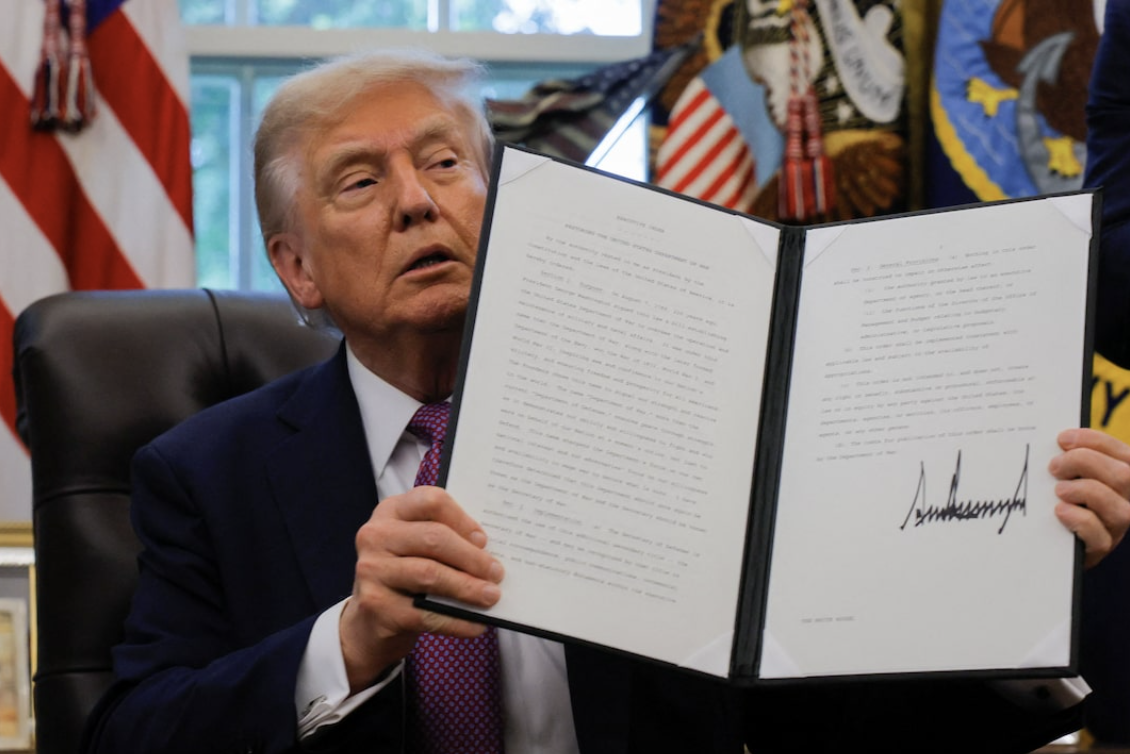
Military signals in the midst of geopolitical tensions, the Ministry of National Defense is renamed the Ministry of War.
President Trump will sign an executive order renaming the Department of Defense the "War Department," in an effort to present a more aggressive and victorious U.S. military. The move challenges the traditions of a national security structure that dates back to 1947 and will require a costly rebranding of the names and symbols of hundreds of military agencies. The shift from "defense" to "offense" in official discourse not only reshapes the U.S. military's positioning, but also sends a strong signal at a time when geopolitical frictions such as the Russo-Ukrainian war, the Middle East conflict, and tensions in the Taiwan Strait are on the rise. According to the Stockholm International Peace Research Institute (SIPRI), global military spending will reach a record high of US$2.4 trillion in 2024, with the U.S. still accounting for more than one-third of the total, highlighting the accelerating spread of militarization and laying the groundwork for potential conflicts in the future. The name change is not just a rhetorical adjustment, but a shift in strategic thinking. If the U.S. takes on the posture of a "war department," it will deepen the psychological expectations of allies and rivals that military conflict is inevitable, further escalating the regional arms race and geopolitical confrontation. This narrative of "military aggression" is a preview of the escalation of global conflict and could be a turning point in the repricing of risk in the market: safe-haven assets such as gold and Bitcoin could benefit from it. Bitcoin, in particular, is often seen as a safe haven for capital in the face of heightened geopolitical conflict due to its denationalized and censorship-resistant properties. If the US military policy gets tougher, the current name change could be an important stepping stone for a shift in global capital allocation to crypto assets.

Russia Tests NATO's Bottom Line, East Flank Defense Being Fully Strengthened
A Russian drone has crossed into Poland, prompting the Polish prime minister to say that the country is "the closest it has been to open conflict since World War II". According to the BBC, the incident, which involved the shooting down of three drones and the scattering of debris in eastern Poland, was much larger than previous cases of mistaken entry. Poland immediately called for a meeting of the United Nations Security Council, and received support from many countries: the Netherlands and the Czech Republic pledged to send air defense systems and troops, Germany will step up air defense patrols on its eastern flank, and France even dispatched three Rafale fighters. This reflects that NATO members regard this as a serious provocation, and no longer intend to respond with diplomatic rhetoric, but rather with concrete military deployment as a warning. This incident essentially challenged NATO's authority and credibility. If Russia's intention was to "test" NATO's ability to respond, the results are already visible: the defense line on Poland's eastern flank is rapidly being strengthened, and neighboring Lithuania will receive German brigade-sized troops. For the crypto market, the escalation of such regional conflicts will continue to increase safe-haven demand, with gold, the US dollar and some decentralized assets becoming the preferred destination for capital flows. However, geopolitical uncertainty will also increase market volatility, reminding investors to avoid extreme "all in, all out" strategies and diversify their allocations to address unexpected risks. Russia's provocations have reshaped the security landscape in Eastern Europe and reaffirmed the high degree of correlation between geopolitics and asset markets.
Related Post:
Best Cryptocurrency Trading Platform for Hong Kong Users?2025 Latest Bitcoin Tips for Beginners
2025 Coin Ring Newbie Guide Lazybones|Chained Ecology Entry Guide
2025 Must Read for Newbies! Use these six data indicators to learn how to judge buying opportunities.
Chained Data Analysis:

New investors in the red, risk of selling pressure rising
As seen in the Glassnode chart, the current price of Bitcoin has fallen below the cost benchmark for short-term holders, with the average cost for investors buying in 1 month and 3 months around $115,600 and $113,600, respectively, and the price is already below this range, implying that recent entrants are being pressured to take losses. Meanwhile, the six-month cost benchmark is around US$107,000, and if prices continue to dip and lose this level, a wider range of investors could be left with unrealized losses. Short-term holders tend to be emotional and highly liquid, and when the market falls below their cost zone, the psychological pressure can easily translate into selling behavior, exacerbating downside momentum. This phenomenon reflects the market structure is entering a fragile phase, whereby short-term holders' losses will act as resistance to a price rebound, and any rebound could be met with profit-taking or unwinding selling pressure, rendering the upside weak. A fall below the 6-month cost basis could trigger wider panic selling, pushing prices even lower into the supply support zone. In other words, new capital intolerance and potential selling pressure are the main sources of risk for the market at the moment. Investors need to be wary of heightened short-term volatility and take a conservative position against a possible downside test.

Short-term holders' losses deepen, market pressure risk accumulates
As can be seen from the chart, the change-adjusted SOPR (yellow line) currently remains in neutral territory near 1, implying that investors as a whole are neither realizing large profits nor taking large losses. Historical experience has shown that when the SOPR falls below 0.98, it often signals a generalized sell-off and a bear market bottom. However, no such signals have been seen yet, suggesting that the market is anxious but has not entered a stage of outright capitulation. In other words, this is more of a cooling of sentiment and a retreat of speculation rather than a real crash point. This neutral to weak structure means that the market is still supportive and is not yet in an over-panic. As sentiment has not gone through an extreme frenzy and a bubble burst has been avoided, the market retains room to recover from a downward shock. Against the current backdrop of heightened uncertainty, a Divided and Chunked Attachment (DCA) is a reasonable strategy to minimize the risk of short-term volatility and to benefit from the market's regaining momentum in the future. Therefore, the next one to two months of pullback may be seen as a strategic opportunity for long-term capital to enter the market.

Converging volatility, long-term structural stability
Bitcoin price has retreated from its highs to a retracement of ~11.4%, which is significantly shallower than the historical interim correction of over 25% and the deep bear market of up to 75%. As can be seen in the chart, while the market has retraced from the US$124,000 high, the decline has been manageable and far from the extreme downside pressure zones of the past. This limited price retracement reflects the fact that the current pressure is not typical of a full-blown capitulation, but more of a short-term consolidation in the midst of capital inflows. It is further observed that the continued inflow of ETF funds is gradually consolidating the price structure, making Bitcoin significantly less volatile. As mainstream capital moves in and positions become more long-term, the market is more inclined to enter a low-volatility medium-to-long-term range, rather than a quick and sharp correction. This means that although there may still be a short-term pullback, the overall structure has gradually stabilized, and investors can focus on holding patiently and adding to their positions in small batches at low levels to capture the long-term capital-driven trend dividends.

Market frenzy subsides, back to rational accumulation stage
After breaking out to new highs in mid-August, Bitcoin entered the third multi-month frenzy of the cycle, with sentiment running high and supply above 95% once in profit. However, as capital inflows slowed, profit-taking pressure built up and the price eventually fell back below the 0.95 quartile cost basis on August 19th. Prices are currently hovering in the 0.85 to 0.95 quartile band, or approximately $104.1K to $114.3K, which has historically served as a consolidation corridor following the peak of the frenzy. This structure suggests that the market has lost the sustained buying required to maintain the frenzy in the short term, and the momentum is entering a period of digestion. This is not the end of the cycle, but rather the natural course of the cycle: buy low, keep accumulating in the affordable range, and then take profits in batches during the frenzy and insanity phases, and so on and so forth. If the price falls below 104.1K, it will replicate the "burnout" trend that has followed many previous all-time highs; conversely, if it stabilizes above 114.3K, it will mean that demand is once again dominating. For investors, instead of chasing the frenzy, it is better to focus on gradually increasing their holdings within the affordable range, patiently waiting for market sentiment to rise to irrational peaks again before harvesting, which is the core of the strategy that the cyclical structure of Bitcoin has repeatedly verified.

Ether Spot ETF Funding Flow: Wait-and-see Period After the Capital Surge
Spot ETF flows clearly reveal the core drivers of this year's ethereum price hike. Since May 2025, there has been a steady influx of funds from traditional financial institutions, with 14-day averages of 56,000 to 85,000 ETH per day, and the chart shows that this influx of funds has coincided with the price's surge from $2,000 to more than $4,500, suggesting that ETF funds are not only a source of liquidity, but also directly shaping the upward trend. However, the pace of inflows slowed down significantly in September to around 16,600 ETH per day, with the corresponding price falling from its highs, reflecting the direct impact of the cooling liquidity. This phenomenon reveals that the market is now entering a "catalyst-less" phase, where the rally brought about by the ETF funding wave has come to an end and investors are waiting for new macro conditions to emerge, especially a turnaround in interest rate policy. If the Fed signals a further rate cut, it could be the trigger for the next wave of capital inflows; conversely, if interest rates remain high, demand may continue to be pressured. In other words, whether ethereum can resume its upward trend no longer depends on the supply and demand in the chain, but on the macro environment and policy direction. This proves once again that the current market is deeply embedded in the macro-financial cycle, and ETF flows are a key indicator of this.
Conclusion
The breakout of ETH and the popularity of torrents have confirmed our previous judgment that "capital flows are about to shift". If you've pocketed some money during this surge, you're in an ideal position to get in and get out. But if you're still completely immersed in the excitement of the market, this may be a good time to review your position ratios and risk tolerance.
If you have learned something from this update, or learned more about the market, please follow us on Monsterblockhk. Twitter ,並Join our Telegram GroupsWe will be able to share and discuss the next wave of opportunities!
Most Popular Cryptocurrency Trading Platforms
Hong Kong People's Top Choice for Bitcoin and Ether Trading 》 【2025 Introduction】OSL Registration Benefits, Security, Deposit and Withdrawal, Special Features
Suitable for traditional Hong Kong investors to buy and sell stocks and currencies at the same time. [2025 Introduction] What is Victory Securities? Security, Deposit and Withdrawal, Features
More choices of contract currencies, suitable for buying fake coins in cash. Trade on MEXC and enjoy 500x leverage and many other benefits!
Related Post:
Best Cryptocurrency Trading Platform for Hong Kong Users?2025 Latest Bitcoin Tips for Beginners
2025 Coin Ring Newbie Guide Lazybones|Chained Ecology Entry Guide
2025 Must Read for Newbies! Use these six data indicators to learn how to judge buying opportunities.

Disclaimer
The content of this article is for reference only, investors should exercise independent judgment, invest prudently and at their own risk, this article does not provide or attempt to persuade the audience to do trading or investment basis, the content is for sharing purposes only, and should not be regarded as investment advice.It does not represent the views and position of Monsterblockhk.All information and opinions are current as of the date of the judgment. In addition, if a judgment is rendered on aIn this siteAny content related to virtual asset trading platforms that have not yet obtained a license to operate virtual asset trading platforms in Hong Kong, including but not limited to text introductions, pictures, offers, events, etc., are only available to users outside the Hong Kong Special Administrative Region.
According to the Hong Kong Anti-Money Laundering and Counter-Terrorist Financing (Amendment) Ordinance 2022, after June 1, 2023, all centralized virtual asset trading platforms operating in Hong Kong or actively promoting their services to Hong Kong investors will be licensed and regulated by the SFC, and any related unlicensed activities will be a criminal offence. For more information and details of the legislation, users may refer to the SFC website.