

Whenever a major cryptocurrency summit approaches, there are two distinct reactions on social media. One is that cryptocurrency professionals are excitedly sharing their itineraries, airfare, and meeting people on the sidelines; the other is that most people who are curious about Web3 but are still standing on the sidelines are silently scrolling through the posts and asking themselves, "Is this the kind of event that I can go to?"
Behind this question lies a more common misconception than you might think - Web3 events are only for those who are already in the loop.
The opposite is true. If you're interested in Web3 but don't know where to start, a big cryptocurrency campaign is probably the lowest cost and highest density entry point you can find. This article is for you.
What is a Web3 event? Why it's worth going even for outsiders
Web3 events, in general, are large-scale conferences and exhibitions that focus on blockchain technology, cryptocurrency, decentralized finance (DeFi), NFT and the entire Web3 ecosystem. These events range in size from local meetups of a few dozen people to international summits of tens of thousands.
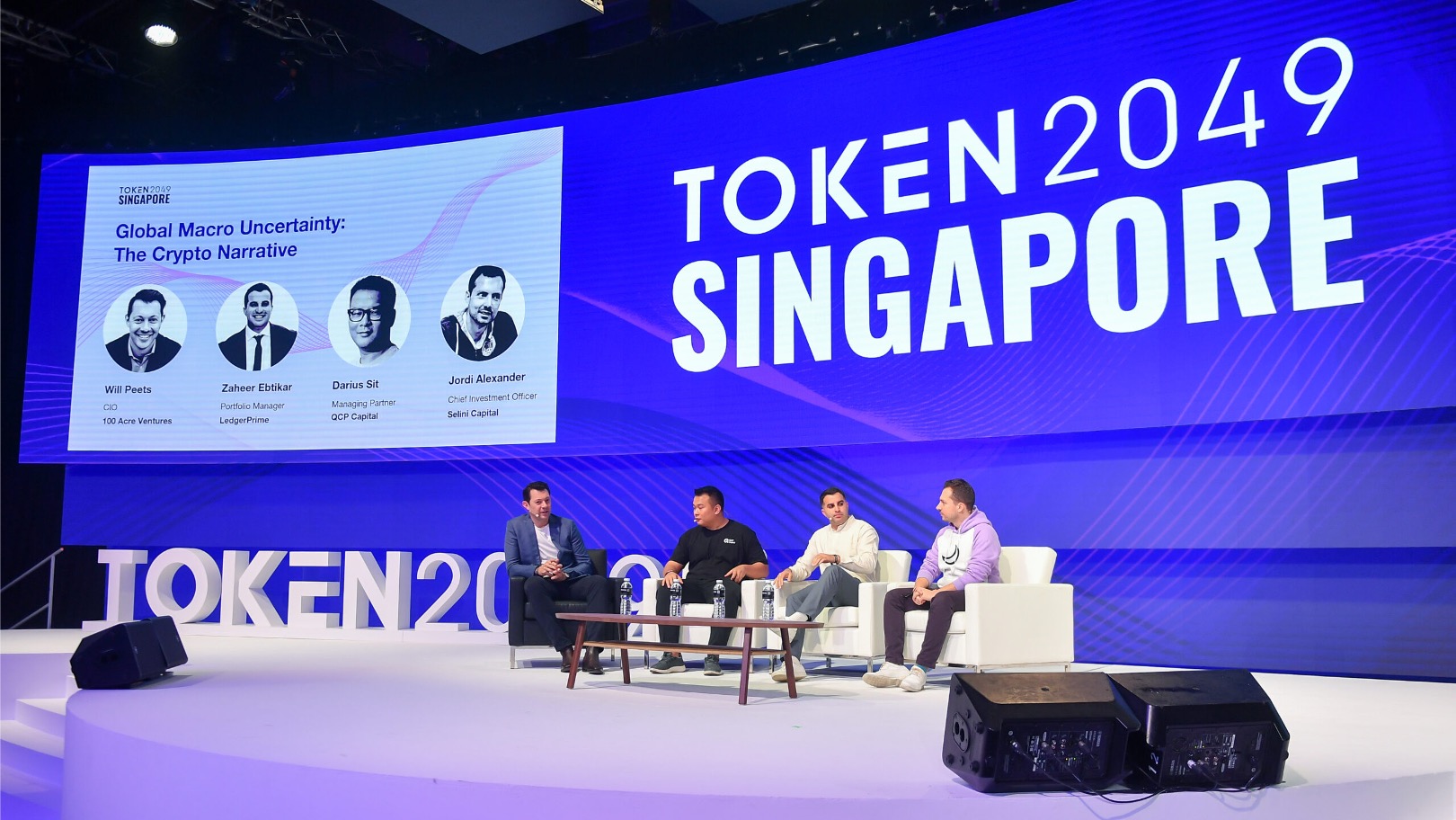
The most iconic Web3 events in the world today include the annual Singapore and Dubai events. TOKEN2049The following are some examples of the activities that are organized in Hong Kong each year Bitcoin Asia (Bitcoin Asia Conference) 與 Hong Kong Web3 Festival (香港Web3 嘉年華)and CoinDesk, which was based in Hong Kong. ConsensusEach of these events attracts investors, founders, developers, regulatory representatives and media from around the world. Each of these events attracts investors, founders, developers, regulatory representatives and media from around the world and is the most important gathering point for the industry throughout the year.
You may ask, "What do these names have to do with me when they all sound so professional?"
This is exactly the problem. Most people's first impression of these events is that they're "just for industry people". But in reality, these events were never designed to keep outsiders out - they're a window for the industry to show itself, and a bridge for more people to learn about Web3.
You don't need to hold any cryptocurrency to be eligible to step through that door.
Second, you don't need to know coins or have a wallet: cracking the three most common misconceptions
Many Web3 curious newbies have several invisible barriers when considering whether or not to participate in an event. Often these barriers are not real barriers, but imaginary ones.
Misconception #1: "I don't even understand the basic concepts, so I'll just be out of place if I go."
The Web3 event floor has never been a place for experts. In fact, almost every major summit has an introductory level of presentations designed for first-time visitors to the industry. A large percentage of the people you see in the room are on the same learning curve as you are - they're observing, they're asking questions, and they're trying to make sense of an industry that's taking shape.
It's never the amount of knowledge that really puts people off, but the attitude. A novice who enters the market with curiosity and an open mind is more likely to make real connections at events than a practitioner who just shows off his positions.
Misconception #2: "I don't have an encrypted wallet, so I can't participate even if I go."
This concern is completely unnecessary. With the exception of a handful of session-specific, on-chain interactive experiences, the vast majority of Web3 events are exactly the same as any other industry summit - all you need is a ticket, a cell phone, and the will to receive information.
Misconception 3: "Going means I have to invest, it's risky."
Attending events and making investment decisions are two completely separate things. The former is learning and observing, the latter is financial behavior. No one is going to force you to buy coins at an event, just as attending a tech expo doesn't mean you have to buy everything on display right away.
Going in as a sober observer is the ideal novice position.
Recent Recent Posts:
2026 Latest 6 Free Coin Ring Tools Inventory|Where to find the data on the chain?
2025 Latest OKX Web3 Wallet Tutorial: Does it work? How to create it? A Guide to Safe Operation, Multi-Link Support, and Time-Limited Airdrops
2026 Latest Polymarket Tutorial|How to find out the insiders and realize the high win rate!
2025 New DeFi Beginner's Guide|Teaching you to earn stable money passive income! Introducing 3 popular programs, DeFiLlama tool tutorial!
What can I get from going? The real gains for newbies are these.
This is the most important question that deserves a serious answer. For newbies, the reward of participating in Web3 events is not "finding the next hundred percent" as people think, but rather a few more tangible and long-term things.
Build a true sense of the industry as a whole
The presentation of the Web3 industry on the Internet is often extremely fragmented - what you see on Twitter is one version, what you see on YouTube is another, and what you see in the news is yet another. But when you are in a real summit, you can feel the real temperature of the industry in a few days: which projects are really being done, which directions have capital flowing in, and what the market participants' real judgment of the future is.
No article or video can duplicate this sense of reality.
Access to a network of real industry contacts
The Web3 industry is inherently built on collaboration and community, and face-to-face interaction is the most effective way to build real connections. At the event, you'll have the opportunity to speak directly with project owners, developers, investors, and even representatives from regulatory agencies. For a newcomer to the industry, the value of these conversations far outweighs any second-hand information - you get to ask the questions you really want to ask and get the answers first-hand.
Get a trackable learning framework
The terms you hear, the projects you see, and the concepts you encounter at the event become the starting point for your own research after you leave. You are no longer looking at a vast Web3 universe with no way to start, but you have a few concrete coordinates to follow. This way of learning is much more efficient and directional than just reading online.
Confirm whether you really want to enter the industry
For those who are considering a career change or a deeper involvement in Web3, observing a large-scale event on the ground is the most effective "market research". You'll be able to get a feel for the industry's culture, pace of work, and composition of people, and be able to more rationally determine if this is a direction you really want to dive into.
IV. Global overview of major Web3 activities
Below are some of the most representative Web3 events in Asia and around the world, which newbies can use as a reference according to their geographic location and interests.

TOKEN2049
TOKEN2049 is one of the largest Web3 summits in the world and is held annually in Singapore and Dubai. TOKEN2049 Singapore attracts over 25,000 attendees from over 160 countries and is one of the most important annual gathering points for the global cryptocurrency industry. In addition to the speeches and exhibitions in the main venue, the most unique part of TOKEN2049 is the thousands of Side Events that are held alongside the main event, ranging from mini-gatherings, themed dinners, hackathons, and workshops, so that participants from different backgrounds can find their own entry point.
To the uninitiated, the size of TOKEN2049 may be a bit jarring at first, but that's where it excels - it's diverse enough that you'll find fellow enthusiasts and portals in almost any corner of Web3.

Bitcoin Asia / Bitcoin Hong Kong (Bitcoin Hong Kong Conference)
Bitcoin Asia is the largest Bitcoin summit in Asia organized by BTC Inc. (parent company of Bitcoin Magazine), with Hong Kong as the main venue. Bitcoin Asia 2025 attracted more than 15,000 attendees, making it the world's second-largest Bitcoin event, and reflecting Hong Kong's position as a leader in the global adoption of digital assets. The event is relatively focused on Bitcoin itself and its related ecosystem, and is suitable for newcomers who are particularly interested in the Bitcoin thread.
It is worth noting that the 2026 event has been officially renamed the Bitcoin Hong Kong 2026will be August 27-28, 2026Held at the Hong Kong Convention and Exhibition Center.
Tickets are priced at $58 for a basic GA ticket (full two-day pass), which is suitable for general attendees and Bitcoin beginners, and $107 for a GA Plus ticket, which offers additional access to the Deal Flow Zone business meeting space and the Networking Lounge, for those who want to proactively network with others in the industry. For newcomers on a budget, a GA ticket is more than enough to experience the main stage presentations, the exhibit hall, and Asia's largest exhibition of Bitcoin digital art, making it a cost-effective entry option.
Read more Bitcoin Conference articles:
Bitcoin 2026 Conference Announces Afroman as Guest Speaker
Bitcoin Enterprise Seminar returns with a strong presence at Bitcoin Summit 2026!
Middle East Bitcoin Power on the Rise: Bitcoin MENA to Gather Over 12,000 Global Leaders in Abu Dhabi in December
Bitcoin Amsterdam 2025 The World's Strongest Bitcoin Speaker Lineup Revealed! If you miss this conference, you could miss the next Bitcoin bull market!

Hong Kong Web3 Festival (香港Web3 嘉年華)
Co-organized by Wanxiang Blockchain Labs and HashKey Group, the Hong Kong Web3 Carnival is one of the largest comprehensive Web3 events in Asia, held annually in April at the Hong Kong Convention and Exhibition Centre. The Hong Kong Web3 Carnival has been held annually since 2023, bringing together more than 350 cutting-edge projects, over 1,200 industry leaders, and more than 100,000 attendees, as well as over 400 side events. For local Web3 newcomers in Hong Kong, this is the closest and lowest barrier to entry.
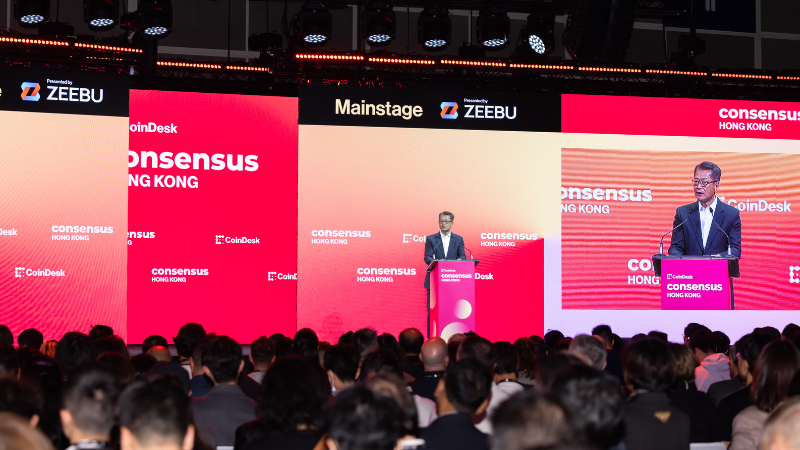
Consensus
Consensus is a flagship summit organized by crypto media outlet CoinDesk, and has been held in Hong Kong in recent years, positioning itself as a bridge event between traditional finance and the Web3 ecosystem. Consensus Hong Kong is positioned as the "gateway to cryptocurrency in Asia," bringing together global leaders for trading and business development, and is suitable for participants interested in the interface between traditional finance and Web3. The event is relatively formal, with presentations and speeches. The event is relatively formal, with a mix of policy, regulatory, and technical presentations, making it a valuable reference for newcomers to the industry who want to understand the broader landscape of the industry.
How to prepare before going? Beginner's Pre-trip Checklist
Preparation for attending a Web3 event doesn't require you to have read ten blockchain white papers first. Here are a few really useful pre-event actions:
Get a basic understanding of the program
Before the event starts, spend an hour or two browsing the event website to learn about the theme area, the list of speakers, and the core issues that the event will focus on. You don't need to know everything about the speakers, but having a general idea of "where this event will focus" will help you make more effective choices on the spot.
Most major events publish a full agenda (Agenda) and venue descriptions in advance. Choose three to five events that interest you the most for your must-attend list, and keep the rest of the year flexible.
Prepare your basic tools
A fully charged cell phone is a basic necessity. Many events use official apps or registration platforms (e.g. Luma, Eventbrite) to manage entry, so downloading and confirming your ticket information in advance can help avoid confusion at the venue.
It's also a good idea to have some physical business cards on hand, or set up a digital business card on your phone that's easy to share (e.g., a QR Code on your LinkedIn profile page). The people you meet at a networking event are often going to be separated in a matter of minutes, and a quick way to share your contact information will keep you from missing out on any conversations that are worth extending.
Set your participation goals in advance
This is the most easily overlooked but also the most important step. Before you go, set yourself a specific, quantifiable goal, e.g. "I want to learn about DeFi's current mainstream use cases", "I want to meet three people who work in this industry", "I want to figure out the direction of virtual asset regulation in Hong Kong".
With a goal in mind, every choice you make in the field will have a better sense of direction. People without a goal often leave the event feeling that they "went to a lot of places, but couldn't tell you what they learned".
How to go to the venue? Six principles of action that will keep you from going in vain
When you get there, there are two common mistakes newcomers make: trying to listen to all the sessions and ending up exhausted and not remembering anything, or sitting in the main room all day and missing out on the really valuable informal interactions.
Here are six principles to help you spend your time where it's really worth it.
Principle 1: Don't Try to Attend All Sessions Speeches in the main conference hall are usually followed by a video recording or organizer, which you can watch afterwards. The most valuable part of a live event is the conversations and interactions that only exist there. Save your energy for the sessions that really interest you, and spend the rest of your time exploring the exhibition area and talking to people.
Principle 2: Exhibit areas are the most information-intensive places The exhibition area of a large event is filled with hundreds of project and organization booths. For newcomers, this is an ideal place to get a low-barrier approach to the industry - you can walk up to any booth and ask "what are you doing?" and almost all the booth staff will be happy to introduce themselves to you. It's a very direct way to research the market.
Principle 3: Be proactive and don't wait for others to come to you. The Web3 community as a whole is very open and conversations between strangers are not uncommon. At an event, almost any moment of waiting - in line, in the coffee area, in the elevator - is an opportunity to start a conversation. You don't need to have a great background, and a sincere question is often the best way to start a conversation.
Principle 4: Watch for Side Events As mentioned earlier, many valuable interactions occur in side events outside of the main event. These events are usually smaller, more relaxed and less guarded. Search for concurrent side events on the event's social media channels or the Luma platform ahead of time and select a few you're interested in attending.
Principle 5: Keep track of new terms and concepts you hear. The amount of information in the field often exceeds your ability to digest it in real time. Make a note of every word, program title or concept that you don't understand but are interested in, and use it as a checklist for when you go back and dig deeper. This list is the most authentic learning path you will take away from the event.
Principle 6: Maintain Critical Thinking The atmosphere in the Web3 industry can sometimes be optimistic and even overblown. As a newcomer, it's more important to remain a sober observer than to follow the mood of the room. Any project or opportunity you hear about that sounds "great" is worth verifying independently after the fact, rather than believing it right away.
After the event, the real harvest begins!
Many people see attending an event as the end point, but for true novices, the most important phase comes after the event is over.
Within 24 to 48 hours after the event, while your memory is still fresh, organize the notes you took at the event and begin preliminary independent research on the terms and items you recorded. This research process is when you really turn the event into knowledge.
For people you met at the event, take the initiative to send a follow-up message within one to two days after the event. It doesn't have to be intentional, just a "I'm glad I met you at the event and I look forward to keeping in touch" will suffice. The value of connections is not in the number of business cards, but in your willingness to maintain that connection.
If this is your first exposure to the industry, we suggest that you ask yourself the question, "Has my interest in Web3 become more specific since the event?". If the answer is yes, then your next step is to find a specific area or project that you would like to continue to follow and turn this curiosity into systematic learning.
The Monsterblockhk (MB) community and content resources were created with this goal in mind! If you'd like to learn more about the Web3 industry, join our Telegram CommunityWe have a rich network of industry contacts to help you grow and get started!
Recent Recent Posts:
2026 Latest 6 Free Coin Ring Tools Inventory|Where to find the data on the chain?
2025 Latest OKX Web3 Wallet Tutorial: Does it work? How to create it? A Guide to Safe Operation, Multi-Link Support, and Time-Limited Airdrops
2026 Latest Polymarket Tutorial|How to find out the insiders and realize the high win rate!
2025 New DeFi Beginner's Guide|Teaching you to earn stable money passive income! Introducing 3 popular programs, DeFiLlama tool tutorial!
Disclaimer
The content of this article is for reference only, investors should exercise independent judgment, invest prudently and at their own risk, this article does not provide or attempt to persuade the audience to do trading or investment basis, the content is for sharing purposes only, and should not be regarded as investment advice.It does not represent the views and position of Monsterblockhk.All information and opinions are current as of the date of the judgment. In addition, if a judgment is rendered on aIn this siteAny content related to virtual asset trading platforms that have not yet obtained a license to operate virtual asset trading platforms in Hong Kong, including but not limited to text introductions, pictures, offers, events, etc., are only available to users outside the Hong Kong Special Administrative Region.
According to the Hong Kong Anti-Money Laundering and Counter-Terrorist Financing (Amendment) Ordinance 2022, after June 1, 2023, all centralized virtual asset trading platforms operating in Hong Kong or actively promoting their services to Hong Kong investors will be licensed and regulated by the SFC, and any related unlicensed activities will be a criminal offence. For more information and details of the legislation, users may refer to the SFC website.