

In the ever-changing crypto market, a single data platform is often not enough to make informed investment decisions. Different tools have their own strengths, new projects may not yet be included in mainstream dashboards, or certain specialized areas (such as prediction markets) may lack a common analytical interface. As a result, both advanced crypto researchers and retail investors looking to improve their capabilities need to have a comprehensive "toolkit" of useful tools at their disposal.
This article will give youIntroducing 6 free and powerful cryptographic data analysis toolsThese tools cover different aspects of DeFi overviews, community generated data, token economics, project fundamentals, forecasting markets and self-service data analysis. These tools cover DeFi overviews, community generated data, token economy, project fundamentals, market forecasting, and self-service data analysis. Together, they complement each other to provide in-depth analysis of project fundamentals and market dynamics from multiple perspectives.
Open Source DeFi Data Hub: DeFiLlama
When you can't find information about a project on other analytics sites like Token Terminal, take a look at DeFiLlama, an open-source Decentralized Finance (DeFi) data aggregation platform where many DeFi project teams have created official dashboards to showcase their project's key metrics and data performance. Born in the heyday of DeFi, DeFiLlama has evolved over the years to include most of the major DeFi protocols, making it one of the most comprehensive analytics sites in the ecosystem with the widest coverage of data and projects.
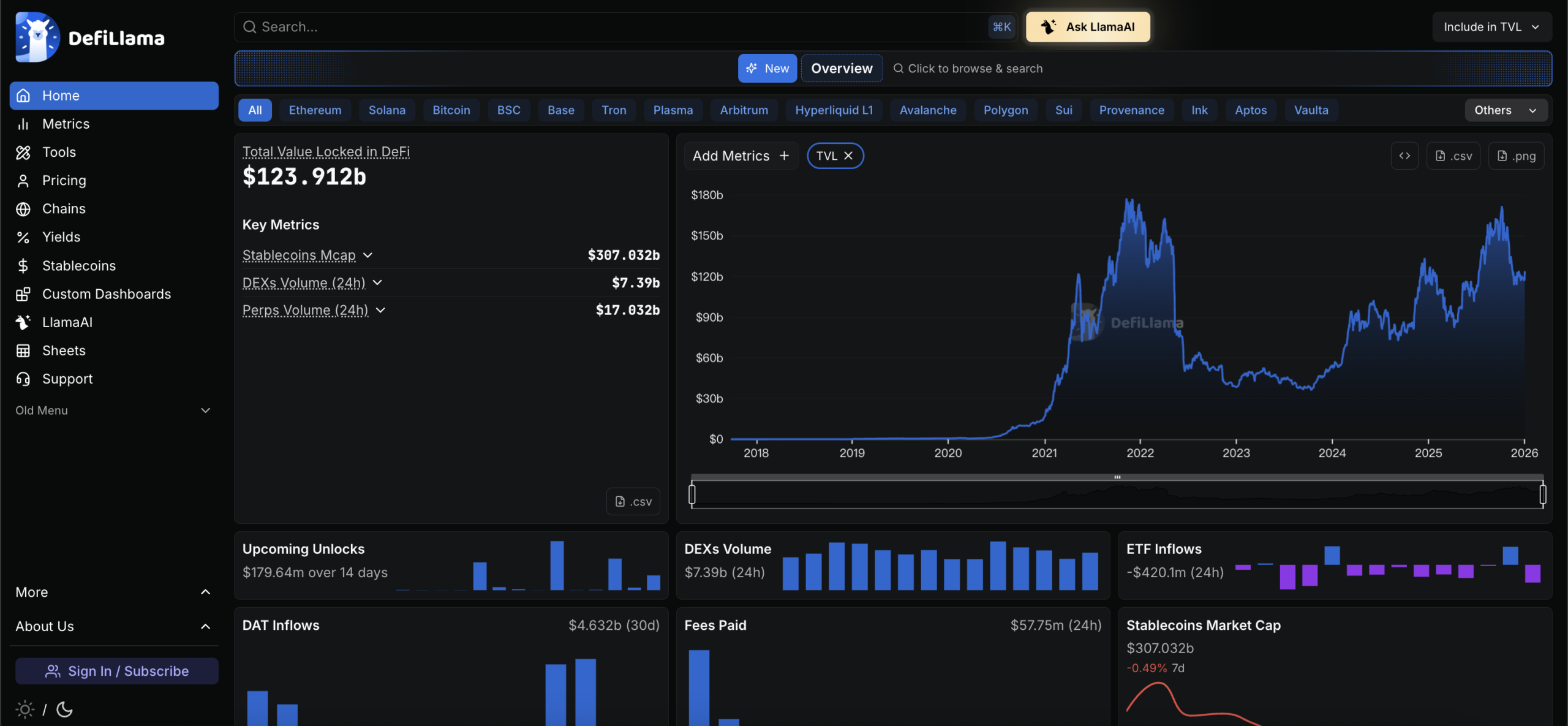
Multi-indicator filtering for quick comparison of quotesDeFiLlama provides a powerful filtering function that allows users to switch between different data types according to their needs. For example, if you want to compare the Total Value Locked (TVL) of various public chains, just click on the "Chains" or "Chain TVL" indicator, and the TVL trend and ranking list of major public chains will be displayed on the page, so that you can immediately see the capital size and growth rate. If you want to understand the overall ecosystem from a macro level, you can also browse the "Chains" overview page, where you can grasp the core data of each chain, such as trading volume, fee income, total lock-ups, etc., in one page, so that you can quickly get a full picture of the market.
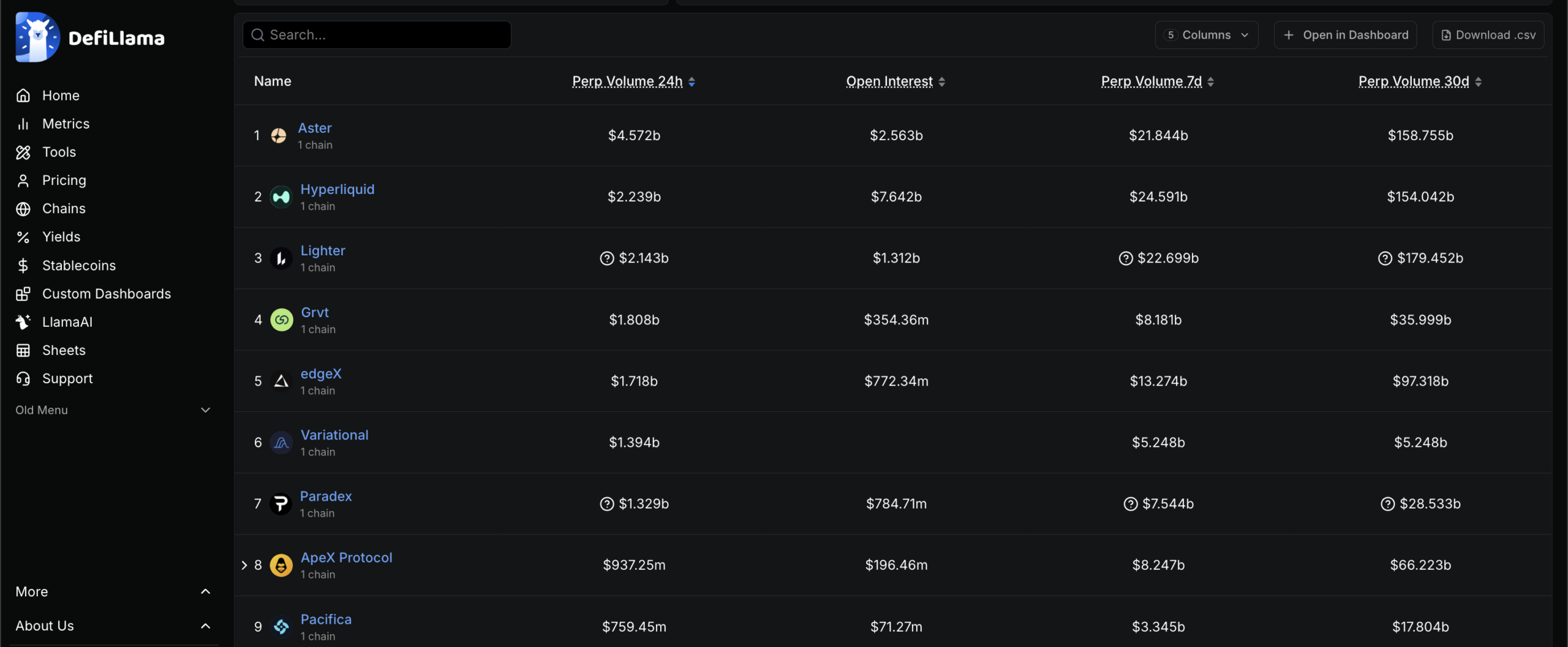
Focus on specific areas and customize your own Kanban boards: In addition to the general overview indicators, DeFiLlama also supports dashboards categorized by domain, which is ideal for readers focusing on a particular type of application. For example, by selecting the "Perp DEX" (Decentralized Exchanges for Sustainable Contracts) category, the website automatically generates a dashboard for this area: not only does it summarize the total volume of the entire sustainable contracts market, but it also provides a Competitor Comparison Table, which lists key data (e.g., the total number of open positions, trading volume, etc.) for all the major sustainable trading protocols. With this dedicated dashboard, you can simultaneously keep track of the overall market buzz and quickly assess the performance and competitiveness of each agreement.
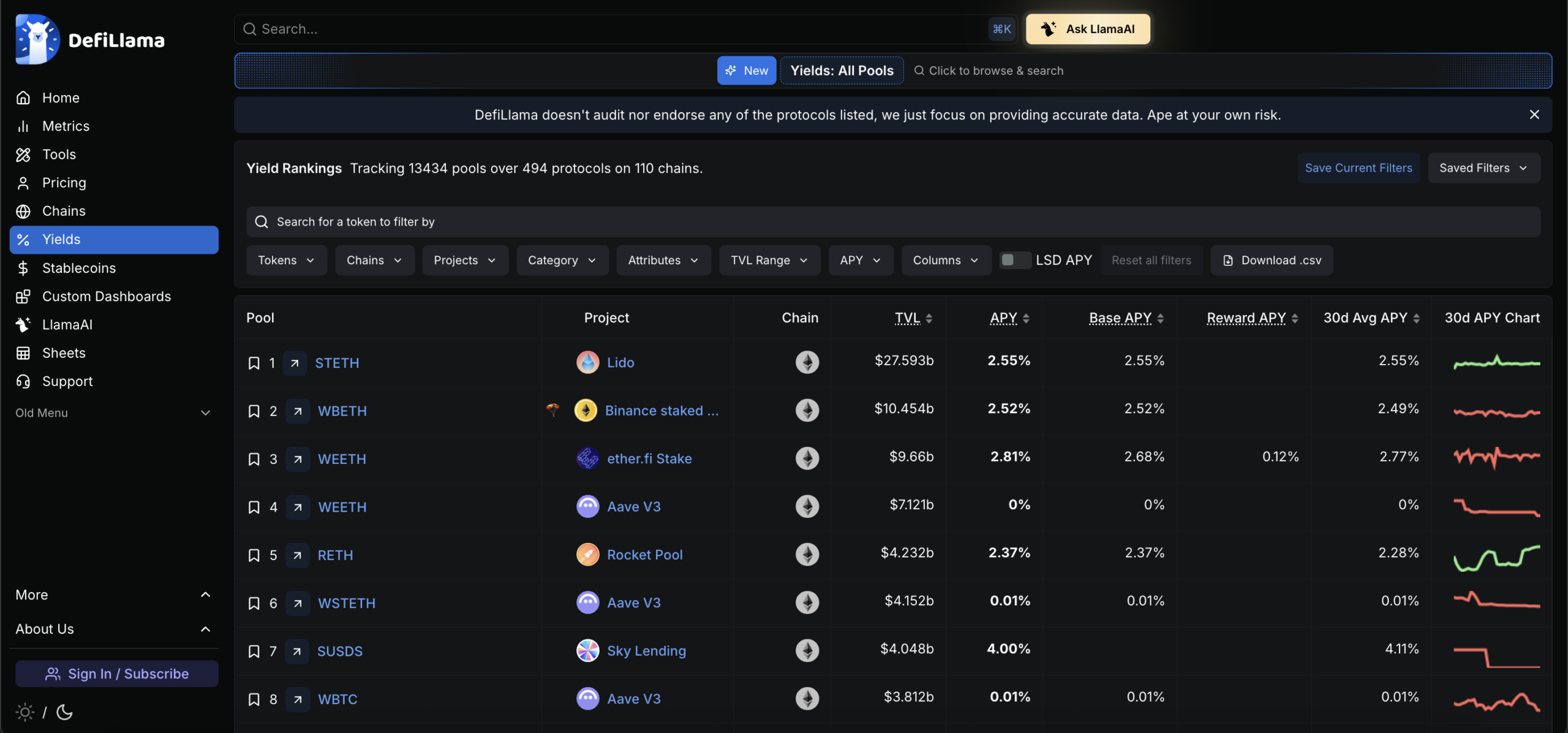
Yield-farming dataDeFiLlama also provides a "Earnings" page to compare the Annualized Percentage Yield (APR) and Locked Position of different protocols for liquidity mining, making it easier for you to find a suitable mining strategy.
All in all, DeFiLlama covers key data on DeFi protocols, decentralized exchanges (DEXs), stablecoins, and more, from TVLs and volumes to fee revenue. Using this platform, you can directly compare the data of different projects and quickly see who is performing well and who needs to improve. DeFiLlama is an indispensable and powerful assistant for investors who want to study the fundamentals of DeFi in depth.
Community-Driven Customized Dashboards: Dune Analytics
Dune Analytics is another popular choice for getting a more diverse and customized view of your on-chain data. Simply put, Dune is a community-built database and dashboard platform where anyone can query on-chain data and create visual reports. Many enthusiastic developers and data experts have shared a variety of public dashboards on Dune, which cover a richer set of metrics and a wider range of topics than your average business analytics site.
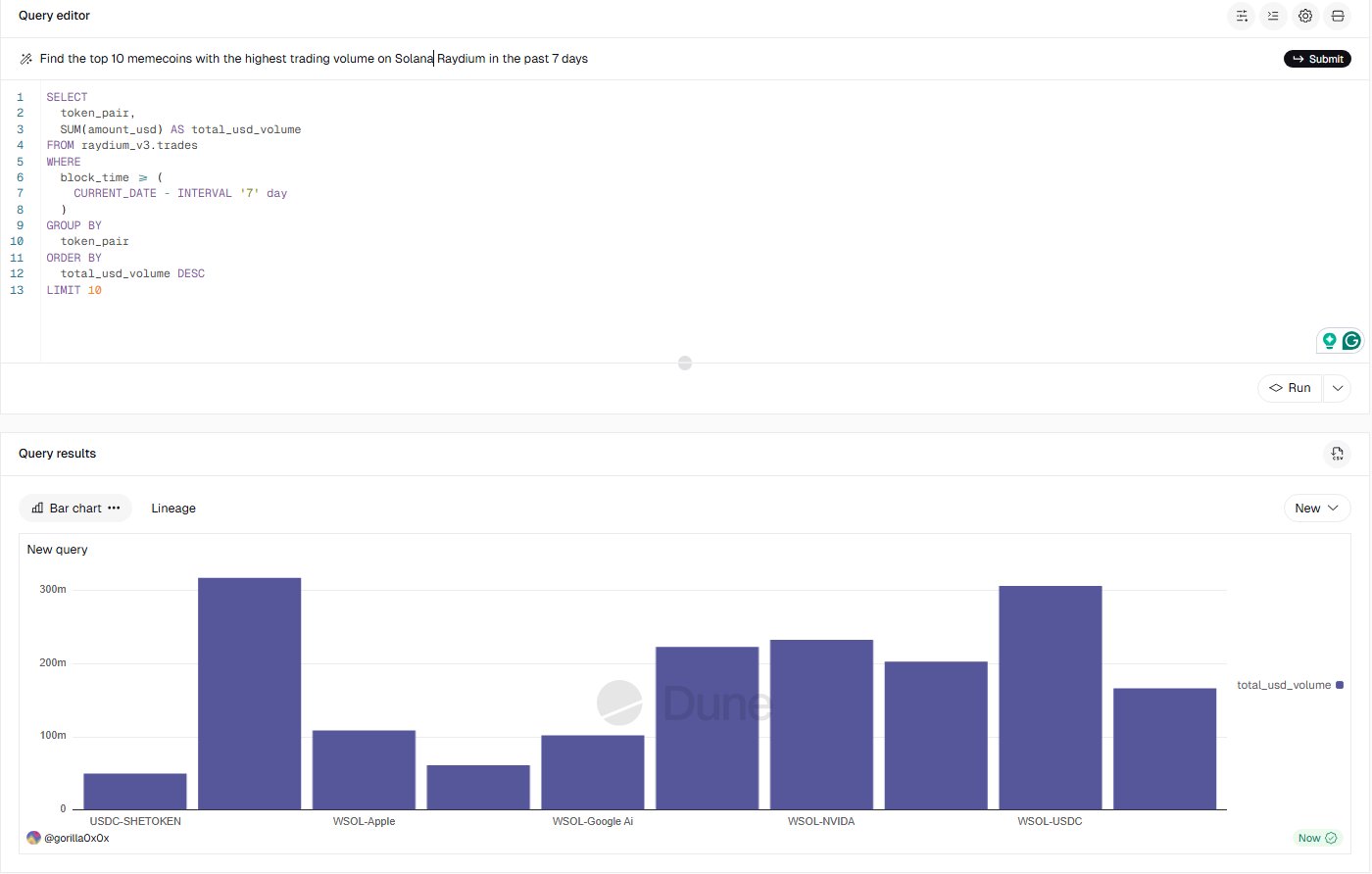
Thanks to community contributions, almost every time there is a new data requirement, someone at Dune has created a corresponding dashboard.
From the flow of funds in DeFi lending agreements to the trading heat of the NFT market, reports are readily available on Dune. These community dashboards translate the results of complex on-chain queries into charts and graphs, making key data trends accessible to users without a technical background. When you can't find an indicator on a mainstream data site, search to see if Dune already has an enthusiast who has created a report on it, which can serve as a useful supplement to the main platforms and provide deeper insights.
In the past, only people who knew SQL could build their own Dune reports, but now with AI assistance, even if you don't know how to write a program at all, you can still "talk to Dune" and let the AI generate a dashboard for you.
For example, just enter"Identify the 10 most traded fan currencies on Raydium in the last 7 days."Dune's built-in AI automatically translates this requirement into the correct query code, pulls the data and generates charts for you. The whole process is like asking a skilled person to analyze the data for you, which greatly reduces the threshold.
Dune also allows users to copy other people's dashboards and tweak them with a single click, so you can quickly build your own version based on what others have done.
Dune certainly has its limitations:
- Some projects may not have a full or well-developed dashboard, as coverage depends on the initiative of community members or individual creators. Therefore, when projects are relatively new or of low interest, users often need to consult other external resources.
- If the creator does not regularly maintain or check the dashboard, the data may become outdated, resulting in data uncertainty or inconsistency. Sometimes users need to manually send out requests to update dashboards or turn to other sources to replenish dashboards that have not been updated in a long time.
- The accuracy, depth and clarity of the data, as well as the visual presentation, are largely dependent on the SQL experience and data modeling skills of the creator. Misconfigured dashboards can also lead to data inaccuracies and data quality reservations, so readers should cross-check key metrics using multiple sources whenever possible.
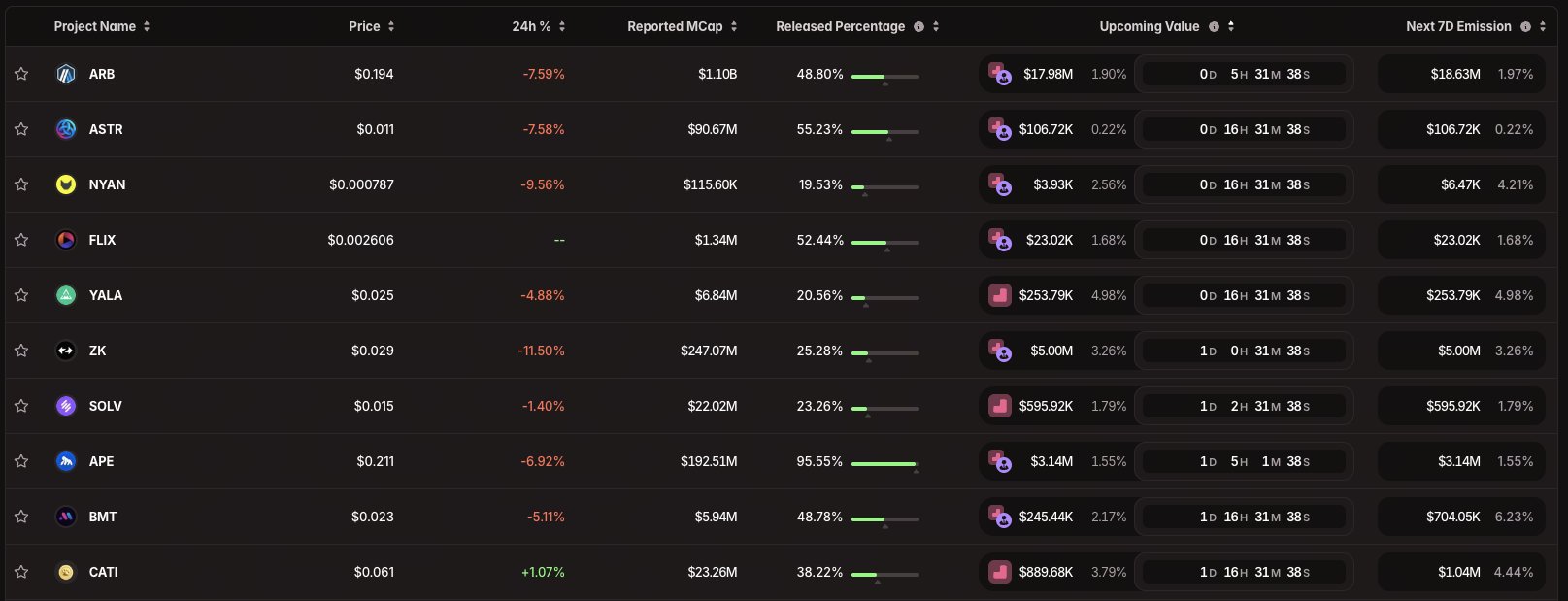
Getting a pulse on the token economy: Tokenomist
When evaluating crypto projects, tokenomics is often as important as the technology and business model. One of the most easily overlooked but far-reaching aspects is token unlocking. Token unlocking refers to the gradual release into the market of tokens that were originally locked in (e.g., allotted by the team or held by early investors) according to a plan. If a large number of tokens are unlocked in a short period of time, and market demand cannot keep up with the new supply, there may be tremendous selling pressure, resulting in a decline in the price of the currency. This situation is somewhat similar to the unlocking of restricted shares in the stock market: when a large number of restricted shares are suddenly available for sale, stock prices are often under downward pressure.
In order not to be caught off guard by a sudden wave of selling, you need to familiarize yourself with the Tokenomist This tool is specialized in tracking the unlocking schedule of tokens. Open TokenomistWhen you enter the name of the project you are interested in, you will be able to view the project's complete token release schedule, as well as the percentage of the total supply that will be unlocked at any one time. With this information, you can anticipate when future peaks in selling pressure are likely to occur and factor them into your investment decisions.
Through Tokenomist You will also be able to see through the project's token distribution structure and understand:
- Proportion of tokens held by each role (team, investor, community, etc.) at the time of the initial issuance of the project
- Rhythms and Mechanisms for Sequel Token Unlocking
- The impact of successive unlockings on the coin price, and the team's efforts to buy back tokens
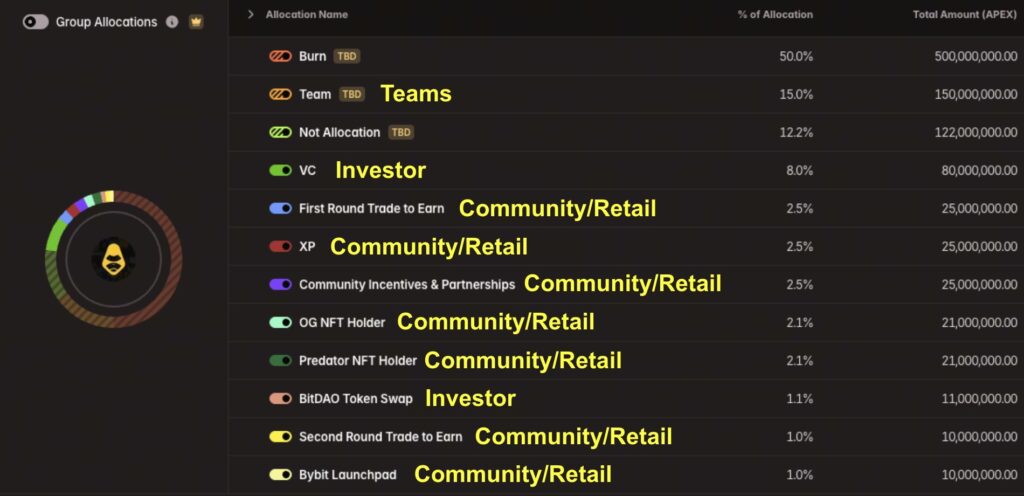
To illustrate the importance of token unlocking more intuitively, let's look at the case of APEX, a decentralized, sustainable exchange.
On the surface, the token economy appears to be split into a number of sub-divisions for distribution, but after re-categorization, it can be found that about 14% of the tokens are actually distributed to the community. In addition, the token destruction mechanism of 50% is equivalent to a significant compression of the circulating supply, which is actually equivalent to close to 30% of the effective chips are eventually returned to the users.
In addition, by analyzing the unlocking timeline of tokens, we can clearly understand the unlocking rhythm of different stakeholders and determine its potential impact on market supply and demand. In the case of APEX, for example, there is a clear correlation between the price of the token and the unlocking time.
Before and after the unlocking of VC, market sentiment tends to ferment and the price is pushed up to a relatively high level by speculation; however, as the unlocking actually takes place, the selling pressure is gradually released and the price subsequently drops significantly. This kind of trend of "pulling up before unlocking and retracting after unlocking" is not uncommon in the crypto market.
This example clearly illustrates that an investor's unlocking timeline is itself an important variable affecting the price of a currency. Therefore, when evaluating a project, understanding the unlocking rhythms of various stakeholders and incorporating them into the risk and price judgment framework is an essential part of the process.
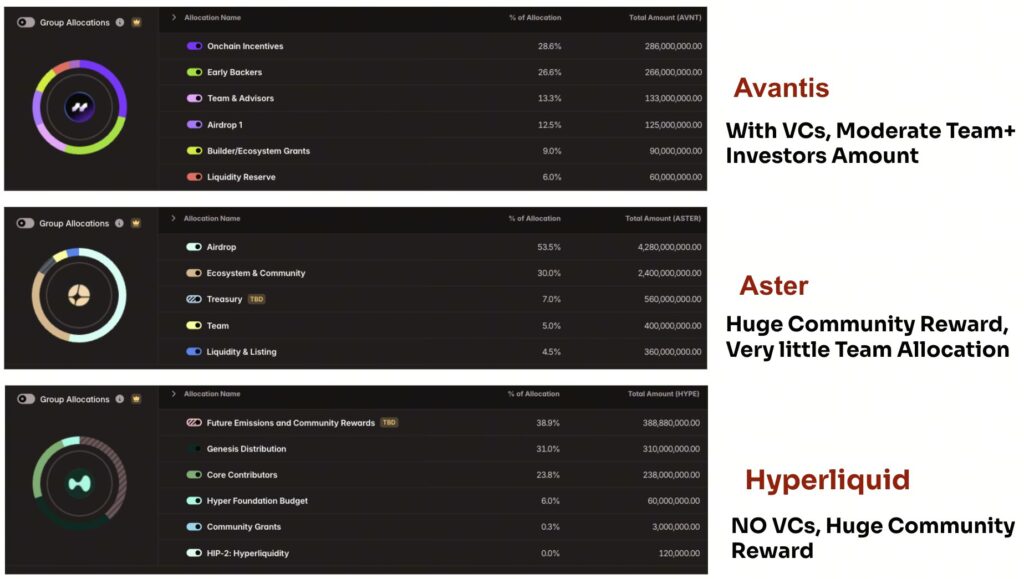
In short, Tokenomist helps us to see the supply side of tokens clearly. Don't overlook this "chip side" information when researching a project. There you have it. TokenomistYou can easily compare the distribution and unlocking arrangements of similar programs to see who favors capital and who cares more about the community, thus avoiding those programs that are potentially under tremendous selling pressure.
Wikipedia for the Web3 World: RootsData
For investors who want to fully research crypto projects, there is a lot of information beyond the data that is also worth looking at. For example, what organizations have invested in the project, and how much did they raise? What is the background of the founding team, and who are the key members of the team who have worked for well-known companies? What's the buzz in the community? You can find all the answers on RootData, which compiles key background information on each project, kind of like the "Wikipedia" or "Crunchbase" of Web3, making it easy for you to understand the background of a project before making investment decisions.
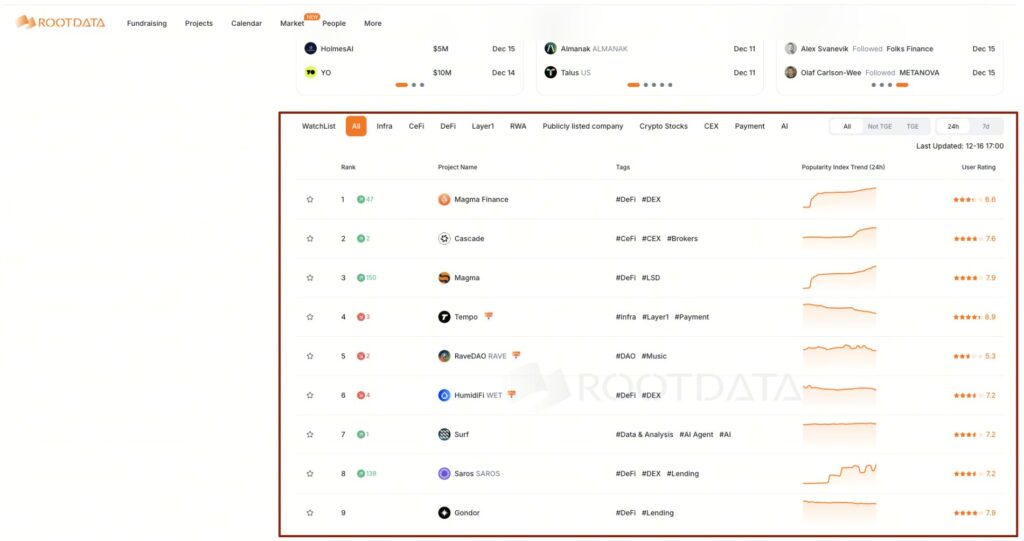
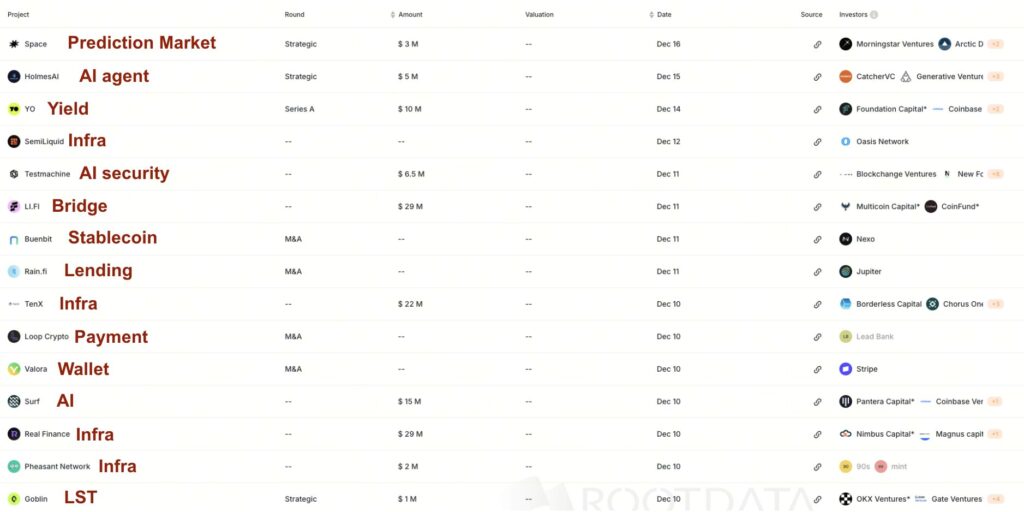
When you enter the RootData homepage, you will first see a list of the hottest recent projects. After all, in the cryptocurrency world, it is common to "speculate on the new, not the old", so keeping abreast of the latest hot projects will help you capitalize on the market opportunities. Switching to the "Fundraising Round" page, we can see which projects have recently raised funds, how much they are, and which organizations are leading the investment. Through this information, we can get a glimpse of the market's capital preferences: compared with the past bull market's frenzied pursuit of concepts, today's venture capital community is much more rational, favoring projects with long-term value and sustainability. If you notice a recent influx of capital in a particular area (e.g., AI or a specific DeFi track), it may be a hint that this area could be the next stage of development.
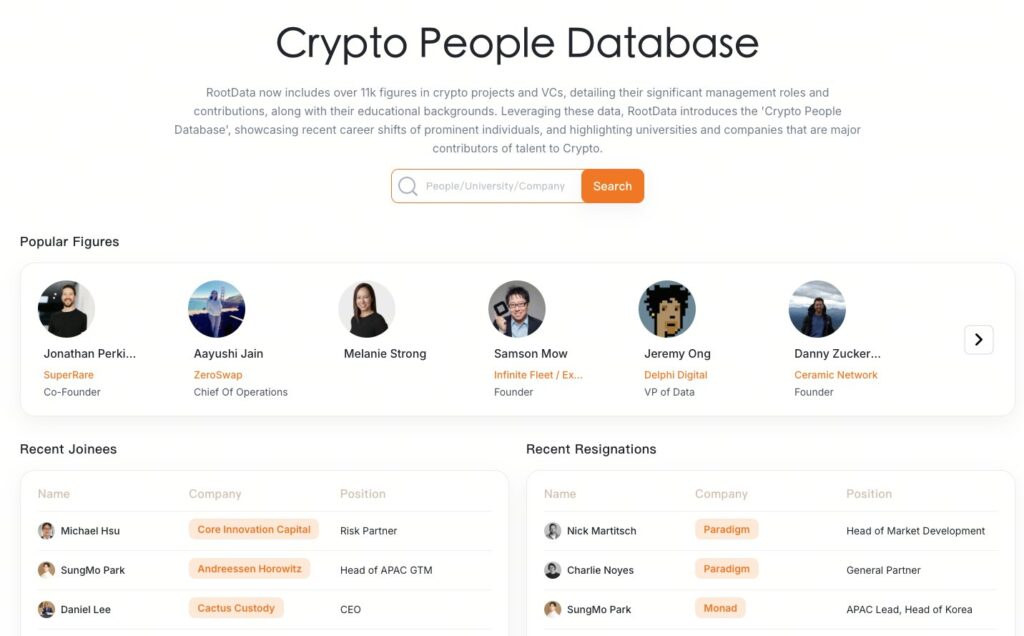
Besides looking at projects, "investing is also about people". On RootData, you can check the background information of the core members of the project team, including their work history, education, and public social media accounts (e.g. LinkedIn, Twitter, etc.). Generally speaking, projects whose founders are willing to disclose their real identities and have relevant successful experiences are more credible and have a lower risk of fraud (rug pull); on the contrary, if the team members are anonymous and have unknown backgrounds, they need to be extra cautious.
It's worth mentioning that RootsData offers a one-click horizontal comparison feature. You can check off multiple projects and let the system automatically generate a comps table, which presents the funding history, team background, market capitalization and other indicators of each project side by side. With this table, you can quickly see the difference between projects in the same track: who has raised more money and has a higher valuation, and who has a tougher team with better market performance.
In short, with RootData, you are in possession of a comprehensive project research report, and you can get a thorough understanding of "people and money" before you enter the market, thus greatly reducing the risk of information asymmetry.
Recent Recent Posts:
JPEX Lazybones|Over 1.6 billion dollars fraud case revealed, 80 people arrested, KOLs such as Hayashi Saku are involved in the storm.
2025 Latest OKX Web3 Wallet Tutorial: Does it work? How to create it? A Guide to Safe Operation, Multi-Link Support, and Time-Limited Airdrops
Jay Chou's friend on behalf of hundreds of millions of Bitcoin investment "sudden people evaporate" can not bear to sue!
Bitcoin Amsterdam 2025 The World's Strongest Bitcoin Speaker Lineup Revealed!
Forecast Market Data Analysis: The Block & Polymarket
There is also a unique market in the crypto space - the prediction market, where platforms such as Polymarket and Kalshi allow users to buy and sell "prediction contracts" on real-world events. If you're interested in this type of market, check out the Polymarket Statistics dashboard from The Block. This comprehensive dashboard brings together core statistics from the two major prediction market platforms (Polymarket and Kalshi), including the number of active traders, total volume, open interest, etc. for each platform.
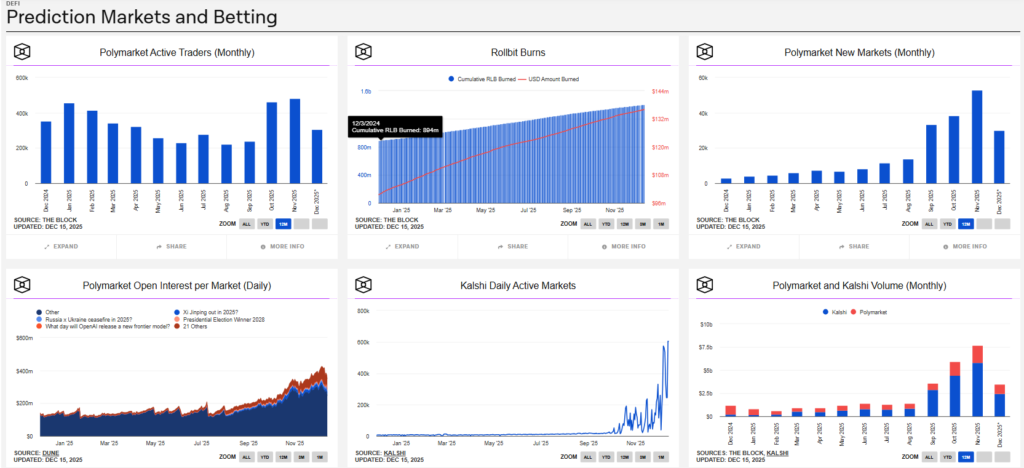
This dashboard allows you to compare how many active markets the two platforms currently have, how much volume they have, and their respective market shares. At a glance, you can see how hot the entire prediction market space is and who is more popular among traders, Polymarket or Kalshi.
On the other hand, the Polymarket platform itself has an official analytics page, where you can view more detailed data, including trader profit/loss rankings, market dynamics (new openings and upcoming settlements), as well as up and down trends in the price of each forecasted contract.
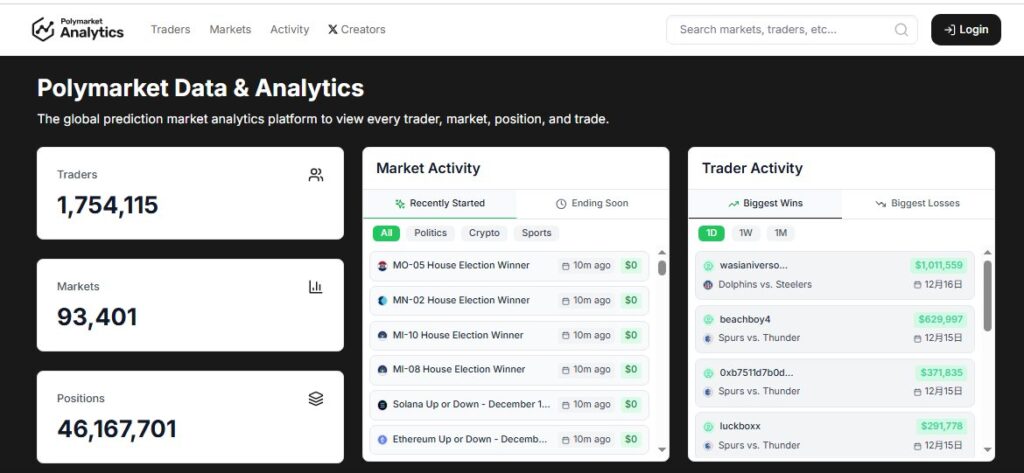
With this information, you can get a feel for the heat and dynamics of the prediction market. Forecast markets reflect investors' confidence in the outcome of actual events, and through the data, we may also be able to catch hints of market sentiment, which can be used as a reference for general crypto-investment judgments.
Self-service data analysis tool: Artemis Sheet
Last but not least, we would like to introduce Artemis Sheet, a powerful tool that allows you to create your own data dashboard, while most of the tools like DeFiLlama, Dune, etc. directly show you the organized data, Artemis goes one step further by allowing you to pull data directly from the chain into your own spreadsheet, as if creating a mini version of "encrypted Bloomberg terminal". Artemis goes one step further by allowing you to pull the data from the chain directly into your own spreadsheet and analyze it freely, just like creating a mini version of the "encrypted Bloomberg terminal".
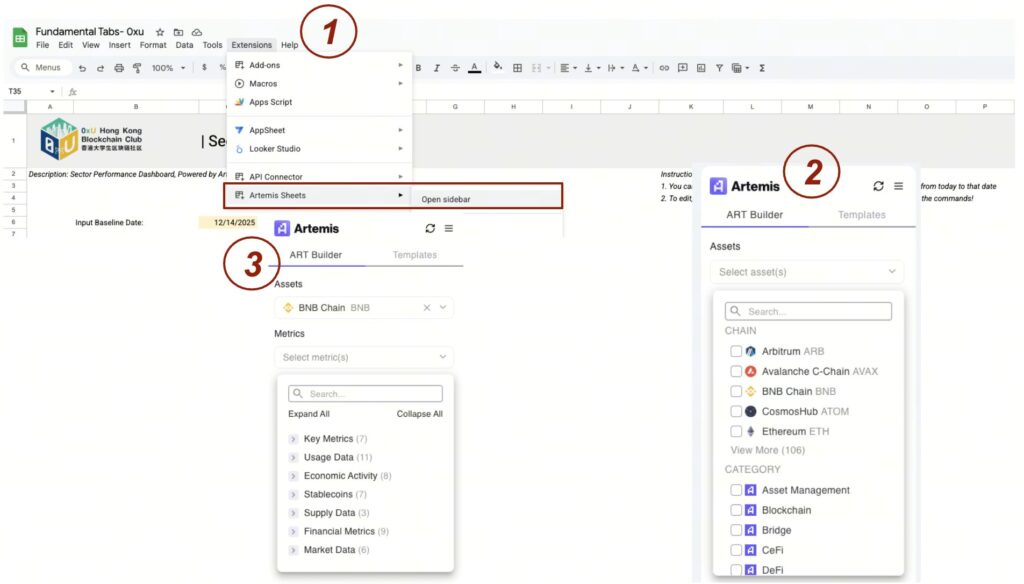
With Artemis' Google Sheets plug-in installed, you simply open the sidebar in your spreadsheet, select the assets and metrics you want to query (e.g., price, subscribers, negotiated revenue, etc.), and the plug-in will automatically populate the table with the latest data from the chain! The whole process is as easy as using normal spreadsheet functions, with no code to write.
With the help of Artemis Sheet, you can get creative and create a variety of specialized analysis panels. For example, you can create a price list of industry segments and compare the price of a token across different tracks (e.g., DeFi, NFT, Layer 2, etc.) in real time; or you can compile a DEX operations data overview, which presents the number of users, trading volume, and fee revenue of each decentralized exchange in one place. Combine the data pulling power of Artemis with the flexible calculation and graphing capabilities of spreadsheets, and you have the power to build a small data terminal on your own.
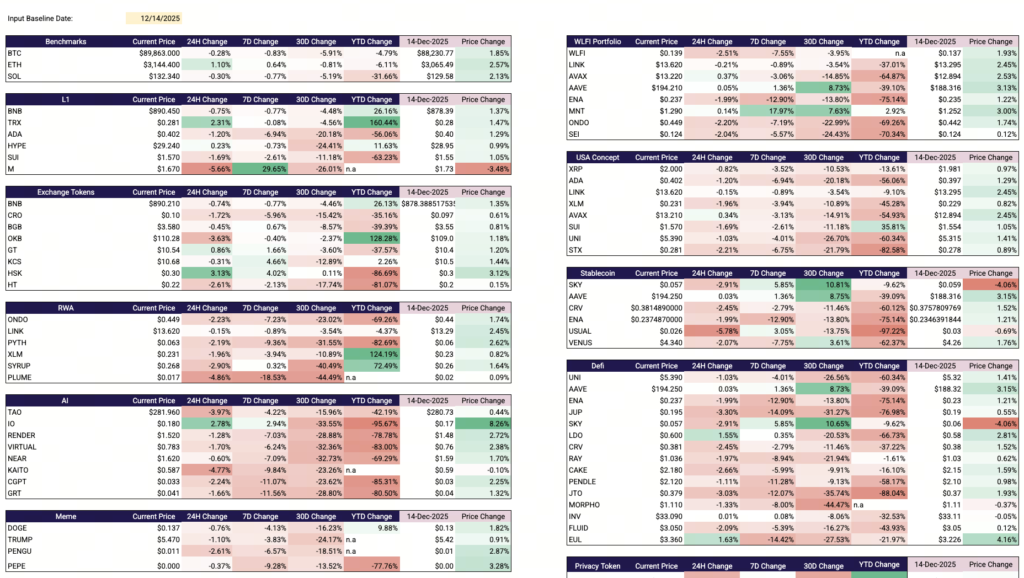
Setting up these form templates may take a little bit of work at first, but it's really an investment in your own capabilities. As the crypto market matures, capital is increasingly favoring projects with solid fundamentals and transparent data. Learning how to build models using the Artemis Sheet will give you the perspective of an institutional investor who speaks from data, not just feelings. When the market shifts from emotional speculation to value-oriented, you will have an advantage over others.
Of course, the above introduction may not be able to cover all the functions, but it contains the core logic of use, and the focus is still on the flexible use. Especially for Artemis Sheet, it takes a lot of time to set up a complete and useful template by yourself. If you think it's too much trouble to set up by yourself, you don't have to worry about it. Here. Find a copy of the full template and download it directly!
Conclusion
The six tools described above each have their own focus but complement each other, and together they form a powerful cryptoanalytics toolkit: DeFiLlama looks at the big picture of DeFi, Dune Analytics draws on the wisdom of the community, TokenUnlocks analyzes token supply, RootsData provides background on the project, and the Predictive Markets tool and Artemis Sheet meet the needs of niche market analysis and advanced self-service research. RootData provides project context, while the Predictive Market Tool and Artemis Sheet fulfill the need for niche market analysis and advanced self-service research.
For retail investors, by making good use of these free tools, you have the opportunity to narrow the information gap with professional organizations. Of course, to do a good job, you need to make good use of the tools, but ultimately, you are the one who makes the decisions. While using these tools to gather a lot of information, don't forget to think independently and develop your own judgment. I hope this guide will help you build your own crypto research framework, so that you can feel more confident and comfortable in the ever-changing market!
I hope this tutorial will help you to make good use of crypto tools and discover more valuable clues in the blockchain world!
As a newbie, you should keep learning and pay attention to the market dynamics, if there is anything you do not understand, welcome to join our Whatsapp Free Member Community Networking is also a great way to share and discuss the latest DeFi information, airdrop campaigns, and revenue strategies!
The content of this article is based on the original author @ChingChaLong02 and @Mr_Gorilla_eth Previously written research material was organized and rewritten, and restructured and optimized by the editorial team.
Related Post:
Best Cryptocurrency Trading Platform for Hong Kong Users?2025 Latest Bitcoin Tips for Beginners
2025 Coin Ring Newbie Guide Lazybones|Chained Ecology Entry Guide
2025 Must Read for Newbies! Use these six data indicators to learn how to judge buying opportunities.
Disclaimer
The content of this article is for reference only, investors should exercise independent judgment, invest prudently and at their own risk, this article does not provide or attempt to persuade the audience to do trading or investment basis, the content is for sharing purposes only, and should not be regarded as investment advice.It does not represent the views and position of Monsterblockhk.All information and opinions are current as of the date of the judgment. In addition, if a judgment is rendered on aIn this siteAny content related to virtual asset trading platforms that have not yet obtained a license to operate virtual asset trading platforms in Hong Kong, including but not limited to text introductions, pictures, offers, events, etc., are only available to users outside the Hong Kong Special Administrative Region.
According to the Hong Kong Anti-Money Laundering and Counter-Terrorist Financing (Amendment) Ordinance 2022, after June 1, 2023, all centralized virtual asset trading platforms operating in Hong Kong or actively promoting their services to Hong Kong investors will be licensed and regulated by the SFC, and any related unlicensed activities will be a criminal offence. For more information and details of the legislation, users may refer to the SFC website.