

The cryptocurrency market has been on a roller coaster ride recently, with sharp declines in just two weeks due to market fears and policy changes, followed by a strong rebound driven by positive news. Does this market rally mean the market has bottomed out, or is it just a temporary rebound? In this article, we will analyze the market sentiment, chain data and U.S. regulatory policies to help readers determine the next trend.
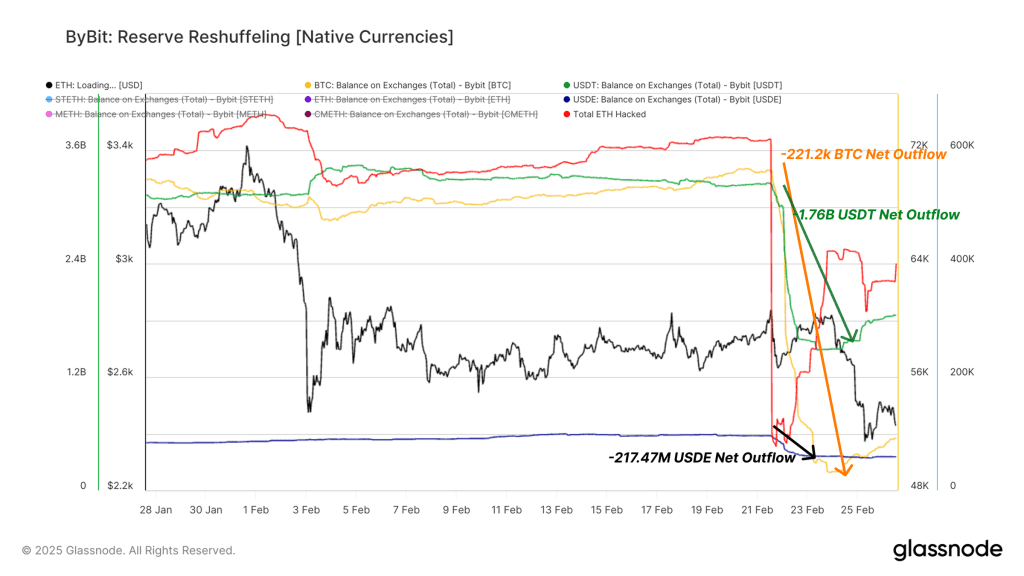
In late February, the cryptocurrency market suffered a succession of major downsides. First, Bybit, the world's third-largest cryptocurrency exchange, suffered a hacking attack on February 21 that stole approximately $1.5 billion in digital assets, including 403,996 Ether, from its cold wallet.Shocked the market.
The incident triggered concerns about the safety of exchange funds, and a large number of users began withdrawing their coins from exchanges to avoid risk, with the total amount of bitcoin and stablecoins withdrawn from exchanges amounting to about $4.3 billion in a single week. This was followed by the new U.S. administration's tariffs policy, with President Trump hinting at higher tariffs on Chinese imports, adding to the uncertainty in the global economy. A sense of doom and gloom prevailed in the markets, with the Extreme Fear Index soaring, and the Fear & Greed Index dropping to as low as 10 during this period, as investors rushed to sell their assets at a loss.
Related Post:
Best Cryptocurrency Trading Platform for Hong Kong Users?2025 Latest Bitcoin Tips for Beginners
2025 Coin Ring Newbie Guide Lazybones|Chained Ecology Entry Guide
DA Labs Releases Cryptocurrency Market Outlook Report 2025
Is the U.S. "Strategic Cryptocurrency Reserve" Program Key?
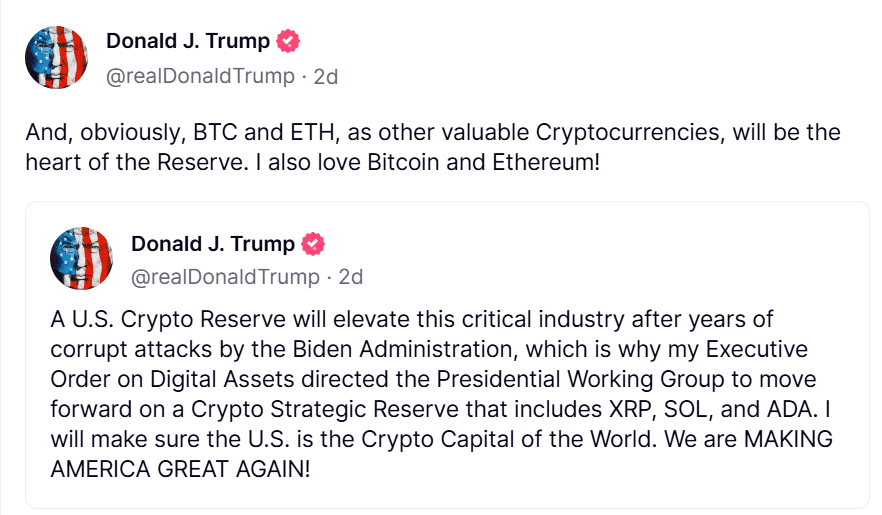
At the beginning of March, when investor sentiment dropped to the freezing point, a heavy news from the U.S. political arena changed everything - President Trump suddenly threw out the "U.S. Fiscal Reserve Plan": On the weekend of March 2, Trump announced a shocking news via social media Truth Social:
The Executive Order on Digital Assets, signed in January, will implement the creation of a U.S. Strategic Cryptocurrency Reserve Fund comprised of Bitcoin, Ether, XRP, Solana and Cardano. The news rocked the market and was seen as a clear signal that the U.S. government was planning to take official ownership of cryptocurrency assets for the first time.
Bitcoin price surged 10% to $95,000 in just a few hours after the news was announced, while Ether rose 14% to $2,550. This market rally has left many investors wondering: has the bull market returned?
On the one hand, the news brought about an obvious retaliatory rebound - for example, XRP surged by 34%, Solana by more than 24%, and Cardano by 72% after the news was released - and these tokens, which Trump named as part of his reserves, became the focus of the market's capital pursuits. However, on the other hand, as the market digested the news on Monday (March 3), some of the gains were retraced. Bitcoin price retreated about 8% from its Sunday high to around $86,000, while ethereum even retraced its gain of nearly 14%. The market for many torrents also turned volatile, with the ADA dropping nearly 241 TP3T from its highs.
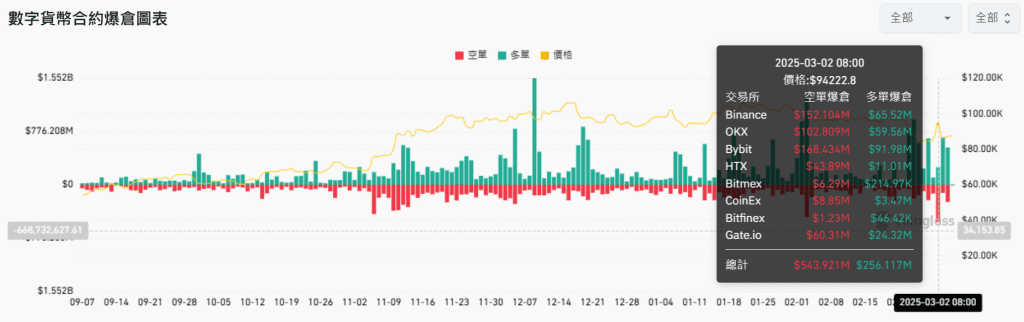
This suggests that a significant portion of the initial rally may have been the result of short covering and short-term capital influxes, with statistics showing that short positions were blown out by as much as $500 million in the 24 hours of the rebound. To determine whether this rebound can be sustained, the key lies in whether this policy will really bring substantial capital inflows. All in all, Trump's plan has given a boost to the market in the winter, but its long-term effect remains to be seen.
Despite the short-term volatility in the market, the data in the chain can help us determine whether the rebound is sustainable.
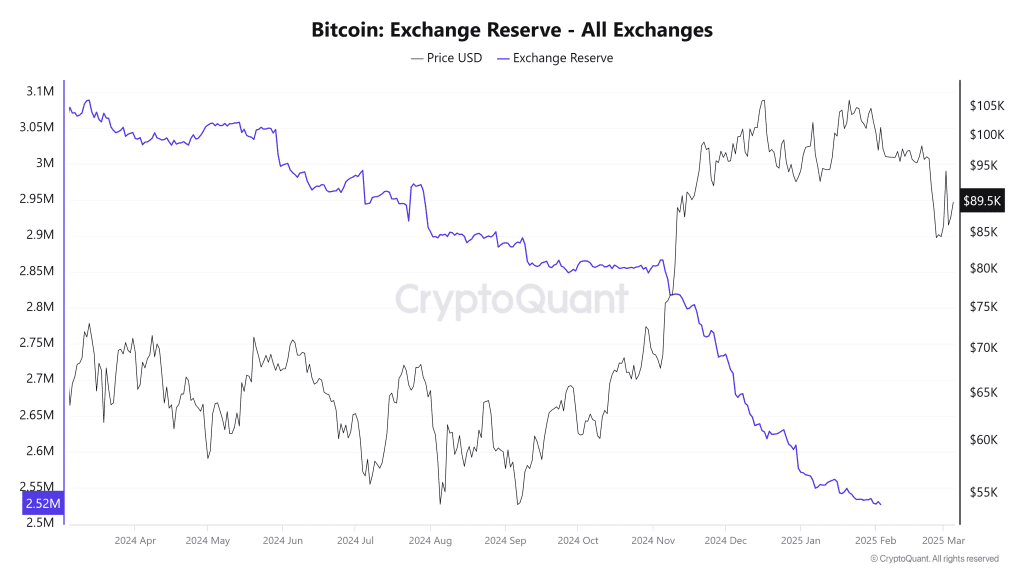
From March 2024 to February 2025, BTC reserves on exchanges declined steadily, from approximately 3.1M to 2.52M, suggesting that long term investors are moving funds into cold wallet storage. This trend usually represents the entry of institutional capital, which reduces the supply of liquidity in the market and may drive prices up further.
The change in exchange ETH balance has been on a downward trend since March 2024, with a brief recovery after August 2024 until it declined again after September 2024, indicating more short-term trading activity in the market. As can be seen from the price of ETH, ETH has oscillated within a wide range throughout the year, which matches the results of the exchange's ETH balance change.
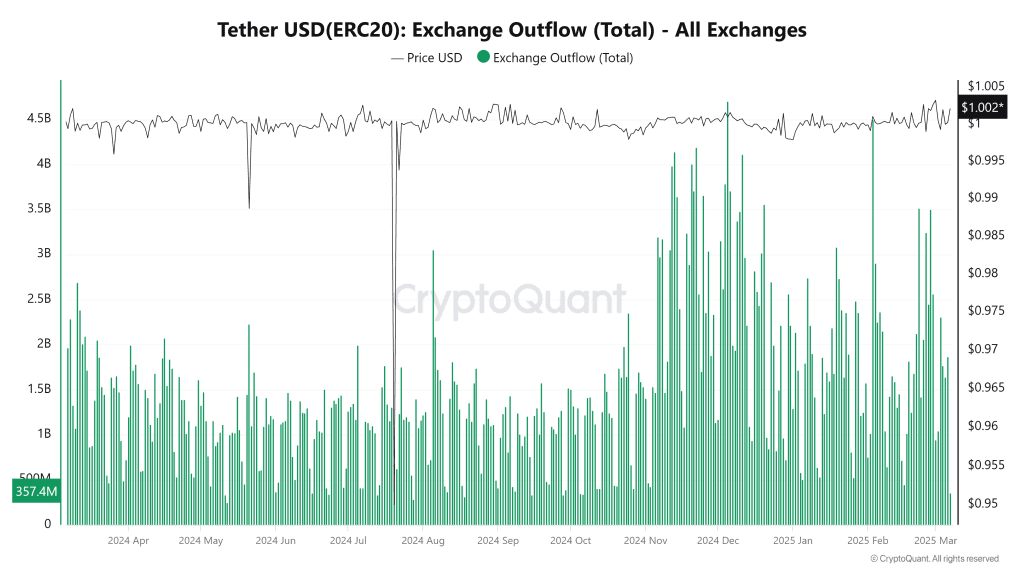
Additionally, from November 2024 onwards, both the Inflow and Outflow figures for USDT on exchanges have risen significantly, suggesting that the market has reached a peak in trading activity. Such large flows of stablecoins are often closely associated with capital inflows or increased market activity, and could be a potential precursor to a new bull market.
As the market prepares for an uptrend, institutional investors will deploy funds ahead of time, which will lead to an increase in the size of USDT flows to exchanges. increased USDT liquidity could indicate active leveraged trading, with more traders utilizing USDT to leverage their positions, driving further volatility in the market. the dramatic increase in USDT exchange traffic is a noteworthy sign of increased participation in the market, as well as increased liquidity, which is usually a typical characteristic of a pre-bull market. It is a sign of increased market participation and liquidity, which is usually typical of a pre-bull market. In the coming months, watch for a parallel increase in BTC and ETH volumes to confirm that this capital momentum can continue to drive the market upwards.
Springtime for the Currency World with a U.S. Policy U-turn?
The Trump administration's high-profile inclusion of cryptocurrencies in the nation's strategic reserves signals a major shift in U.S. policy attitudes. This could have a profound impact on the future rules and patterns of the entire industry. Only a year ago, the U.S. government had a different face on the cryptocurrency industry - between 2022 and 2023, the U.S. Securities and Exchange Commission (SEC) and other regulatory agencies launched strong enforcement actions against a number of cryptocurrency companies to straighten out the market chaos.
In the latter part of the Biden administration, the tightening of the regulatory environment became the main theme, and cryptocurrency companies faced severe scrutiny, and many mainstream currencies (including ADA, SOL, etc.) were once regarded by the SEC as unregistered securities, which posed potential legal risks. It can be said that policy uncertainty was once a big mountain weighing on the market. However, during the 2024 election campaign, Trump released friendly signals to the cryptocurrency community - he promised to support digital asset innovation, deregulation, and even the establishment of a national Bitcoin reserve.
In just a few weeks since taking office, Trump has appointed a number of cryptocurrency-friendly officials, quickly shelved some of the Biden-era investigations into cryptocurrency companies, and even withdrew the SEC's lawsuit against cryptocurrency exchange Coinbase. This series of actions shows that the US government's overall attitude towards cryptocurrencies is shifting from suppression to acceptance. The announcement that mainstream currencies and some of the cottage currencies will be included in the strategic reserve has elevated the status of cryptocurrency assets to an unprecedented level.
This policy shift will undoubtedly reshape the global perception of cryptocurrencies: the policy risks that worried investors in the past have been greatly reduced, and the U.S. government's more positive attitude will set an example for other countries and institutions. It can be expected that in this environment, more traditional financial institutions may embrace cryptocurrencies at an accelerated pace. In fact, since Trump's election victory, some large asset management firms have increased their allocations to Bitcoin-related ETFs, and U.S. hedge funds, banks and even sovereign funds have begun to buy cryptocurrency assets. The U.S. has gone from being a major obstacle to the development of cryptocurrencies to an important force in supporting and promoting their development.
The historical significance of this change can be seen in the explosive growth of the Internet industry in the 1990s when it received legislative support. In the future, if the U.S. government continues to be friendly and develops a clear regulatory framework, the cryptocurrency industry is expected to move further into the mainstream and attract massive amounts of new capital.
The SEC (Securities and Exchange Commission) plays a key role in US cryptocurrency policy. Over the past few years SEC Chairman Gary Gensler has been known to be a tough regulator in the cryptocurrency space, repeatedly characterizing tokens as unregistered securities and filing lawsuits against them. However, since the Trump administration took office, the SEC's stance seems to be adjusting, with the SEC recently withdrawing its investigations into several cryptocurrency companies, and announcing that a major lawsuit against Coinbase has been canceled.
This indicates that the SEC has begun to moderate its previous aggressive approach against the backdrop of the government's change in attitude. For currencies such as ADA, SOL, and XRP, which were included in the strategic reserve, the market is generally concerned about whether the SEC will reassess their regulatory positioning. It is worth noting that XRP was part of the SEC's litigation (the Ripple case), but has now been named as one of the strategic reserve assets, and it is reasonable to assume that the SEC's stance on these currencies may soften in the future.
Perhaps the SEC will not openly admit the errors of its previous characterizations, but in terms of enforcement priorities, it will be more inclined to ignore or downplay its pursuit of the ADA, SOL, and XRP. Particularly in light of the explicit support of the President's Executive Order, the SEC may face pressure from the Executive Branch and Congress if it insists on clamping down. As a result, we may see the SEC switching to a guidance rather than prohibition approach to these cryptocurrency assets.
For example, the SEC may work with the project to develop disclosure standards rather than directly citing it as a security. Of course, it is also possible that the SEC will wait for Congress to enact legislation to clarify the asset classifications before taking action. In any event, since the U.S. government plans to hold these currencies itself, it is unlikely that it will allow regulators to define them as illegal securities in the meantime. A policy change would clear the cloud over these once-risky mainstream currencies.
ADA, SOL, and XRP, which have long been suppressed by legal concerns, are now expected to be vindicated. And once regulatory pressures ease, these asset prices could see a reshaping of their valuations. It will be interesting to see if the SEC issues new regulatory guidance that clarifies whether blockchain tokens like Cardano and Solana fall into the category of securities, commodities, or something else. If the SEC chooses to go along with this and treats them like commodities or currencies with less stringent regulations, it could be a huge boon to the industry.
Recommended Cryptocurrency Trading Platforms
Hong Kong People's Top Choice for Bitcoin and Ether Trading 》 OSL is the first licensed exchange company in Hong Kong, enjoy up to HKD 10,088 bonus when you open an account.
Suitable for traditional Hong Kong investors to buy and sell stocks and currencies at the same time. Victory Securities: Open an account and get a free ticket to Tokyo and Taipei, and a concert flight.
More choices of contract currencies, suitable for buying fake coins in cash. Trade on MEXC and enjoy 400 times leverage and many other benefits!
Related Post:
Best Cryptocurrency Trading Platform for Hong Kong Users?2025 Latest Bitcoin Tips for Beginners
2025 Coin Ring Newbie Guide Lazybones|Chained Ecology Entry Guide
DA Labs Releases Cryptocurrency Market Outlook Report 2025
Establishment of the Strategic Bitcoin Reserve and the U.S. Digital Asset Reserve
U.S. President Donald Trump signed an executive order on March 7 that formally establishes the Strategic Bitcoin Reserve and at the same time creates the U.S. Digital Asset Stockpile. Under the Executive Order, the U.S. government's Bitcoin Reserve will be backed by Bitcoins confiscated in criminal or civil forfeiture proceedings, rather than by taxpayer funds. This means that the U.S. government will not buy Bitcoin directly from the market, but will instead build up its position by confiscating assets. Currently, the U.S. government is estimated to hold about 200,000 BTC (about $18 billion), but a full audit has not been conducted. The Executive Order also directs the relevant organizations to conduct a full asset inventory to ensure the transparency of the government's Bitcoin reserves. In addition, the Executive Order makes it clear that these Bitcoins will be held for the long term and will not be sold, and that the government will treat them as "digital gold," similar to the U.S. gold reserves (Fort Knox). One of the aims of this policy is to avoid the mistake of the government selling Bitcoin at a low price, as over the past few years the U.S. government has auctioned off confiscated Bitcoin at a low point, and the value of these assets could have increased by more than $17 billion if they had been held to date. To further expand the reserves, the executive order also authorizes the U.S. Departments of Treasury and Commerce to find "budget-neutral" ways to increase the Bitcoin reserves, provided they do not impose additional burdens on taxpayers. This could mean that the government will allow some businesses or organizations to pay fines or taxes in Bitcoin, and may even explore the possibility of managing reserve assets through the DeFi platform. In addition to Bitcoin, the Trump administration has created the U.S. Digital Asset Stockpile, which is dedicated to managing digital assets other than Bitcoin confiscated by the government, such as XRP, Solana (SOL), Cardano (ADA), and others. Similar to the Bitcoin stockpile, these assets will not be sold in the market, but will be managed by the U.S. Treasury Department, and may be used for policy pilot programs or financial innovation applications in the future.
Bitcoin Tumbles as Executive Order is Implemented!
After US President Donald Trump signed the executive order, the price of Bitcoin unexpectedly dropped 5.5% after the news was announced. The author believes that before the announcement of this policy, the market had already reacted to the expectation that the US government might include Bitcoin in the Bitcoin reserves, and the price of Bitcoin had risen to some extent in the past few weeks. When the favorable news came to an end, short-term traders often chose to take profits, causing the price to fall back. In addition, although the executive order establishes a "strategic Bitcoin reserve," the U.S. government's source of Bitcoin is limited to criminally or civilly confiscated assets, not market purchases.
This means that the government will not buy BTC directly through the market, thus not bringing in new direct buying, leading to disappointment amongst market investors. Despite the short-term pullback, the long-term impact of the executive order remains positive, especially with the U.S. government's long-term holding policy and digital asset reserve program, which will further strengthen Bitcoin's position as a strategic asset. Going forward, if the market develops new expectations about the possibility of the government increasing its holdings of BTC further, or if institutional capital inflows accelerate, then Bitcoin could still return to an uptrend after a short-term shock.
In the face of policy changes, how can retail investors position themselves to capitalize on golden opportunities?
The positive attitude of the U.S. government provides institutional investors with greater market confidence and makes it more likely that they will increase their holdings of BTC and ETH. While in the past many large asset management firms remained on the sidelines of cryptocurrencies, now that the U.S. government itself is beginning to stockpile BTC, it may prompt traditional financial institutions (e.g., pension funds, banks, hedge funds, etc.) to reevaluate BTC as a part of their asset allocation. as part of their asset allocation.
Investors should pay close attention to Grayscale, BlackRock, Fidelity Changes in the ETF positions of institutions, such as the BTC and ETH spot ETFs, could represent a potential uptrend in the market if institutional funds do continue to flow in. The approval of the BTC and ETH spot ETFs signifies that US regulators have given some recognition to the legitimacy and investability of the cryptocurrency market.
However, there are currently no spot ETFs for currencies such as XRP, SOL, ADA, etc., and the Trump administration's inclusion of these currencies in its strategic reserves has significantly increased the likelihood of successful ETF applications in the future. If the SEC's regulatory stance softens further, ETFs in these currencies could become the main battleground for the next wave of institutional capital inflows. Investors can keep an eye on the progress of ETF applications for Solana (SOL), XRP and Cardano (ADA).
Utilizing Retailer's Magic Strategies
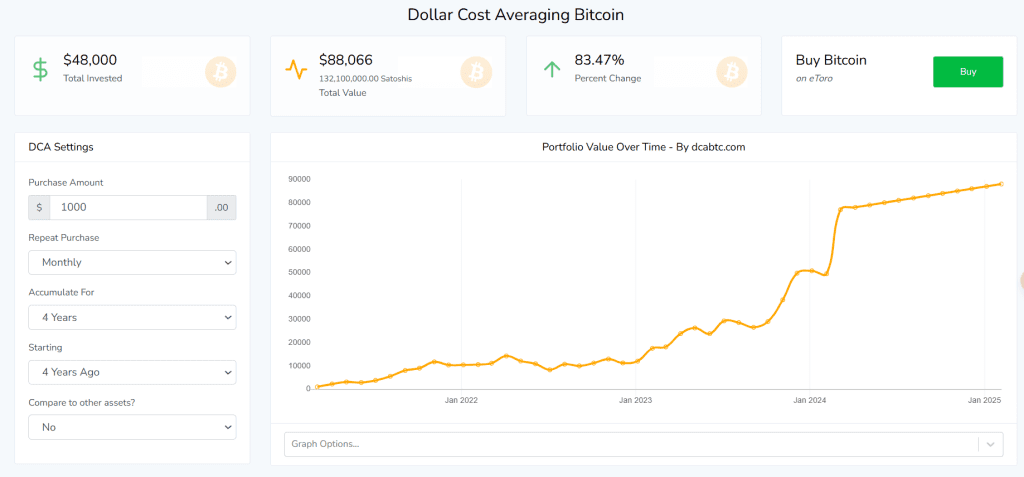
When the market is on a roller-coaster ride, emotions tend to dictate decision-making. Some investors cut their losses at the height of the panic, then chase the market higher during the rebound, only to be beaten on both sides. To avoid falling into this emotional trap, buying quality assets on a regular basis (DCA, Dollar-Cost Averaging) is a good strategy to follow.
A DCA is a strategy that involves buying an underlying asset for a fixed amount of money at predetermined intervals (e.g., weekly or monthly), regardless of price. This strategy helps investors to smooth out the cost of buying during volatile periods and avoid ill-timed All-Ins.
For example, four years ago, even though I started investing at the height of the bull market at that time, I regularly invested $1,000 per month, and my total investment to date is $48,000, and now the value of my investment has increased to $88,066, which is a whopping increase of 83.47%. This is precisely the power of "Derivative Capacity Attributed to a Fixed Period of Time" - no matter how volatile the market is, through long-term continuous investment, it can still bring substantial returns. This is the power of DCA - no matter how volatile the market is, the growth in value of Bitcoin will continue to provide significant returns through long-term investment.
Recommended Cryptocurrency Trading Platforms
Hong Kong People's Top Choice for Bitcoin and Ether Trading 》 OSL is the first licensed exchange company in Hong Kong, enjoy up to HKD 10,088 bonus when you open an account.
Suitable for traditional Hong Kong investors to buy and sell stocks and currencies at the same time. Victory Securities: Open an account and get a free ticket to Tokyo and Taipei, and a concert flight.
More choices of contract currencies, suitable for buying fake coins in cash. Trade on MEXC and enjoy 400 times leverage and many other benefits!
Related Post:
Best Cryptocurrency Trading Platform for Hong Kong Users?2025 Latest Bitcoin Tips for Beginners
2025 Coin Ring Newbie Guide Lazybones|Chained Ecology Entry Guide
DA Labs Releases Cryptocurrency Market Outlook Report 2025

Disclaimer
The content of this article is for reference only, investors should exercise independent judgment, invest prudently and at their own risk, this article does not provide or attempt to persuade the audience to do trading or investment basis, the content is for sharing purposes only, and should not be regarded as investment advice.It does not represent the views and position of Monsterblockhk.All information and opinions are current as of the date of the judgment. In addition, if a judgment is rendered on aIn this siteAny content related to virtual asset trading platforms that have not yet obtained a license to operate virtual asset trading platforms in Hong Kong, including but not limited to text introductions, pictures, offers, events, etc., are only available to users outside the Hong Kong Special Administrative Region.
According to the Hong Kong Anti-Money Laundering and Counter-Terrorist Financing (Amendment) Ordinance 2022, after June 1, 2023, all centralized virtual asset trading platforms operating in Hong Kong or actively promoting their services to Hong Kong investors will be licensed and regulated by the SFC, and any related unlicensed activities will be a criminal offence. For more information and details of the legislation, users may refer to the SFC website.