

There are two ways to buy Memecoin: directly through a centralized exchange (CEX), or on a decentralized exchange (DEX), and the core difference between the two is not in which platform has lower fees, but in which type of Memecoin you want to buy. The core difference between the two is not in which platform has lower handling fees, but in which type of Memecoin you want to buy; mainstream currencies such as DOGE, SHIB, and PEPE can be purchased directly on CEXs such as Binance, OKX, etc., while new currencies that have just been launched can only be found on DEXs such as Pump.fun, Raydium, Uniswap, etc. Choosing the wrong platform is not a matter of paying more, but of paying more for the Memecoin. If you choose the wrong platform, it's not a matter of paying extra fees, but simply not being able to buy the coins you want.
The logic of the Memecoin market is very different from other crypto assets. In early 2026, the Memecoin market surged by over 23% in one week, with daily trading volumes topping $8.7 billion at one point. The market is extremely fast-paced - a token can go from zero to popularity in a matter of hours, and from peak to zero in a day. In a market where speed is everything, understanding the platform differences is the first step to protecting your capital.
This article introduces the fundamental differences between CEX and DEX, specific examples of each platform, the complete procedure, and how to recognize a Rug Pull scam, and is suitable for newcomers who have never been exposed to Memecoin trading before.
The Life Cycle of Memecoin, Deciding Which Platform You Should Use
What are the stages of a Memecoin from birth to fame?
Understanding Memecoin's platform choices starts with understanding its lifecycle. Most tutorials just tell you "which platform to use", but not why you should use different platforms at different points in time.
The typical lifecycle of a Memecoin is divided into four stages: Stage 1 is upload and discovery, where tokens are launched on the DEX at a near-zero price and early buyers get in at a very low cost, but the vast majority of tokens die at this stage and never make it to the next stage. The second stage is narrative triggering, where celebrity tweets, viral fandom or news events generate attention, volumes skyrocket and FOMO sentiment begins to spread. The third stage is the exchange listing, where the token lands on CEX, the biggest single price catalyst for any Memecoin, exposing millions of non-DEX users to the token for the first time, with 2x to 10x increases common on the day of the listing. The fourth stage is the peak frenzy, where everyone is talking about it, and retail investors are flooding in at high levels.
This framework tells you one thing:The Memecoin you buy at CEX has often already gone through its maximum increaseThis means that it has passed the "Early Entry" window. A token that can be listed on CEX is one that has passed the exchange's compliance audit and has sufficient trading volume and number of holders, which means it has passed the "early entry" window. If your goal is to capture early opportunities, you must go to DEX; if you just want to hold mainstream Memecoin, CEX is a safer choice.
What is CEX, the Mainstream Memecoin Preferred Purchase Channel?
Centralized Exchange (CEX) is a traditional trading platform operated by a company, which uses an order book or aggregation mechanism, and all transactions are completed within the platform. Users deposit their assets into an exchange account and the platform holds the private key, similar to a stock trading app. CEX has the advantages of an intuitive interface, easy access to fiat currencies, and no need to manage your own wallet, making it the lowest barrier to entry for novices.
BinanceCEX: CEX, the world's largest trading volume, has uploaded DOGE, SHIB, PEPE, BONK, WIF and other mainstream memecoins, and has launched the "Meme Rush" campaign to allow users to participate in new coin trading competitions. Binance's uploading audit is strict, and it's usually not the first platform to upload new coins, but once uploaded, it will have the deepest liquidity. Binance is suitable for those who only want to buy mainstream coins and are not looking for an early entry.
OKXOKX has launched the "Meme Mode" zero-fee trading option, specifically for users who trade Memecoin frequently, and the "Meme Magic" incentive program, which allows users to receive tokens for trading newly-listed Memecoin. OKX has also integrated the OKX Wallet, which allows users to switch between CEX and DEX trading in the same interface. OKX also integrates OKX Wallet, which allows users to switch between CEX and DEX transactions in the same interface.
MEXC: MEXC is one of the fastest CEXs to launch Memecoin, and is often the first centralized platform to launch emerging Memecoin, offering higher early entry opportunities than the larger exchanges, but with correspondingly thinner liquidity and more volatile prices. It is suitable for users who are willing to take higher risks and want to get in earlier than Binance.
KuCoinThe "Alpha Zone" is a dedicated area for initial coin launches. Based on 2026 data, the median return for new coins in the KuCoin Alpha Zone within 30 days of launch is about 92%, but high volatility also means high risk, and not all new coins can maintain their gains.
What is DEX? A complete introduction to chain trading
Decentralized Exchange (DEX) is a smart contract program that runs on the blockchain, where all transactions are done directly between users' wallets and the platform itself never holds your assets in custody.DEX uses liquidity pools and an Automated Market Maker (AMM) mechanism, whereby liquidity providers deposit pairs of tokens into the pools and traders make The price is automatically determined by an algorithmic curve. Since no listing review is required, anyone can create token pairs on the DEX, which is why the new Memecoin first appeared on the DEX.
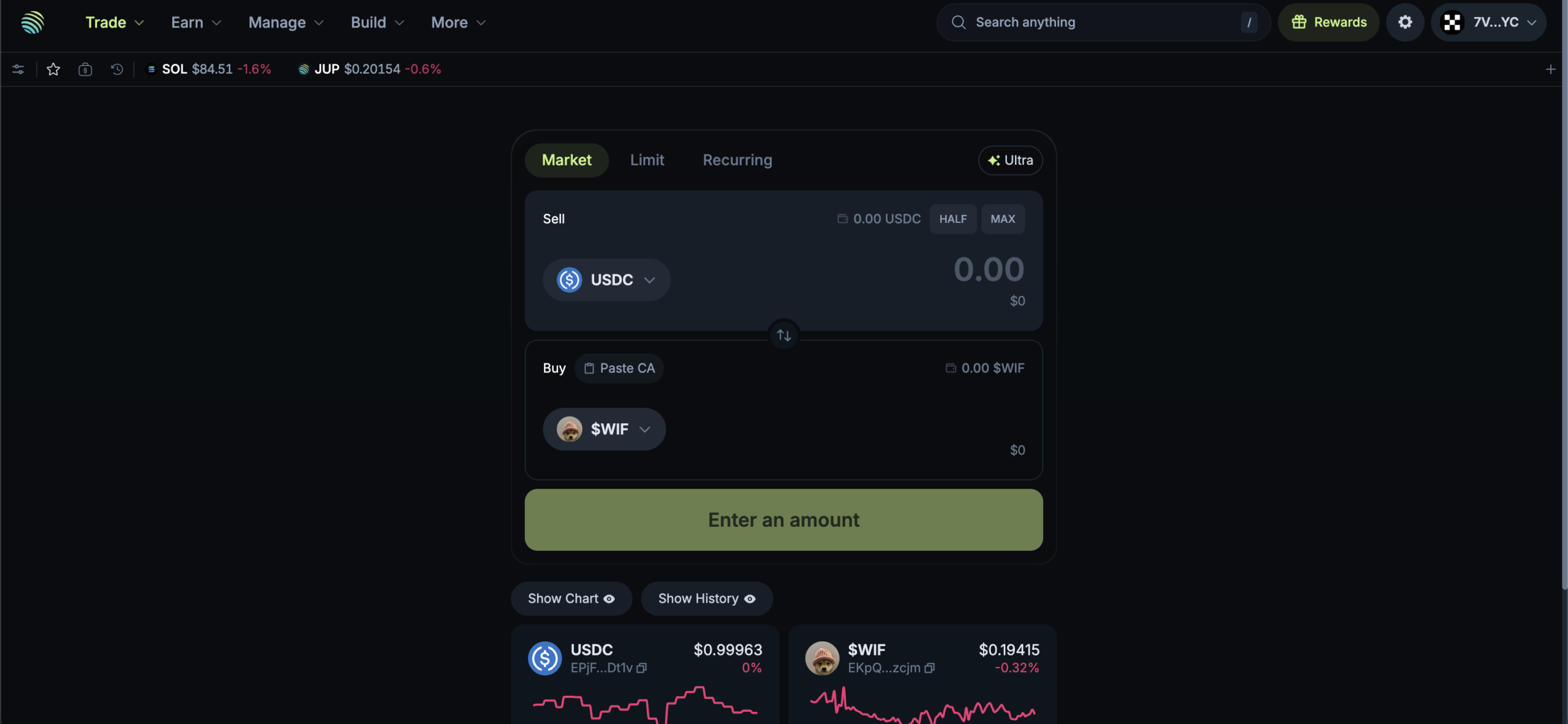
DEX is attached to a specific blockchain, and the first step in choosing DEX is to determine which chain the coin you want to buy is on.
Solana family - Raydium and JupiterSolana is known for its extremely low fees (~$0.001 to $0.01 per trade) and near real-time trade confirmations, with over 80% of new Memecoin issued on Solana in 2026, and Jupiter as Solana's DEX aggregator handling over 50% of Swap volume on the chain. bonk, BONK, WIF, FARTCOIN, POPCAT and other well-known Solana Memecoins were originally traded on Raydium.
Ethereum System - UniswapUniswap is the largest DEX based on total locked positions, and its V4 version lowers the Gas cost by up to 50% compared to V3, but the Gas fee on Ethereum's main network can still be over $5 per transaction, making it unsuitable for small transactions. PEPE, SHIB and other major Ethereum memecoins are traded on Uniswap before going to CEX.
BNB Chain System - PancakeSwapPancakeSwap is the main DEX on the BNB Chain, known for its low fees and relatively user-friendly interface, and is the main trading venue for the BNB Chain's ecological Memecoin.
Extended Reading:
2026 OSL User Referral Code Tutorial
Getting to know OSL: What is it? Security, Features
2026 Hong Kong OTC Trading Compliance Methods
MEXC Global Exchange In-Depth Review
Hyperliquid perpetual contract DEX analysis
Hot and Cold Wallet Principles: Self-Custody vs Exchange Custody
Complete Steps to Purchase Memecoin at DEX
Take the example of a Bitget Wallet purse purchasing Solana-series Memecoin at Raydium:
Step 1: Install the wallet. Go to here Download the Bitget Wallet computer plug-in or mobile app and follow the instructions to create a new wallet.Be sure to write down the 12 aphorisms on a piece of paper and keep them offline. Anyone who asks for your aphorisms is a scam!。
Step 2: Get SOLThe In OSL、FTSE BULL Buy SOL from other CEX (e.g. Binance or OKX) and withdraw to your Phantom wallet address. Remember to have some extra SOL for Gas Fee, we recommend to set aside at least 0.05 SOL.
Step 3: Go to DEX and Connect Wallet. Go to raydium.ioIf you have a Bitget Wallet, click "Connect Wallet" in the upper right corner, select Bitget Wallet, and confirm the connection in the Wallet pop-up window.
Step 4: Enter your token contract address。This is the most critical step of the DEX operation.When searching for a currency in the Swap interface, don't just type in the name. When searching for coins in the Swap interface, do not just type in the name, but get the correct contract address from an official source (the project's Twitter/X account, official website or DEXScreener) and paste it into the search box. Fraudulent coins with the same name are very common and the contract address is the only accurate identification.
Step 5: Set the slider and run the Swap.Enter the purchase amount. Enter the purchase amount, set the slippage tolerance (3% to 5% for new currencies, higher may be required for very small currencies), confirm the preview, click Swap, check the details in the Bitget Wallet pop-up window and confirm the transaction.
Step 6: Confirmation of PaymentTransactions on Solana are usually completed within a few seconds, and you can check the Bitget Wallet's Assets page to see if the tokens have been credited. If you don't see it, manually enter the contract address in the search box to add to the token display.

Why choose Bitget Wallet for DEX trading?
For users who need to access Memecoin on multiple chains at the same time, a single-chain wallet can present a management headache. Bitget Wallet, which supports more than 130 chains, 1 million tokens, and more than 90 million users in 2026, is designed around the core requirements of Memecoin transactions: early entry, fast execution, and secure exit.
Bitget Wallet has a built-in cross-chain Swap feature that allows users to exchange tokens on Solana, Ethereum, BNB Chain and other chains directly from the wallet without having to switch between multiple DEX interfaces. For active Memecoin traders who need to keep track of new coin opportunities on multiple chains at the same time, this feature can significantly reduce operation time.
Extended Reading:
2026 OSL User Referral Code Tutorial
Getting to know OSL: What is it? Security, Features
2026 Hong Kong OTC Trading Compliance Methods
MEXC Global Exchange In-Depth Review
Hyperliquid perpetual contract DEX analysis
Hot and Cold Wallet Principles: Self-Custody vs Exchange Custody
CEX or DEX, the way you want it.
If you're completely new to zero-basedIf you just want to try your hand at holding a well-known memecoin such as DOGE or SHIB, go for CEX. Binance or OKX have the lowest operational thresholds, don't need to manage wallets or deal with Gas Fee, and are the most convenient to deposit and withdraw funds.
If you have some basic knowledge and would like to get in touch with the newer currencies that are not yet on the mainstream CEX shelvesIf you are looking for a platform that offers a wide range of options within the same CEX security framework, choose MEXC or KuCoin, both of which are faster than Binance in terms of coins.
If you understand how the chain works and want to get in early before the tokens explode in popularityIn the case of Solana, we use Raydium or Jupiter, and in the case of Ethereum, we use Uniswap, but we need to accept a higher risk of fraud and operational complexity.
If you need to track multiple chains at the same timeIf you want to minimize the friction of switching between multiple interfaces, use a wallet that supports multiple chains (e.g., Bitget Wallet) in conjunction with the DEX of each chain.
How to Recognize a Memecoin Scam? Three Must-Do Checks Before You Go
DEX's unlicensed listing mechanism brings with it a huge variety of tokens to choose from, as well as a high risk of fraud. Since anyone can create a token and add liquidity in a matter of minutes, a Rug Pull (where the project owner attracts funding and then suddenly removes liquidity and walks away with the money) is the most common risk in DEX Memecoin trading.
Step 1: Verify Honeypot in DEXScreener. Search for the address of the token contract in DEXScreener and check the recent transaction history to make sure that there are no other wallets that can be successfully sold - if all the transactions are recorded only as buys but not sells, the token may be a Honeypot (a fraudulent contract that can only be bought but not sold).
Step 2: Check the concentration of the top holdersIf the top few wallets hold more than 30% supply, it means insiders have the ability to unilaterally pull up and sell. If the top few wallets together hold more than 30% supply, it means that insiders have the ability to unilaterally pull up the supply and then sell it off, which is a high-risk sign of a Rug Pull. This data can be found in DEXScreener or Solscan's Token Holder Distribution page.
Step 3: Confirm that liquidity is locked inThe project will have to be funded by the project owner, who will have to pay for the project. Healthy projects usually lock initial liquidity for a period of time to prevent the project owner from withdrawing funds immediately. Whether liquidity is locked or not can be verified by checking the contract address on liquidity locking platforms such as Unicrypt or Team Finance. New tokens that are not liquidity locked are at risk of having their liquidity drained at any given moment.
Frequently Asked Questions
Q1:Do I have to have an encrypted wallet to buy Memecoin? No personal wallet is required to buy mainstream Memecoin at CEX, an exchange account is sufficient. However, to operate on DEX, a self-hosted wallet is required (e.g. Phantom for Solana, MetaMask or Bitget Wallet for Ethereum and multichains).
Q2: What is the Gas Fee and how much do I need to prepare when trading on DEX? Gas Fee is a fee paid to the blockchain network for processing transactions in the chain's native currency; Solana's Gas Fee is very low at around $0.001 per transaction; Ethereum's Gas Fee can range from $5 to $20 per transaction during busy periods, and you should set aside enough ETH or SOL for transactions to run smoothly.
Q3: What is slippage point and how much should I set? Slippage is the maximum deviation from the transaction price that you are willing to accept. For new coins or small-cap tokens with thin liquidity, it is recommended to set 3% to 10%; for mainstream coins with deep liquidity, 1% to 2% is sufficient. If the slippage point is set too low, the transaction will easily fail; if it is set too high, it will be susceptible to Sandwich Attack.
Q4:If the price of tokens return to zero after I buy from DEX, can I complain to anyone? DEX is decentralized, with no customer service, no regulator, and no compensation mechanism. Once a token is Rug Pulled, the funds are usually unrecoverable. This is the fundamental risk of DEX trading, and why the pre-entry verification step should not be omitted.
Q5: What is the relationship between Pump.fun and Raydium? Pump.fun is a token issuance platform on Solana where new tokens are traded early in the Bonding Curve mechanism. When the token reaches a market capitalization of approximately $69,000, it automatically "graduates" and creates a liquidity pool on Raydium, which is the next stop for Pump.fun tokens to enter mainstream DEX trading.
Extended Reading:
2026 OSL User Referral Code Tutorial
Getting to know OSL: What is it? Security, Features
2026 Hong Kong OTC Trading Compliance Methods
MEXC Global Exchange In-Depth Review
Hyperliquid perpetual contract DEX analysis
Hot and Cold Wallet Principles: Self-Custody vs Exchange Custody
Disclaimer
The content of this article is for informational and educational purposes only and does not constitute any investment advice, nor does it represent the position and views of Monsterblockhk. All information and analyses are based on publicly available information as of a specific date and are subject to change. Readers are advised to exercise independent judgment and carefully assess the associated risks. This article does not constitute any invitation or solicitation to buy or sell securities, funds or other financial products, and Monsterblockhk is not a licensed investment adviser of the Securities and Futures Commission of Hong Kong. If necessary, readers should consult a licensed professional for advice on their own circumstances.