

Welcome back to Monsterblockhk's Alpha Report. with the announcement of a rate cut by US FED Chairman, Colin Powell, the broader market picked up for a while. Trading volume started to surge, the currency prices were green across the board, and the market sentiment went from extreme panic back to panic. Based on the on-chain data, BTC is temporarily in a relatively fragile setup, with a large number of retail exits followed by increased unrealized losses, higher realized losses, and significant profit-taking pressure on long-term holders as well. The inability of the currency price to rise to cost price for short-term holders reflects further downside in the currency price. However, if you have read our Monsterblockhk weekly reports in the past, you will know that real opportunities are often hidden in times of panic and high uncertainty. This Alpha Report will highlight why retail investors should not panic and leave the market, but rather start saving according to their ability.
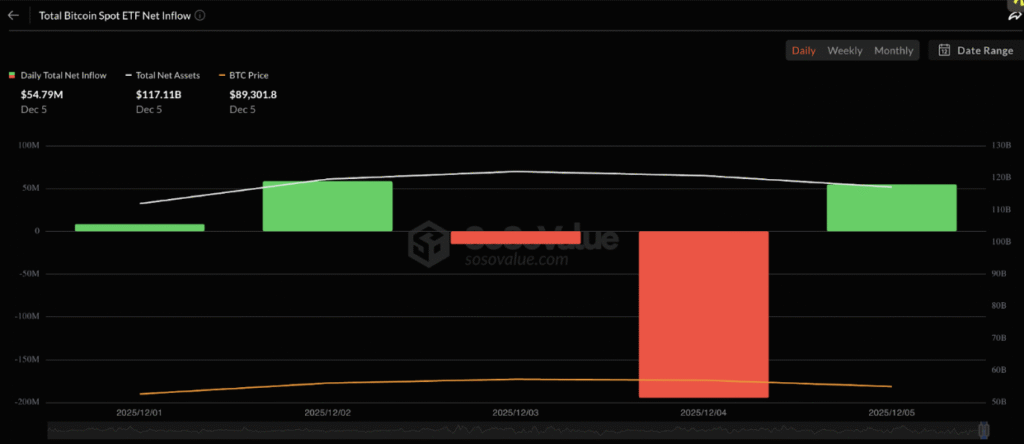
Sideways Silence in Tentative Coverage: ETF Funding Patience in a Wait-and-See Period
According to the SoSoValue chart, Bitcoin spot ETF flows showed a clear range-bound pattern over the past week, with only a small net inflow on Dec. 1, followed by an impressive inflow of about $50 million on Dec. 2. Momentum was slightly blunted on Dec. 3, and then the most pronounced weekly retreat on Dec. 4, with net outflows of nearly $190 million, which was the biggest source of pressure this week. -The biggest source of pressure for the week came on December 4, when the net outflow approached US$1.19 billion. The market then recovered on December 5, bringing in a net inflow of about US$54.8 million, keeping total assets at about US$117.11 billion. Bitcoin price has been oscillating in a narrow range around USD 89,302 in tandem, but has not moved out of the early-week range, echoing the overall lack of direction in the market. In this week's sideways theme, ETF flows were not characterized by trend buying or panic retreats, but rather by both bulls and shorts holding their positions at minimal cost and waiting for a clear signal from the market. Although the largest one-day outflow indicates a short-term cooling of risk appetite, the rapid recovery in the following days implies that funds have not abandoned their positions in the market, but rather, they have taken control of their positions to cope with the low volatility environment. This trend-less, wait-and-see sentiment is often a window of opportunity for medium- to long-term capital to reassess the risk-reward ratio. When prices and capital flows are oscillating at high levels but have not yet broken out, it is more efficient to make a disciplined move to the lows than to chase a direction, as the real switching point in the market often occurs when the market agrees that "nothing is happening" and the market is quietly accumulating.
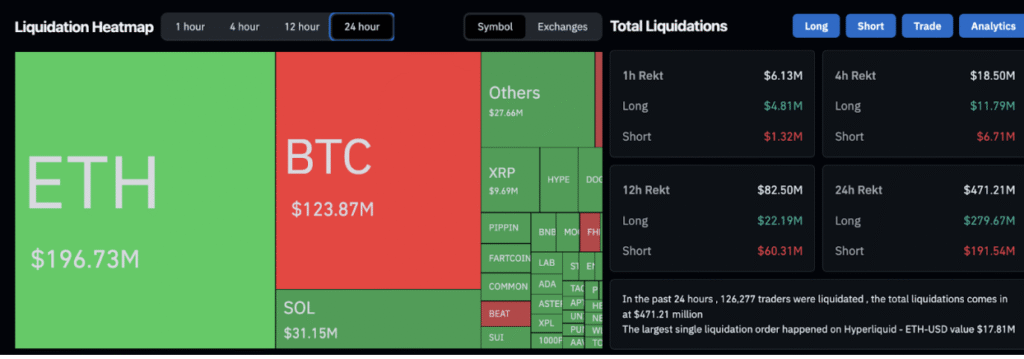
Low volatility in a period of liquidation compression as the market waits for the next directional signal
Over the past 24 hours, the city's market liquidation scale reached US$471 million, especially the long liquidation of about US$280 million, the short liquidation of about US$192 million, the structure is slightly more on the long side of the pressure, but the overall is still in order. In terms of the distribution of the underlying, ETH liquidation amounted to US$197 million, which is the biggest source of risk in the market, while BTC recorded US$124 million, SOL about US$31.15 million, and other tokens totaled US$27.66 million. A total of 126,277 traders were liquidated during the day, with the largest liquidation occurring in Hyperliquid's ETH USD pair, which amounted to $17.81 million. Against the backdrop of a sideways consolidation, this round of liquidation showed typical low volatility compression characteristics, suggesting that while leverage continued to be adjusted, the market as a whole was not caught up in panic overflow. The simultaneous liquidation of both long and short positions reflects a general short-cycle probing strategy rather than trend betting, further returning the market to a state of equilibrium and lack of momentum. When capital momentum slows and prices are directionless, the market tends to enter a period of rebalancing, waiting patiently for the next clear signal. Such a liquidation structure suggests that the market is still in a wait-and-see rhythm.
Most Popular Cryptocurrency Trading Platforms
Hong Kong People's Top Choice for Bitcoin and Ether Trading 》 【2025 Introduction】OSL Registration Benefits, Security, Deposit and Withdrawal, Special Features
Suitable for traditional Hong Kong investors to buy and sell stocks and currencies at the same time. [2025 Introduction] What is Victory Securities? Security, Deposit and Withdrawal, Features
More choices of contract currencies, suitable for buying fake coins in cash. Trade on MEXC and enjoy 500x leverage and many other benefits!
Related Post:
Best Cryptocurrency Trading Platform for Hong Kong Users?2025 Latest Bitcoin Tips for Beginners
2025 Coin Ring Newbie Guide Lazybones|Chained Ecology Entry Guide
2025 Must Read for Newbies! Use these six data indicators to learn how to judge buying opportunities.
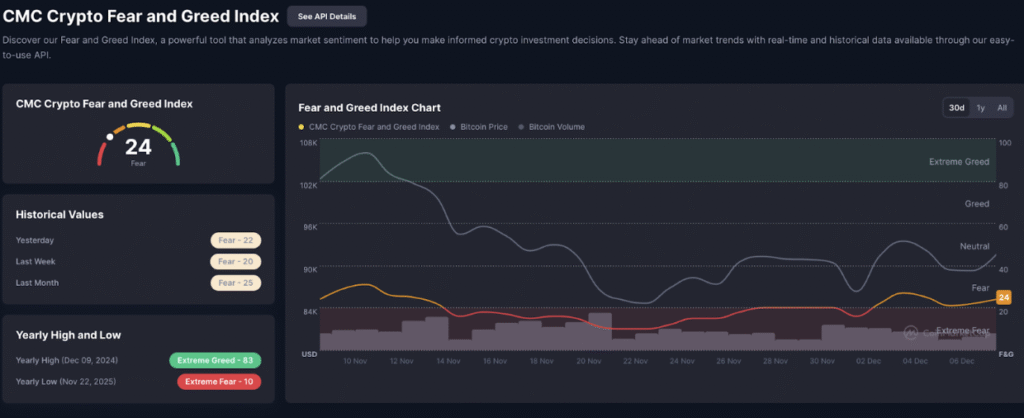
Markets remain sideways on the edge of fear as the rebound in sentiment has yet to take hold.
The CMC Fear and Greed Index has remained in a low range for the past 30 days. The latest reading of 24 was in Fear, compared to 22 yesterday, 20 last week and 25 last month. Sentiment has picked up a bit, but remains within the Fear zone. The yearly high was 83 on December 9, 2024, which is Extreme Greed, while the yearly low was 10 on November 22, 2025, which is Extreme Fear. The chart shows that the price of Bitcoin has fallen from the high of about $108K at the beginning of November and then slid all the way down to the $80,000 area, with a significant contraction in turnover, and a simultaneous rapid weakening in the sentiment indicators from the greedy area to the $80,000 area only at the beginning of December. Sentiment indicators have rapidly weakened from the greed zone, with only a modest rebound in early December, but no clear momentum for a reversal. This sentiment structure is consistent with the sideways and wait-and-see tone of this week's market. Investors generally lacked a sense of direction and preferred to wait for clearer trend signals instead of actively adjusting their positions. Although sentiment has not fallen into extreme pessimism, prolonged stagnation in the fear zone represents a lack of buying momentum, making it difficult for the market to push for a new direction on its own in the short term. Historical experience has shown that when sentiment is in a sawing match at low levels but has not fallen to new lows, the market is usually in a bottoming stage, slowly accumulating chips and momentum for the next wave. In such an environment, it is more difficult to operate on a short-term basis, and it is more appropriate for medium-to-long-term investors to use disciplined DCA to enter the market in batches.
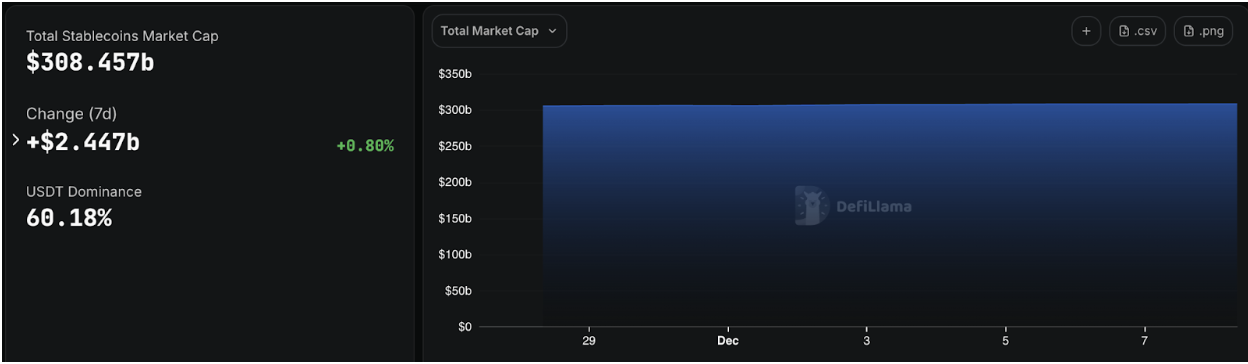
Stabilized currencies remain high and sideways, chain mobility options wait for direction
The stablecoin market continued its stable pattern over the past week, with the total market capitalization remaining at $308.457B, a net increase of $2.447B over the seven-day period, representing a weekly increase of 0.80%. USDT's market share reached 60.18%, continuing to maintain its absolute dominance in the supply side of the market. As seen in the chart, the overall market capitalization curve has shown a narrow, nearly horizontal movement over the seven-day period, with no apparent expansion or contraction, suggesting that capital has not left the crypto market, but rather remains on the chain in the form of stable coins waiting for an allocation opportunity. Such stagnation reflects a market that maintains some liquidity base but lacks the immediate incentive to push risky assets. This high sideways structure of the stable currency echoes the overall directionless nature of the market this week, suggesting that most capital is on the sidelines, waiting for clearer signals from the macro or price side. Instead of a panic contraction, the stabilized currency grew slightly, implying that risk appetite has not collapsed, but has been temporarily delayed. From a cyclical perspective, when the market capitalization of stable money stays in the US$300bn range and movements tighten, it is often a period of preparation before the next round of capital flows to risky assets. For investors, maintaining a partial position in stable currencies can increase the speed of reaction after a directional breakout, while the core can be gradually placed during consolidation periods through disciplined DCA. The market may be quiet, but the energy is slowly building in stillness.
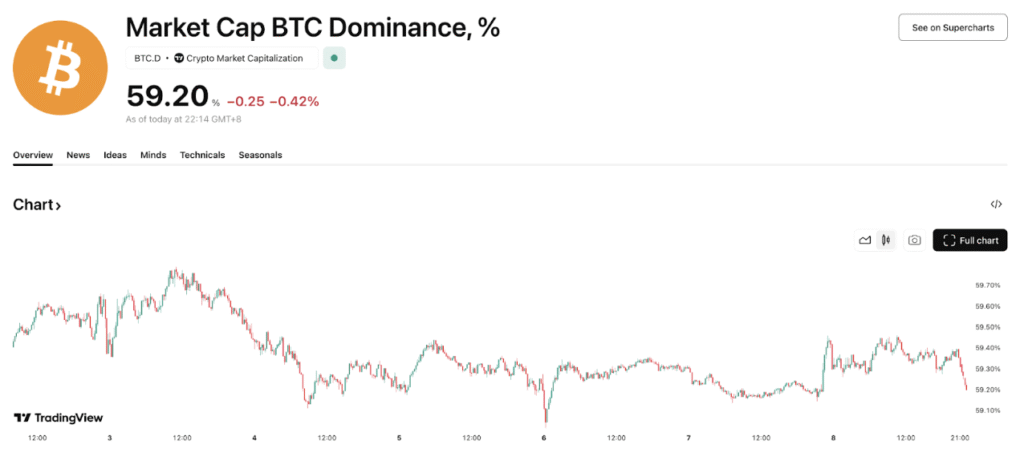
Bitcoin Dominance Rate Shakes Lower, Potential Pressure in Sideways Trading
Over the past week, Bitcoin's leadership has maintained a weak structure, oscillating all the way down from the highs above 59.6% to the latest 59.2 %, during which a number of short-term bounces failed to break above the previous highs, and the close was even characterized by a sharp intraday decline. The trend remained in a narrow sideways range from 3 to 8 days, but each move up to the 59.4-59.5 % area was met with selling pressure, which eventually pushed the leadership rate back down to near one-week lows. This repeated resistance suggests that capital is not yet definitively in favor of Bitcoin, and the market continues to remain on the sidelines in the absence of direction, echoing the sideways consolidation in the crypto market as a whole. This oscillating downward dominance reflects a new market that has yet to be ignited. While Bitcoin remains the market leader, the failure of the leadership rate to move higher means that capital is not choosing to focus on defense or shift to the risky cottage sector in general. passive ETF fund flows have made overall liquidity more neutral, making it difficult for the market to develop a clear trend. When leadership is blocked in high territory without incremental capital, it means that the rotation remains slow and investors are waiting for clearer macro signals to decide on a direction. This kind of sideways weakness does not necessarily lead to a crash, but rather indicates that the market is in the energy accumulation stage of compression, which will have a magnifying effect once the direction of the subsequent breakout is established.
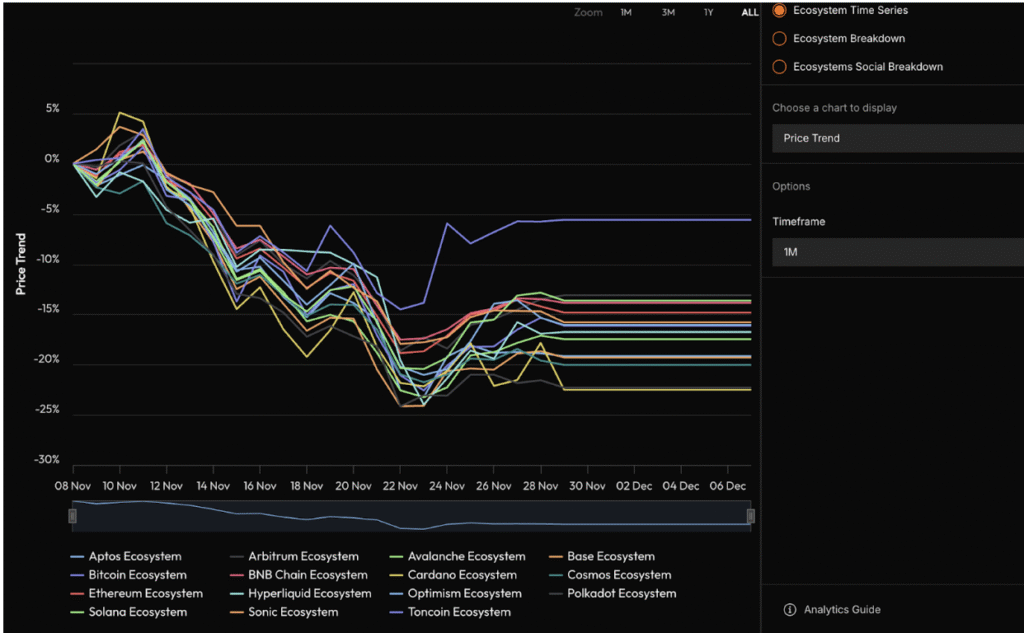
Mainstream Public Chain Under Pressure to Pull Back, Ecology-wide Synchronized Downtrend
Over the past month, the prices of major ecosystems weakened across the board. The chart shows that since 11/8, most of the chains have been sliding from 0% to -15% to -25%, with medium-sized ecosystems such as Solana, Avalanche, BNB Chain and so on touching -25% lows at one point, and mainstream ecosystems such as Bitcoin, Ethereum and so on have seen a relatively moderate decline. Bitcoin, Ethereum, and other mainstream ecosystems have seen relatively moderate declines, mostly in the range of -10% to -15%. It is worth noting that a few chains, such as Sonic and Toncoin, rebounded briefly after 11/26, but eventually still traded sideways in the range of -10% to -15% in line with the market, reflecting the overall trend of generalized retracement in the ecosystem. Although mainstream chains avoided the deep decline, they also failed to reverse the monthly downtrend. The overall trend shows that the market mindshare has shrunk significantly, with capital commitment to non-mainstream narratives weakening rapidly, while mainstream ecosystems are relatively resistant to declines due to their larger size and deeper liquidity. This structure echoes the accelerating loss of small cap holders in the chain data, which will be discussed later. The exit of retail investors has made small and medium-sized ecosystems more susceptible to the amplification effect of selling pressure, while large ecosystems such as Bitcoin and Ethereum, with their greater depth and narrative stability, have eventually become the place for capital to flow back defensively. This type of synchronized monthly decline pattern often occurs during the redistribution of capital prior to a cyclical turnaround.
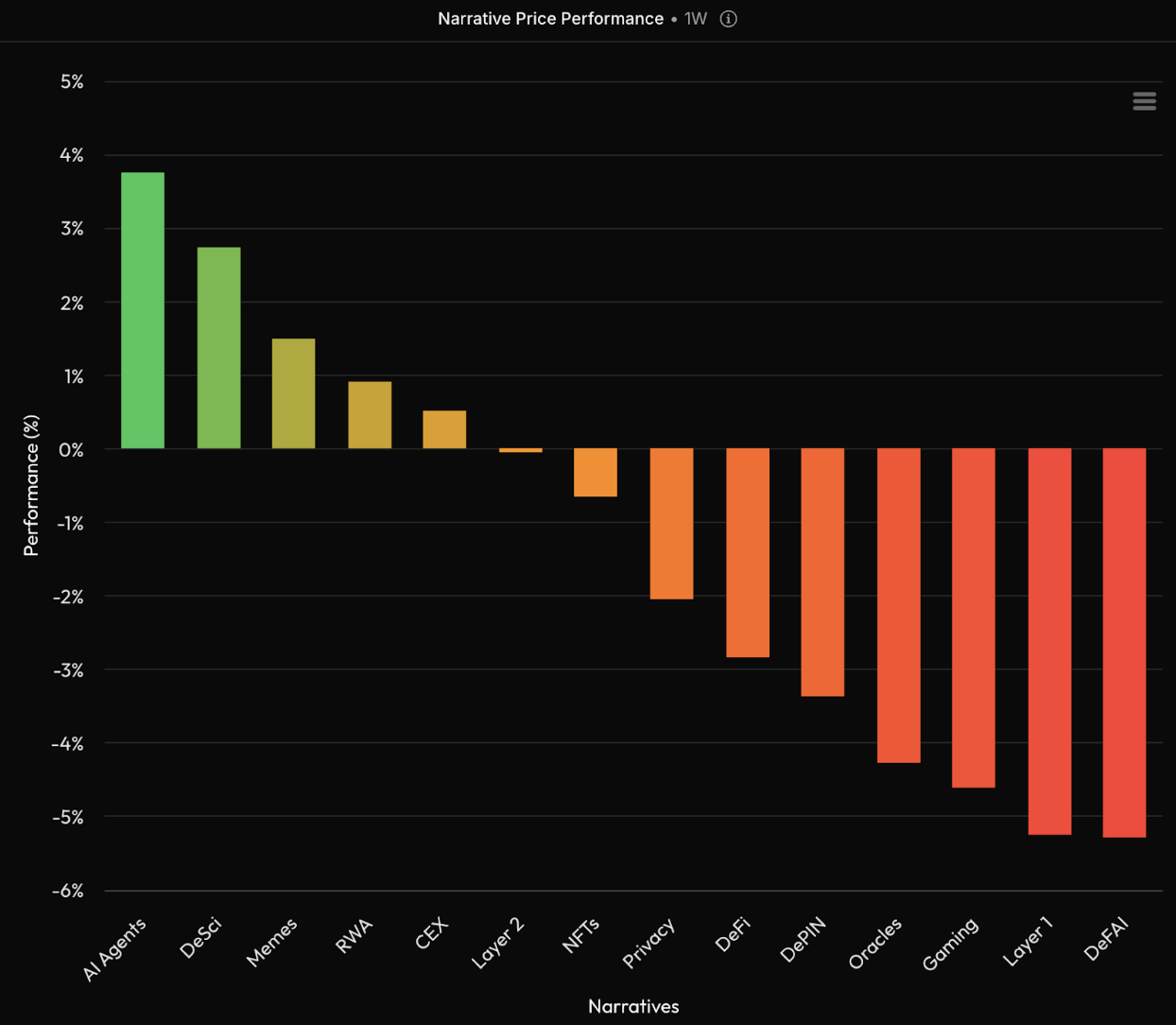
Initial Warming of Risk Appetite: Capital Repricing Amid Diverging Narratives
AI Agents and Decentralized Science regained market mindshare this week, reflecting the rapid recovery in risk appetite following the Fed's rate cut. The chart shows that AI Agents posted a weekly gain of ~3.7%, Desci gained ~2.7%, and Memes posted a positive return of ~1.5%, making it one of the few sectors with significant inflows. In contrast, Layer 1 and DeFi weakened considerably, down ~5.3% and ~5.4% respectively, indicating that the mainstream base layer and traditional protocols are still being neglected by capital. The overall structure shows clear headline and tail pressure, indicating that the market is still selective despite the recovery. This sectoral divergence reflects a shift in capital appetite towards more flexible narratives following the rate cuts, particularly in the AI-related and more speculative meme sectors. As interest rate risk declines and pricing power reverts to areas with growth imagery rather than solid cash flows, capital is naturally gravitating towards sectors with narrative drivers and high speed rebound characteristics. Meanwhile, the weakness of mainstream L1s and DeFi indicates that their mindshare has not yet recovered and the market is waiting for a new catalyst. Overall, sector rotation is characterized by early risk appetite recovery. If the macro environment remains stable, this rhythm of capital approaching high Beta narratives is expected to continue and provide structural support for the year-end market.
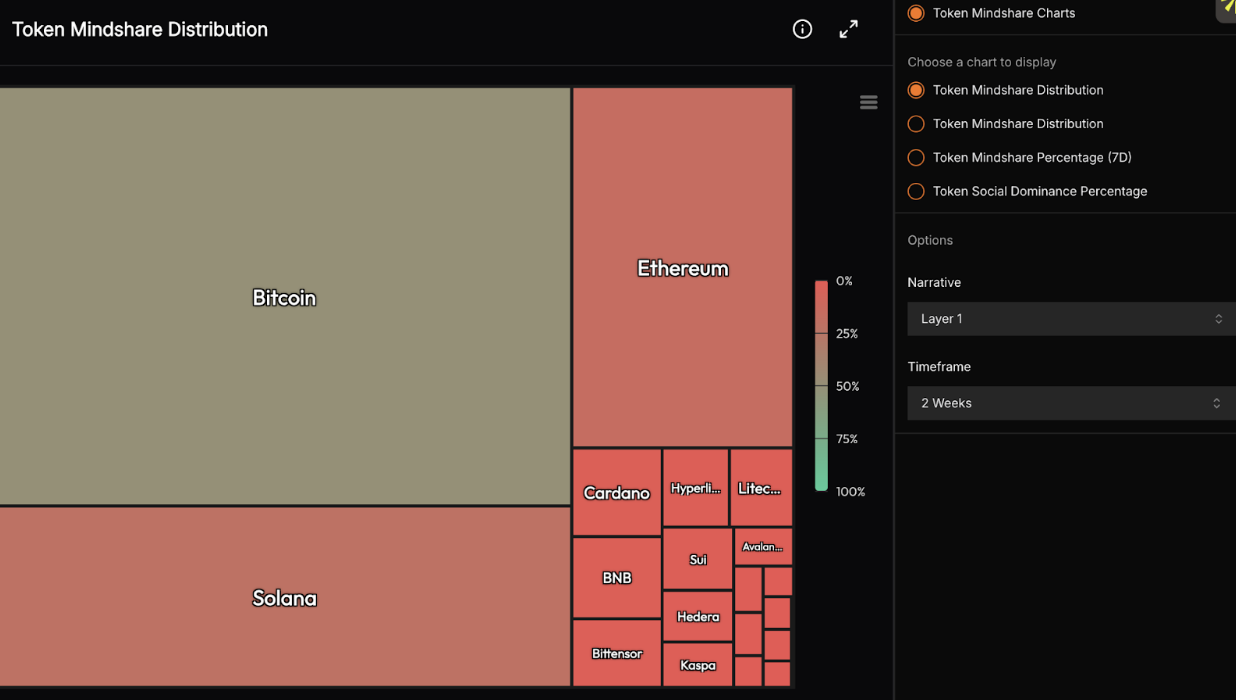
Layer 1 Mindshare Continues to Shrink as Mainstream Narratives Cool Off
Layer1's mindshare distribution has shown a clear concentration trend over the past week, reflecting the market's withdrawal of risk appetite from the main chain narrative. The chart shows that Bitcoin takes up the lion's share of the area, nearly half of the total, with Ether as the second largest core, while other Layer1s such as Solana, Cardano, BNB, Sui, etc. have shrunk significantly to a small area and remain in the darker red range, indicating a general decline in their share over the two-week period. This type of graphical contraction represents a concentration of capital and attention on a very small number of high-cap assets, with the majority of mid-sized main chain mindshares noticeably compressed during the period in question. This concentration is not a simple fluctuation at the price level, but rather reflects a structural adjustment to investor fatigue in the main chain narrative. The overall market risk appetite has risen since the Fed cut rates, but instead of flowing into the traditional main chain, there is a shift towards more storytelling and high beta sectors, such as AI Agents, Memes, or emerging infrastructure, suggesting that investors are moving away from the stability of blue chips and looking for more flexible returns. As Layer1 mindshare declines across the board, while Bitcoin and Ethereum's share rises, this phenomenon generally indicates that investors are choosing to view the mainchain as an anchor for value against a backdrop of declining macro uncertainty, and are investing their new risk capital in newer tracks with more active storytelling.
Chain Data
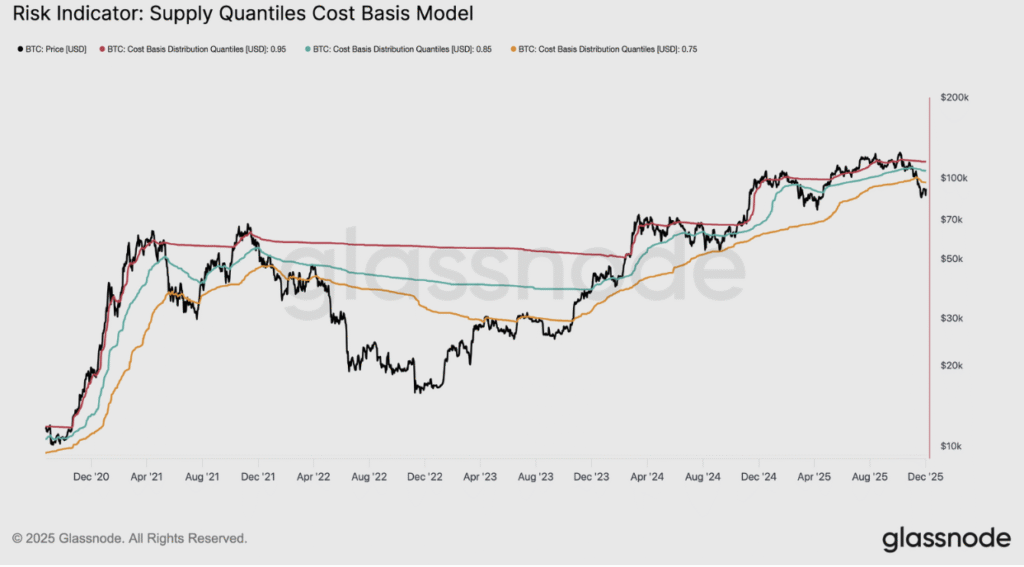
Critical Resistance Pressure: Loss of Top Could Trigger Deeper Adjustment
Bitcoin is facing a highly concentrated set of key resistance zones that correspond to the 0.75, 0.85, and 0.95 cost distribution bands, which have historically determined whether or not the market moves from a mild correction to a deep bearish trend. As seen in the chart, since mid-November, the current price has fallen below the 0.75 level and once dipped to ~$96.1K, putting more than 25% of supply in loss-making territory, while the 0.85 level at ~$106.2K and the 0.95 level are even higher than the current price, exerting heavy upward pressure. This structure is highly similar to that of 2022 Q1, suggesting that high-cost buyers are starting to become potentially vulnerable and that overall market conditions are moving closer to high-risk territory. If Bitcoin fails to regain $106.2K and turn it into support, downside momentum could build up quickly and could force high buyers to exit the market under pressure, further aggravating the downward slide in price. The black line trend has repeatedly tested around the 0.75 level, suggesting that the market is extremely sensitive and the risk of a break below support would be significantly magnified in the event of a macro-volatility. However, if the price can maintain a sideways consolidation between ~US$96.1K and ~US$106.2K and stabilize above the true mean of the non-dormant currencies, it means that the selling pressure from the high-cost supply may be gradually depleted, forming a potential bottom area. This is a concentration of risk and a critical point for a long/short turn, and future direction will depend on whether it can successfully retake the resistance band and rebuild the upward structure.
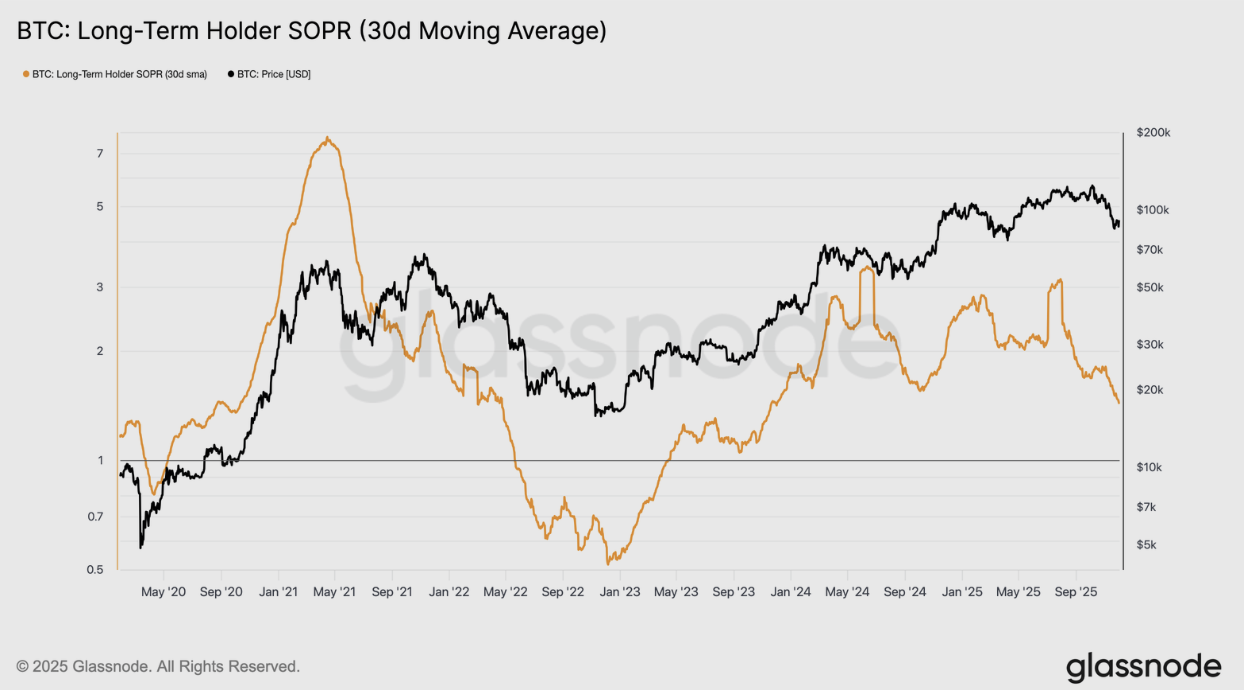
Long-Term Chip Profits Tighten: A Long Endurance Test Amid Cooling Demand
According to Glassnode's chart, the SOPR 30-day average for long-term Bitcoin holders is currently around 1.43, clearly above the breakeven line of 1, which means that long-term chips are still in an overall profit-taking mode, but have significantly declined compared to the previous highs; its trend is highly similar to the structure of the first quarter of 2022, with a profit squeeze pattern of a declining price and a concurrently declining SOPR. However, the biggest structural difference of the current round lies in the amplitude of the fluctuation. The SOPR in the peak period of 2021-2022 was as high as 7 to 8, reflecting extreme profit and overheated sentiment, while the high point of the 2024-2025 cycle is only around 3, indicating that the strength of demand and speculative leverage in the current round have tightened significantly, and the driving force of capital is not as fervent as that of the previous round. The current round of demand strength and speculative leverage have tightened significantly, and the capital drive is no longer as fervent as the previous round. This structure means that long-term investors are still cashing in on their gains, but their profit margins are continuing to be squeezed, demand momentum is gradually moving downhill, and the market has shifted from highly elastic growth to a phase of liquidity contraction and supply absorption. Compared to 2022, there has not yet been a full-blown loss wipeout with a SOPR below 1, suggesting that the market is still in a fragile equilibrium of positive net inflows, rather than a systemic collapse. The real key for the bulls will be to hold the true market averages and wait for the next wave of new capital to pick up the baton. Looking at the broader currency capital cycle, this phase of profit convergence without turning to losses often corresponds to a transition period of extreme sentiment, tight liquidity and repricing of risky assets, and is also the window where the long and short term capital game is at its most intense.
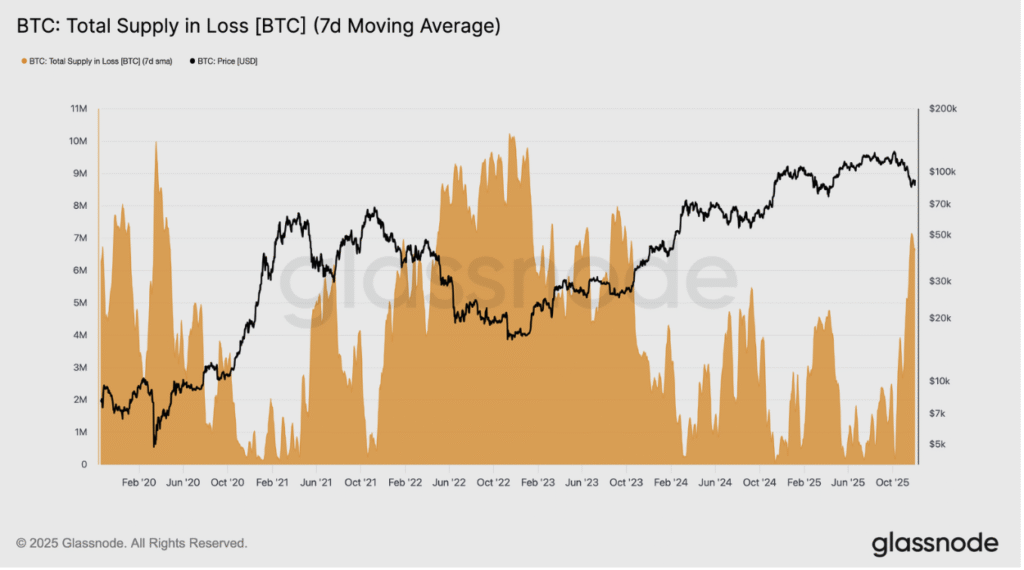
Institutional Focus on Volatility: Climbing Loss Supplies Reveal Structural Divergence
The seven-day average of loss supply shown in the chart recently climbed to approximately 7.1 million pieces, the highest since September 2023, and has continued to remain in the 5.0 to 7.0 million piece range, quite close to the early 2022 sideways consolidation phase. This magnitude reflects the large number of high level buyers still bearing unrealized losses at this stage, and the fact that black line prices have repeatedly oscillated at higher levels to form a functional shallow bottom after the uptrend of the past two years or so, suggesting that market sentiment, while not collapsing, is still subdued. Compared to previous cycles, this expansion in loss supply was not accompanied by a sharp sell-off, suggesting that the holder structure has been significantly reshaped at this stage, with the dominant force shifting from retail to long-term institutional funding, allowing volatility to be sharply converged despite the high pressure environment. The stability of ETFs and institutional funds has provided a different kind of resilience to the current pullback, with the primary source of most of the outflows shifting to retail investors, providing a stark contrast and depressing the chances of extreme volatility in the market. The repeated stacking in the orange area of the chart suggests that the large supply of losses has not triggered a sharp decline, reinforcing the argument that the market is shifting from a short-term sentiment-driven to a longer-term capital-driven focus. With quantitative tightening just ending and interest rates likely to fall in Q1-Q2 2026, the market is expected to regain upside momentum on the back of an improving macro environment. However, this potential rally may not be able to replicate the explosive expansion of previous cycles due to heavy high-cost fundraising and still large loss-making supply.
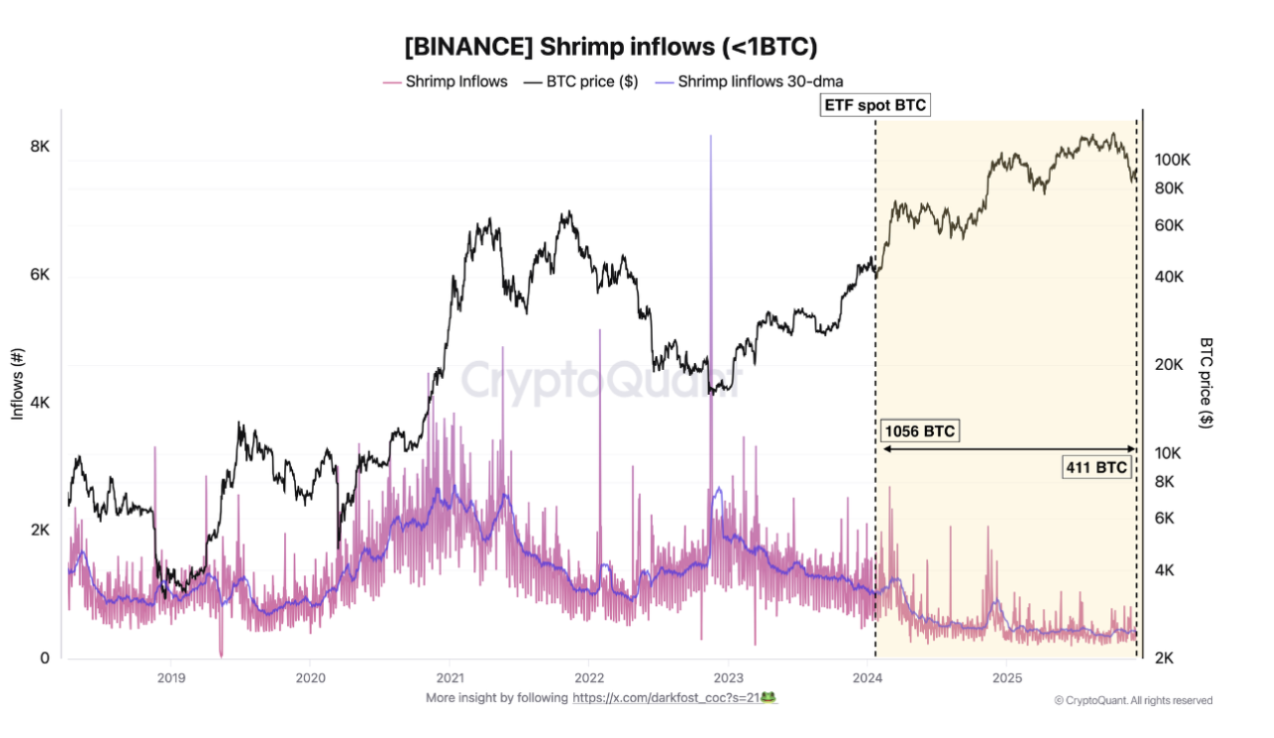
Retailers retreat to the freezing point, creating the perfect opportunity for large investors to raise funds.
Bitcoin retail activity has fallen to its lowest range on record, with the chart showing that 30-day average deposits for addresses holding less than one coin have shrunk from about 2,675 in December 2022 to just 411 today, a decline of about 61% from 1,056 at the start of 2024. The purple and blue curves have both reached multi-year lows and contrast sharply with the rapid amplification of retail deposits in 2020-2021 as prices broke above $20,000, $30,000, and $50,000, and the rapid expansion of retail deposits as they rose above $30,000 and $50,000. The purple and blue curves have both hit multi-year lows, in stark contrast to the 2020-2021 period when retail deposits expanded rapidly as the price exceeded $20,000, $30,000, and $50,000. At this stage, even though the BTC price remains in the $90,000-$100,000 region, retail traffic continues to decline, clearly reflecting that this is not a short-term drop, but rather a structural retreat that has reduced retail momentum on the exchange side of the market to a near-vacuum, and the market participation structure is completely different from that of past cycles. The retreat of retail investors does not mean that demand has disappeared, but is more likely to reflect a shift in preference to the spot ETFs that have been available since 2024, whose low-friction nature has eliminated the need for retail investors to inject more than 1,000 monthly deposits into the exchanges, leading to a significant decline in the data, but not to a decline in longer-term interest. The chart shows that prices have strengthened and retail deposits have fallen consistently to the 411-credit mark, implying that short-term sentiment has been withdrawn significantly and that the concentration of chips has returned to large investors, institutions and long-term holders. This state often represents an increase in the degree of control, which is conducive to the large investors to quietly absorb chips in the 80,000 to 90,000 U.S. dollars of weakness, in order to reserve space for the subsequent upward movement. As the liquidity structure becomes dominated by large investors, with retail investors absent and deposits at multi-year lows, the market typically enters a high-winning window for long-term investment and staging, helping to get ahead of the next easing cycle and interest rate reductions due in Q1-Q2 2026.
Related Post:
Best Cryptocurrency Trading Platform for Hong Kong Users?2025 Latest Bitcoin Tips for Beginners
2025 Coin Ring Newbie Guide Lazybones|Chained Ecology Entry Guide
2025 Must Read for Newbies! Use these six data indicators to learn how to judge buying opportunities.
Chained Data Analysis:
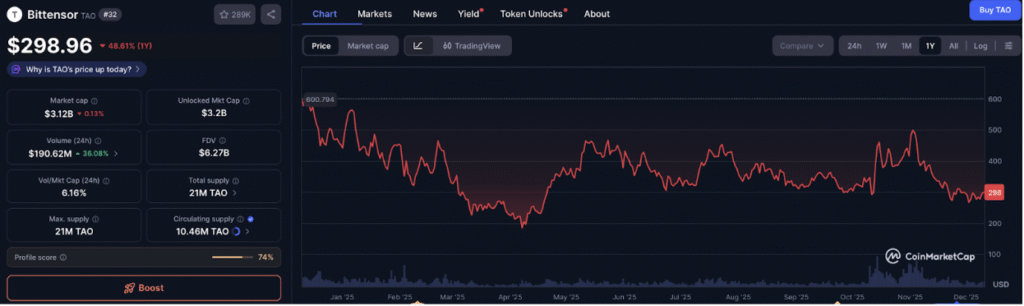
Bittensor's first halving landed on the supply and demand inflection point of AI arithmetic marketization
Bittensor is a decentralized artificial intelligence network driven by a token mechanism, with the core objective of commoditizing model training and reasoning capabilities, and distributing arithmetic power and revenues through market competition.TAO, as the only unit of exchange and motivation in the network, has a direct impact on the economic structure of the entire ecosystem. According to the chart data, the current price of TAO is about 298.96 USD, the total market capitalization is about 3.12B USD, the circulation volume is about 10.46M pieces, and the maximum supply is fixed at 21M. Yesterday, after TAO was halved for the first time in history, the market quickly reflected the turnaround in the supply structure, and the price has increased by about 15% in recent weeks, which shows that the logic of halving the TAO price has been pre-priced by some investors, but at the same time, the logic of halving the TAO price is also confirmed by the fact that the medium and long term inflation is going down. However, it has also confirmed the downward trend of inflation in the medium to long term, and the market is shifting from event trading to fundamentals digestion. The nature of halving is to permanently compress new supply, a mechanism that has been tested many times in the history of Bitcoin, often accompanied by shock and retraction in the short term, and gradually reflected in the price structure over time in the medium term. For Bittensor, the demand is not pure speculation, but rather a rigid functional demand for model competitors to hold and pledge TAOs in order to participate in the network and earn rankings and revenues. While supply growth has slowed, competition for AI computational power and model quality has not diminished, but rather reinforced the utility value of tokens. This means that there may be a technical correction in the short term to digest the rapid rise of 15% in the previous period, but with the passage of time and the fermentation of the effect of new supply constraints, the price pivot has the conditions to rise along the time axis. In terms of business model and cyclical structure, TAO is entering a supply constraint phase similar to that of Bitcoin after the halving of the supply, and the short-term oscillations for the long-term trend have a long bias for medium- to long-term pricing.
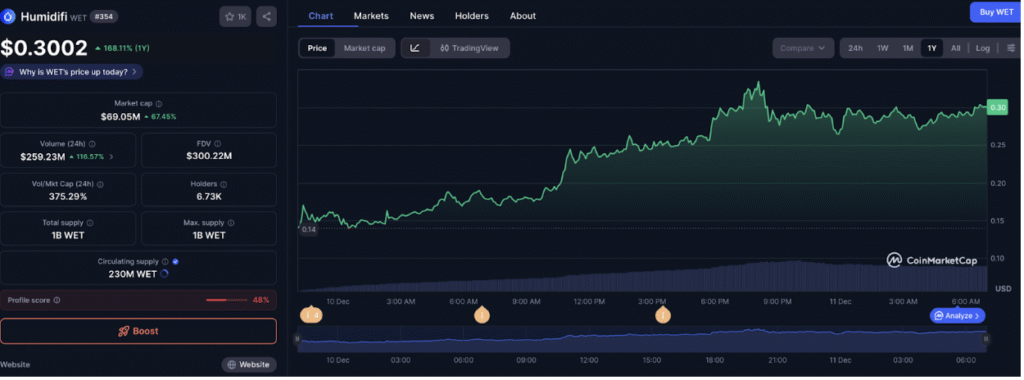
HumidiFi officially moves into Solana as next-generation DEX infrastructure
As one of the fastest growing dark pool DEX and liquidity infrastructure in the Solana ecosystem, HumidiFi is not positioned as a trading front-end, but rather as a core conduit that directly receives and amplifies the demand for trading on the chain. As seen in the chart, the WET price has risen in a short period of time to approximately US$0.3002, an annualized increase of 168.11%. At the same time, its fully diluted valuation is approximately US$300 million, and its 24-hour turnover is approximately US$259 million, with a high degree of closeness between volume and market capitalization, reflecting strong capital participation and real-time turnover efficiency. In addition, the circulating supply of approximately 230 million coins, paired with 6,730 holders and continuously expanding bar volume, suggests that the agreement is not a single point of speculation, but rather a demand for liquidity based on high-frequency, real-world usage behavior. What makes HumidiFi stand out from the crowd of DEX agreements is its product structure, which is highly synchronized with Solana's trading dynamics. On a data level, the protocol has processed over $100 billion in cumulative volume in just five months, with a market share of approximately 35% to 40% of Solana's total DEX, making it a natural liquidity taker in both the Jupiter ecosystem and the DTF regime. Its proprietary automated market maker structure, high-speed pricing engine with 17 to 75 updates per second, and execution quality that limits slippage to less than 5 basis points essentially translates trading volume directly into stable, repeatable infrastructure revenue. As market sentiment cools and the narrative window lengthens, capital tends to flow into these new and underpriced efficiency deals.
Conclusion
In the above analyzed indicators, we can clearly see a general direction that the currency market still needs time to adjust in a short period of time, and most likely there will not be a significant increase. Here I would like to share that the prediction market is in full swing and Polymarket has reached the top 5 apps in the App Store. We will share this track in the next Alpha Report! Looking at the data on the retail exit chain, we can see that this is a phase for the big players to change their positions, and to suck in the chips.
In addition, at the same time Powell announced the interest rate cut, he also vaguely mentioned a new measure, reserve management purchases (RMP). To put it simply, this is QE, which means that the US is going to start buying short-term bonds and injecting liquidity into the market. Starting from this month, it will be $40 billion per month, lasting until April 2026, to inject liquidity into the market. Moreover, the US FED will have a new chairman in Q2, and according to Trump's character, it is very likely that he will hire a chairman who is more favorable to cryptocurrencies and supportive of cryptocurrencies. Therefore, we suggest that you should not be influenced by the price of the currency and the market sentiment, but rather go for a position.
If you have learned something from this update, or learned more about the market, please follow us on Monsterblockhk. Twitter ,並Join our Telegram GroupsWe will be able to share and discuss the next wave of opportunities!
Most Popular Cryptocurrency Trading Platforms
Hong Kong People's Top Choice for Bitcoin and Ether Trading 》 【2025 Introduction】OSL Registration Benefits, Security, Deposit and Withdrawal, Special Features
Suitable for traditional Hong Kong investors to buy and sell stocks and currencies at the same time. [2025 Introduction] What is Victory Securities? Security, Deposit and Withdrawal, Features
More choices of contract currencies, suitable for buying fake coins in cash. Trade on MEXC and enjoy 500x leverage and many other benefits!
Related Post:
Best Cryptocurrency Trading Platform for Hong Kong Users?2025 Latest Bitcoin Tips for Beginners
2025 Coin Ring Newbie Guide Lazybones|Chained Ecology Entry Guide
2025 Must Read for Newbies! Use these six data indicators to learn how to judge buying opportunities.

Disclaimer
The content of this article is for reference only, investors should exercise independent judgment, invest prudently and at their own risk, this article does not provide or attempt to persuade the audience to do trading or investment basis, the content is for sharing purposes only, and should not be regarded as investment advice.It does not represent the views and position of Monsterblockhk.All information and opinions are current as of the date of the judgment. In addition, if a judgment is rendered on aIn this siteAny content related to virtual asset trading platforms that have not yet obtained a license to operate virtual asset trading platforms in Hong Kong, including but not limited to text introductions, pictures, offers, events, etc., are only available to users outside the Hong Kong Special Administrative Region.
According to the Hong Kong Anti-Money Laundering and Counter-Terrorist Financing (Amendment) Ordinance 2022, after June 1, 2023, all centralized virtual asset trading platforms operating in Hong Kong or actively promoting their services to Hong Kong investors will be licensed and regulated by the SFC, and any related unlicensed activities will be a criminal offence. For more information and details of the legislation, users may refer to the SFC website.