

What is Pearl? Why did it come about?
Bitcoin mining rigs run day and night to compute a bunch of hash values that serve no other purpose—they’re disposable once the calculations are complete. AI inference also uses GPUs, but it performs matrix multiplication that people are willing to pay for. Pearl combines these two functions: miners use GPUs to perform the matrix multiplication required for AI models, while simultaneously generating the blockchain’s proof-of-work from these computations—earning two streams of revenue from a single unit of computing power. The project team refers to this as “Proof of Useful Work.”
Pearl was developed by Pearl Research Labs, a company that states it was founded in 2025. Its mainnet went live on April 27, 2026, and its native token is PRL. The three co-founders are:
- Omri Weinstein (CEO): Ph.D. in Computer Science from Princeton University; formerly an assistant professor at Columbia University; currently an associate professor at the Hebrew University; states that he previously worked at NVIDIA and VAST Data.
- Ilan Komargodski: A cryptography researcher who earned his Ph.D. from the Weizmann Institute of Science and is currently a professor at the Hebrew University; he is a co-author of the paper on Pearl’s theory.
- Idan Sugarman: With a background in business and investment, he is a partner at Zero Knowledge Ventures and co-founder of the AI company QuantHealth.
The technical foundation is a paper published in 2025 that has been accepted for presentation at an academic conference. According to the team’s statement, there is no pre-mining, no founder allocation, and no venture capital funding; all PRL can only be generated through mining. The team joined the NVIDIA Inception program in July, which is a free membership and does not constitute an investment. The company’s registered address, headcount, and the team’s token holdings have not been disclosed to date.
Open a Hyperliquid account using the MBHK referral code to enjoy a fee discount when trading PRL perpetual contracts:
How to Get Involved with Pearl: Trading PRL and Mining
Method 1: Trading PRL Perpetual Contracts on Hyperliquid
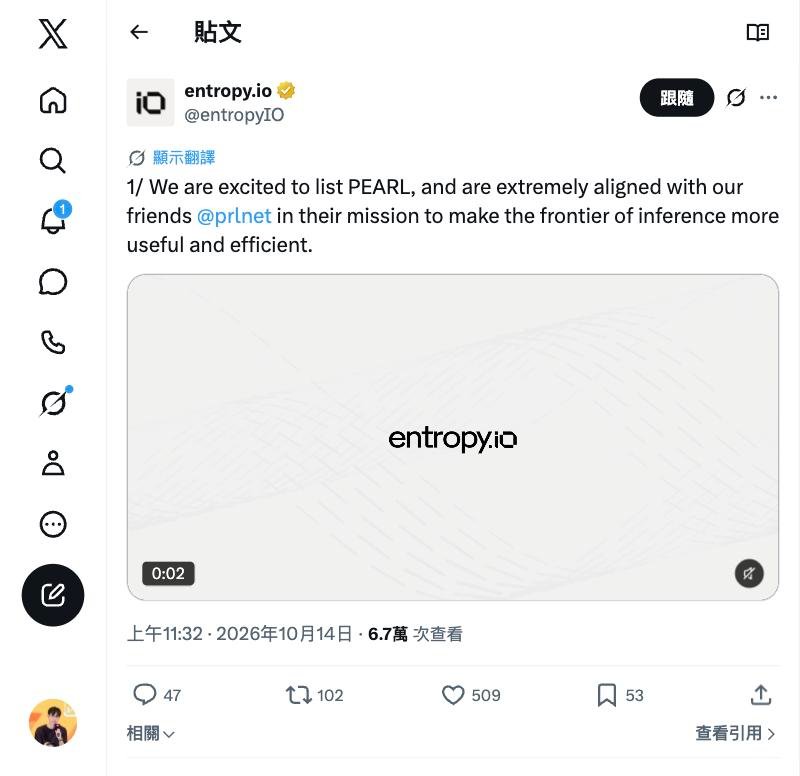
PRL spot trading is currently limited to two small exchanges and over-the-counter markets, with extremely low liquidity. Starting October 14, Entropy, a deployment partner within the Hyperliquid ecosystem, launched PRL perpetual contracts via the HIP-3 mechanism. Within just one day of launch, it became the market with the highest trading volume and is currently the most direct way to participate.
- Opening an Account: Use Hyperliquid Referral Links Sign in, connect your on-chain wallet, and use the referral code MBHK to enjoy a 4% fee discount.
- Deposit: Transfer USDC via the Arbitrum network. Readers who do not have USDC can first purchase BTC or ETH on Futu Securities, withdraw the coins to their own on-chain wallet, and then exchange them. For details, see Fidelity Cryptocurrency Teaching。
- Find the market: Search for "PEARL" or "PRL" in the trading interface, and select the perpetual market deployed by Entropy.
- Placing an Order: Start by placing a small, low-leverage test order to confirm the difference between the contract price and the spot price before increasing your position.
Risk Warning: Perpetual contracts involve leverage. Over the past two months, the PRL has risen from approximately $0.28 to a high of $2.10 before falling back, demonstrating extreme volatility; During the initial launch of Aster, the futures price was approximately $0.20 higher than the spot price, making it easy to chase the price and buy at the peak. For first-time participants, limit your position to an amount that won’t significantly impact your livelihood even if you lose it all. For information on how the interface and funding rates work, please refer to A Complete Guide to the Hyperliquid Exchange。
Method 2: Spot Trading and Mining
Spot trading is concentrated on two small exchanges: BigONE and SafeTrade. Based on data from October 17, the two exchanges combined for a daily trading volume of approximately $5 million, meaning the total buy orders required to push the price up by 2% amounted to only about $50,000. Neither platform holds a license in Hong Kong; this article does not serve as a guide for their use.
Mining requires an NVIDIA GPU; community mining software supports the RTX 30 through 50 series, accessed through a mining pool. However, once the FP8 upgrade mentioned in the next section is activated, graphics cards such as the RTX 30, RTX 40, and A100 series will be unable to generate valid proofs. At this stage, this factor must be factored into the payback period when purchasing cards for mining.
Pearl: Ecosystem and Commercialization Progress
Whether Pearl's story holds up depends on whether there are actually paying AI customers. As of October 17:
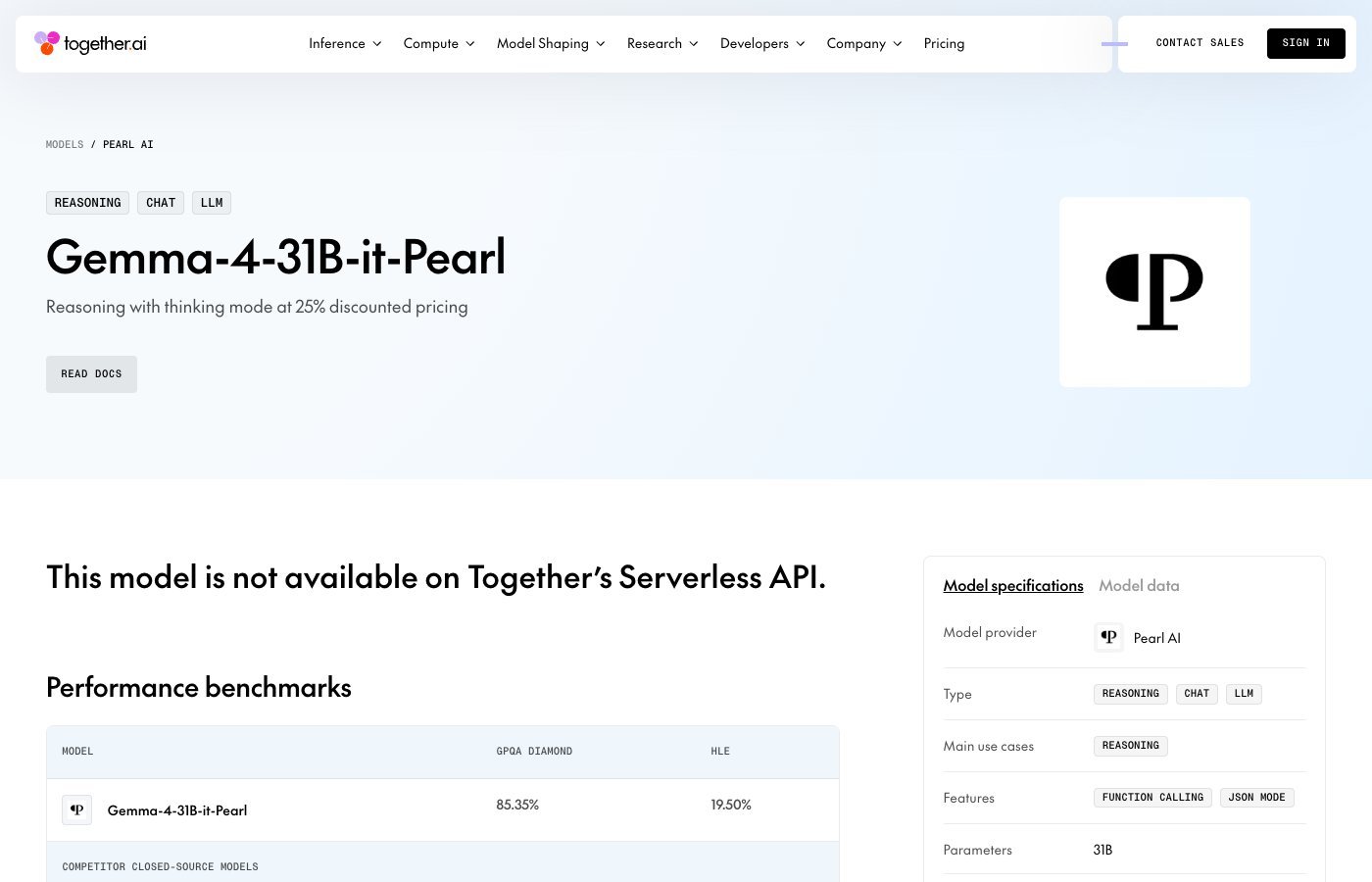
- Together AI: On May 15, the company announced an exclusive partnership to launch the Pearl edition of the Gemma 4 31B inference endpoint, touting a price of 25%; the discount is offset by the expected value of the PRL issuance. However, the model page currently states “Not available on Serverless API,” and the provider record on Hugging Face has changed from “Live” to “Error”; users can still deploy it themselves using a dedicated endpoint, but without the discount.
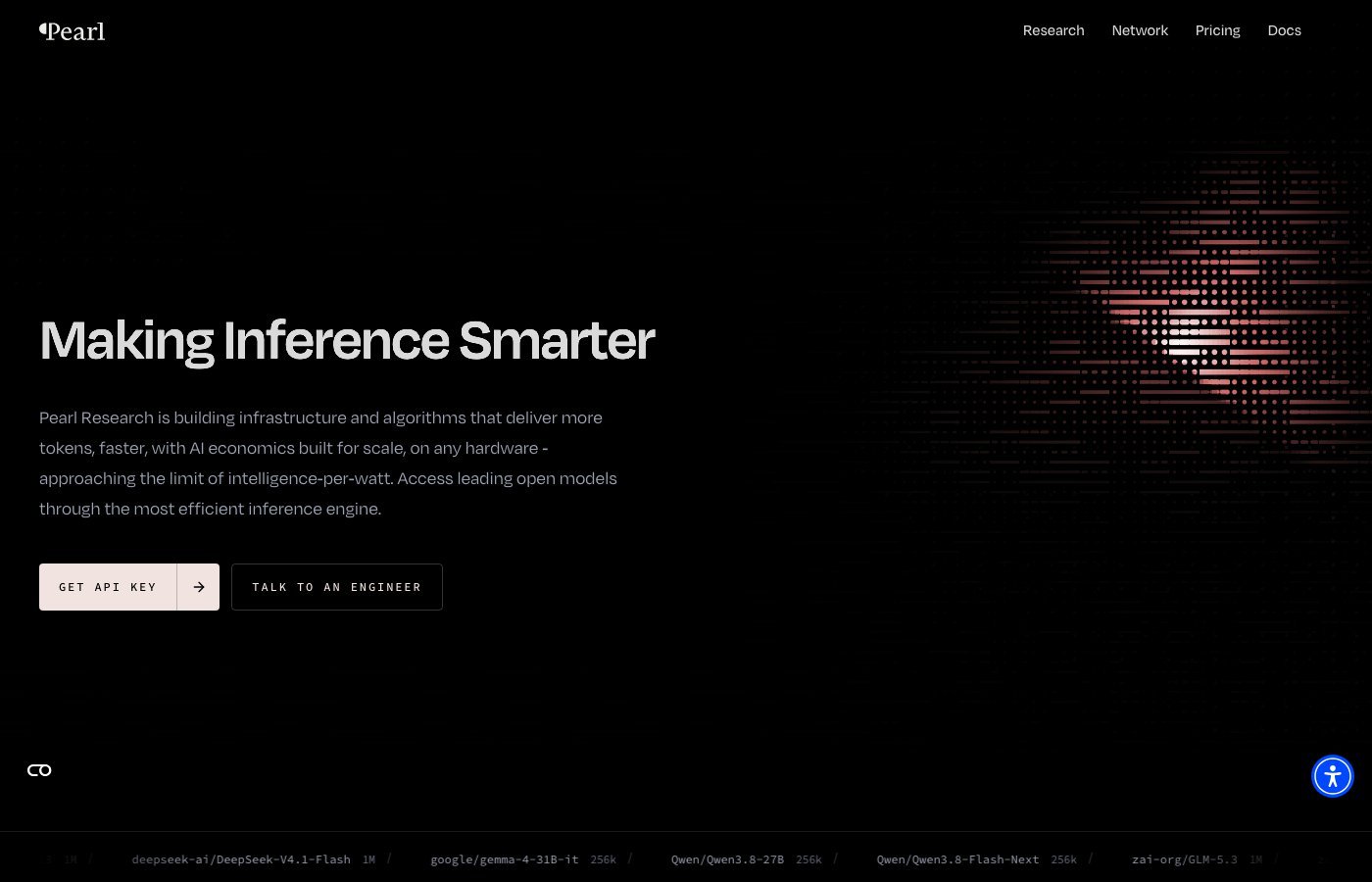
- Pearl's in-house inference platform: It charges based on prepaid credit in U.S. dollars and offers seven open-source models; the price for the same Gemma 4 31B model is only one-third that of the Together endpoint.
- Attestable: Announced on September 14 that it would collaborate on the development of an “inference proof” layer; development is still underway.
- Trading platforms: Entropy, Aster, Lighter, and Margin Trade offer perpetual contracts; spot trading is available only on BigONE and SafeTrade.
Market Data (CoinGecko, October 17):
| Project | Data |
|---|---|
| Price | About $1.68 |
| Circulating Supply | Approximately 347 million, accounting for 16.51 TP3T of the total |
| Market Capitalization (Free-Float) | Approximately $580 million, ranking 106th |
| Fully Diluted Valuation | Approximately $3.5 billion |
| 24-Hour Spot Trading Volume | Approximately $5.09 million |
| New Releases Today | Approximately 1 million |
Upgrades and partner announcements directly affect PRL contract prices, so be sure to set up an account before participating:
Technical Principles and Token Economics
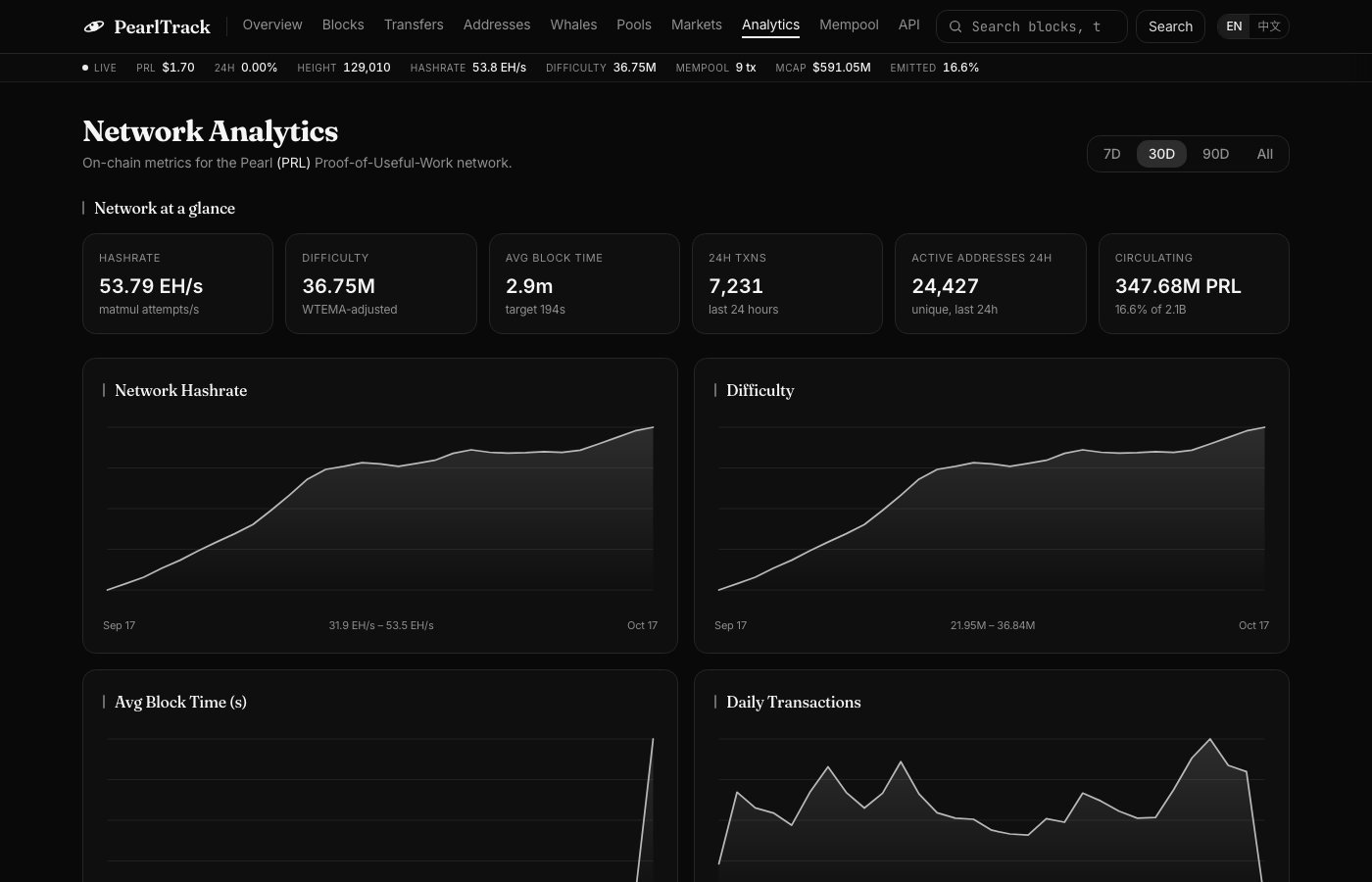
Pearl is a fork of Bitcoin’s btcd code, differing primarily in its block generation method: miners add random noise to a matrix and perform multiplication; the greater the computational effort, the higher the chance of finding a result that meets the difficulty threshold; Once found, the result is packaged using a zero-knowledge proof; the entire network only needs to verify the proof and does not need to recalculate it. The target block time is 194 seconds.
Key Points of the Token Economy: Total supply capped at 2.1 billion; no halving—the issuance rate decreases gradually, with half of the total issued over approximately four years; approximately 1 million new tokens are issued daily, valued at about $1.7 million at current prices, equivalent to one-third of daily spot trading volume; The difficulty was extremely low during the first six days of the mainnet, during which approximately 122 million tokens were mined—accounting for more than one-third of the current circulating supply—with unknown holders; all transaction fees go to miners, and there is no buyback or burn mechanism.
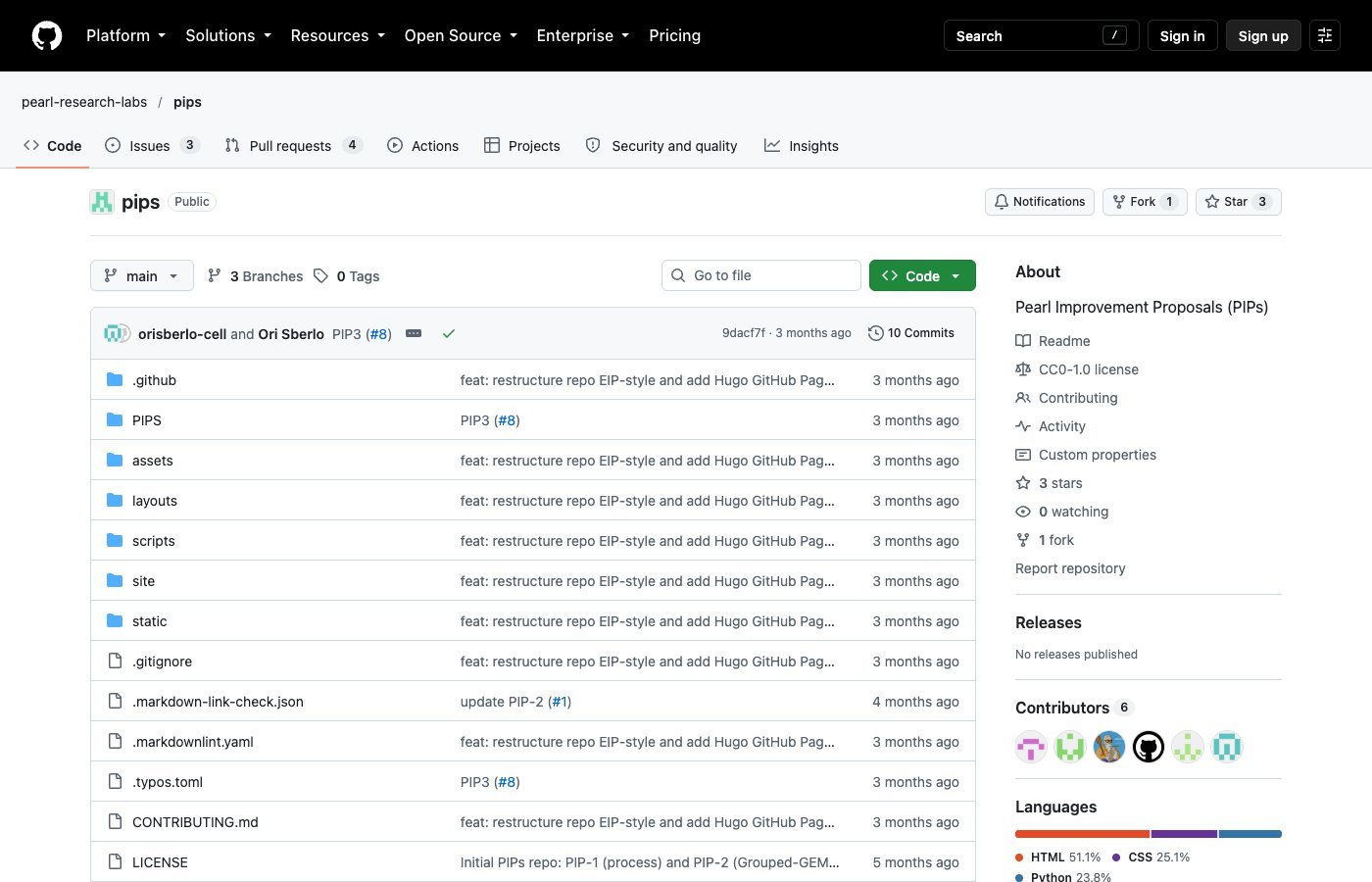
The next major upgrade is FP8 (Proposal PIP-3). The current protocol only supports integer operations, with an additional overhead of approximately 10% to 15%; the FP8 version has been reduced to 0% to 3% on the testnet. However, the proposal is still in the draft stage and has not been assigned a launch height. Furthermore, the specifications only define two generations of chips—NVIDIA Hopper (H100, H200) and Blackwell (RTX 5090, B200)—which are the consumer-grade graphics cards currently underpinning the network’s computing power; most of these will become ineligible after the upgrade.
Risks to Be Aware of Before Investing in PRL
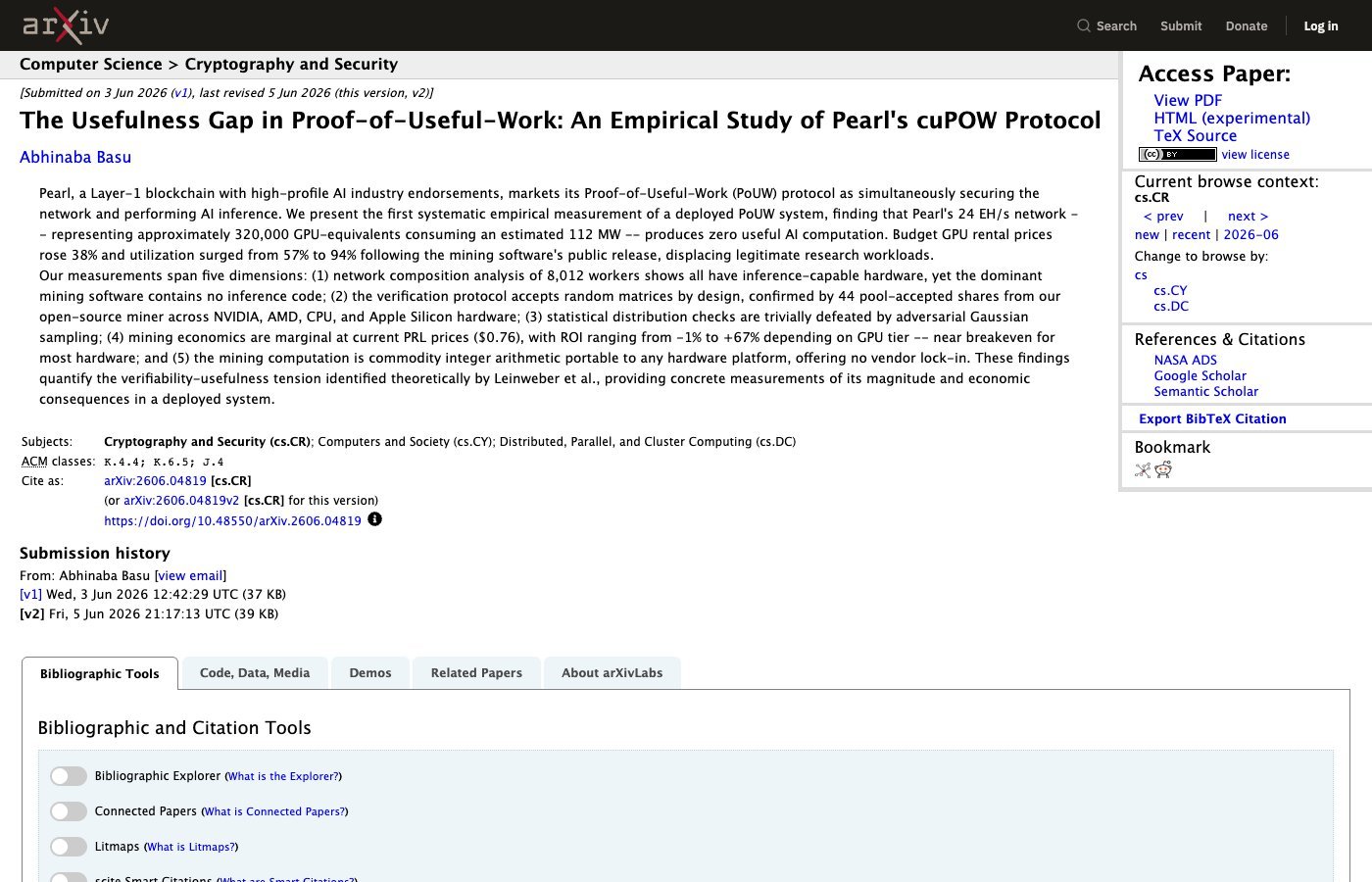
- Mining isn’t necessarily “useful”: The protocol can only verify that miners have performed matrix multiplication; it cannot verify whether any clients want that result. A study conducted in June analyzed approximately 8,000 mining machines and found that the code of mainstream mining machines does not contain inference code; even random matrices can still earn rewards.
- PRL has no demand mechanism: customers pay in U.S. dollars, miners receive PRL, and at no point in the entire process does anyone need to purchase PRL. During a community Q&A on September 15, the founder mentioned the possibility of future pricing or burning in PRL, but participants’ notes clarified that this was merely a line of thought and had not been officially announced.
- The company controls the rules: Within four months of launch, the consensus rules were modified four times, all of which were drafted and scheduled by the company.
- Extremely low liquidity: The combined order book depth for spot positions at ±2% totals only tens of thousands of dollars, and price discovery is primarily driven by perpetual contracts.
- The dual nature of the FP8 upgrade: While it will help attract large inference providers, it will exclude most existing mining rigs, causing the network’s total hash rate to first decline and then rebuild.
- Name Confusion: There is also Perle on Solana (with the same ticker symbol, PRL) and several other tokens with the same name. When checking market data, be sure to verify that it is the native Pearl of pearlresearch.ai.
The conclusion is: Pearl’s technical case holds up, but PRL’s current price is driven by the belief that it is the “AI version of Bitcoin,” rather than by its business fundamentals. Before investing, you need to be clear that you’re betting on whether the team will be able to build the demand mechanism.
To track PRL market prices and funding rates, start by opening an account:
Frequently Asked Questions
What is the difference between Pearl and Bitcoin? Both are proof-of-work blockchains with the same source code. Bitcoin miners compute hashes, the results of which have no other use; Pearl miners perform matrix multiplication, which theoretically can simultaneously support AI inference. Pearl has a total supply of 2.1 billion coins with no halving event, while Bitcoin has a total supply of 21 million coins and undergoes a halving every four years.
Can PRL be purchased on licensed platforms in Hong Kong? No. As of October 2026, PRL has not been listed on any licensed virtual asset trading platform in Hong Kong; spot trading is limited to small overseas exchanges and over-the-counter transactions.
Has Pearl received venture capital funding? The team has stated that it has not raised any venture capital funding, and its official website does not list any investors. Rumors that firms such as a16z have acquired stakes in the company have not been confirmed; No Limit Holdings is the only institution that has publicly disclosed its stake.
Is the Together AI discount endpoint available now? The model page is currently marked as not available on the Serverless API, and Hugging Face's provider status also shows an error, indicating that the shared endpoint was previously available but is now disabled; users can still deploy it themselves using a dedicated endpoint, but no discount is available.
What supports the price of PRL? At this stage, the project is supported by the “AI-powered Bitcoin” narrative, weak liquidity, and new buyers absorbing approximately 1 million newly issued tokens daily. The project lacks a demand mechanism such as buybacks, token burns, or PRL pricing; the team is still considering relevant proposals.
Disclaimer
The content of this article is for reference only, investors should exercise independent judgment, invest with caution and at their own risk, this article does not provide or attempt to persuade viewers to trade or invest on the basis of the content of this article is for sharing purposes only, and should not be regarded as investment advice, and does not represent the Monsterblockhk viewpoints and positions, all information and views of the specific date of the judgment of the time-limited nature. In addition, if any content in this website involves virtual asset trading platforms that have not yet obtained a license to operate virtual asset trading platforms in Hong Kong, including but not limited to text introductions, pictures, promotions, events, etc., they are only available to users outside of the Hong Kong Special Administrative Region.
According to the Hong Kong Anti-Money Laundering and Counter-Terrorist Financing (Amendment) Ordinance 2022, after June 1, 2023, all centralized virtual asset trading platforms operating in Hong Kong or actively promoting their services to Hong Kong investors will be licensed and regulated by the SFC, and any related unlicensed activities will be a criminal offence. For more information and details of the legislation, users may refer to the SFC website.
Next, set up your Hyperliquid account first, then decide whether to participate based on the risk checklist in this article:
Extended Reading:A Complete Guide to the Hyperliquid Exchange