


If you've seen Michael Saylor in the news or on the internet lately, talking about how his company is spending tens of billions of dollars to buy Bitcoin, you've got to be wondering what's going on:"Isn't this company using its shareholders' money to speculate on currency?"「If Bitcoin keeps dropping, it's going to go down, right?" "Does that sound like cutting the leeks?"
As a complete newbie, it's only natural to have these questions, so I'm going to start from scratch in this article to take you through the entirety of Strategy (formerly MicroStrategy, ticker MSTR), the DAT Digital Asset Treasury strategy, including how it works, why it dares to continue buying coins in a bear market, how safe leverage really is, and the most common criticisms in the market along with the facts! The most common criticisms and facts in the market are contrasted.
All figures are from Strategy's official website, SEC filings, CoinDesk, Bloomberg, Reuters, and other reliable sources (updated 2/26/2026).
Strategy's Story of Going from a Software Company to the 'Largest Corporate Holder of Bitcoin'
Originally a traditional technology company founded in 1989 to provide business intelligence software, Strategy made a bold shift in 2020 under the leadership of Executive Chairman Michael Saylor to view Bitcoin as a "better-than-cash asset," and began to use the company's capital to purchase large quantities of Bitcoin and gradually position it as a core treasury asset. In 2020, under the leadership of Executive Chairman Michael Saylor, the company made a bold shift: it viewed Bitcoin as a "reserve asset superior to cash" and began to use company funds to purchase large quantities of Bitcoin, gradually positioning it as a core treasury asset.
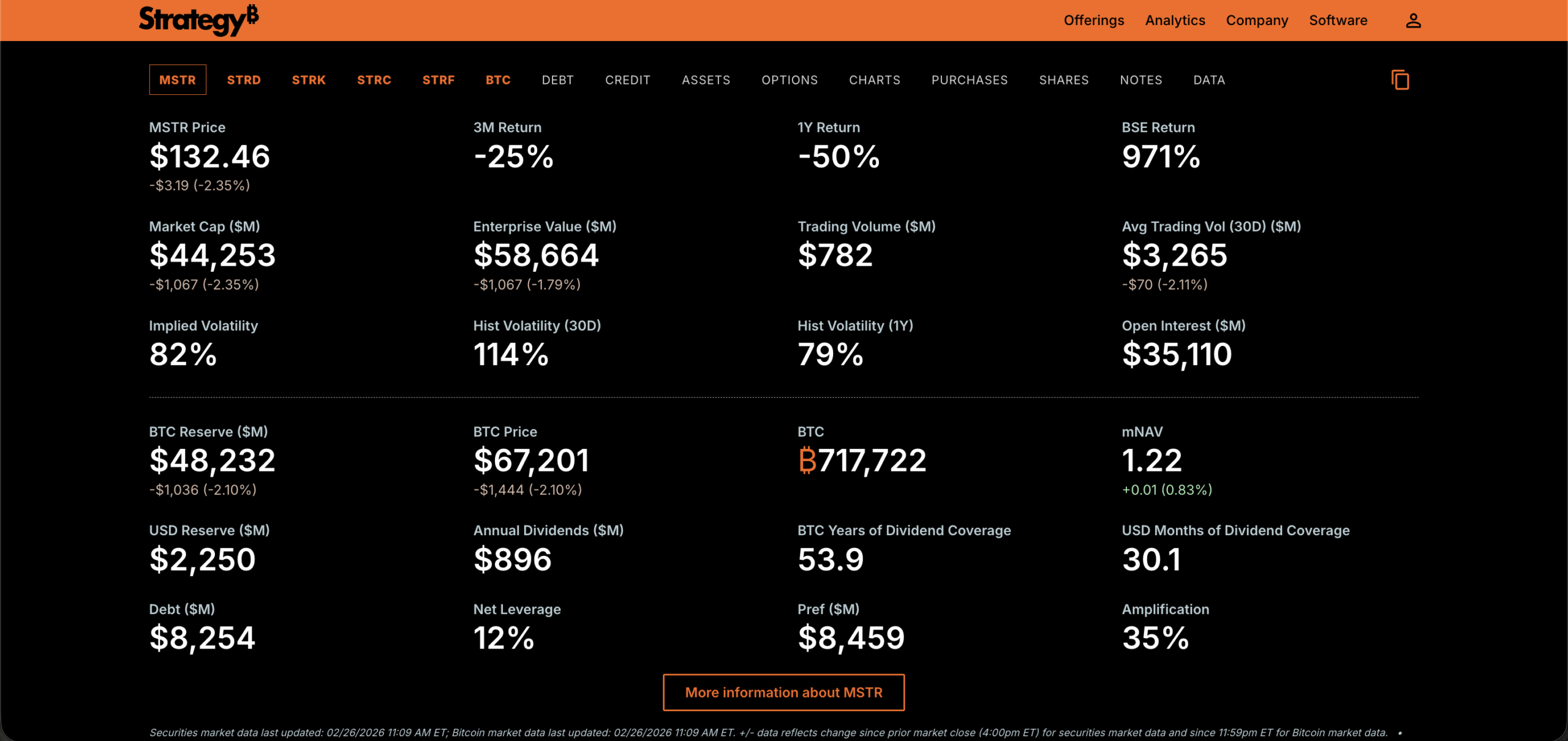
As of February 23, 2026, Strategy has completed its 100th Bitcoin purchase, holding a total of 717,722 Bitcoins at a total acquisition cost of $54.56 billion, or an average cost of approximately $76,020 per Bitcoin. The current market price of Bitcoin is around US$68,000, and the market capitalization of these Bitcoins is approximately US$48.909 billion. This makes Strategy the world's largest corporate Bitcoin holder, accounting for approximately 3.4% of the total Bitcoin supply.
Simply put, the company's main source of value is now not selling software, but becoming a "Bitcoin Treasury Company" that allows investors to indirectly receive Bitcoin price exposure by buying MSTR stock.
Bitcoin Flywheel: Strategy How to Keep Buying Coins with Wall Street Money
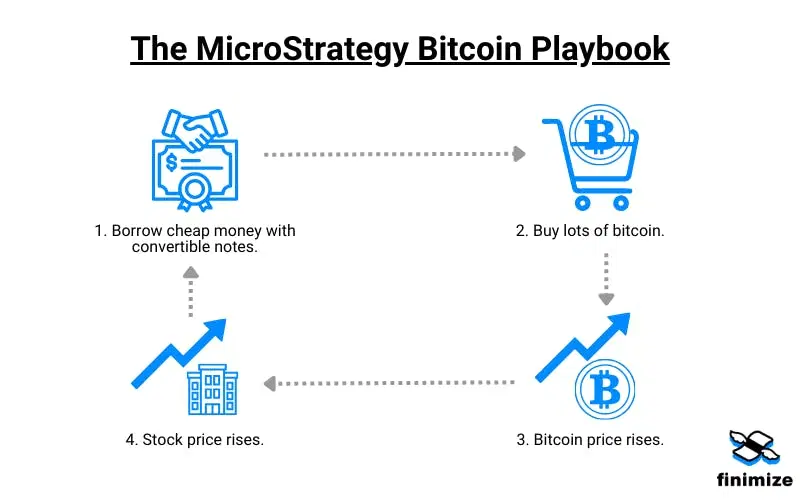
Strategy's core strategy is called the "Bitcoin Flywheel" and the principle of operation is actually quite straightforward. When the stock price is higher than the value of the bitcoin holdings (i.e., mNAV is greater than 1), the company will issue new shares or preferred shares to buy more bitcoins at a premium. The increase in bitcoin holdings increases the overall value of the company, which makes it easier for the stock price to continue to rise, so the company can refinance and buy more bitcoins, creating a positive cycle.
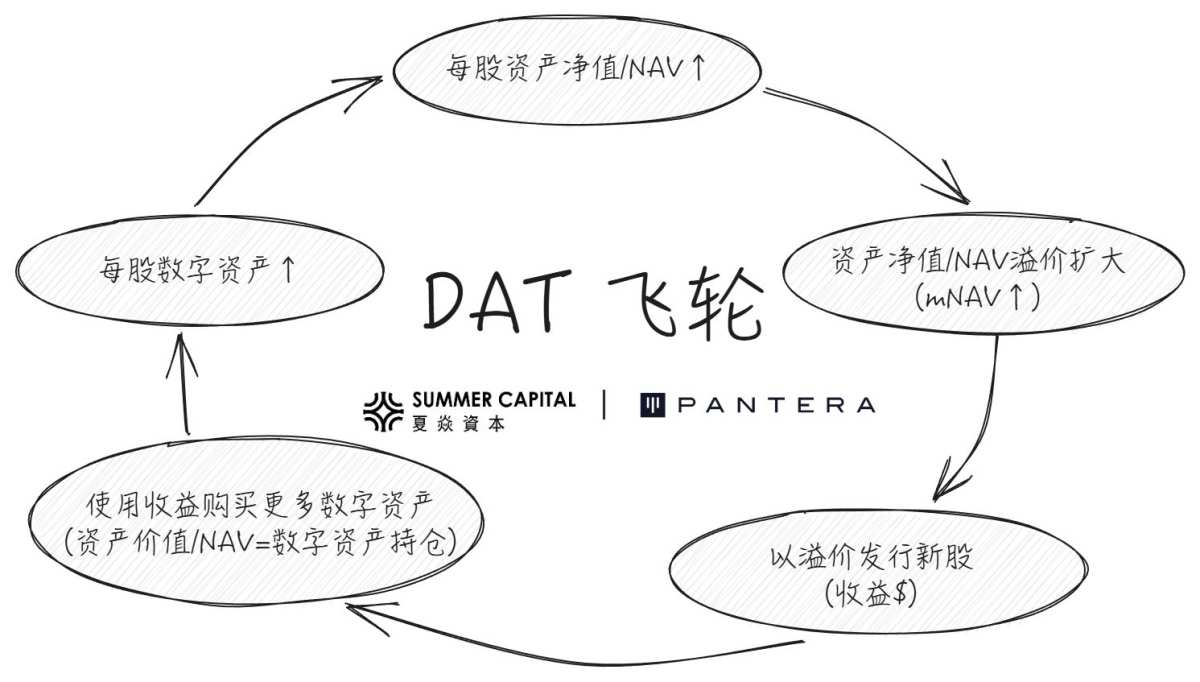
mNAV is the key indicator of this strategy, which is equal to the company's market capitalization divided by (Bitcoin market capitalization minus debt plus cash). When mNAV is greater than 1, the market is willing to pay a premium for MSTR, and the financing is "accretive" to existing shareholders; conversely, if mNAV is less than 1, the financing becomes "dilutive" and bitcoin holdings per share decrease. As of February 25, 2026, Strategy's mNAV for 1.22In the past few months, the share price has fallen by more than 65% (from the October 2025 high) after briefly dropping below 1, although it remains in a relatively safe range.
Throughout 2025, Strategy raised approximately $25.3 billion through various financing vehicles, almost all of which was used to purchase Bitcoin. This set of flywheels allows the company to quickly scale up its holdings during a bull market for Bitcoin, but it also comes under pressure during a bear market.
Why is the debt structure safe? Why do you dare to say "never sell Bitcoin"?
Many people worry about whether they will go bankrupt if they buy coins in debt, but Strategy's debt design is actually quite conservative. As you can see from the screenshot of the website at the beginning of this article, the current total debt is about $4,000,000, and the total debt is about $4,000,000. US$8,254 millionThe maturity profile of Bitcoin's assets, mainly from 0% interest rate convertible bonds, is spread over the period 2028 to 2032. The market value of Bitcoin assets of US$48.909 billion divided by the debt of US$8.254 billion is about six times the asset value of the debt, which is an extremely strong buffer.
In addition, the Company has a cash buffer of approximately $2.25 billion, which is sufficient to cover the preferred stock dividend obligation for more than the next 30 months (annual obligation of approximately $854 million). Preferred shares, such as the STRC series, offer dividends from 8% to 11%, attracting income investors, and these funds are similarly used to purchase Bitcoin or strengthen cash positions.
Institutional investors such as hedge funds may indeed be able to depress MSTR's share price by shorting its shares, especially during volatile times in the Bitcoin price. However, it would take extreme conditions, such as a debt maturity or a collapse in the stock price that would cause a break in financing, to "combine forces" to force MSTR to sell its first BTC.
It is worth noting that on February 5, 2026 the Q4 Financial Reporting Conference CallIn a statement made by CEO Phong Le, he said, "If the price of Bitcoin falls 90% to $8,000 and stays there for five to six years, it will really threaten our solvency". Even if Bitcoin falls to US$8,000, the 717,722 Bitcoins would still be worth about US$5.74 billion, which, together with the cash cushion, would still be enough to cover the debt. The company could then refinance, issue new shares, or restructure its debt, rather than being forced to sell Bitcoin, and Michael Saylor has repeatedly and publicly promised, "We will never sell Bitcoin.
With a leverage ratio of only 13-14%, why can the bears continue to buy coins?
Strategy's Debt-to-Asset, or LTV, is currently around 13-14%, which is an extremely low level of leverage. The benefit of low leverage is that even if the price of Bitcoin drops significantly, the value of the asset is still much higher than the debt. For example, if the price of Bitcoin falls by another 50%, the value of the assets is still about US$24.5 billion, which is far more than the debt of US$8.2 billion, and the company will not face margin call or compulsory liquidation.
With this structure, Strategy can continue to finance its currency purchases during bear markets. on February 23, 2026, the company's most recent purchase cost $40 million for 592 Bitcoins.2026 The company's most recent purchase cost $40 million for 592 Bitcoins. Financing is mainly done through ATM (at-the-market) share sales or preferred share issues, and the market is willing to continue to fund the "world's largest Bitcoin holding company". This is the low leverage moat that allows Strategy to maintain its commitment to "sustainable coin buying" during market downturns.
MSTR Is it true that they are cutting leeks with other people's money?
There is some room for discussion in this argument, but it is not entirely reasonable overall because it simplifies the MSTR business model and ignores transparency and voluntary investor participation.
MSTR, as a publicly traded company, raises funds through the issuance of shares and bonds in the open market (the "MSTR").(Over US$25 billion of new shares to be issued in 2025)Retail investors can buy MSTR stocks or bonds, thus indirectly exposing themselves to BTC price volatility. This is not directly "buying BTC with retail money" but is part of corporate finance, a strategy that Saylor has publicly touted as "digital gold" and which has attracted investors who believe in the long-term value of Bitcoin.
As of February 2026, MSTR was the most shorted $25B+ stock on Wall Street, with a short position of ~14% of market capitalization (Goldman Sachs data). Bitcoin holdings still have an unrealized loss of about $7 billion, and software business revenues have taken a backseat. short-sellers such as Kerrisdale Capital have even pointed out that once mNAV falls below 1 for a prolonged period of time, the flywheel will break and the stock could crash.
From a risk perspective, MSTR's strategy is indeed high-risk, high-reward, and looks like a "bet" on the future of BTC, which has seen extreme price volatility (e.g., a drop of more than 70% from the highs of 2021 to the lows of 2022), and a dramatic swing in MSTR's share price as a result. But this isn't just gambling, as it's based on Saylor's macroeconomic thesis (anti-inflation) and backed by an enterprise software business. It's more of a leveraged investment than a traditional stock, rather than a mindless gamble. Regulators such as the SEC have approved the financing as a legitimate investment strategy.
These queries are not unfounded.short term speculatorIndeed, it could have suffered significant losses. strategy's mNAV fell to 0.7 when bitcoin crashed 75% in 2022, but the company didn't sell coins and survived the crisis with financing.
A Legitimate Long-Term Bitcoin Leverage Strategy
All of Strategy's purchases and financings are completely transparent, with every trade reported to the SEC, real-time updates on holdings and costs on the website, and voluntary participation by investors. Secondly, despite multiple dilutions since Strategy's launch in 2020, long-term holders have been rewarded with extremely high returns, with the stock price rising from $100 to a peak of over $1,000. If Bitcoin rises over the long term as Saylor expects, annualized returns will far exceed those of the stock market, and dilution will be a necessary cost of growth.
Furthermore, MSTR offers a more leveraged exposure than buying Bitcoin outright, and when it goes up, it goes up more, thus attracting many institutional investors. History has also proven its resilience: it didn't go bankrupt during the extreme bear market of 2022, and continued to buy more than 225,000 Bitcoins in 2025. In the future, the company also plans to explore Bitcoin loans and derivatives, gradually transforming into a "Bitcoin bank" and generating real income.
Despite the protection of the mechanism, the risk is still high!
Firstly, the bitcoin price is the most risky: if it stays below the average cost of USD 76,000 for a long time, the share price will remain under pressure. mNAV stays below 1 for a long time, and a new share issue could seriously dilute existing shareholders.External factors such as changes in regulatory policy and exclusion from the index may also have a short-term impact, so MSTR may not be the most prudent choice for novice investors with a very low risk tolerance.
Strategy's "Bitcoin Flyer" is a high-risk, high-potential return innovation for those who are truly bullish on Bitcoin over the long term and have a high risk tolerance. It is not a tool to make a steady profit, but a leveraged agent to bet on the long-term rise of Bitcoin. If you've just had a look at it on TV, you'll be impressed.We recommend calming down first: extend the time horizon to 5-10 years, assess whether you can withstand a retracement of 50% or more, and then consider a small allocation to MSTR.。
If you want to simply participate in Bitcoin, it's safer to buy spot or ETFs directly.Strategy WebsiteReal-time data is available, and quarterly earnings conference calls are broadcast live, so be sure to do your own homework before investing.
Our Telegram Community Every day, our members share market opportunities and event updates to help you avoid blind betting and quickly adjust your strategy, now you can join us for free~!
Recent Recent Posts:
2026 Latest 6 Free Coin Ring Tools Inventory|Where to find the data on the chain?
2025 Latest OKX Web3 Wallet Tutorial: Does it work? How to create it? A Guide to Safe Operation, Multi-Link Support, and Time-Limited Airdrops
2026 Latest Polymarket Tutorial|How to find out the insiders and realize the high win rate!
2025 New DeFi Beginner's Guide|Teaching you to earn stable money passive income! Introducing 3 popular programs, DeFiLlama tool tutorial!
Disclaimer
The content of this article is for reference only, investors should exercise independent judgment, invest prudently and at their own risk, this article does not provide or attempt to persuade the audience to do trading or investment basis, the content is for sharing purposes only, and should not be regarded as investment advice.It does not represent the views and position of Monsterblockhk.All information and opinions are current as of the date of the judgment. In addition, if a judgment is rendered on aIn this siteAny content related to virtual asset trading platforms that have not yet obtained a license to operate virtual asset trading platforms in Hong Kong, including but not limited to text introductions, pictures, offers, events, etc., are only available to users outside the Hong Kong Special Administrative Region.
According to the Hong Kong Anti-Money Laundering and Counter-Terrorist Financing (Amendment) Ordinance 2022, after June 1, 2023, all centralized virtual asset trading platforms operating in Hong Kong or actively promoting their services to Hong Kong investors will be licensed and regulated by the SFC, and any related unlicensed activities will be a criminal offence. For more information and details of the legislation, users may refer to the SFC website.