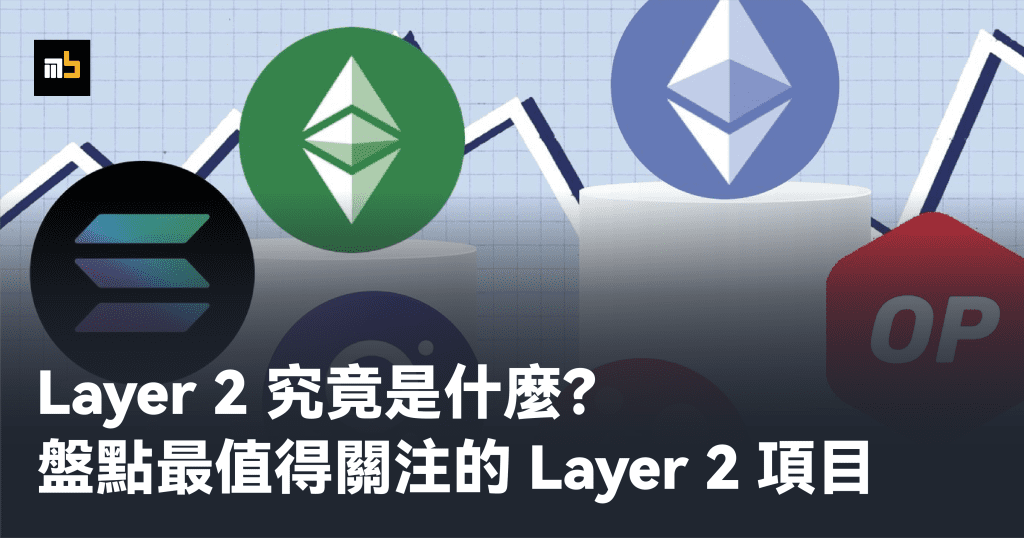
Layer 2 is a technical solution to increase the scalability of the blockchain in order to extend the Layer 1 (Ethernet) network. Why do blockchains need layers? What is the purpose of these layers? This article will delve into the reasons for blockchain's hierarchical structure, in particular the importance of Layer 2 and its key role in increasing transaction speeds, lowering costs, and improving scalability, as well as recommending the most noteworthy Layer 2 projects.
preamble
The Layer 2 extension came about because blockchain users have always complained about its speed and fees - a typical transfer in Bitcoin can take up to half an hour to complete, and the transaction speed of the Ethernet mainchain (Layer 1) can take up to 10-20 minutes before upgrades, as well as tens of dollars in fees (at busy times). So different developers and technicians have worked on Layer 2 in order to bring down the transaction speed and the price of the fees, aiming to apply blockchain to everyday life.
Why does Layer 2 appear?
In addition to the speed and handling issues mentioned above, we need to first understand a problem with blockchain called the 'impossible triangle'.
This "no.The Triangle of Possibilities was proposed by Vitalik, the founder of ethereum, which means that there are three features of concern in a blockchain: scalability, decentralization, and security, but the problem is that it is difficult for a blockchain to satisfy all of them. So the solution is usually to give up one of them and focus on two.
We mentioned above that the main chain network is jammed because too many people are using it, so there are two ways to solve this problem.
First, the expansion of the main website:This solution is based on the expansion of the transaction capacity of the main network, because the small transaction capacity of the main network itself leads to network congestion, so this solution mainly focuses on the original weakness of the main network.
Second, the Layer 2 extension:This solution involves expanding the Ethernet to solve the clogging problem on the main network, like building a larger capacity track on a congested railroad. It's worth noting that while scaling the mainnet will theoretically reduce the overhead, the Layer 1 solution may not be able to improve on the already high overhead and slow speeds of Layer 1 (the mainnet) if you need to do applications that require higher performance.
Layer 2 extensions can theoretically be done on different blockchains, but because many blockchains don't have Ethernet hosts, such as the Solana chain, which is fast and has low overhead, Layer 2 extensions are mainly done on Ethernet.
Layer 2 Extensions
There are many different types of Layer 2 extensions/expansions, namely Sidechains, Rollups, Validium, Plasma, and so on, and this article will focus on the most common ones, namely Sidechains and Rollups.
1. Side Chains
According to Ether's official explanation, a sidechain is an independent blockchain that differs from Ether in terms of its history, development path, and design considerations. Sidechains use different consensus algorithms than Ether - Proof of Authority, Delegated Proof of Stake, etc. These algorithms are designed to improve transaction processing efficiency. Sidechains are faster and cheaper with faster block times and higher gas limits, but they reduce node centrality and security and increase the likelihood of malicious behavior.
The best example of a sidechain is the Polygon chain, which developed a faster and cheaper sidechain for the problems of ethereum itself, but at the relative expense of a degree of security and centralization.
📍Related Articles📍
2. Rollups
Rollups are simply a way to move the complexity of computing down the chain and storage up the chain. This reduces the workload on the main chain, making transactions faster and cheaper. The costs of moving up the main chain are pooled and amortized, making individual transactions cheaper.
There are two types of Rollup, namely Optimistic Rollup 和 Zero-Knowledge Rollup。
Optimistic Rollup
Optimistic Rollup assumes that all the data is correct and that no one is fiddling with it, so there is no proof needed to transfer assets from Layer 2 to Layer 1. All that is needed is to use the 7-day proof period left by Plasma's "Fault proof", meaning that you can get your Optimistic Layer 2 back instantly. It is only necessary to use the "Fault proof" time of 7 days left by Plasma to prove that the transaction is innocent.
What are the projects that use Optimistic Rollup?
1. Optimism
It allows users to generate and sign transactions on its network, which are then sent to the Ether network for verification by a block of transactions they report as Rollup, and then once verified, the results are sent back to the user to complete the transaction. Arbitrum also adopts Optimistic's Rollup public chain, while Arbitrum's operation mechanism is similar to Optimism's, but both chains have different visions and goals.
2. Arbitrum
Arbitrum is one of the earliest public chains to use Optimistic Rollup, and has one of the highest lockups in Ether due to its full compatibility with EVMs (Ethereum Virtual Machine), so different projects on Ether can be easily migrated to Arbitrum. Arbitrum has already distributed airdrops before, and its eligibility is relatively simple, so many users have benefited from it.
3. Boba Network
Boba Network utilizes the proven Optimistic Rollup technology solution, which is one of the mainstream scaling solutions for ethereum. Optimistic Rollup provides a better user experience than the Plasma technology used by Boba Network's predecessor, OMG Network. Boba Network is backed by the OMG Foundation and has a strategic partnership with OMG Network.
Although OMG Network was not well developed before, Boba Network can utilize the resources and ecosystem of OMG Foundation. Boba Network has attracted a lot of DeFi projects, including DODO, API3, AnySwap, etc., which has increased the activity of the whole ecosystem.
Zero Knowledge Rollup
A Zero Knowledge Rollup is simply a transaction that is compressed, packaged into a batch, and submitted on the main Ethernet network (layer 1). Before the batch is submitted, a string of encrypted numbers is generated to prove the batch's innocence through a Zero Knowledge Proof. Nodes can quickly prove this string of numbers, thus confirming the legitimacy of the entire batch without having to look at the specifics of each transaction.
What are some of the projects that use ZK Rollup?
1. Polygon
Polygon's goal is to complement Ether and realize the features that Ether can't handle in Layer 1 and Layer 2. The Polygon chain provides many options for developers to build different ecosystems on top of it to make it as robust and secure as Ether, and at the same time, reduce developers' development costs.
2. zkSync
zKSync is one of the major scaling technologies behind the creation of Matter Labs in Germany. zkSync 1.0 was only able to complete 3000 transactions per second (TPS / Trade Per Second), while zkSync 2.0 is an improved version, which is able to achieve 20,000 transactions per second. zkSync has even launched its own tokens for active users in the recent past. zkSync has recently launched its own token, which has been airdropped to active users. The token is called $ZK.
3. StarkNet
StarkNet is a relatively small zk-rollup project that allows anyone to deploy their own smart contracts on a chain with different code. It differs from other chains in that you don't need to know who the Validator is to complete a packaged transaction, and StarkNet has recently launched its own token drop for active users, called $STRK.
Conclusion
Layer 2 not only facilitates users, but also reduces development costs and improves overall efficiency; Layer 2's Rollup technology makes transactions efficient, which will enable faster Ethernet development and strengthen the Ethernet ecosystem.

Disclaimer
The content of this article is for reference only, investors should exercise independent judgment, invest prudently and at their own risk, this article does not provide or attempt to persuade the audience to do trading or investment basis, the content is for sharing purposes only, and should not be regarded as investment advice.It does not represent the views and position of Monsterblockhk.All information and opinions are current as of the date of the judgment. In addition, if a judgment is rendered on aIn this siteAny content related to virtual asset trading platforms that have not yet obtained a license to operate virtual asset trading platforms in Hong Kong, including but not limited to text introductions, pictures, offers, events, etc., are only available to users outside the Hong Kong Special Administrative Region.
According to the Hong Kong Anti-Money Laundering and Counter-Terrorist Financing (Amendment) Ordinance 2022, after June 1, 2023, all centralized virtual asset trading platforms operating in Hong Kong or actively promoting their services to Hong Kong investors will be licensed and regulated by the SFC, and any related unlicensed activities will be a criminal offence. For more information and details of the legislation, users may refer to the SFC website.