

Welcome back to Monsterblockhk's weekly report. We reminded our readers a few weeks ago that "when greed is overheated, leverage is piled on leverage, and capital rotation is shifting to the main chain, the market is in dire need of a healthy retracement to digest the momentum". This pullback is now official, structurally sound and controlled, paving the way for a real bullish leg up in late Q3. From solid ETF inflows, TVL rising again, main chain capital absorption to deleveraging and cooling market sentiment, this week can be considered as a critical moment to release pressure and reshape the rhythm. In this bull market "preview" towards reality, whoever can complete position optimization and asset switching during the pullback will be on the starting line of the next trend. This weekly report will take you through the capital momentum, leverage data, chain structure and sentiment indicators to accurately dissect the deeper significance of this retracement, and determine when the real main uptrend will break out.
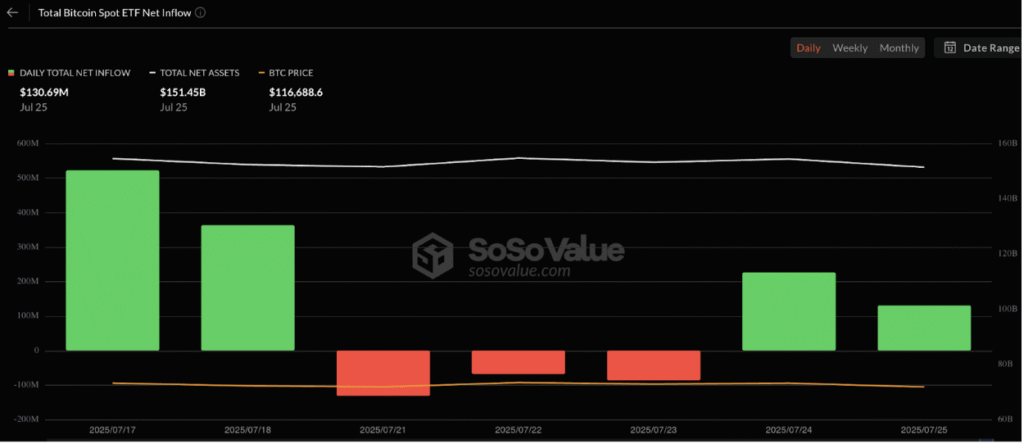
ETF Funding Flows Stabilize, Healthy Correction Ahead
According to SoSoValue chart data, as of July 25th, Bitcoin spot ETF recorded a net inflow of US$130 million in a single day, with a total asset size of US$151.45 billion, while the price of Bitcoin closed at US$116,688, a significant net inflow of over US$500 million and US$350 million was recorded on July 17th and 18th, followed by a short adjustment on the following three consecutive days. Looking at the past seven days of fund flows, significant net inflows were recorded on July 17th and 18th, amounting to more than US$500 million and US$350 million respectively, followed by a short adjustment on the next three days, with three consecutive days of small net outflows, ranging from US$60 million to US$100 million. However, the green bars resumed on July 24th and 25th, with capital inflows of US$200 million and US$130 million respectively, indicating that the adjustment was limited and the market's capital structure remained resilient. This week's ETF flows reflect that the market has entered a benign consolidation phase. Although there is a short-term slowdown in capital inflows, there is no obvious sign of capital withdrawal, indicating that the overall bullish pattern is still stable. The rapid return of net inflows after three days of correction also indicates that institutional funds are highly confident in the future market. Such a mild correction could help release overheated sentiment and pave the way for a possible bullish push in late Q3. Investors should view this pullback as a healthy signal, not a trend reversal, and wait for a new trend to take hold, which would be a more strategically valuable time to do so.
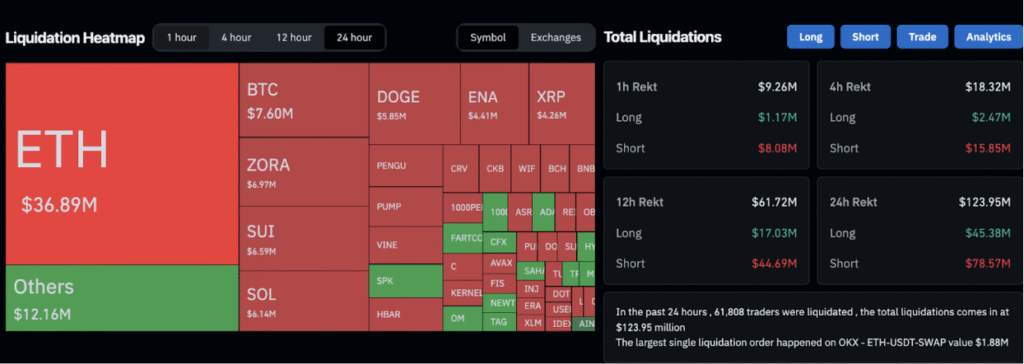
Leveraged liquidation soars, ETH becomes the hardest hit by bursting positions
According to the latest data before the deadline, a total of 61,808 traders were liquidated in the past 24 hours (Saturday), with a total amount of $124 million, among which short orders were liquidated up to $78.57 million, far exceeding the long orders of $45.38 million, which showed that the market was mainly short-side counterattacked. In terms of assets, ETH's one-day liquidation reached $36.89 million, topping the list, followed by BTC ($7.6 million), ZORA ($6.97 million), SUI ($6.59 million), and SOL ($6.14 million). 1-hour, 4-hour, and 12-hour liquidation data also showed that short-term volatility has intensified, especially in the ETHUSDT-SWAP OKX contract, where the largest single liquidation reached $18.85 million. Especially on the OKX contract of ETHUSDT-SWAP, the largest single liquidation was as high as $1.88 million, indicating that ETH has become the center of gravity of the recent leveraged liquidation. The large number of short liquidation orders and ETH's leading burst of positions reflect the recent rapid reversal of the market, which may be related to macro news or technical rebound, further triggering the short squeeze effect. From a leverage perspective, the short-side has been under pressure from the successive rebounds and short-term sentiment has become impatient. This kind of drastic leverage shuffle has caused shocks, but it has also helped the market complete the necessary healthy correction. Consistent with the rapid recovery of ETF funds after a small pullback, the market is entering a pre-bull market "de-bubbling period", through active deleveraging and risk-releasing, to lay a more solid foundation for the upcycle at the end of Q3. Investors should focus on medium to long term logic and avoid misjudging the main trend due to short term fluctuations.
Most Popular Cryptocurrency Trading Platforms
Hong Kong People's Top Choice for Bitcoin and Ether Trading 》 【2025 Introduction】OSL Registration Benefits, Security, Deposit and Withdrawal, Special Features
Suitable for traditional Hong Kong investors to buy and sell stocks and currencies at the same time. [2025 Introduction] What is Victory Securities? Security, Deposit and Withdrawal, Features
More choices of contract currencies, suitable for buying fake coins in cash. Trade on MEXC and enjoy 500x leverage and many other benefits!
Related Post:
Best Cryptocurrency Trading Platform for Hong Kong Users?2025 Latest Bitcoin Tips for Beginners
2025 Coin Ring Newbie Guide Lazybones|Chained Ecology Entry Guide
2025 Must Read for Newbies! Use these six data indicators to learn how to judge buying opportunities.
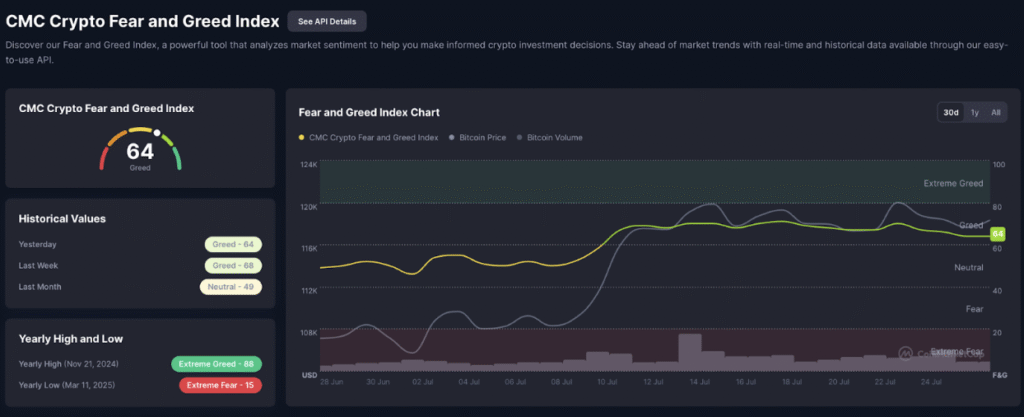
Greed falls back to healthy territory as market enters wait-and-see and set-up period
According to the CMC Fear and Greed Index, the sentiment indicator fell slightly to 64 this week from 68 last week, which is still in the greedy zone but suggests that sentiment is returning from overheated to relatively rational. Compared to last month's level of 49 (neutral), the current level is still on the high side, suggesting that capital risk appetite has not yet cooled down significantly. Looking at the resonance between the yellow line (BTC price) and the green line (sentiment index), we can see that the index has been hovering at a high level since mid-July, and has been accompanied by a slight pullback in Bitcoin price from its highs to the ~US$118,000 range. At the same time, volume has not increased dramatically, reflecting no panic selling pressure in the near term, and the market is still undergoing a benign adjustment. After a series of rallies and short squeezes, investors are taking profits, which has led to a natural fall in the greed index and provided further opportunities to enter the market. For those who have already taken profits in the previous period, it is now a good time to re-enter the market and adopt a DCA strategy. With no major withdrawal of ETF funds, overall market momentum is still building. Such healthy adjustment not only releases short-term risks, but also paves the way for the bull market to start in late Q3. It is advisable to take advantage of the correction to optimize positions and wait for the trend to start again.
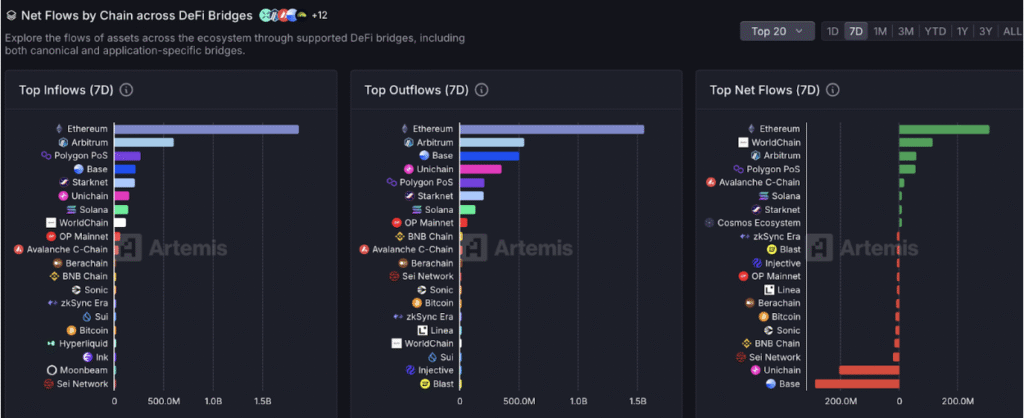
Main Chain Continues to Suck in Funds, Signs of Marginal Chain Retreat Emerge
According to Artemis data, in the past seven days, Ethereum has again recorded the largest net inflow on the chain, amounting to about $200 million, and is firmly positioned as the core funding hub, while WorldChain and Arbitrum also recorded significant positive inflows, and ranked at the top of the list. On the other hand, Base and Unichain recorded net outflows of more than $200 million and $100 million respectively, making them the hardest hit by this week's withdrawals. Although Base also appeared in the top 5 of the inflow, indicating active trading, its overall net inflow remained negative, reflecting capital's preference for profit-taking and risk reassessment, while Polygon PoS, Avalanche C-Chain, and Solana maintained small net inflows, demonstrating the robustness of the sub-major chains. The pace of the capital shift is a clear sign of a 'healthy adjustment' in the market, with master chains once again becoming safe havens for capital, suggesting that investors are reallocating their positions for the main uptrend expected at the end of Q3. The inflow of Ethereum is not only a reflection of the thickness of its applications and technical stability, but also suggests that it is still in the early stages of the bull market, rather than the end of the market. At the same time, the high level of Beta Chain activity in the past is cooling down, and the retreating capital is helping to unwind the risk of a bubble. Investors are advised not to be tempted by the short-term rebound and chase for high prices. They should wait patiently for the structural correction and enter the market at the right opportunity, and maintain capital flexibility and risk control awareness in order to advance steadily in the uptrend phase to come.
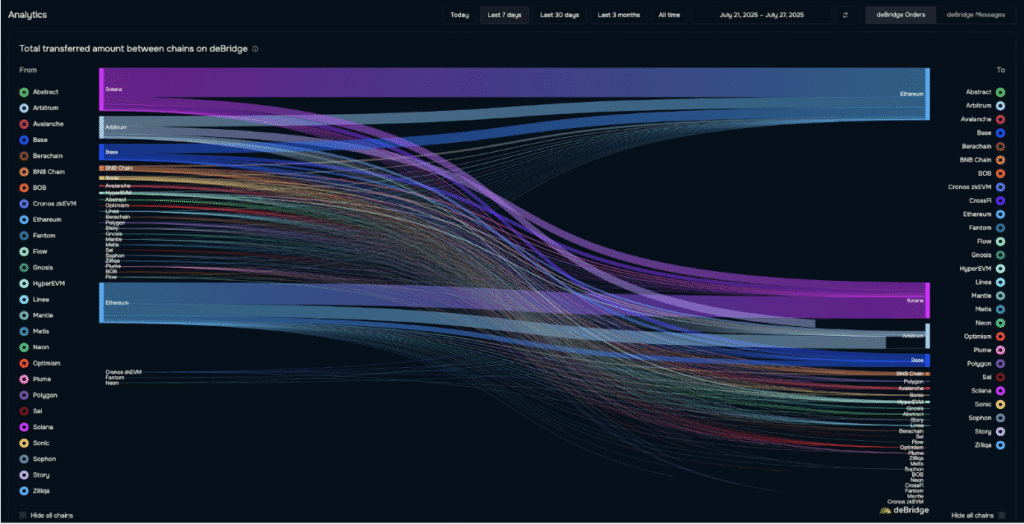
Solana outflows continue to expand, Ethereum stabilizes at bridge core
According to deBridge data, in the past week (7/21-7/27), Solana once again became the largest outflow chain, mainly to Ethereum, Base and Arbitrum, especially to Ethereum, which showed the thickest flow line. Arbitrum and Base also received large amounts of funds from many chains, including BNB Chain, Fantom, Polygon, etc., continuing its role as a liquidity hub, while Ethereum continued to maintain its bi-directional status, not only as the largest receiving chain of Solana, but also a sizable amount of funds flowed out to the other chains, which shows that its role as a bridge between the chains has not been reduced steadily. Such a capital path further validates that the market is undergoing a healthy adjustment and rebalancing, and that the massive capital shift out of Solana, a high beta chain, may be a result of short-term arbitrage and lockup behavior, but does not represent an overall bearishness, but rather a redeployment of capital to stable chains such as Ethereum, which, as the largest receiving chain and a two-way relay point, demonstrates that its infrastructure and trust in the market remains strong. Ethereum is the largest receiving chain and two-way relay point, indicating that its infrastructure and market trust are still strong. Base, as a high liquidity receiver, continues to play the role of capital aggregator and may be the outpost of the next stage of capital activation. The overall pattern reflects that capital is strategically adjusting to the potential main uptrend at the end of the third quarter, reminding investors to focus on high-quality chains and reserve flexibility for core long positions after the pullback is complete.
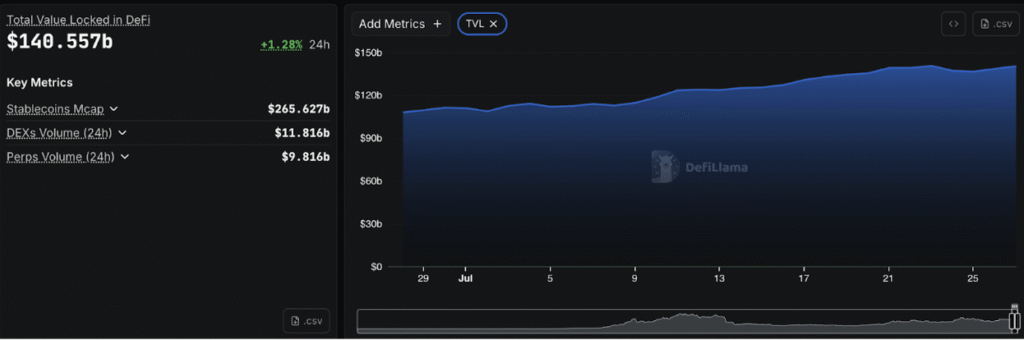
TVL steadily rises above $140B as chain capital continues to be replenished
According to DefiLlama, as of July 27th, DeFi's Total Locked Position (TVL) rose to $140.557B, an intra-day increase of 1.28%, continuing the overall steady upward trend. The total market capitalization of the stable currency was $265.627B, indicating that the underlying liquidity of the market is still resilient; the 24-hour DEX volume was $11.816B, while the Perps perpetual contract volume was $9.816B, both of which are in a relatively active range. Looking at the TVL curve, we can see that although there was a short period of consolidation in late July, the overall upward slope was maintained, and this week it hit a stage high again, outperforming the overall market oscillator. This week's TVL performance reaffirms that capital is making orderly adjustments and reallocations amidst short-term volatility, and the steady but rising TVL shows that capital on the chain has not been overly disturbed by the price correction, and is instead taking advantage of the pullback phase to gradually replenish and strengthen its underlying positions. The stabilized currency market value and the trading activity on the chain synchronized to support the trend, avoiding a fat rebound. This pattern is highly in line with this week's market theme - capital is not chasing highs, but actively preparing for the main uptrend in the pullback stage, waiting for the main uptrend to kick off at the end of Q3. TVL trend reflects not only the stabilization of confidence, but also the attitude of medium-term deployment in a rhythmic and strategic manner.
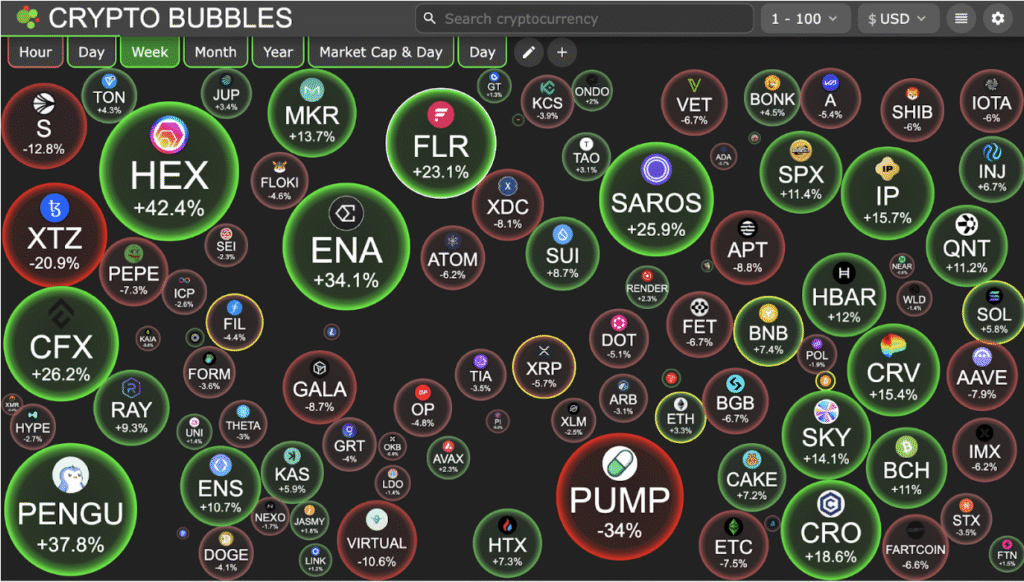
Technical Retracement, Healthy Consolidation Before Upside
Currency markets were divergent this week, with a clear shift in the capital structure. According to Crypto Bubbles data as of July 27, the top performing currencies such as HEX (+42.4%), PENGU (+37.8%), ENA (+34.1%), CFX (+26.2%), and SAROS (+25.9%) are small and mid-caps, which indicates that short-term capital flows are moving to the high volatility track. These are small and mid-cap targets, suggesting a short-term shift in capital flows to the high volatility circuit. Large-cap assets such as MKR (+13.7%), SOL (+5.8%) and ETH (+3.3%) also maintained moderate gains, confirming that the overall structure is still resilient. On the other hand, XTZ (-20.9%), PUMP (-34%), and GALA (-8.7%) showed significant corrections, reflecting that some of the assets have entered into technical retracement, and the market has entered into a period of consolidation with high and low levels rotating. The mixed structure is not a sign that the market is flaming out, but rather that it is undergoing a healthy profit-taking adjustment. The short-term withdrawal of hot money from high assets and its shift to unchained or emerging markets means that capital is not leaving the market, but rather looking for new outlets for the next round of the market. Such capital rotation and structural optimization will help to dissipate the pressure built up from the previous rally and establish a more solid support zone. Despite the lack of a main theme this week, the overall pullback was well controlled, and the steady growth in stable currency market capitalization and TVL suggests that the market has not loosened its grip. If the structure continues with this resilience, the main uptrend in late Q3 is still highly anticipated.

Sun Yuchen's one-week double appearance on the mainstream stage, encrypted storytelling impacts mainstream horizons
Yu Chen Sun has become one of the most prominent figures in this week's meeting between the cryptocurrency world and the traditional market. Not only will he become the youngest Chinese astronaut in history to go into space aboard Blue Origin's new Shepard, but he will also be listed on the NASDAQ on July 24th under the name of TRON Inc. to complete the transition from crypto founder to publicly traded CEO. According to the official announcement, he won the chief seat in space in 2021 with US$28 million and donated all the money to Blue Origin's education foundation, demonstrating both capital and public welfare. The wave TRON public chain he founded, through a reverse merger with SRM Entertainment, was officially listed on the stock exchange under the code TRON, becoming the first crypto project to appear on the NASDAQ under the Layer-1 brand. This double exposure signifies that Sun is bringing his story into the mainstream, not only reinforcing his personal image, but also symbolizing that crypto assets are trying to break away from the framework of "fringe finance" and enter the traditional capital arena. The fact that its blockchain entity completed 67 million gas-free transactions in the same period, surpassing Cardano to become the ninth largest by market capitalization, shows that there is still a gap between the development of its chain and the performance of the capital market. Overall, this phenomenon underscores the fact that crypto has a foundation for real-world applications, but it still needs a clear revenue and value model for integration into traditional finance, and financial reporting and commercialization progress will be key points to watch in the coming quarters. However, as a listed company, TRON still faces structural challenges in terms of its business model and revenue expectations. Although the blockchain entity (TRX) is active and attracts users and developers with its focus on fee-free transactions, stock market investors are skeptical about its sustainable profitability, which was also reflected in a 9.6% drop on the first day of listing. From a strategic perspective, TRON has successfully captured the narrative dividend, but whether it can stabilize capital market confidence in the long run depends on the ability of the growth in the chain to be converted into tangible cash flow and scalable revenues. The long-term stability of the capital market depends on whether the growth in the chain can be translated into concrete cash flow and expandable revenue. At this point in time, although Sun Yuchen has already stepped onto the mainstream stage, the real capital test is still to come.
Pudgy Penguins Builds Cross-Industry Brand Narrative to Reshape NFT Market Expectations
Pudgy Penguins has transformed from a single NFT project on ethereum into an intellectual property (IP) operating platform with global branding ambitions and projected 2025 revenue of $50 million. The brand is operated by Igloo Inc. and spans businesses such as Layer 2 protocol Abstract, NFT licensing platform Overpass, and other businesses, and has opened up the mainstream market with physical products such as plush toys, children's books, and video content. CEO Luca Netz even emphasized in a public interview that his ultimate goal is to create a global IP that can compete with Pokémon and Hello Kitty, demonstrating that Pudgy Penguins is no longer just a speculative symbol in the NFT market, but rather a fusion of culture and commerce. Against the backdrop of a prolonged downturn in the NFT market and a generally bearish mainstream media, Pudgy Penguins' optimistic narrative and physical layout has injected a rare positive signal into the market. Instead of relying solely on floor price hype, the brand actively extends its content and product logic, making Pudgy's external penetration more structured than many NFT programs that remain within the community. Its transparent revenue targets and cross-border strategy not only provide confidence to crypto-users, but also provide a tangible example of the NFT market's role in the new cycle, making it one of the few projects to have gained the recognition of both mainstream consumption and cultural capital.

Large Institutions Continue to Increase Positions in ETH, Long-Term Bullish Opportunities Remain Strong
The enthusiasm of large organizations for ETH allocation has not subsided, SharpLink Gaming announced its intention to issue an additional $5 billion in shares on top of the original $1 billion in order to further increase its holdings of ETH, bringing its total position to 345,158 pieces, valued at more than $1.2 billion, and regaining its position as the industry's largest ETH holding organization. One of its leaders is Consensys CEO Joseph Lubin, who is backed by a team of blockchain technology and finance professionals to strengthen the credibility and longevity of its reserve strategy. The layout reflects that the mainstream financial institutions are not only oriented to the storytelling and speculation, but also to increase their holdings in the long term through their professional teams and capital tools. However, the market still has reservations about some of the financing structures, as SharpLink's dual PIPE+ATM financing mechanism puts pressure on the stock price in the short term, and the market is still skeptical about whether it is truly optimistic about the long-term value of ETH, causing investor sentiment to waver for a while. Nonetheless, from the perspective of institutional positions, the above reserve strategy could turn into a powerful flywheel effect if the ETH price picks up again. Institutions, with their information advantage and risk control capabilities, will most likely choose to add to their positions at key price points rather than sell in the long run.
Liquid pledges combined with payment scenarios to drive asset realization along the chain
Ether.fi has launched a cryptocurrency credit card that combines a liquidity pledge with an uncustodialized payment system, effectively expanding the availability and liquidity of assets on the chain. The card supports weETH, eUSD, and eBTC as asset sources and allows users to pledge BTC and ETH to lend out stablecoins for spending, similar to the financial proof and credit model of traditional credit cards. This design not only lowers the threshold for users to enter the market, but also expands the use of assets on the chain. Compared to traditional cards that need to be tied to a centralized exchange, Ether.fi offers more flexible non-custodial wallet operations, and with a maximum annualized return of 11% and 3% cash back, it greatly enhances the incentives and efficiency of users' asset usage. The emergence of such products is expected to change the previous restriction that on-chain assets can only be used for financial management but difficult to circulate, and promote the transformation of cryptocurrency assets from an investment tool to a daily payment medium. However, this model is still subject to market validation and regulatory pressures, especially in the lending model where liquidation risk and currency price volatility may cause assets to shrink. It also remains to be seen whether the platform will be able to sustain the high levels of returns and earnings. Therefore, despite the many innovations and incentives offered by the Ether.fi credit card, investors should be cautious and view it as a step forward in the on-chain financial experience, rather than the end game. The potential is to make mobility not just a technical concept, but a real-world engine for Web3 adoption.
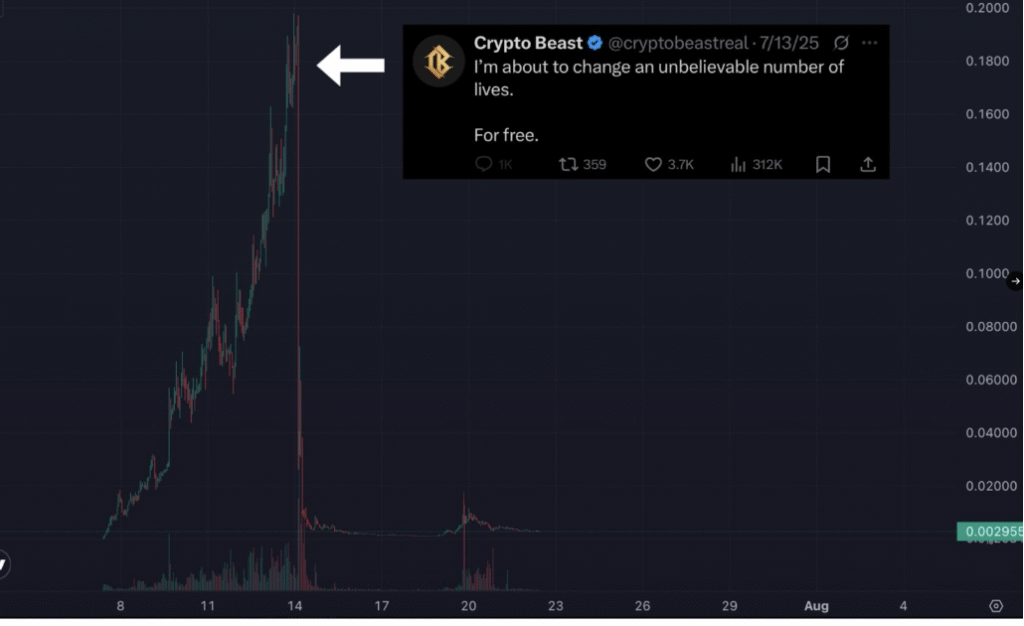
Evidence on the chain exposes the risk of KOL manipulation, and the community should cultivate skepticism and independent judgment.
Crypto Beast's alleged orchestration of the ALT coin "carpet run" has raised widespread questions about the manipulation of crypto KOLs. According to ZachXBT, the KOL manipulated more than 45 wallets to sell more than $11 million in tokens before the ALT crash, accounting for about 3% of the total supply, triggering panic selling and a price crash of 97%. From the chain of activities, the relevant wallets began to transfer funds as early as May, and sniping wallets through the centralized exchanges to carry out a covert layout. What's even more noteworthy is that Crypto Beast has been involved in a number of similar projects, all of which used the "advertise first, liquidate later" model. This incident not only reveals the complexity of individual behavior, but also shows that even for those with a high degree of community influence, their backstage operations may not be transparent and carry significant risks. This case demonstrates how easy it is to rely on a single source of information, such as KOL tweets or social media campaigns, which can lead to errors in judgment and loss of capital, and how Crypto Beast's deletion of posts, deactivation of accounts, and denial of the allegations, despite the fact that the data in the chain matches the timeline closely, suggests that the linkage is difficult to disassociate. Even though ZachXBT's analysis is compelling, investors should remain cautious and avoid accepting any single theory as the ultimate truth. Information should be cross-checked and evaluated in an integrated manner, combining technicals, up-the-chain flows and potential motives. In the fast-moving Web3 environment, skepticism and critical thinking are not just for protection, but for the health of the market.
Macro News
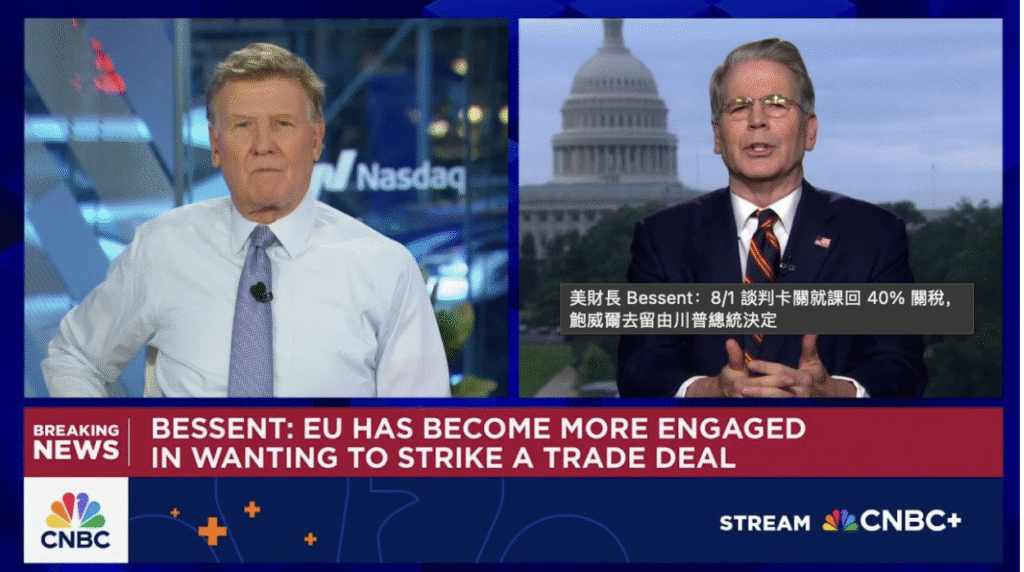
Liquidity faces multiple pressure tests as macro policy clouds loom over the market
Recent instability in the macro environment is rapidly amplifying market volatility. U.S. Treasury Secretary Yellen warned that tariffs as high as 40% will be reinstated if no agreement is reached with the European Union before August 1, which will potentially impact the global trade landscape and supply chain restructuring. At the same time, the uncertainty of Federal Reserve Chairman Powell's stay and the possibility of US presidential candidate Donald Trump's hawkish monetary policy or intervention in the Fed after the election made it difficult for the market to determine the future policy direction. This high degree of uncertainty has heightened risk aversion in the market, and institutional investors are inclined to reduce their exposure to risky assets in order to preserve their cash positions, with the crypto market being the first to bear the brunt as a highly volatile asset. In recent days, Bitcoin's sharp intraday decline to below $61K showed a clear liquidity contraction, and the chain reaction quickly triggered the stop-loss and liquidation mechanism, reflecting that funds are not just switching positions, but withdrawing from risky positions altogether. Looking at the crypto-native market, what is even more alarming are the signs of market makers and main liquidity providers withdrawing from the market. Looking at the depth of major exchanges such as Binance and OKX, we can see that the thickness of pending buy orders decreases significantly during downward price fluctuations, suggesting that the main liquidity providers are on the sidelines, reducing their leverage and position exposure. According to CoinGlass data, open positions in perpetual contracts on the entire network have dropped by nearly 15% over the past three days, further supporting the fact that leveraged capital is being withdrawn. There was also no significant pick-up in stable money issuance, suggesting that capital did not form a collective "Buy the dip" consensus, but instead flowed into money market funds or short-term bond assets. From a fund behavior perspective, the pullback was more liquidity-driven than event-driven compared to March, with a reassessment of the macro-framework. Overall, against the backdrop of uncertainty over the Federal Reserve's personnel and policy direction, as well as rising trade tensions between the US and China, crypto assets will be caught between a lack of inflows to support a bottom in prices, and the exit of market-making and leveraged capital, which will further increase volatility. Liquidity is particularly fragile at this point in time, with small news and data releases triggering sharp price reactions. Without clear liquidity and policy support in the near term, the crypto market may struggle to stabilize effectively. However, it is worth noting that historical experience has also shown that when markets overprice panic and policy risk, it provides an opportunity for medium-term asset reallocation. Policy cues and capital flows in the coming weeks will be key variables in gauging the speed and direction of the market recovery.
Related Post:
Best Cryptocurrency Trading Platform for Hong Kong Users?2025 Latest Bitcoin Tips for Beginners
2025 Coin Ring Newbie Guide Lazybones|Chained Ecology Entry Guide
2025 Must Read for Newbies! Use these six data indicators to learn how to judge buying opportunities.
Chained Data Analysis:
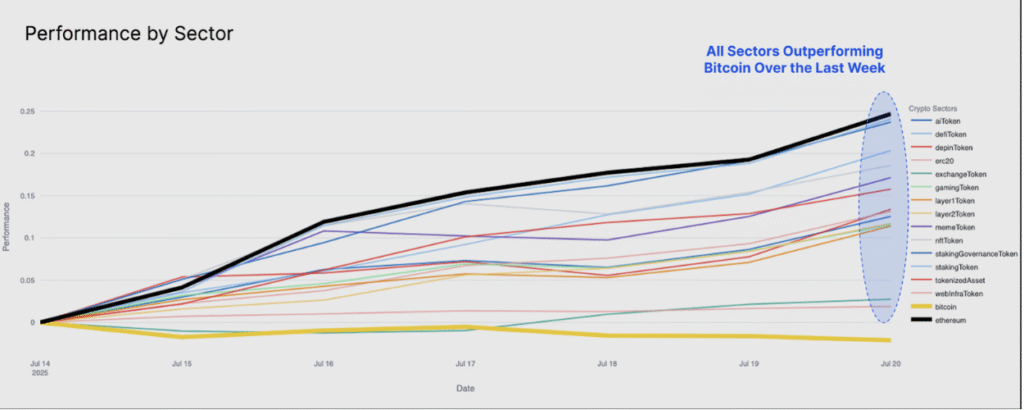
Short-term Wall Street Frenzy Ahead as Funds Rotation to Risky Assets Gradually
Looking at the last week's data, almost all cryptocurrency sectors have significantly outperformed Bitcoin, with AI, DePIN, DeFi and Ether leading the way, while Bitcoin price has been consolidating sideways. This is a typical phenomenon of capital rotation in the risk curve: after the mainstream assets have stabilized market confidence by building up a bottom first, capital will gradually shift to highly volatile assets such as torrents. As seen in the chart, since July 14th, most of the sectors have risen significantly away from Bitcoin, indicating that the market's risk appetite is heating up rapidly in the short term, further reflecting that investors have started to prepare for the next round of the "frenzy" in advance. Although this round of capital transfers has not yet reached extreme insanity, it is a prelude to a future cottage-currency frenzy. If Bitcoin continues to consolidate sideways with no obvious downward pressure, the overall market may enter a "full-blown uptrend" period lasting one to three months. At that time, the rotation of various sectors will become more intense, further triggering irrational chasing and capital FOMO effects. However, it should be noted that the market share of Bitcoin is still as high as 64%, and if the mainstream currencies show signs of weakening, it may quickly affect the overall market momentum. Therefore, investors are advised to participate in the short-term market during the start-up phase, but they should set clear profit targets and risk control mechanisms to capitalize on the capital bonuses before the frenzy, and at the same time reserve flexibility for the eventual exit of the market.
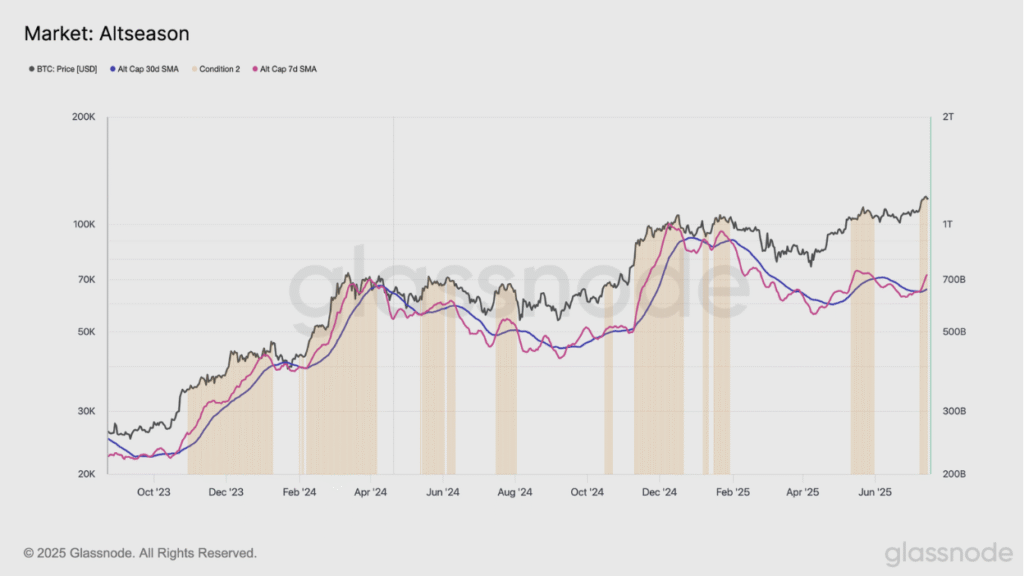
Altseason has entered the activation stage, waiting for the trigger to trigger the rotation.
According to the chart, the Altseason indicator has continuously triggered since July 9, indicating that the technical conditions for capital rotation have been met in the cottage currency sector. The purple line (Alt Cap 7-day average) has continued to break through the pink line (30-day average), representing a rebound in the market's momentum towards the valuation of the torrents. At the same time, the price of Bitcoin has maintained a high level of consolidation, and the market has not seen an outflow of capital, but rather a trend of distributional spreading. This phenomenon of short-term oscillations and long-term capital shifts is typical of what has happened before the start of Altseason in the past. Analyzing the supply and demand structure, when Bitcoin and Ether are steadily absorbing mainstream capital, the supply of stable coins is rising (with more money on the sidelines), and there is a golden crossover in the momentum of the total market capitalization of Shanzhai Coin, the market has the potential to shift capital to high-risk assets. However, unlike the previous cycle, the supply of tokens has expanded significantly during this cycle, and the overall "currency density" of the market has become thinner, making it difficult for a single cryptocurrency to create a full-blown rally, and more precise liquidity triggers are needed. Therefore, while Altseason is in its preparatory phase, it needs a specific catalyst to fully ignite the valuation expansion.
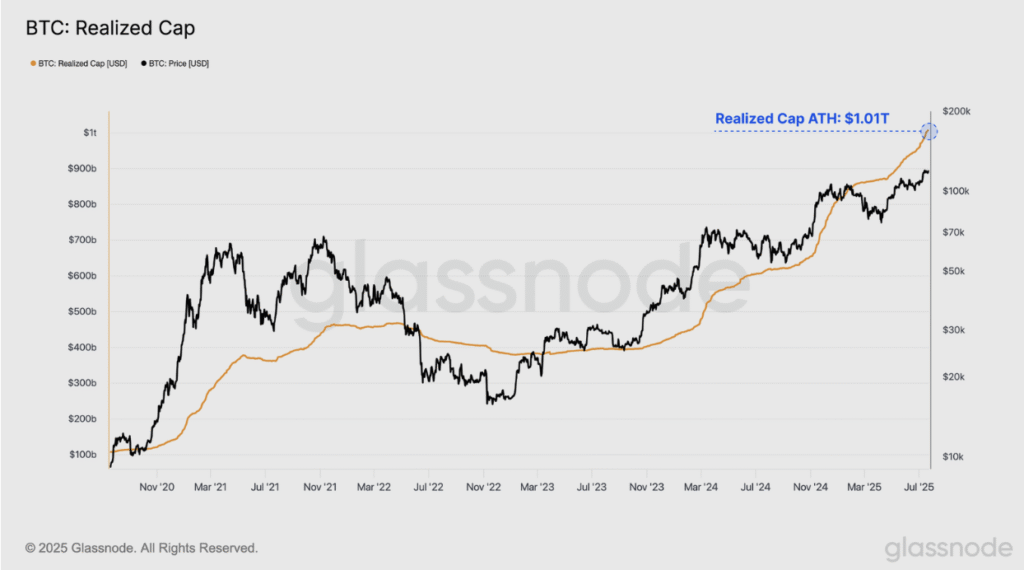
Bitcoin Reaches Mega Market Cap: Market Consensus and Capital Suction Strengthen Simultaneously
Bitcoin's Realized Cap has surpassed the $1 trillion mark for the first time, marking an unprecedented level of confidence in the asset. According to the chart, the Realized Cap has risen steadily since mid-2023 to reach an all-time high of US$1.01 trillion in July 2025, a measure that reflects the total amount of capital actually invested in the market, excluding the amount of capital invested in Bitcoin. This indicator reflects the total amount of capital actually invested in the market, excluding the disruption of unrealized profits, and provides a better picture of capital flows and asset acceptance. This breakthrough is not just the result of a rising price, but also a sign of a large amount of new capital coming into the market and a growing consensus amongst long-term holders, reinforcing Bitcoin's position as a "store of value" in the marketplace. If Bitcoin can successfully bottom out and consolidate around $1 trillion in real market capitalization, this price will become the psychological threshold for a new round of capital inflows. Once the market accepts Bitcoin's stabilizing role in the macro-structure, institutional and mainstream capital will be more willing to allocate to the asset, increasing its ability to absorb capital significantly. This will not only mean stronger downside support, but will also lead to a revaluation of crypto market assets as a whole, creating a "gravitational field of capital" effect. This breakout is not just a technical high, it is a tangible demonstration of the change in the global market's perception of Bitcoin, laying a solid foundation for the next stage of the explosion.
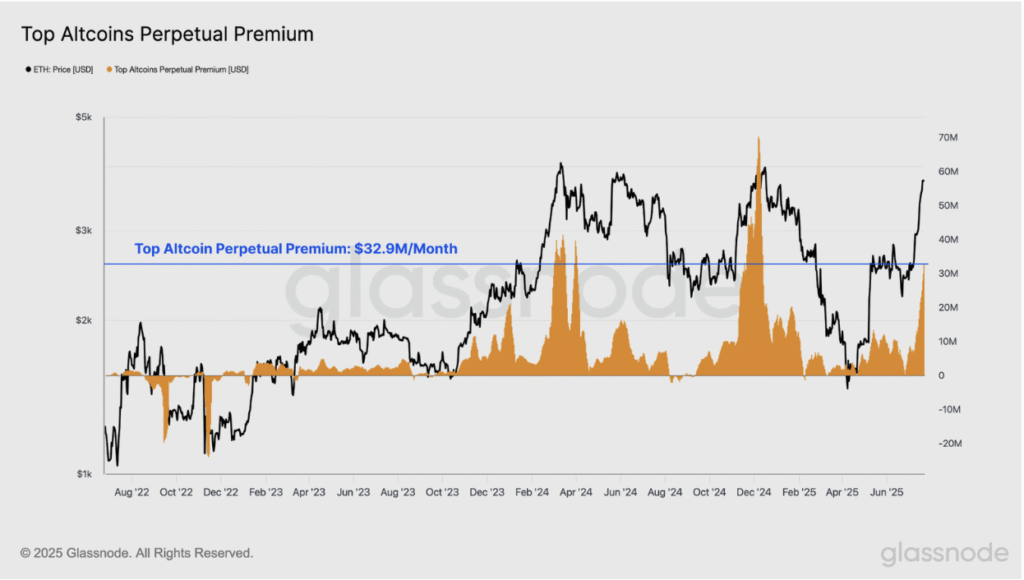
Leveraged Long Costs Soar: Market Sentiment Shifts from Conservative to Greedy
The cumulative Funding Rate on the long side of mainstream torrents has reached $32.9 million per month over the last 30 days, approaching the $42 million level seen in March 2024 when Bitcoin was at a record high. The Funding Rate is a periodic cost paid by both long and short players in a contract market to keep the price in line with the spot, and when positive, it means that the long side pays a regular fee to the short side. A rise in the rate means that market participants are willing to pay more to bet on a rise, indicating a clear increase in demand for long leverage. The size of the orange block in the chart has expanded dramatically recently and is consistent with previous highs, reflecting a rebound in speculative sentiment. Changes in leveraged funding rates typically outpace spot market prices because derivatives investors are highly sensitive and anticipatory. Therefore, a rapid rise in long end rates is often indicative of an imminent strengthening of spot, accompanied by a shift in market sentiment from fear to greed. This indicator can be regarded as a "sharp signal" of market wind direction, and its appearance often triggers a change in investor sentiment, which is the trigger that initiates FOMO and amplifies price volatility. Against this backdrop, it is the most effective strategy to stabilize the position at the low point in batches and take profits gradually when the sentiment becomes extreme.
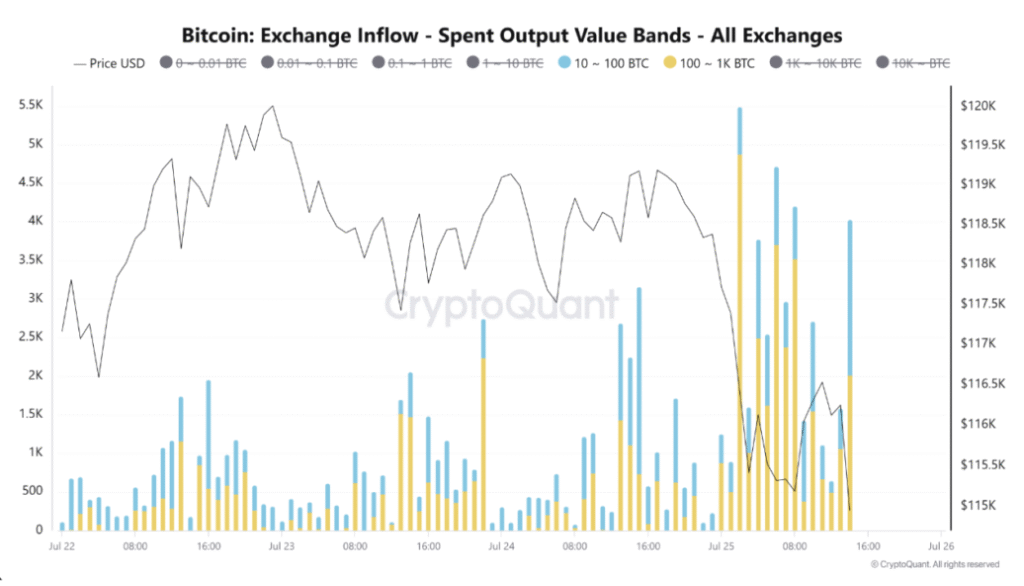
Short-term Giant Whale Selling Sparks Panic, Supply Quickly Absorbed By Market
The chart shows that since July 24th, the exchange has received a large inflow of 10 to 1,000 BTC, with the total inflow exceeding 40,000 BTC in a single day, mainly from large wallet holders and OTC desktop traders. Such a single concentrated outflow directly impacted the exchange order books, causing short-term prices to plummet from a high of $119K to the 115K level, triggering a chain of panic and automatic stop-loss selling, reflecting a short-term imbalance in the supply side. However, it is worth noting that despite the surge in supply pressure, prices did not fall below the key support of US$110K, highlighting the resilience of medium-term buying. This phenomenon can be explained by the economic logic of supply and demand: although the scale of selling was large, it was a one-off shock rather than a systematic withdrawal of liquidity; on the contrary, there was still sufficient internal market capacity to effectively absorb the selling pressure. The fact that the price did not collapse as a result of the surge in supply proves that there is a certain level of demand in the market. This is also in line with Bitcoin's medium-to-long term long position, which shows that capital still regards it as an anti-inflation and safe-haven asset, and strategically, it constitutes a good opportunity for medium-term deployment.
Conclusion
As we predicted earlier, this pullback is a structural health correction, not a trend reversal. with ETF inflows still coming in, TVL rising steadily, and chain capital returning to the core, the market is not ebbing, but just redistributing chips and momentum to warm up for the bullish uptrend in late Q3. When sentiment cools down, leverage cleans up, and the market regains its rhythm, it is the most critical time to add positions. If you miss the pullback, you miss the low position; if you know how to wait, you can stand on the wave in advance. The bull market has not yet fully launched, and whether you are in the best position ready to go? Now, is the golden window to optimize positions and strategies, the next section of the trend explosion rhythm, is coming.
If you've learned something from this week's update, or if you've learned more about the market, feel free to follow us on Monsterblockhk! Twitter and join our Telegram GroupsWe will be able to share and discuss the next wave of opportunities!
Most Popular Cryptocurrency Trading Platforms
Hong Kong People's Top Choice for Bitcoin and Ether Trading 》 【2025 Introduction】OSL Registration Benefits, Security, Deposit and Withdrawal, Special Features
Suitable for traditional Hong Kong investors to buy and sell stocks and currencies at the same time. [2025 Introduction] What is Victory Securities? Security, Deposit and Withdrawal, Features
More choices of contract currencies, suitable for buying fake coins in cash. Trade on MEXC and enjoy 500x leverage and many other benefits!
Related Post:
Best Cryptocurrency Trading Platform for Hong Kong Users?2025 Latest Bitcoin Tips for Beginners
2025 Coin Ring Newbie Guide Lazybones|Chained Ecology Entry Guide
2025 Must Read for Newbies! Use these six data indicators to learn how to judge buying opportunities.

Disclaimer
The content of this article is for reference only, investors should exercise independent judgment, invest prudently and at their own risk, this article does not provide or attempt to persuade the audience to do trading or investment basis, the content is for sharing purposes only, and should not be regarded as investment advice.It does not represent the views and position of Monsterblockhk.All information and opinions are current as of the date of the judgment. In addition, if a judgment is rendered on aIn this siteAny content related to virtual asset trading platforms that have not yet obtained a license to operate virtual asset trading platforms in Hong Kong, including but not limited to text introductions, pictures, offers, events, etc., are only available to users outside the Hong Kong Special Administrative Region.
According to the Hong Kong Anti-Money Laundering and Counter-Terrorist Financing (Amendment) Ordinance 2022, after June 1, 2023, all centralized virtual asset trading platforms operating in Hong Kong or actively promoting their services to Hong Kong investors will be licensed and regulated by the SFC, and any related unlicensed activities will be a criminal offence. For more information and details of the legislation, users may refer to the SFC website.