

Welcome back to Monsterblockhk's cryptocurrency newsletter. Over the past week, the cryptocurrency market has hit a low point in terms of sentiment, with fear and skepticism once again dominating public opinion. After several rounds of volatility, investors have begun to wonder: is the bull market over? The market seems to have lost its way as mainstream currencies are weak, torrents are on the retreat, and capital flows are out of order. However, in this pessimistic atmosphere, rational observers will find that this is not the end, but the most typical bottoming period in the middle of a bull market. In the author's view, the current chaos in the market maps out the core feature of this cycle: there is no full-blown mad cow, only structural prosperity. This means that opportunities no longer belong to high chasers, but to investors who can maintain clarity in the chaos and dare to lay out their positions in batches amidst fear. The bull market is still here, but it's moving forward in a smarter way. This week's weekly report takes a fresh look at the pulse of the market. From structural capital flows and unlocking rhythms to the relative strength of specific sectors, we will unpack why this fear is not an ebb, but the beginning of a reshuffle. This weekly report will help you keep your judgment clear in times of oscillations, and avoid getting caught up in short-term market mood swings.
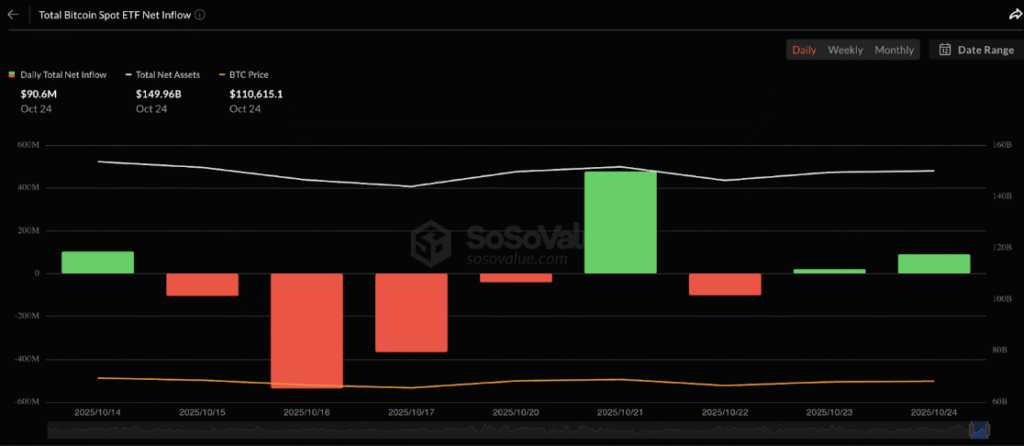
A Moment of Reason as ETF Funding Weakens: Fear Spreads
According to SoSoValue, as of October 24, the Bitcoin Spot ETF recorded a one-day net inflow of US$90.6 million, bringing the total asset size to US$149.96 billion, with Bitcoin trading at US$110,615. Looking back at the past two weeks, there was a clear divergence in ETF inflows: two consecutive days of large net outflows from October 16th to 17th, followed by the only significant return of the week on October 21st, which amounted to about US$500 million. The overall trend shows a cautious pullback amidst the severe volatility, but no signs of systematic withdrawal. This phenomenon echoes the current market sentiment. Fear is rising, sectors are falling, but structural capital is still accumulating locally, and weak ETF liquidity reflects a rational wait-and-see phase rather than a full-blown collapse in confidence. From a cyclical point of view, this is a typical phenomenon before every major uptrend: prices are suppressed by fear to the intrinsic value range, and smart money begins to quietly position itself. The market has entered a cycle of divergence, not a full-blown upswing, but a structural explosion. Only investors with foresight and the ability to recognize the right narrative and niche will be able to get a head start in the downturn.
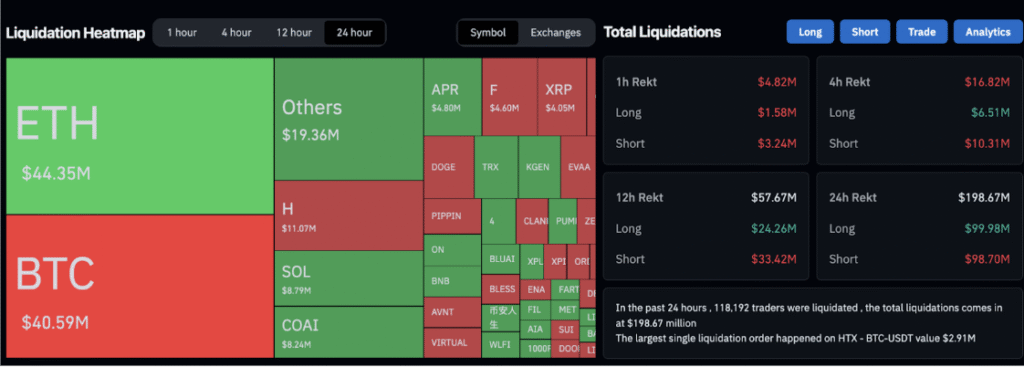
Market Shakeout Brings Long and Short Positions to 200 Million, Fear Deepens and Chips Reorganize
According to Coinglass data, a total of 118,192 traders were liquidated in the past 24 hours, with a total amount of $198.67 million. Among them, BTC and ETH were liquidated for $40.59 million and $44.35 million respectively, which were the main liquidated assets. In terms of liquidation distribution, both long and short positions were evenly matched, with long positions liquidated at about US$99.98 million and short positions at US$98.7 million, indicating that the market is in a fierce game. The largest single liquidation occurred on the HTX exchange, in the BTC-USDT segment, with a size of $2.91 million. This wave of liquidations is not a sign of a full-blown crash, but rather a natural process of market restructuring amidst fear. Successive liquidations represent a clearing of leveraged capital rather than a deterioration of fundamentals. When fear spreads and prices break below short-term support, it allows chips to be redistributed to long-term investors. Although the market is in a generalized downturn, the currency is close to or even below its intrinsic value, so it is time for rational investors to enter the market.
Most Popular Cryptocurrency Trading Platforms
Hong Kong People's Top Choice for Bitcoin and Ether Trading 》 【2025 Introduction】OSL Registration Benefits, Security, Deposit and Withdrawal, Special Features
Suitable for traditional Hong Kong investors to buy and sell stocks and currencies at the same time. [2025 Introduction] What is Victory Securities? Security, Deposit and Withdrawal, Features
More choices of contract currencies, suitable for buying fake coins in cash. Trade on MEXC and enjoy 500x leverage and many other benefits!
Related Post:
Best Cryptocurrency Trading Platform for Hong Kong Users?2025 Latest Bitcoin Tips for Beginners
2025 Coin Ring Newbie Guide Lazybones|Chained Ecology Entry Guide
2025 Must Read for Newbies! Use these six data indicators to learn how to judge buying opportunities.
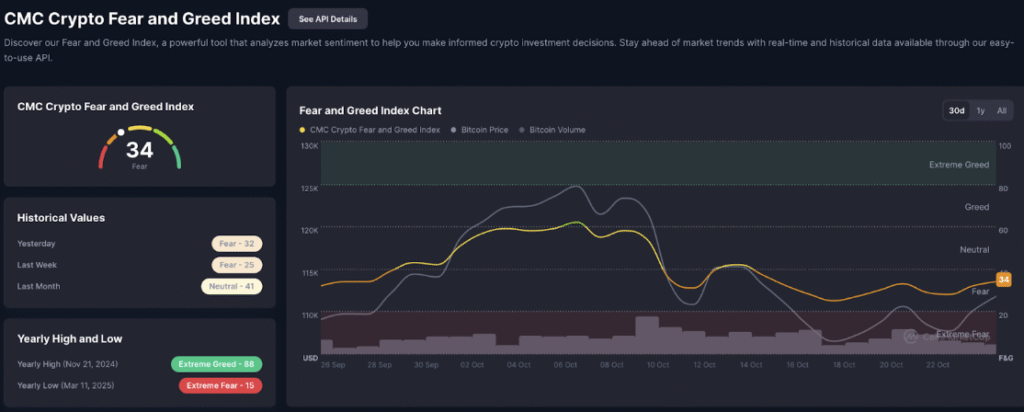
Return of Fear: A Window of Reason Amid Cooling Market Sentiment
According to CMC data, as of October 25th, the Crypto Fear and Greed Index was at 34 (Fear), up slightly from yesterday's 32, but still significantly lower than last month's 41 (Neutral). Since the beginning of October, sentiment has cooled significantly as Bitcoin has fallen from a high of $128,000 to around $110,000, and the chart shows that in the first half of October, Bitcoin has fallen from a high of $128,000 to around $110,000. The chart shows that the index moved into greed territory in early October, but sentiment quickly slipped into fear territory as prices fell sharply and volume contracted after mid-month. The cooling of sentiment is not a sign of a market crash, but rather a process of rebalancing capital. The current fear is mainly due to macro pressure and leveraging rather than deteriorating fundamentals, and ETF net flows and chain activity remain stable, suggesting that long term capital has not retreated. Historically, when indices fall into fear zones, it often means that prices are close to undervalued areas, which is a good opportunity for rational investors to position themselves in groups. The market is now returning to a structural rotation phase. Although there is no overall upward momentum, some sectors are still quietly accumulating capital. This means investors should look for value amidst fear, focus on areas with strong fundamentals and friendly policies, and position themselves before the next round of capital flows.
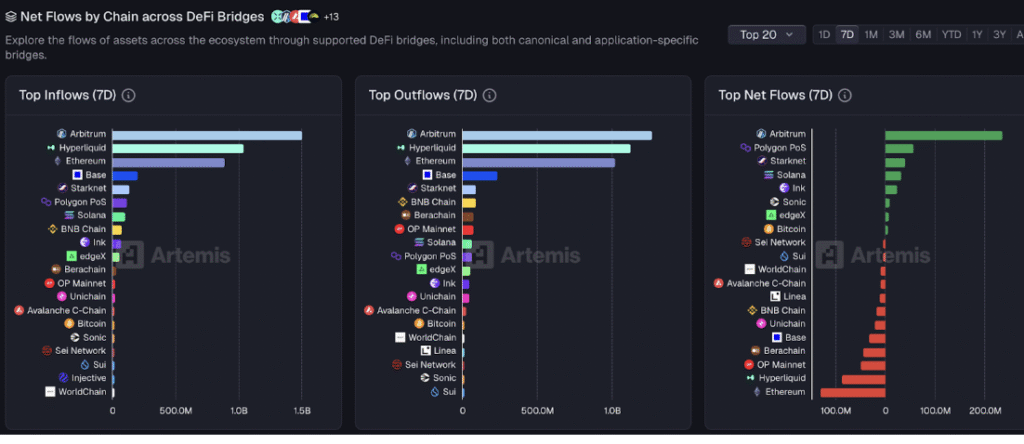
The best time to rationally position amidst fear as capital polarization on the chain intensifies
According to Artemis data, as of this week, Arbitrum maintains the highest level of capital activity in the chain with inflows of approximately $1.5 billion and outflows of over $1 billion, ultimately resulting in a positive net inflow of over $200 million. Polygon PoS and Starknet followed closely behind, each posting moderate positive fund growth, suggesting that some capital continues to seek out ecosystems with potential for expansion. Notably, emerging chains such as Solana, Ink and Sonic saw steady net inflows despite the headwinds, highlighting the flow of capital from highly valued markets to secondary ecosystems with potential growth. This capital distribution structure clearly reflects the market's fear-driven rebalancing phase. While capital has temporarily withdrawn from mainstream sectors, it has not exited the market entirely, but rather shifted to sub-divided, thematic narrative chains. This is in line with the main theme of the week's sentiment. Prices are mostly below intrinsic value and the overall sentiment is negative, but there are structural opportunities. From a cyclical perspective, such a pattern of localized hot spots and overall sluggishness is often a precursor to a big market. Investors should face fears with a rational mindset and adopt a batch DCA strategy, focusing on chains with practical applications and capital growth potential. When the market shifts from panic to renewed risk-taking, these pre-positioned sectors will be the core beneficiaries of the next wave of liquidity explosion.
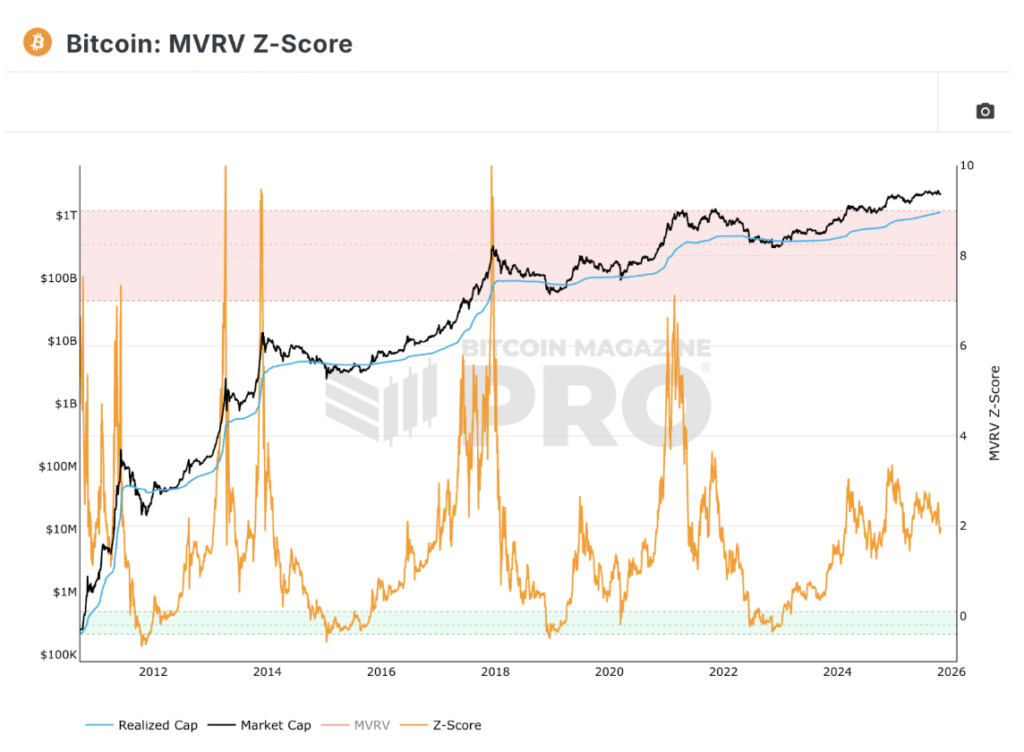
MVRV Ratio Falls, Golden Opportunity Amidst Market Fear
According to Bitcoin Magazine Pro, the MVRV Z-Score has recently fallen back to around 2, well below the historical highs (around 6-10), suggesting that Bitcoin's current market capitalization is only slightly above its Realized Cap. This structure implies that the overall market valuation is still at a reasonable or even low level, without the extreme bubbles seen at the end of bull markets in the past. Historically, when the MVRV Z-Score breaks above 7, the market is overheated, which is often accompanied by a short-term price peak; on the other hand, when it falls within the 0-2 range, it is the best time for long-term investors to enter the market. The current data shows that although the market is in a period of volatility, it has not yet reached a frenzied stage.
Analyzing the cyclical structure, when MVRV stays in the mid-range and does not move up significantly, it often means that the market sentiment is still suppressed and capital is in a wait-and-see mood. This is consistent with the current fear-driven, undervalued market. In many bull markets in the past, this is the stage when values are lower than intrinsic prices, which is the golden period for rational investors to actively deploy DCA. Although short-term uncertainty has risen and sector rotation has been intense, we can still see some strong themes such as Virtuals and the 404 chain attracting capital against the trend. Investors should remain calm amidst the fear and focus on fundamentals and practical application potentials to prepare for the next wave of sentiment and liquidity explosion.

The bull market has not yet entered the madness stage: the rationalist's golden period of deployment
According to LookIntoBitcoin's Multiple Bullish Top Indicators, as of mid-October, none of the 30 key cyclical top signals have been triggered (Hit 0/30), and the overall model continues to show a "100% Holding Range". Core indicators such as the Ahr999 Index (1.10 / Need 4), Puell Multiple (1.01 / Need 2.2), MVRV Z-Score (2.46 / Need 5) and Bitcoin Bubble Index (13.48 / Need 80) are all well below their historical bullish thresholds. This means that although the market is experiencing short-term volatility and capital withdrawal, it has not yet entered the 'end of the frenzy'. Historically, when the above indicators enter the high risk zone at the same time (especially MVRV Z-Score > 7 and Ahr999 > 4), it often signals the end of a major uptrend and a chip distribution period. The fact that we are still significantly away from that zone suggests that the overall market is in a high level of oscillators but not in a bubble. From a cyclical perspective, when most of the top models are still in the mid-to-low range, it means that the mainstream assets still have potential upside. This echoes the current market sentiment of "price correction and rising fear". Although the prices of Bitcoin and mainstream sectors have fallen from their highs, their valuation indicators show that they are not yet overheated, reflecting that the current correction is a healthy correction rather than a structural collapse. In fact, the end of a real bull market is often accompanied by media frenzy, KOLs shouting and a full-blown bubble in the chain, which has yet to occur. This means that rational investors should take advantage of this period of fear to continue to DCA and focus their capital on fundamentally supported sectors. The real danger of the market is not falling prices, but missing the opportunity to make a move when rationality and fear are intertwined.

Unlocking Wave Approaches: Rational Layout Under the Panic Cloud
In the next two weeks, a number of medium and large tokens will be unlocked, potentially releasing hundreds of millions of dollars. According to the data, XPL and TRIBL will be unlocked in 2 days with US$33.84 million and US$36.85 million respectively, corresponding to a market capitalization of 4.97% and 1.90%, which are the largest unlocking events in a short period of time. FET and JUP will release US$7.53 million and US$21.01 million in 3 days, while IMX, OP, SUI and ENA will release US$12 million to US$18 million in 5 to 7 days. Overall, the unlocking pressure is mainly concentrated on mid-cap tokens, and the unlocking ratio of some items, such as SUI and ENA, is still lower than that of 50%, so there is still room for potential expansion of the unreleased supply. From a macro perspective, this wave of unlocking occurred during a period of generalized market downturn and heightened emotional panic, with prices generally below intrinsic value. This structural divergence means that liquidity has not dried up despite the fear. In the short term, unlocking is bound to bring volatility, but as previous cycle lows have shown, fear is often the starting point for value investing. For rational investors, they should capitalize on the "pressure pricing" at this stage, and position in batches in sectors with long-term fundamentals to prepare for the next structural upturn.
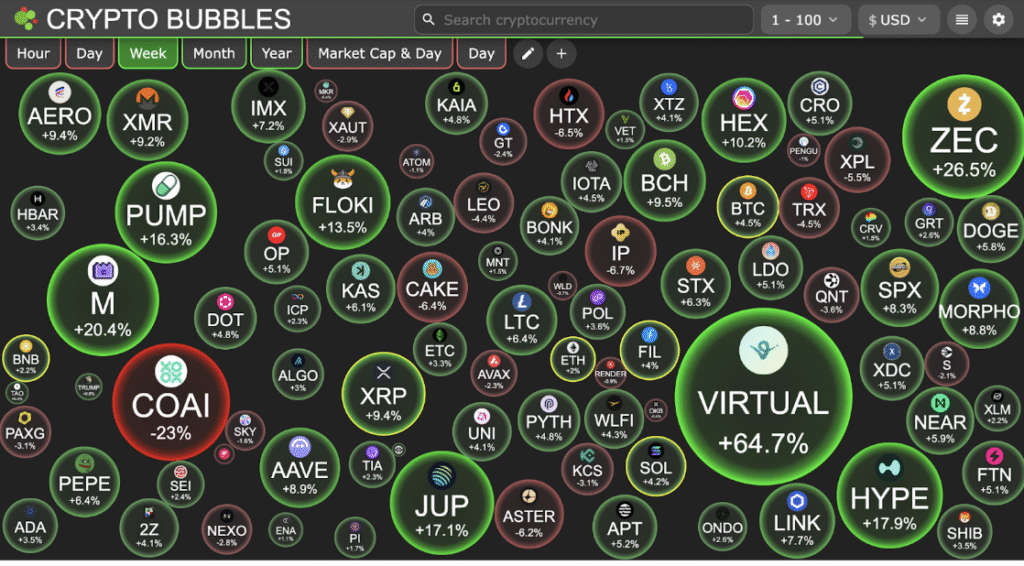
Virtuals Ecology Counterattacks, Structural Strength Emerges Amidst Market Fear
According to Crypto Bubbles data, the overall market pattern continued to be weak in the past week, with mainstream and cottage sectors generally pulling back, and fear still dominating the short-term rhythm.BTC only recorded +2.8%, ETH +3.2%, reflecting the strong wait-and-see sentiment of the capital, and further intensified the polarization of the sectors.AI concepts and some emerging application tokens continued to be under pressure, such as COAI -23%, HTX -6.5%, IP -6.7%, indicating that risk aversion to high beta symbols has increased. COAI -23%, HTX -6.5%, IP -6.7%, indicating that the market's risk aversion towards high beta symbols is on the rise. However, amidst the general downturn, Virtuals ecological related tokens stood out against the trend, with VIRTUAL surging +64.7%, Arbus +259%, GAME +220.1% and other Virtuals ecological tokens recording double-digit gains, which became the main direction of this week's capital focus. This structural divergence suggests that the market, while fearful, is not in a full-blown meltdown phase. Capital is still looking for sectors with real narrative support and liquidity depth, particularly tokens related to the virtual economy, simulated ecosystems or social interaction. This is a core feature of the current cycle: there is a lack of a generalized outbreak, but the opportunity for rotation remains clear. When prices generally fall below intrinsic value and sentiment is in fear, it provides a window of opportunity for rational investors to position themselves in batches. While the short term may continue to be shaky, the medium term structure is gradually becoming healthier. In the face of noise and short-term volatility, only by focusing on sub-sectors with strong fundamentals and supporting narratives can we build up advantageous positions amidst the fear, and take the lead in the next wave of structural upturn.
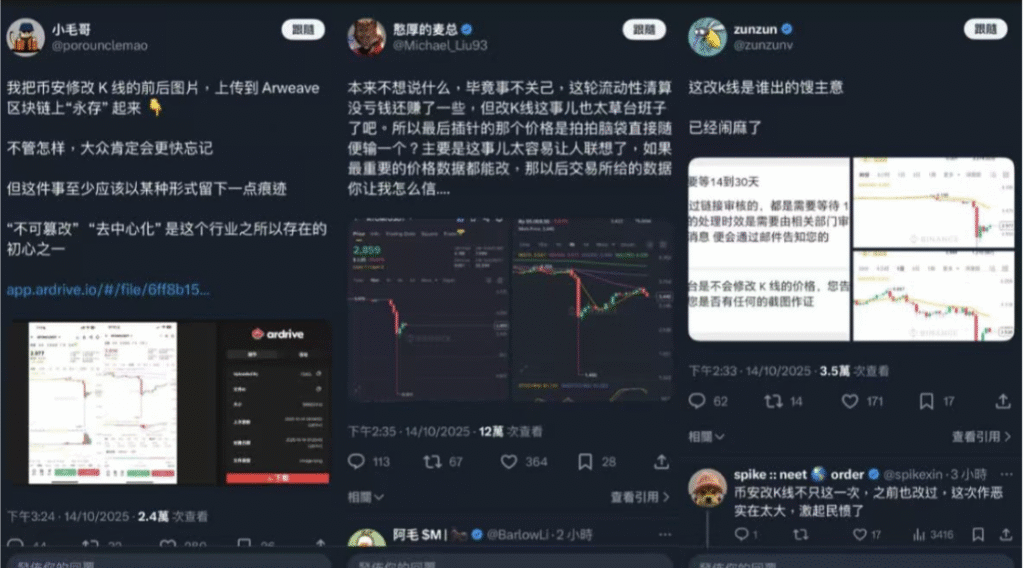
K-Line Crisis Resurfaces, Currency Security Trust Goes to Zero
Recently, CoinSafe has been caught in a "K-line fix". During the October 11th market crash, the ATOM/USDT pair once showed a zero price (as low as $0.01), which led to a large number of leveraged users' positions being blown up, resulting in heavy losses. However, on October 14th, the community discovered that CoinSafe had quietly modified its historical K-line data, adjusting the lowest price to $1.54 and "smoothing" the volume curve to make it appear that the crash never happened. Although the official response said that this was a price correction and a technical adjustment for abnormal fluctuations, the statement failed to quell the public's anger, and the community accused Coin of erasing history and manipulating data. The controversy over this incident lies not only in the technical modification of data, but also in the arbitrary control of the centralized platform over the "truth", which has shaken the fundamental trust mechanism of the crypto market. This trust crisis reveals the structural fragility of centralized exchanges: when users rely on a single platform for data and explanations, transparency loses its meaning. Data can be rewritten, and trust is an illusion. In contrast, on-chain exchanges such as Hyperliquid have openly challenged CEX's under-reporting of clearing data, and have called for "chain-wide verification," highlighting the fact that transparency is becoming the core of a new round of competition. This storm may become an opportunity to rebuild trust in decentralized exchanges (DEXs), pushing funds and users to accelerate their migration to a verifiable, open and transparent on-chain environment. The market will gradually divide into two camps: "trust auditable" and "trust hypothetical", and the decentralization narrative will once again gain substantial momentum. At a time when trust is gradually breaking down, the storm triggered by CoinSafe may reshape the power structure of the entire trading market.

The Eldorado Lost Cause Coin Incident: A Crash Course in Currency Leeks
With the slogan of "Euromoney, it's so generous", the "Euromoney" named cryptocurrency has been widely spreading among the student crypto community recently. The coin reached a market capitalization of $46 million in the early morning hours of the 15th, and then continued to fall, with large traders continuously dumping their stocks and panicking, leaving Euromoney with a residual volume of around $100,000 in the morning. The line chart shows a nearly perfect arch, completing a dramatic swing in just two days. A few days after the coin was issued, Euromoney quickly became known as the "Euromoney Foundation" due to the massive circulation of the traditional Chinese community by MarsCrypto, a new generation cryptocurrency content creator in Taiwan, and Farcrypto, a cryptocurrency publisher in the cryptocurrency community.
ETF claimed to be a completely fair token, and the latter promotion showed a short video of early returns, screenshots, and 100x profits, emphasizing that this was the last chance to get on the bandwagon. At the same time, there were typical shout-outs on Dcard, and the number of promotions on Threads was so large that many students who had never finished cryptocurrency before were infected with emotions and invested their money. Fat, who was heavily promoting ETF on the community, was set on fire for the crash, and he later released an apology video saying that he had not profited from the crash and had underestimated the liquidity risk, and apologized for the impact on his viewers. While the losers have shared their "leek-cutting" experiences, and some have even gone to the police to report the incident, and the remaining investors have formed a Discord Victims' Group to prepare for their follow-up plans, the real market makers are currently smiling in secret, calculating the gains from this wave of capital inflows and outflows. The dramatic fluctuation from a market capitalization of $46 million to $100,000 in two days is not only a test for retail investors, but also a successful show of capital harvesting.
Arthur Hayes Seizes Sentiment Recovery Window as Markets Regain Risk Appetite
After a week of sharp volatility, tensions between the US and China have eased for the moment with President Donald Trump's latest remarks. Trump claimed that talks with Chinese officials were "going well" and that he was confident that his meeting with President Xi this month would go ahead as scheduled. The turnaround quickly turned Wall Street sentiment from panic to optimism, with the S&P 500 posting its best one-week performance since August. Meanwhile, Bitcoin has bounced back from its low of $103,000 and has led to a recovery in overall risk appetite, with BitMEX founder Arthur Hayes noting in a social media post that "Bitcoin is on special offer" and revealing that his family office is raising a $250 million fund to pursue merger and acquisition opportunities among mid-sized crypto firms. This series of movements reflects the market's extreme sensitivity to short-term policy winds, and also reveals the "instant control" effect of Trump's political theater on asset prices. However, this kind of drama of "creating panic first and then releasing hope" has been seen for a long time. Trump's strategy of using high-profile threats to heighten market fear, and then talking to ease the atmosphere, has made volatility a tool of his pressure. For the crypto market, this kind of back-and-forth maneuvering, although short-term sentiment recovery market, but also exposed the price is still dominated by macro-political disturbances of the reality. This rally is more of a 'confidence test'. When power rhetoric becomes a source of volatility, the real strength lies not in Trump's tweets, but in whether investors can remain calm in the midst of the drama.
Positions Surge 95% in Q3; Ether Becomes Core Treasury Allocation
According to a Bitwise report, Ether holdings of publicly traded companies surged by 95% in Q3 2025 to 4.63 million ETHs, valued at approximately $19 billion, indicating a rapid influx of institutional capital into the ethereum ecosystem. Major players such as BitMine have accumulated more than 3 million ETH and are targeting 5% of the global supply, while institutions are looking at Ether as a cash-flow and application asset rather than a purely speculative one as the regulatory environment in the U.S. becomes clearer, spot ETFs see steady inflows of capital, and the attractiveness of pledge yields ranging from 3% to 14%. This concentration of buying, which occurred mainly between July and September, resonated with the rebound of Ether from US$1,400 to US$4,500, marking a structural reorganization of "retail to institutional". Ether is increasingly becoming a strategic centerpiece of corporate asset allocation, symbolizing deep institutional trust in decentralized finance (DeFi) and tokenized markets (RWA). This phenomenon reflects a shift in focus from Bitcoin's "stored value narrative" to Ether's "revenue and ecology narrative. In other words, ETH's attractiveness lies in its combination of liquidity, network effect and financial appreciation potential. This round of institutional investment is not a short-term speculation, but a medium- to long-term bet on "tokenized infrastructure". If this trend continues, Ether may become the core pivot point for institutional asset reallocation in the next bull market, and further consolidate its pricing power as the underpinning of the Web3 economy.

Real-Time Prophecy Machine Lands: Chainlink Accelerates Chain Market Synchronization
Chainlink announced the launch of the first native real-time prognosticator on MegaETH, enabling smart contracts to capture market prices in real-time requests with less than milliseconds of data latency through the integration of Chainlink Data Streams. This marks a major innovation in decentralized financial infrastructure, eliminating the predictor latency bottleneck that has long plagued on-chain derivatives and positioning MegaETH as a high-throughput Ethernet Layer 2 network capable of handling up to 100,000 transactions per second. According to official data, the integration enables the streaming of predictor data directly into the MegaETH execution environment, allowing contracts to read market prices in real-time and synchronize high-frequency applications such as perpetual contracts, prediction markets and stablecoins. The Chainlink-MegaETH alliance is an infrastructure breakthrough for the crypto market as a whole. When the latency of the prediction machine is completely compressed, the on-chain capital market will be able to match the speed of centralized platforms for the first time, opening a new level of DeFi," said Yang Lei, co-founder of MegaETH, "This is the first time that low-latency data acquisition has been achieved at the protocol layer, allowing on-chain developers to operate at the speed of centralized exchanges. A real-time data-centric on-chain economy capable of supporting hundreds of billions of dollars in financial products. This move not only strengthens Chainlink's monopoly on the Web3 data layer, but also signals a new race to integrate performance and capital in the Ethernet ecosystem.
Backpack Chain Opening Bell Rings, Stocks on the Chain to Reorganize the Capital Market Landscape
Backpack and Superstate have teamed up to launch the "Opening Bell" system, the first of its kind to enable real US SEC-registered shares to be traded on the chain, allowing investors to directly hold shares with full equity, dividend and voting rights. According to an official statement, the first batch of shares will include major Nasdaq companies such as Apple and Tesla, and will use the same CUSIP code, establishing the official legal status of the on-chain stock market. Superstate CEO Robert Leshner emphasized that this is not just about putting stocks on the chain, it's about bringing the U.S. capital markets to the chain. The partnership allows crypto-native traders to operate $BTC, $USDC, and real U.S. stocks simultaneously in a single interface, symbolizing the movement of on-chain finance from the speculative stage to functional integration. This development reflects that RWAs (Real World Assets) are entering the "materialization" stage, extending from real estate and treasury bonds to the equity level, revealing the next large-scale application of blockchain. The Backpack-Superstate model is a true legally recognized transfer of ownership, making the blockchain the underlying structure for escrow, clearing and refinancing. This shift could reshape the efficiency of financial markets: 24/7 trading, real-time clearing, seamless cross-border funding and DeFi rehypothecation could take capital mobility to a new level. This could be the beginning of an era of capital markets on the chain. A new form of market that is broader than tokenized bonds and more efficient than ETFs.
Jay Chou's surrogate fucks storm resurfaces, surrogate fucks risks set off alarm bells again
Recently, Jay Chou's furious search for his friend in Bitcoin has sparked widespread discussion in the community. According to a report by Mirror Weekly, his longtime friend Wei-Ze Cai was suspected of manipulating Bitcoin accounts on his behalf and then disappeared, making it impossible for Jay to withdraw his funds, and he eventually publicly searched for people and canceled his concerns. It is worth noting that this is not the first time that a celebrity has been involved in a virtual asset manipulation dispute. As seen in many previous "investment advisor" incidents, when trust overrides validation and emotion replaces prudent judgment, risk often follows. This incident reminds the market once again that even if a person is an acquaintance or appears to be a professional, once he or she has surrendered control of the funds or private keys, he or she has lost the most fundamental defense. This incident reflects a core truth: in the crypto space, DYOR is not a slogan, it is a rule of survival. Any act of entrusting someone else to do the work for you is essentially tantamount to giving up ownership of your assets. While the decentralization of the crypto market brings autonomy and freedom, it also means that the responsibility rests entirely with the investor. In light of the current market environment, the importance of investor education is becoming more and more prominent as mainstream adoption and regulation become more stringent. The pursuit of gains on behalf of others not only runs counter to the spirit of crypto, but is also likely to become a hotbed for others to cut leeks.

MrBeast's foray into crypto-banking: the tug-of-war between celebrity aura and financial regulation
One of the world's most influential YouTubers, Jimmy Donaldson (MrBeast), has recently filed for registration of the MrBeast Financial trademark, with plans to launch a financial app that combines crypto payments, trading and investing capabilities. If successful, he will be the first community creator to enter the U.S. mainstream banking system with his own brand. This move not only highlights the gradual penetration of blockchain technology into the traditional financial sector, but also reflects the fact that celebrities and influencers are actively pursuing crypto-finance business opportunities. However, it is worth noting that MrBeast has been involved in crypto controversies in the past, including allegations of arbitrage and insider trading of low-cap tokens, which has caused the market to remain cautious about its true intentions and regulatory risks. Looking at the market structure, when mainstream KOLs and entertainment personalities are heavily involved in financial innovation, it is often a clear sign that capital sentiment is heating up. This phenomenon may not necessarily mean the end of the bull market, but it often signals the beginning of a frenzy. If more celebrities follow suit in launching related projects in the future, it is important to watch out for signs of an overheated market. For investors, the key at this stage is to remain rational and adhere to the principles of DYOR and private key security, and not to be fooled by the glamor. After all, while celebrities can boost the buzz, they may not guarantee the value, and the market peak is often approached when the applause is loudest.
Macro News
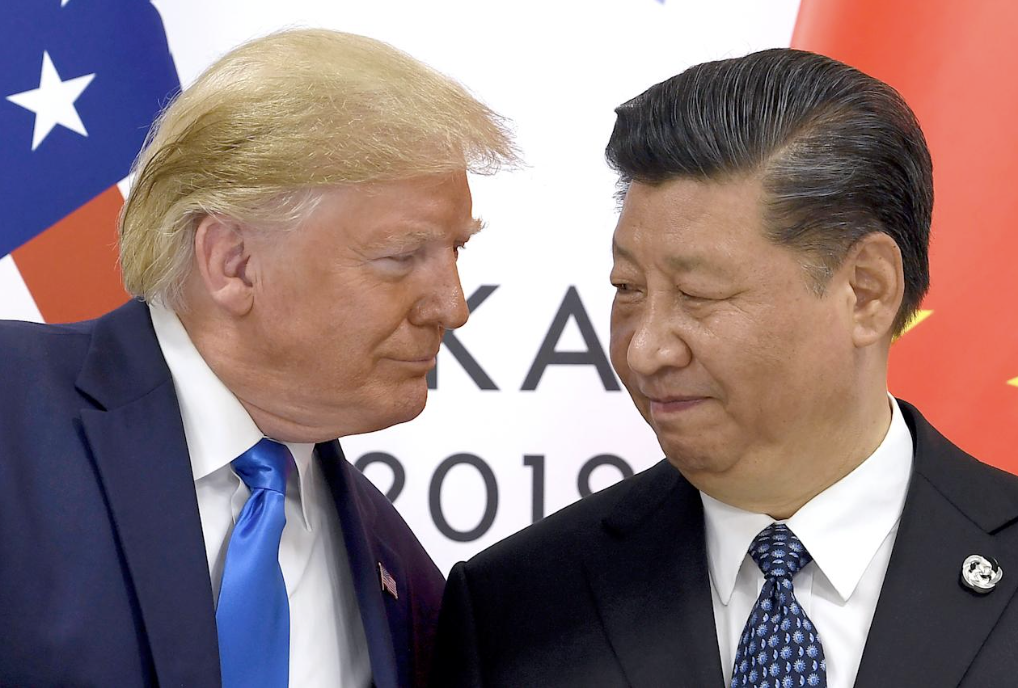
Trump's Trade Swing: Key Asset Short-Term Volatility Worsens
US President Donald Trump has recently made a number of demands on China over rare earths, fentanyl and soybeans, and has signed a rare earth supply agreement with the Australian Prime Minister to safeguard a key source of US minerals. At the same time, his wavering attitude towards his meeting with Xi Jinping, first indicating a possible meeting and then hesitating, has left the market uncertain about the US-China trade friction. Over the past few weeks, Trump has repeatedly threatened to impose high tariffs on Chinese goods, but has chosen to hold off at key moments. As a result, short-term nervousness has fluctuated, with notable shocks in both equities and safe-haven assets such as gold. This policy swing, coupled with the still fragile U.S.-China trade relationship, directly triggered a rapid rotation of capital between risky and safe-haven assets, creating a market characterized by increased short-term volatility. From a market strategy perspective, the historical pattern of Trump's last-minute retreat tends to galvanize buying in safe-haven assets such as gold, silver and some cryptocurrencies after the initial threat. With uncertainty still high, short-term volatility offers investors a good opportunity to build positions in batches. For those seeking risk management and long-term returns, a DCA strategy with exposure to safe-haven and some growth assets not only reduces the risk of a single entry, but also captures the next rally when Trump's policy swings again and capital flows back into the market. Such market characteristics show that rational operation and allocation in batches are still the most effective strategies in the face of political uncertainty.

Gold Price Surges 6.31 TP3T: Short-term Volatility Highlights Opportunity for Positioning
Over the past week, gold and silver prices posted their largest one-day declines in years, with gold sinking 6.3% to just under $4,100/oz during the session, and silver plummeting more than 8%, its steepest drop since 2021. The retreat occurred against the backdrop of a stronger US dollar, easing US-China trade tensions and technical indicators suggesting short-term overheating. Gold has risen by a cumulative 28% since mid-August, supported by central bank purchases and gold ETF inflows, suggesting profit-taking pressures from the rapid prior rally. Market analyst David Morrison pointed out that gold has encountered resistance near $4,400 several times, and each breakout attempt has been unsuccessful, forming a typical selling pressure of technical retreat. However, this short-term correction should not be viewed as the end of the bull market, but rather as a signal of a healthy correction, providing investors with a window to position themselves lower. The market is still supported by high inflation, low real interest rates and geopolitical risk. Technically, Morrison suggests gold could see its first downside test near $4,000, but buyers are expected to re-engage near $4,200, creating short-term support. Combining long-term fundamentals with capital flows, for investors who have already accumulated profits or are looking to hedge risk, a staged DCA entry strategy, placing gold or silver on price pullbacks, will help minimize the risk of short-term volatility while maintaining the potential to participate in the medium- to long-term uptrend. Short-term shocks and technical pullbacks are good opportunities for rational position building and capital management, and market participants are reminded to avoid chasing highs and putting discipline over emotion.

Inflation is back on top: rate cuts are expected again.
According to the latest data, the US CPI rose to 3% in September, up slightly from the previous month, indicating that inflationary pressures are resurfacing. According to the report, import tariff adjustments pushed up the prices of some commodities, while the prices of services and food remained high. This result means that the Federal Reserve Board is more likely to keep interest rates high in the near term, and the market's expectation of a rate cut in the year has cooled again. From a macro perspective, the current rise in inflation is a result of structural pressures, particularly energy and import costs pushing up core prices, making inflation more sticky and limiting the scope for monetary easing. The interest rate curve is expected to shift back upwards, with US bond yields climbing and liquidity pressures gradually trickling down to risky assets. For the crypto market, this change epitomizes cyclical macro stress. The high interest rate environment means that the cost of capital remains high, speculative liquidity is shrinking and sentiment will become more defensive in the short term. However, it is worth noting that this macro tightening is also driving asset repricing, with high-quality projects and cash-flow agreements coming to the fore in the interplay between deflationary expectations and a return to risk appetite. Historical experience has shown that when inflation and policy expectations are misaligned, the market tends to complete the correction early and nurture the next round of upward movement. For rational investors, this is the right time to assess intrinsic value and lay out long-term positions.
Related Post:
Best Cryptocurrency Trading Platform for Hong Kong Users?2025 Latest Bitcoin Tips for Beginners
2025 Coin Ring Newbie Guide Lazybones|Chained Ecology Entry Guide
2025 Must Read for Newbies! Use these six data indicators to learn how to judge buying opportunities.
Chained Data Analysis:
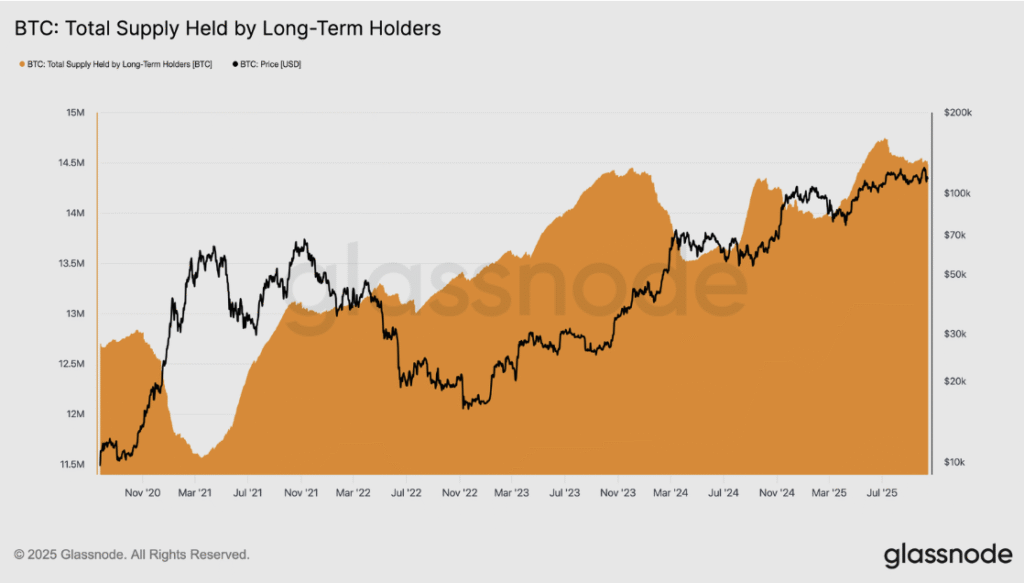
Bitcoin Supply Tightening Slows as Long-Term Capital Continues to Come Out of the Market
Since July 2025, total Bitcoin Long-Term Holders (LTH) positions have declined by around 300,000 BTC, suggesting that sophisticated investors in the market are gradually realizing profits. The chart shows that the decline in LTH holdings from the mid-year highs is highly consistent with the price consolidation at the high end of the range. This implies that some long-term holders chose to take profits at a time when sentiment was high and prices were approaching record highs, which has been a major force in releasing the supply side recently. This phenomenon reflects the sensitivity of "smart money" to the risk of high market levels, and also shows that long-term chips are shifting from strong hands to the liquid market, weakening the short-term upside momentum of Bitcoin. This round of declining long term positions and distribution behavior is a sign that the market is entering a structural consolidation phase. As long term holders become net sellers, available supply in the market increases, making it difficult for demand momentum to support the continuation of the euphoric phase. If the distribution trend is not reversed and new capital inflows remain weak, the market may face a phased pullback or even a localized washout. Overall, the LTH shipment is not a bearish signal, but rather a healthy adjustment typical of a bullish cycle, laying the groundwork for the next accumulation period.
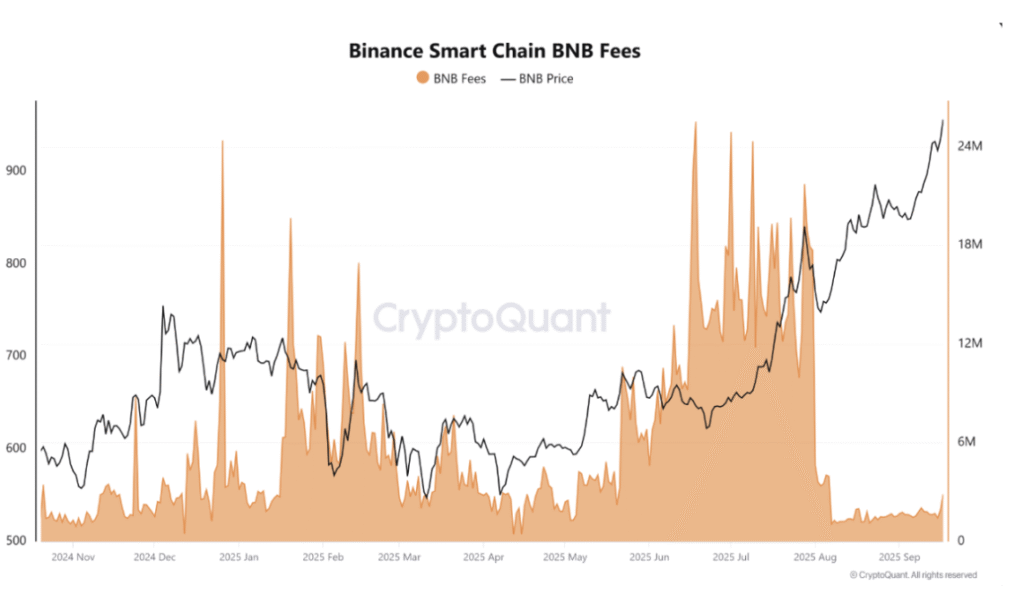
Handling Fees Plunge 87%: BNB Chain Efficiency Surge Triggers Capital Repatriation
According to CryptoQuant data, Binance Smart Chain (BSC) fees have fallen dramatically from a peak of approximately $25 million in June to only approximately $2.8 million in August, a drop of 87%, and hit a yearly low of only $1.07 million on August 7th. This trend reflects a significant improvement in the efficiency of BSC's network operations, a reduction in transaction congestion, and an increase in overall throughput, which in turn reduces transaction costs for users. The chart shows a strong positive correlation between the rapid decline in renewal fees from their highs and the upward trend in BNB prices, which surpassed record highs in September. This phenomenon reveals that the low-cost network environment is attracting more users and developers back to the BNB ecosystem, creating a self-reinforcing demand cycle. From a structural perspective, the continued decline in transaction fees not only represents optimization at the technical level, but also signifies that the capital efficiency of the BNB chain is maturing. The reduction in transaction costs enhances the scalability of DApp and DeFi projects, especially against the backdrop of high fees on other main chains (e.g., ethereum), further magnifying the relative attractiveness of BSC. This structural advantage sets BNB apart from the capital rotation and reinforces its position as a major capital gathering place in Asia and the retail market. If this low rate environment is maintained, BNB is likely to continue to benefit from increased chain activity and network effects, driving further strength in price performance over the medium to long term.
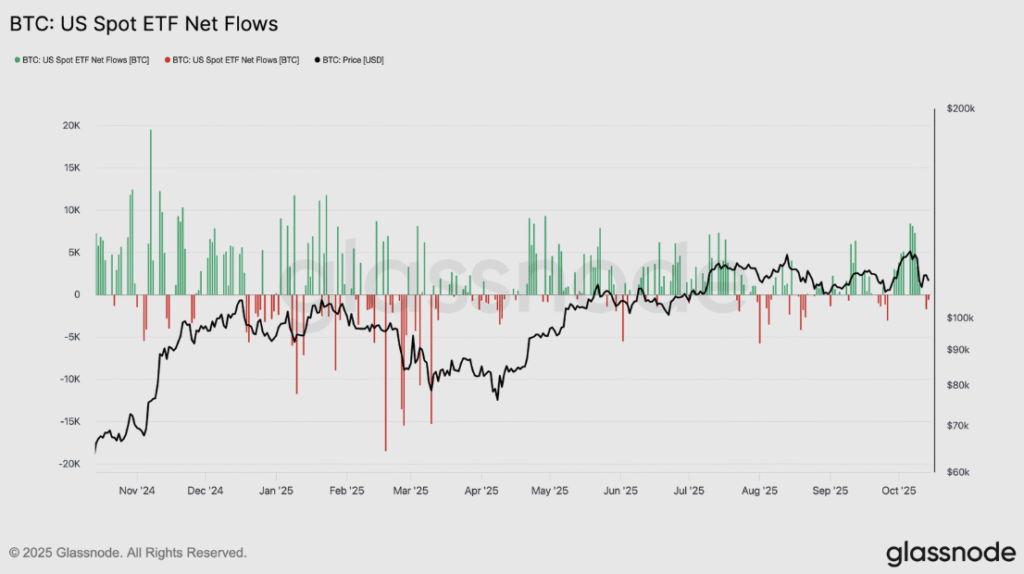
ETF inflows weak, sentiment-driven prices briefly distorted
According to Glassnode, after the largest liquidation wave in history of $19.2 billion, the US spot Bitcoin ETF saw significant outflows, with cumulative net inflows turning negative this week, down by about 2,300 BTC. The chart shows that the frequency of inflows into the ETF has declined significantly since October, and the shortening of the green bar reflects the slowing down of institutional funding momentum, which is in tandem with the decline in the price of Bitcoin. However, unlike previous capitulation selling phases, the current round of outflows has been a moderate adjustment, with no centralized panic selling in the market. This indicates that investor sentiment is in a wait-and-see and hesitant stage, rather than a full retreat. From a macro perspective, the retreat of ETF funds mainly reflects the market's short-term reaction to the uncertainty in liquidity and interest rate expectations, rather than a structural collapse. In fact, ETF positions are still at record highs, indicating that long-term investors' trust in Bitcoin has not been shaken. The real change in the market today is not in the fundamentals, but in the sentiment. Technological advances, network activity and application development have not slowed down, but the market has been dominated by short-term fears, causing prices to temporarily detach from their intrinsic value. This dislocation provides an excellent window of opportunity for rational investors. The risk-reward profile of a downturn is far superior to that of blindly chasing high prices during a frenzy. As history has proven time and again, the next wave of a bull market often starts at the coolest, most pessimistic point in the market. This downturn is not the end, but a period of sentiment correction, and perhaps the most pragmatic strategy for long-term investors is not to predict bottoms, but to continue to enter at an affordable pace when prices are undervalued (DCA), and wait for the moment of sentiment recovery to rekindle the upward cycle.
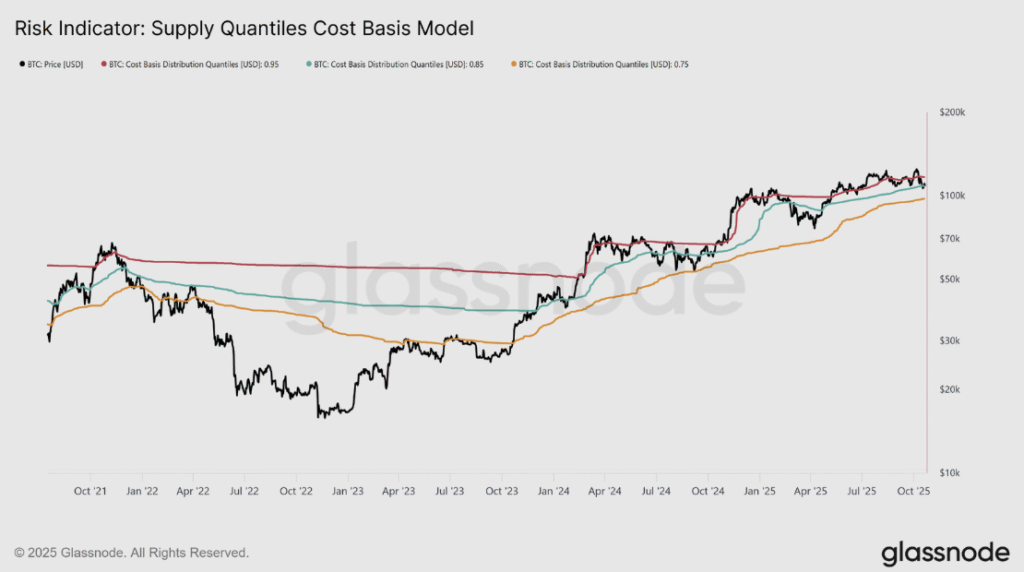
Key Support Lost: Bitcoin Falls Below 112K as Pullback Sentiment Magnifies
Bitcoin's market structure has weakened significantly since it lost the key support at $112,000 last week. According to Glassnode's Supply Quantiles Cost Basis Model, the price has now fallen below the short-term holder's cost (~$113,100) while struggling above the 0.85th percentile cost zone (~$108,600). The model uses the 0.95, 0.85, and 0.75 bins to correspond to the supply and holding costs of 5%, 15%, and 25%, revealing the potential pressure and support structure of the market. Historical data shows that when prices fall below the 0.85 level and fail to recover quickly, it often signals structural weakness and increased capital outflows, and the chances of a subsequent retest to the 0.75 level (~US$97,500) are significantly higher, making it the most critical short-term support area. However, we need to look at the decline rationally: although the structure has been tested, the fundamental drivers have not changed. The health of the Bitcoin network, the activity level on the chain and the participation of organizations remain high, and only sentiment is leading the price fluctuations for the time being. At the moment, the market is in a state of "fear-based pricing", and the price decline is not due to a deterioration in technology or fundamentals, but rather a result of short-term capital withdrawals and psychological imbalances among investors. Rational investors should realize that when prices fall below their intrinsic value, it is a golden opportunity for long-term allocation, not a time to panic out of the market. Holding 97.5K is not only a technical support, but also a watershed for sentiment and confidence. When fear subsides and sentiment warms up, the market will reprice the fundamentals, and the rebound will come swiftly and violently, so the author believes there is no need to panic and sell tokens.
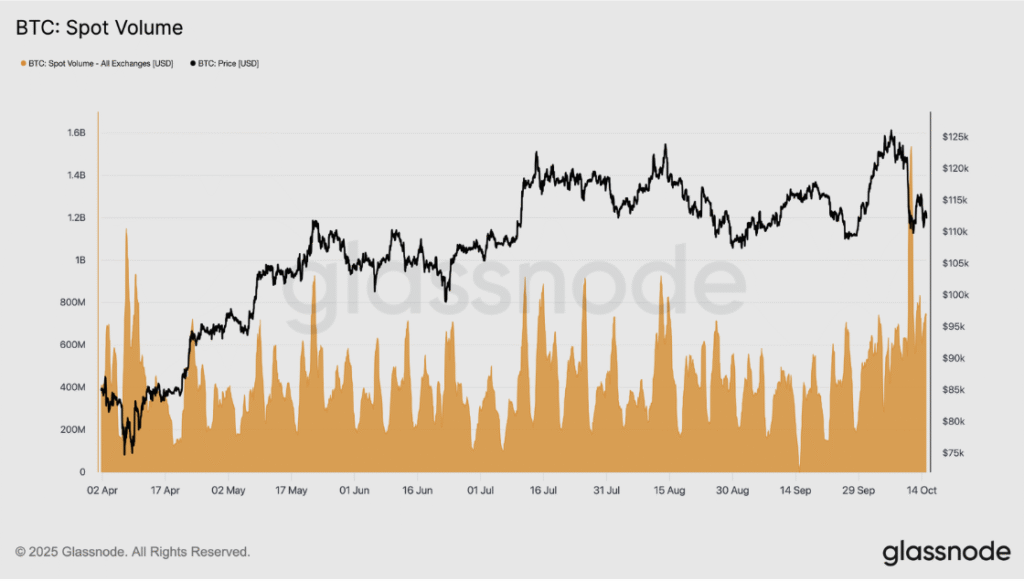
Currency volatility heats up, market sentiment dominates short-term rhythm
After the liquidation event on October 11, Bitcoin spot trading volume zoomed to a rare high for the year, indicating that the market has seen a sharp movement of capital in a short period of time. According to Glassnode data, the volume exceeded $1.6 billion on that day, much higher than the average for the past month, reflecting that traders quickly re-adjusted their positions in the spot market after their leveraged positions were forced to close. This was not simply a passive liquidation, but more of a sentiment-driven reallocation of capital, with a brief recovery in risk-on sentiment leading to a simultaneous expansion in price and volume. Structurally, this phenomenon tends to occur later in the cycle, when market liquidity is still abundant but the momentum of new capital starts to weaken, and price sensitivity to sentiment fluctuations increases significantly. Volume is high, but reflects short-term activity in speculative trading rather than sustained growth in underlying demand. The current high volatility is actually a reflection of the market's psychological instability. If we can lay out our positions in steady batches amidst the fear, the market will quickly reprice itself when sentiment warms up and capital flows back into the market, making it the cornerstone of the next uptrend wave.

Divergent structure reflects market resilience, market not in a general sell-off
After the liquidation event on October 11th, spot trading volume has significantly increased, but Cumulative Volume Delta Bias (CVDB) data reveals divergent trading behaviors across exchanges. Binance recorded significant active selling pressure, reflecting strong deleveraging by retail investors in the Asian market, while Coinbase's CVDB remained positive, suggesting that US-based institutional funds took advantage of the volatility to absorb chips. In contrast, Coinbase's CVDB remained positive, indicating that U.S.-based institutional funds took advantage of the volatility to absorb chips. Looking at the overall CVDB, there is only a slight net selling bias, well below the February 2025 phase of a full-blown spot sell-off. This suggests that despite the increased volatility, the selling behavior is a regional adjustment rather than a global panic or structural capital outflow. The divergence in buying and selling across centralized exchanges reveals the robustness of the market's capital structure and the level of sentiment. The co-existence of active selling pressure in the retail sector and institutional absorption implies that the market is still in the process of resetting the price range in an orderly manner, rather than in a disorderly panic. This structural absorption pattern is very different from the generalized leverage liquidation or capital withdrawal seen at the end of bull markets, reflecting that capital risk appetite remains risk-on. This suggests that global markets have not entered a full-blown risk aversion phase, indicating that investment sentiment is still resilient and that bullish momentum has not yet completely run out.
Conclusion
Most Popular Cryptocurrency Trading Platforms
Hong Kong People's Top Choice for Bitcoin and Ether Trading 》 【2025 Introduction】OSL Registration Benefits, Security, Deposit and Withdrawal, Special Features
Suitable for traditional Hong Kong investors to buy and sell stocks and currencies at the same time. [2025 Introduction] What is Victory Securities? Security, Deposit and Withdrawal, Features
More choices of contract currencies, suitable for buying fake coins in cash. Trade on MEXC and enjoy 500x leverage and many other benefits!
Related Post:
Best Cryptocurrency Trading Platform for Hong Kong Users?2025 Latest Bitcoin Tips for Beginners
2025 Coin Ring Newbie Guide Lazybones|Chained Ecology Entry Guide
2025 Must Read for Newbies! Use these six data indicators to learn how to judge buying opportunities.

Disclaimer
The content of this article is for reference only, investors should exercise independent judgment, invest prudently and at their own risk, this article does not provide or attempt to persuade the audience to do trading or investment basis, the content is for sharing purposes only, and should not be regarded as investment advice.It does not represent the views and position of Monsterblockhk.All information and opinions are current as of the date of the judgment. In addition, if a judgment is rendered on aIn this siteAny content related to virtual asset trading platforms that have not yet obtained a license to operate virtual asset trading platforms in Hong Kong, including but not limited to text introductions, pictures, offers, events, etc., are only available to users outside the Hong Kong Special Administrative Region.
According to the Hong Kong Anti-Money Laundering and Counter-Terrorist Financing (Amendment) Ordinance 2022, after June 1, 2023, all centralized virtual asset trading platforms operating in Hong Kong or actively promoting their services to Hong Kong investors will be licensed and regulated by the SFC, and any related unlicensed activities will be a criminal offence. For more information and details of the legislation, users may refer to the SFC website.