

In the cryptocurrency market, new tokens come online almost every month. Some are distributed via an exchange's Launchpad or Launchpool, while others are airdropped by the project directly to active users on the chain. For many investors, these seemingly "free" or "low-cost" ways of acquiring tokens are one of the most attractive ways to enter the market.
But reality is often much more complicated than imagined.
Participation thresholds, lock-in requirements, rates of return and risk structures vary greatly from platform to platform. Some opportunities do offer significant returns, while others offer minimal returns after fees, gas charges and time costs. What's more, the rules in 2026 have changed significantly from 2024 - exchanges are more closely scrutinized, the witch hunt for chain airdrops is more sophisticated, and the opportunities that are actually worth investing in are more concentrated. The purpose of this article is not to list all the possible airdrop opportunities for you to try one by one, but rather to help you develop a complete framework for judgment: which pipelines are worth paying attention to, what the true cost of participation is for each pipeline, how return expectations should be set, and what common practices will no longer be valid in 2026.
Exchange New Coin Subscription: The Basic Logic You Need to Know
Before we dive into the various platforms, let's first understand a core concept: the exchange's subscription of new coins is essentially a way of "exchanging your assets for the right to distribute new tokens". Although different platforms have different names for their mechanisms, the basic logic can be categorized into three types.
The first category is Launchpool (Pledge Mining). You lock your existing assets (usually platform or stablecoins) to the platform and the system allocates new tokens in proportion to your locked-in position. Your capital doesn't disappear, but it's temporarily locked up, and you can't trade or withdraw during that time. This is currently the most popular model, with Binance Launchpool, OKX Jumpstart Mining and Bitget Launchpool all belonging to this category.
The second category is Launchpad (subscription). You need to buy shares of the new token directly with real money (usually platform money). This is a risky model because your capital is converted into new tokens, and if the price of the new tokens is lower than the subscription price when they go live, you will lose money - some of the projects from Binance Launchpad and Gate.io Startup fall into this category.
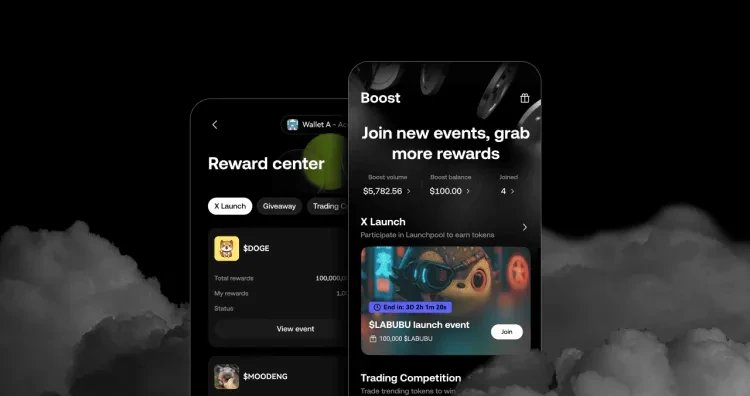
The third category is Bonus Points AirdropOKX Boost is a typical example. OKX Boost is a typical example of this type of model, where you use certain features of the platform (e.g. trading, holding assets) for a specified period of time, and the system calculates points based on your activity and distributes tokens according to your ranking. The return on this type of model depends on the depth of your participation and the number of competitors at the same time.
It is important to understand the difference between these three models as they have completely different risk structures: Launchpool's risk is primarily opportunity cost (the risk of missing out on other investment opportunities while assets are locked up); Launchpad's risk is the risk of principal loss; and the risk of investing in points is that the cost of time and fees may outweigh the eventual return.
Recent Recent Posts:
2026 Latest 6 Free Coin Ring Tools Inventory|Where to find the data on the chain?
2025 Latest OKX Web3 Wallet Tutorial: Does it work? How to create it? A Guide to Safe Operation, Multi-Link Support, and Time-Limited Airdrops
2026 Latest Polymarket Tutorial|How to find out the insiders and realize the high win rate!
2025 New DeFi Beginner's Guide|Teaching you to earn stable money passive income! Introducing 3 popular programs, DeFiLlama tool tutorial!
Binance Launchpool: the portal with the lowest threshold and highest success rate
If you can only choose one platform to start with, Binance Launchpool is almost the only answer. The reasons are simple: it has the lowest participation threshold, the strictest project selection, and the highest historical positive yield.
According to Chain Broker's statistics, about 94% of Binance Launchpad/Launchpool live projects have recorded positive returns since launch. This number is much higher than any other exchange's Launchpad platform. While this doesn't mean that every project is profitable (some projects have fallen back significantly after being uploaded at bull market highs), it does at least show that Binance's project selection mechanism is one of the most reliable in the industry.
As of March 2026, Binance Launchpool has completed more than 70 projects, with recent representative projects including Phase 62 of VANA (User Data L1 Public Link) and Phase 70 of Huma Finance (PayFi Payment Finance Network, with $46 million in funding).
How can I participate in Binance Launchpool?
Step one:Holding BNB or a designated stablecoinLaunchpool usually offers two pledge pools - the BNB pool and the Stablecoin pool (FDUSD or USDC), with the BNB pool usually allocating 85-90% of the total reward, and the Stablecoin pool only allocating 10-15%, which means holding BNB is almost mandatory if you want to maximize your returns. This means that if you want to maximize your returns, holding BNB is almost mandatory.
Step two:Prepare assets before the event。Binance usually announces the program information and pledge rules 24-48 hours before the event. What many people don't realize is that the price of BNB tends to rise briefly after Launchpool's announcement (due to a large number of users buying BNBs in preparation for pledging), and then fall back after the event ends. If you buy BNB after the announcement, the price fluctuation of BNB itself may offset or even exceed Launchpool's gains.
Step Three:Go to the Launchpool page, select Pledge Pool and enter the number of pledges.The system automatically calculates the number of new tokens you can get each hour. The system automatically calculates the number of new tokens you can earn each hour. You can redeem your tokens at any time during the pledge period, but after redeeming them you will no longer be rewarded.
Step Four:Waiting for new coins to be traded onlineThe new tokens will be automatically posted to your cash account after the pledge is closed. Once the pledge is over, the new token will be automatically issued to your spot account. You can choose to sell them the first time they go live (locking in a profit) or hold them for a higher price (taking on price risk).
Real Rate of Return: Don't be Misled by Superficial Figures
A lot of people get excited when they see 'Annualized Yield', but Launchpool campaigns usually only last 7-14 days, and you need to convert the Annualized Yield to an actual yield.
For example, if a Launchpool project has an APY of 100%, but the campaign only lasts for 10 days, then your actual yield would be about 100% ÷ 365 × 10 ≈ 2.7%, which means you pledge $10,000 in BNBs, and you'll get about $270 worth of new tokens after 10 days. In other words, if you pledge $10,000 BNB, you will get about $270 worth of new tokens in 10 days.
This return doesn't look amazing, but considering that your BNB principal isn't gone (it's just temporarily locked in), it's actually an extra income with almost zero risk. The real risk is in the price volatility of BNB itself - if you bought BNB to participate in Launchpool and it goes down 5% during the pledge period, you actually lose money.
Therefore, the ideal strategy is:Users who already own BNBs will have the best results with Launchpool, while those who bought BNBs specifically for Launchpool will need to consider the additional currency risk.
OKX Jumpstart and OKX Boost: Two Different Ways to Play
OKX offers two very different ways to acquire new coins, and many people get them confused, but they are completely different in terms of logic, cost, and who they are for.
OKX Jumpstart: Currency Pledging Type
OKX Jumpstart's model is similar to Binance Launchpool - hold OKB (OKX's platform currency), pledge it for a specified period of time, and receive a proportional allocation of new tokens.
The threshold for participation is that the account must have completed KYC Level 2 verification and hold at least 100 OKBs per day for 5 consecutive days prior to the start of the campaign. based on the March 2026 OKB price of about $50, the minimum position requirement is about $5,000 - much higher than the zero-threshold of Binance and Launchpool. This is much higher than Binance's zero threshold.
Jumpstart offers two ways to participate: the "Mining" mode (pledge BTC, ETH, or other specified tokens to get new coins for free) and the "On Sale" mode (use OKB to buy shares of new coins directly.) The Mining mode is less risky, as the pledged tokens will be returned at the end of the campaign, while the On Sale mode involves the risk of the price of the new coins when they go live.
OKX Boost: Bonus Point Airdrop Type (Advanced Play)
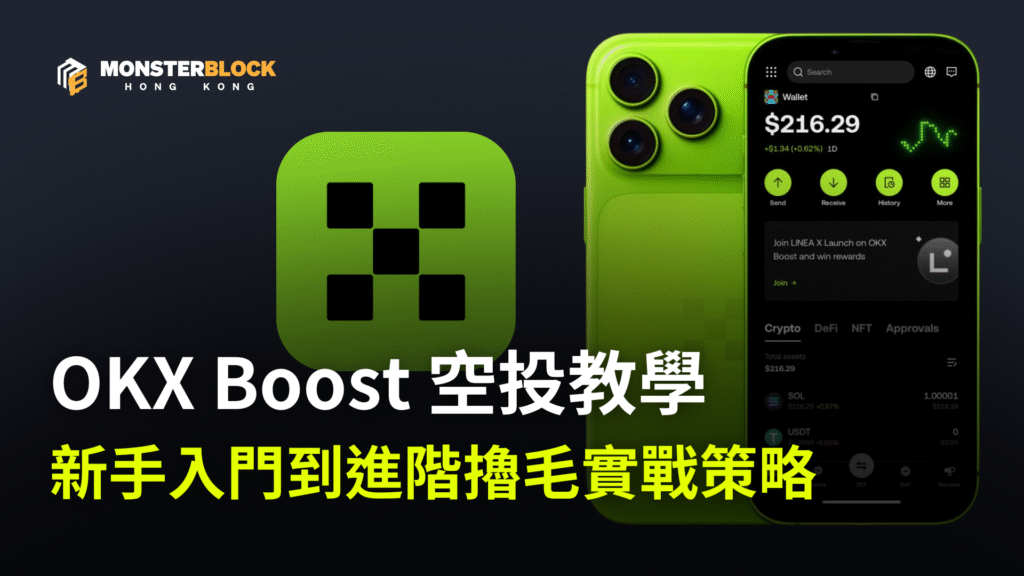
OKX Boost is a completely different system. Instead of simply "holding coins and distributing them", it requires users to trade on OKX DEX, calculate points based on trading volume and wallet balance, and then divide the token rewards according to the ranking of points.
The core logic of this model is that you need to "earn" points by actually trading, which incurs handling and slippage costs. Your final earnings = Airdrop Token Value - Trading Fee - Gas Fee - Slippage Loss.
According to what we wrote earlier OKX Boost Teaching ArticlesThere are a few key rules to keep in mind when calculating points:
Different pairs of tokens have different multipliers. Trades between mainstream currencies (e.g., Stablecoin for Stablecoin) do not count; Stablecoin for large-cap tokens has a multiplier of 0.25x; Stablecoin for smaller currencies has a multiplier of 1x. This means that the more "risky" the pair, the more efficient the crediting, but the higher the cost and risk.
For most ordinary users, OKX Boost's participation threshold and complexity are much higher than Binance Launchpool or OKX Jumpstart, and it is more suitable for advanced users who have some experience in chain operation and are willing to calculate the cost-benefit ratio. If you are a newbie, we suggest you start with a simple pledge model like Launchpool.
Recent Recent Posts:
2026 Latest 6 Free Coin Ring Tools Inventory|Where to find the data on the chain?
2025 Latest OKX Web3 Wallet Tutorial: Does it work? How to create it? A Guide to Safe Operation, Multi-Link Support, and Time-Limited Airdrops
2026 Latest Polymarket Tutorial|How to find out the insiders and realize the high win rate!
2025 New DeFi Beginner's Guide|Teaching you to earn stable money passive income! Introducing 3 popular programs, DeFiLlama tool tutorial!
Bitget Launchpool and Gate.io Startup: Other Platforms to Watch
In addition to Binance and OKX, there are two other platforms that are quite active in the coin subscription space, and it's worth understanding their basic mechanisms.
Bitget Launchpool Bitget Launchpool's model is very close to Binance Launchpool - pledge BGB (Bitget Platform Coin) or other specified tokens to get free rewards for newly uploaded tokens.
The advantage of Bitget Launchpool is its flexibility: users can lock and unlock their positions at any time without any handling fees. The threshold for participation is relatively low, as you only need to complete KYC verification. However, it should be noted that users in the US and Singapore are not eligible to participate.
Compared to Binance, Bitget Launchpool has a smaller number of projects and generally lower project visibility. This means that potential post-launch returns are more volatile - if a project performs well, the returns may be higher than Binance projects (because there are fewer participants and each person receives a larger share), but if the project is of poor quality, there is a higher risk of a post-launch bust.
Gate.io Startup Gate.io Startup utilizes an Initial Exchange Offering (IEO) model, with some programs allowing users to purchase tokens at a fixed price prior to launch. Participation requirements include completion of KYC Level 2 verification and a spot account balance of not less than $500.
Gate.io features both a Startup (Buy) and Launchpool (Pledge) model, with the Launchpool model allowing pledges of GT (Gate's platform currency), BTC, ETH or USDT to get new coins airdropped.
However, we must be honest: Gate.io's project selection criteria are not the strictest in the industry. The quality of the projects launched varies, and the prices of some projects have dropped significantly within a short period of time after launch. If you choose to participate in a Gate.io Startup buy-to-let project, do your due diligence and don't assume a project is reliable just because it's "on the exchange".
Comparison of platforms
Binance Launchpool: Lowest threshold, highest quality program, most consistent returns, but relatively low single return (due to the largest number of participants). Suitable for all levels of users.
OKX JumpstartMining mode is suitable for users who already have OKB.
OKX Boost: Advanced gameplay, requires chain operation experience and complex costing. Suitable for experienced DeFi users.
Bitget Launchpool: Simple operation and high flexibility, but the program is less well-known. Suitable for users who already have assets in Bitget to participate.
Gate.io Startup: The number of projects is large but the quality is uneven, and the risk of purchased projects is higher. Suitable for users with independent judgment.
Chained Airdrop: The Rules of the Game Have Changed for 2026
If Launchpad and Launchpool on exchanges are the "front door", then on-chain airdrops are the most attractive and uncertain opportunities in the cryptocurrency world.
What is Chain Airdrop? An Airdrop is a free distribution of tokens by a project to wallet addresses that meet certain criteria. These criteria usually include having a transaction history on a blockchain, having used a DeFi protocol, holding a specific NFT, or having completed an interaction on the project's test network.
The core logic of airdrops is that the project owner wants to distribute tokens to expand the size of the community, reward early users, and create enough liquidity and trading activity when the tokens go live. For users, if you happen to be an early adopter of a program, you could receive a significant token return without even knowing it. The industry's interest in airdrops peaked with a few heavy airdrops in 2024-2025: LayerZero (ZRO), zkSync (ZK), Starknet (STRK), and EigenLayer airdrops all yielded hundreds or even thousands of dollars in returns for early adopters.
Significant changes to the 2026 airdrop
But the airdrop environment in 2026 will be very different than it was in 2024. Here are a few key changes you need to know about.
First, the Sybil Detection has become extremely strict.The Witch Attack. The so-called "Witch Attack" refers to the practice of using multiple wallet addresses by the same person to disguise as multiple independent users in order to get more shares. Until 2024, this practice was so common that a professional "stroking" industry was formed. But after the massive witch hunt in LayerZero and zkSync airdrops, the 2026 project has upgraded its detection mechanism. According to DL News, the witch detection now not only analyzes the flow of funds between wallets, but also tracks IP addresses, device fingerprints, transaction time patterns, and other multi-dimensional data. The success rate of the strategy of using multiple wallets to "brush up on volume" has dropped dramatically in 2026.
Secondly, airdrops are shifting from "universal" to "stratified"Take Monad's airdrop, for example - a $244 million funded EVM-compatible L1 chain that completed its airdrop after its mainnet launch in November 2025. Take Monad's airdrop, for example - a $244 million EVM-compatible L1 public chain that completed its airdrop in November 2025 after going live on the mainnet - Monad's airdrop was designed with five separate eligibility groups: Monad community members, active users of the chain, crypto community contributors, developers, and crypto eco-contributors. Contributors, Developers, and Crypto Contributors. Each group had different eligibility requirements and allocation ratios, with deeper participants receiving a much higher share than "shallow" users.
Third, the mission platform became the main entry point for airdropsGalxe and Layer3 have become the primary conduits for project parties to distribute air drops. Galxe and Layer3 have become the primary conduits for project owners to distribute airdrops. Projects post "Quests" on these platforms, and users are rewarded with points, NFT badges, or outright tokens for completing tasks up or down the chain, and Galxe's recently launched Earndrop feature has simplified the distribution process by allowing users to pick up drops from projects directly on the Galxe platform.
How can I safely participate in a chained airdrop?
Never give out your helpers or private keys.You will never be asked to provide a copied word for any legitimate drop. If someone asks you to enter a copula under the guise of "picking up a drop", 100% is a scam.
Participate in airdrop interactions using a separate wallet.Don't use your main wallet, where you keep a lot of assets, to connect to unfamiliar DApps. it is recommended to create a "working wallet" dedicated to airdrop interactions, with a small amount of Gas fees and the minimum amount of money needed for the interaction.
Regularly check and revoke unnecessary contractual authorizations.Every time you interact with a DApp, you usually need to authorize it to access certain assets in your wallet. After the interaction is complete, these authorizations should be checked and revoked through a tool such as Revoke.cash to prevent malicious contracts from stealing your assets in the future.
Verify the URL carefully.Phishing sites are the most common method of airdrop scams. Always get the link from the program's official Twitter feed or Discord, and don't click on any unsolicited "airdrop pickup links".
Getting Started with the Task Platform: Galxe and Layer3
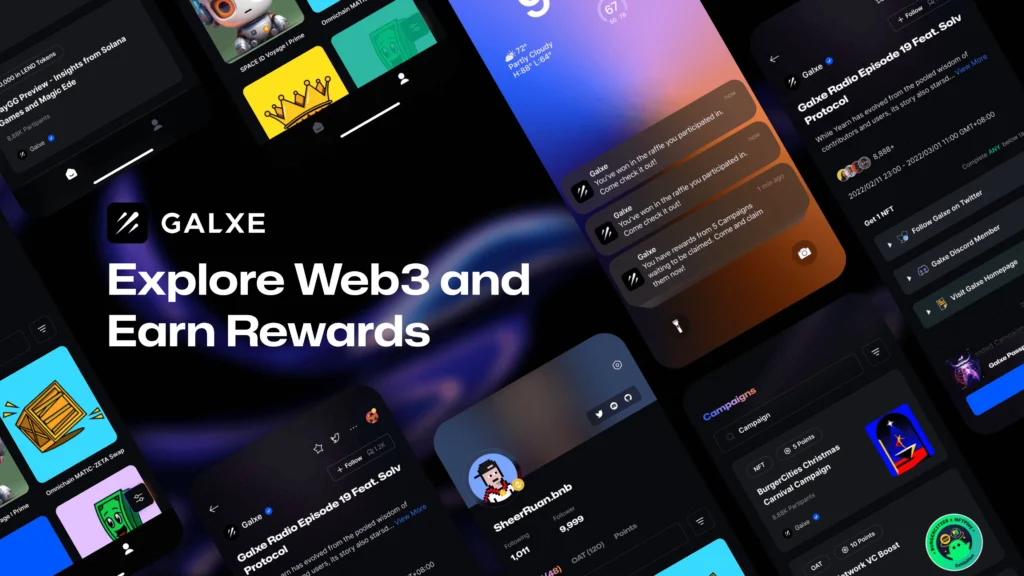
For the uninitiated, "blindly interacting" directly on a chain to qualify for a drop is both inefficient and dangerous. A better starting point is to use mission platforms - they organize the airdrop missions for each project into structured lists that you just need to follow the steps to complete.
Galxe is the largest Web3 task and authentication platform available. You need to sign up for an account, connect to a Web3 wallet (e.g. MetaMask), and then browse campaigns published by projects on the platform.
Each Campaign has specific task requirements - it could be completing a transaction on a chain, following an account on Twitter, joining a Discord server, or providing mobility on a DeFi protocol. Upon completion of a task, you can be rewarded with Galxe points, OATs (on-chain achievement tokens), or outright tokens.
The advantage of Galxe is that the tasks are varied and cover a very wide range of projects, from large L1/L2 public links to small DeFi protocols. The downside is that the rewards for some tasks are very meager and you need to learn to judge which tasks are worth your time.
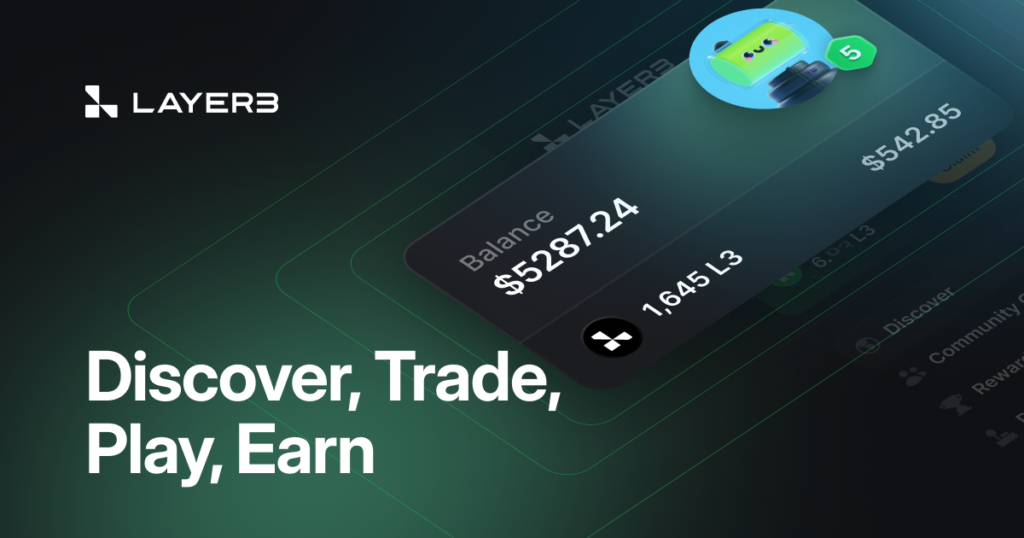
Layer3 is the other main task platform, which is more "game-like" in design than Galxe. It packages tasks as trackable "Quests" that are rewarded with experience, upgrades, and tokens upon completion.
Layer3 is characterized by a relatively high quality of tasks - it tends to work with high-profile projects, and tasks often include actions that have real on-chain significance, such as testnet interactions, cross-chain bridges, DEX trades, or DAO votes. These actions not only help you earn rewards from the Layer3 platform, but also build your on-chain activity history - a key metric that many projects look for when determining airdrop eligibility.
Common Misconceptions: The Five Most Common Mistakes Newbies Make
After learning about the various engagement pipelines, here are five of the most common mistakes newbies make, and avoiding them can save you a lot of time and money!
First, buying platform money at a high price in order to participate in Launchpool.As mentioned earlier. As mentioned earlier, Launchpool announcements tend to push up the short-term price of BNB or OKB. If you buy at a high point, the price of the platform currency itself may fall back and eat into your Launchpool gains completely. The right thing to do is to accumulate platform coins in advance at low levels or only participate with platform coins that you intended to hold for the long term.
Secondly, using multiple wallets to paint airdrops while ignoring the risk of witches.Witch detection in 2026 is very sophisticated. Multiple wallets operating with the same IP address, same time period, and same funding source have a very high probability of being detected. Once you are flagged as a witch, all your wallets will be disqualified from airdrops. If you decide to use multiple addresses, at least make sure that each address has a separate funding source, different interaction times, and different behavioral patterns.
Third, only do the 'minimum' amount of interactionsThe following are some of the reasons why you might want to take advantage of this Many people hear about the possibility of an airdrop in a particular program, so they make the smallest trade or two and wait for the airdrop. But in 2026, airdrops are increasingly designed to reward deeper engagement, rather than "just visiting" users. If you're really interested in a program, it's best to accumulate interactions naturally through daily use, rather than intentionally "brushing" the minimum threshold.
Fourth, ignoring the gas and time costsParticipation in Chain Airdrops requires transactions on multiple chains, each with a Gas fee. Participating in on-chain airdrops requires transactions on multiple chains, each with a Gas fee. If you are doing a lot of small interactions on the EtherNet, the gas fee can be much higher than the value of the airdrop you end up with. It is recommended that you prioritize interactions on chains with low Gas fees, such as Solana, Base, and Arbitrum.
Fifth, believe in the "guaranteed airdrop" paid groups. No one can guarantee the outcome of any airdrop. Many paid groups simply repackage publicly available information and sell it at a high price. All the information you need is available for free on the project's official Discord, Twitter, and the mission platforms mentioned above.
Finally, remember a simple but important principle: the best opportunities in the cryptocurrency market often come not from "chasing every airdrop" but from "getting deeply involved in the projects you're really interested in". The people who got the most out of Monad airdrops didn't do so because they traded with 100 wallets, they did so because they had been using the product seriously since the beta stage. True alpha is not about quantity, it's about depth!
Our Telegram Community Every day, our members share market opportunities and event updates to help you avoid blind betting and quickly adjust your strategy, now you can join us for free~!
Recent Recent Posts:
2026 Latest 6 Free Coin Ring Tools Inventory|Where to find the data on the chain?
2025 Latest OKX Web3 Wallet Tutorial: Does it work? How to create it? A Guide to Safe Operation, Multi-Link Support, and Time-Limited Airdrops
2026 Latest Polymarket Tutorial|How to find out the insiders and realize the high win rate!
2025 New DeFi Beginner's Guide|Teaching you to earn stable money passive income! Introducing 3 popular programs, DeFiLlama tool tutorial!
Disclaimer
The content of this article is for reference only, investors should exercise independent judgment, invest prudently and at their own risk, this article does not provide or attempt to persuade the audience to do trading or investment basis, the content is for sharing purposes only, and should not be regarded as investment advice.It does not represent the views and position of Monsterblockhk.All information and opinions are current as of the date of the judgment. In addition, if a judgment is rendered on aIn this siteAny content related to virtual asset trading platforms that have not yet obtained a license to operate virtual asset trading platforms in Hong Kong, including but not limited to text introductions, pictures, offers, events, etc., are only available to users outside the Hong Kong Special Administrative Region.
According to the Hong Kong Anti-Money Laundering and Counter-Terrorist Financing (Amendment) Ordinance 2022, after June 1, 2023, all centralized virtual asset trading platforms operating in Hong Kong or actively promoting their services to Hong Kong investors will be licensed and regulated by the SFC, and any related unlicensed activities will be a criminal offence. For more information and details of the legislation, users may refer to the SFC website.