

Welcome back to Monsterblockhk's Currency Newsletter. This week the market was once again gripped by fear, with the Extreme Fear Index dropping below a near-monthly low, mainstream currencies weakening across the board, and community pessimism spreading rapidly. Many investors are beginning to believe that the bull market has come to an end. In terms of price performance, BTC once lost the key support, ETH fluctuation intensified, cottage accelerated retracement, and almost all sectors entered the risk aversion mode. The tightening of market liquidity, the collapse of sentiment, and the stagnation of the narrative have caused short-term selling pressure to be infinitely amplified, as if the entire market is being sucked into a bottomless black hole. In this edition of our Weekly Report, we take a quick look back at the week's most critical crypto news, chained data and macro events, and break down the truth behind the panic: Is this really the end of the bull market, or is it just the most typical reshuffle period in the cycle? Where sentiment breaks down, there is often a starting point for the next reversal.
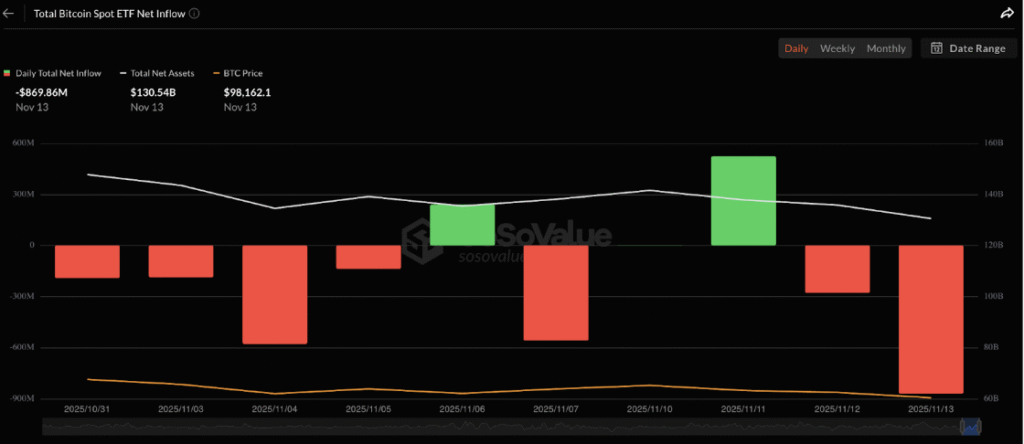
Panic Extremes in ETF Bloodletting: A Window of Opportunity in a Headwind
Over the past week, the Bitcoin spot ETF has shown a clear pattern of capital outflows. The chart shows that daily net inflows have been mostly negative since October 31, and two deep outflows were recorded on November 4 and November 13, the latter amounting to USD -870 million, which is the largest one-day withdrawal this week; the overall assets have also slid slowly from USD145 billion to USD 130.54 billion; and the price of Bitcoin has even dropped below USD 95,000, while the overall structure of the market is still weak. The overall structure of the market remains weak, reflecting the short-term increase in risk aversion and the choice of institutions to reduce their exposure. However, if you look at the cycle and the narrative, the outflows look more like a typical panic-driven late-stage shock than a signal of the end of a bull market. While fear spread through the community and most began to assert the return of the bear market, prices only returned to the middle of the uptrend channel, and ETFs were bleeding out but not in systematic liquidation, and there was still a localized rebound. This kind of rapid "contraction, release and contraction" of capital flows often occurs in the middle and late stages of a bull market. Retail sentiment collapses first, but long term capital is still quietly taking up the slack and sucking in chips from below. For investors who can maintain a forward-looking perspective, such extreme fear provides a more cost-effective position. Personally, I would choose to slowly DCA into large assets during such cycles, and wait for a structural rebound after market sentiment recovers.
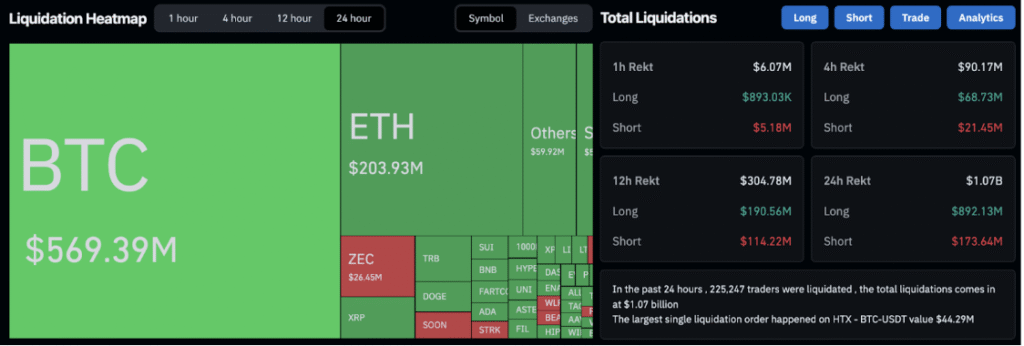
Large liquidation shakes up the market: a hard-landing test in the face of extreme fear
In the past 24 hours, more than $1.07 billion was liquidated in the market, with BTC and ETH becoming the main stressed items, with $569 million and $203 million positions wiped out respectively, while other tokens also evaporated more than $59.92 million in total. From the liquidation rhythm, US$304 million was liquidated within 12 hours, and the 1-hour and 4-hour data also showed obvious cascading bursts of positions. The long position was destroyed by US$892 million in 24 hours, while the short position was only about US$173 million, clearly reflecting the typical end-period characteristics of excessive accumulation of long leverage and concentrated stampede. This kind of "main force leverage clearing" type of sharp killing has pushed market sentiment to the extreme, and the community generally believes that the cycle has reversed and the bear market has returned. However, this kind of deep liquidation is more like a healthy adjustment of mandatory deleveraging rather than a core signal of the end of the bull market. Although the huge bursts of positions have increased volatility, they have not broken the long-term structure of major assets, and the cleansing of long leverage has instead reduced the risk of subsequent contagion and made price movements more flexible. Under extreme fear, investors are prone to misinterpreting short-term shocks as the end of the cycle. However, as seen in the typical pattern of bull markets in the mid-to-late stages, this type of high-intensity liquidation is often a necessary reset of the market - structural funds will be replenished in batches after the volatility expands, and traders need to be more sensitive to risk control at this time. The market is now entering a zone of extreme volatility, where every trade carries a higher degree of uncertainty, and without sound stop-loss and position management, an extreme market can wipe out weekly gains in a matter of minutes.
Most Popular Cryptocurrency Trading Platforms
Hong Kong People's Top Choice for Bitcoin and Ether Trading 》 【2025 Introduction】OSL Registration Benefits, Security, Deposit and Withdrawal, Special Features
Suitable for traditional Hong Kong investors to buy and sell stocks and currencies at the same time. [2025 Introduction] What is Victory Securities? Security, Deposit and Withdrawal, Features
More choices of contract currencies, suitable for buying fake coins in cash. Trade on MEXC and enjoy 500x leverage and many other benefits!
Related Post:
Best Cryptocurrency Trading Platform for Hong Kong Users?2025 Latest Bitcoin Tips for Beginners
2025 Coin Ring Newbie Guide Lazybones|Chained Ecology Entry Guide
2025 Must Read for Newbies! Use these six data indicators to learn how to judge buying opportunities.
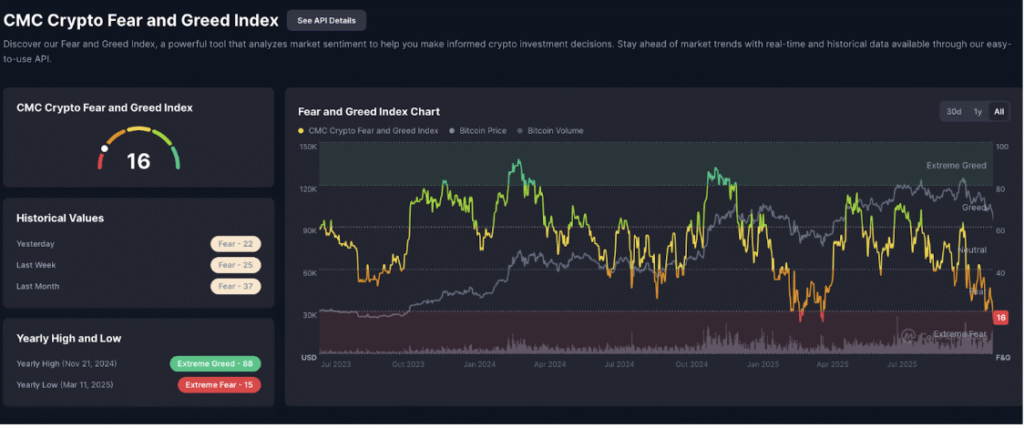
Market Sentiment Bottoms Out: Value Zones Resurface Under Extreme Fear
CMC's latest data shows that the Fear and Greed Index has fallen to 16, all the way down to the extreme fear zone, and the sentiment curve is synchronized with Bitcoin's fall from the highs and the contraction of trading volume. For the year as a whole, the market bottomed at 15 and is now only 1 point higher, which is a cyclical extreme. This emotional sell-off has dragged a large number of high quality assets into valuation depressions, with panic pressure causing prices to fall significantly below their intrinsic value, and the dominant narrative quickly shifting to the pessimistic assumption that the bear market cycle is bound to return. However, for value investors, extreme sentiment is often the best entry point, not the exit signal. Extreme fear means that prices are sentiment-driven and deviating from fundamentals, which is not a good time for a large DCA, but a diversified, small-dollar, long-term position can capture a higher margin of safety at deep discounts and premiums. As a value investor, I tend to enter the market at these sentiment extremes, not because I can accurately predict bottoms, but because history has shown that cyclical DCA when assets fall below their intrinsic value has a much higher long-term payoff than chasing calls or trading on sentiment. When most people believe that a bear market will continue for a long time, it means that the market is at the tail end of a miscalculation, and patience and discipline at this stage are more decisive than judging short-term tops and bottoms.
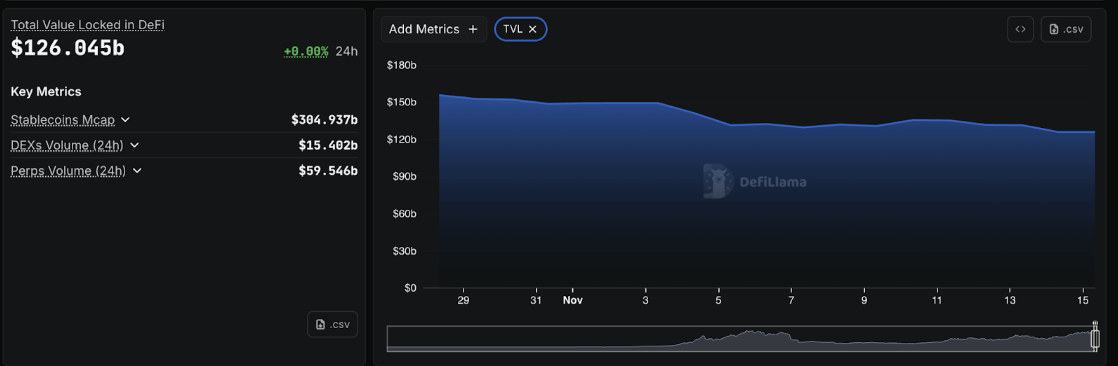
DeFi TVL Slowly Dips, Funding Goes on the Defensive
Over the past two weeks, DeFi Ecology's total locked-up position slipped from nearly US$150 billion to about US$126 billion, with data showing TVL continued to fall from its early November highs to US$126.45 billion on Nov. 15, an overall loss of about 15%. The TVL pattern showed a steady downward slope, with a marked acceleration of the downward trend after Nov. 4, reflecting the rise in risk aversion. With the market capitalization of the stable currency staying near US$304.9 billion and the 24-hour DEX and Perp trading volume not increasing, it is clear that capital is trying to avoid highly leveraged positions. The cooling of TVL is corroborated by an atmosphere of extreme fear: many investors see this as a classic sign of the end of the rotation, rather than a full-blown exhaustion of liquidity. The current downturn is closer to structural deleveraging, and there has been no historic stampede. This makes blue-chip deals such as Aave, Uniswap, Curve and consolidated liquidity deals more attractive over the medium to long term, creating a logical window for staging after valuation compression and exposure convergence. If TVL stabilizes in the US$120bn area, it will provide a base for the next narrative shift, as the market moves from a frenzy of activity to one of quality selection.
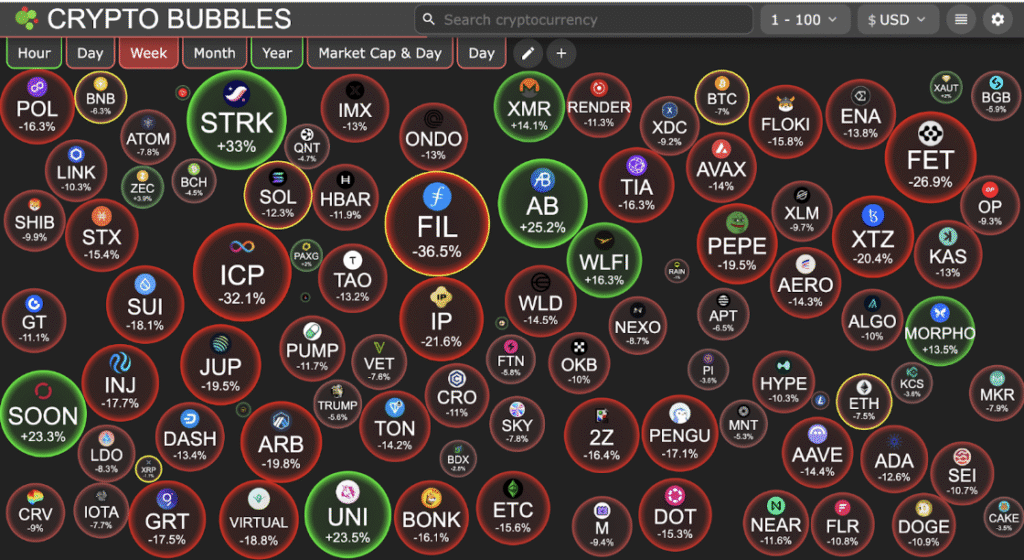
Mainstream and cottage weakened across the board, and the structural strength-to-weakness ratio zoomed up quickly.
According to Crypto Bubbles data, market sentiment turned pessimistic rapidly over the past week, with mainstream and cottage sectors generally falling, showing the typical structure of a "Week of Extreme Fear". Mainstream tokens were under heavy pressure, with FIL plummeting -36.5% and ICP -32.1%, while AI and high beta narratives were also subject to massive sell-offs, such as FET -26.9%, PEPE -19.5%, RENDER -11.3%, JUP -19.5%. The sector is in a sea of red, with declines concentrated in the -10% to -30% area, symbolizing the simultaneous occurrence of leverage cleansing and panic exits. Against this backdrop, only a few tokens are bucking the trend, such as STRK +33%, UNI +23.5%, AB +25.2%, and SOON +23.3%, reflecting that capital is still looking for localized structural opportunities amidst the extreme sentiment. This week's sharp decline was more of an emotional bloodletting than a fundamental collapse. Most of the declines were concentrated in the more leveraged and overly high prior period, which is typical of cyclical panic pullbacks. Once sentiment shifted, the market quickly flipped from FOMO to extreme fear, highlighting the crypto market's high reliance on risk appetite. Historically, extreme panic phases are often paralleled by DCA opportunities, especially for blue chip assets with liquidity and narrative basis such as BTC, ETH and SOL. If you invest in small tokens during a panic, you may get a high double return, but the risk is extremely high and volatility is huge, so it is not a recommended strategy unless you have strong research and risk control skills. When market sentiment is distorted and prices are out of line with intrinsic value, it is a window of opportunity for disciplined investors to accumulate quality positions. This wave of fear reminds us that the core of crypto has never been perfect forecasting, but rather the discipline of going against the grain when sentiment switches.

Hackers are everywhere, online assets require constant vigilance
The Balancer decentralized protocol was recently attacked, with at least $128 million in funds stolen across a variety of tokens including WETH, osETH and wstETH. Data shows that the largest single transfer was $70.9 million to a new wallet, and the incident lasted several hours, causing the platform's TVL to drop from $441 million to $270 million. Initial analysis indicates that the vulnerability originated from a faulty access control check in the V2 liquidity pool smart contract, which was used by an attacker to bypass security mechanisms when creating a new pool and transfer funds in a short period of time. The incident triggered the withdrawal of local and cross-chain funds, and some long-dormant large investors also took immediate action, demonstrating the market's high sensitivity to security risks. This incident underscores the ubiquity of DeFi's security risk, which, even with a single loss of $128 million, represents only a small fraction of the overall market of approximately $80 billion in online assets. Historically, every large attack can have a knock-on effect, affecting liquidity and user confidence. For investors, relying on platform reputation or smart contract audits alone is not enough to protect their assets; they need to continuously monitor contract risk, diversify their investments and divest in a timely manner. The Balancer attack has once again reminded market participants that while pursuing revenue, they should be alert to the potential vulnerabilities of online assets and hacking behavior, and that prudent operation is the only way to survive in the medium to long term.
Uniswap Fee Switches on the Horizon: Token Destruction Reshapes Value
Uniswap's latest proposal was initiated by founder Hayden himself, and centers on measures such as a fee switch, the immediate destruction of 100 million UNI tokens, and the merger of Labs and Foundation. The proposal has suffered seven setbacks in the past two years, but the market forecasts a 79% probability of passage, indicating a significant increase in community support. 2025 fees for the V2 and V3 agreements total $503 million and $671 million, respectively, with the EtherHub alone contributing $320 million and $381 million. After the implementation of the proposal, the fee income from the agreement is expected to reach US$114 million. Combined with the destruction of tokens, the circulating supply will be reduced by 16%, which will fundamentally change the economics of tokens, and enhance the attractiveness of UNI holdings and value support. This ingenious destruction mechanism not only directly increases token scarcity, but also creates a sustainable revenue model for Uniswap. Based on annualized revenues of $130 million, it is projected that approximately 2.5% of liquidity could be bought back and destroyed annually, resulting in a UNI P/E ratio of approximately 40x, which still has growth potential. However, the proposed reallocation of LP proceeds may reduce 10% to 25%, which may affect short-term slippage and trading volume if liquidity is diverted to competitor Aerodrome. Despite market volatility and execution detail uncertainty, the combination of fee switching and token destruction provides UNI with a clear value prop that allows Uniswap to maintain its strategic advantage and long-term optimistic outlook in a highly competitive Base chain.

Aave Accelerates Consumerization: Acquires Stable Finance to Expand User Experience
Aave Labs acquired the Stable Finance team, bringing the latter's engineers into Aave, with founder Mario Baxter Cabrera as Director of Product. Stable Finance developed an iOS app that offers a simplified, high-yield savings account with low volatility through a decentralized lending marketplace, attracting deposits of $38 billion. After the acquisition, the Stable platform will be phased out and the team will shift its focus to building a new DeFi product for mainstream users by abstracting the complexity of the DeFi operation and addressing the pain point of high threshold of consumers. The acquisition enables Aave to transform its agreement from a purely specialized lending tool to a consumer finance platform for the general public, expanding its user base and increasing the stickiness of daily usage. Combined with Aave v3's recent performance of surpassing $26.1 billion in TVL and $2-4 million in daily fees, the addition of the Stable team is expected to accelerate the consumerization path, extend the interest income, lending and savings functions, and create sustainable growth potential for the agreement, further strengthening Aave's leading position in the DeFi ecosystem.
Ethernet Moves Toward AI-Native Payments: ERC-8004 and x402 Become Core Pillars
The Ethernet Foundation's dAI team announced its 2026 roadmap, focusing on two major protocols, ERC-8004 and x402, to build a decentralized AI agent infrastructure for authentication, reputation evaluation, and payment settlement. eRC-8004 provides three registries for identity, reputation, and authentication, and has been adopted by more than 150 open-source projects, with a community of more than 1,000 developers. Gartner predicts that a quarter of all large enterprises will deploy AI agent teams by 2028. x402, designed by Coinbase, writes payment instructions into the HTTP status code, enabling AI agents to automatically complete payments up the chain with proof of payment, supporting micropayments and long-tailed business models, and has already generated 932,000 transactions. This layout means that Ethernet is no longer just a platform for smart contracts, but a trustless AI orchestration layer that carries the flow of funds, behavior verification and payment settlement, providing consumers and businesses with the ability to interact with each other in real-time and with trust. Combined with the 90% reduction in data costs after the Blob upgrade and the increase in DeFi TVL from $83.2 billion to $114.9 billion, ERC-8004 and x402 can accelerate the popularization of AI agents in financial, payment and application scenarios, and build a complete on-chain business ecosystem. In the future, whoever is the first to map models, capital and reputation to a single open chain will lead the next blockchain x AI growth curve.
Filecoin Adds DePIN Feature, Low Chip Accumulation Helps New Narrative
Filecoin price surged by about 100% early last week, breaking through the $3.2 key average, and at the same time, the official announcement of the new website Chained Cloud and the opening of the waiting list. The launch of FVM allows programmable on-chain storage, empowering data management and computation capabilities, and directly taking over the two major needs of AI model training data and DePIN sensing data. This move upgraded FIL from a pure decentralized hard drive to an on-chain cloud base, significantly enhancing its ecological potential. Technically, we are watching the $4 mark in the short term, but the value driver has shifted from external speculation to actual application scenarios. This wave of upward movement also reflects the market maker's effect after accumulating sufficient chips at the low level. The steady increase in FIL volume during the past consolidation period shows that core capital has sufficient liquidity to drive the price upward, and the combination of AI and DePIN applications in FVM provides a sustainable value-added scenario for position holders, boosting market confidence and liquidity stickiness. In the future, if the ecosystem continues to absorb new applications, FIL is expected to form a steady upward trend and become a model case for the integration of on-chain storage and cloud computing.
Near Intents Takes Off: AI Narrative Currencies Get a Chance to Bounce Back
Near Protocol's innovative Near Intents feature has surpassed $4 billion in transaction volume within a year of launch, with TVL climbing to $54 million, making it the core engine of ecological revitalization. Adopting a graphic-driven framework, the feature supports more than a dozen chains, including Ethereum, Solana, and Bitcoin L2, with an average settlement time of 2 to 3 seconds, and provides native support for AI agents and automated DeFi strategies. Its developer-friendly features have also lowered the integration barrier significantly, achieving exponential growth in multi-chain transaction volume in just one year, demonstrating NEAR's technological advantages and market appeal in the field of AI and cross-chain applications. The utility of Near Intents and ecological cooperation directly drive the price of tokens upward, in the last week NEAR even soared 27%, the price of the coin reached $2.77, the market capitalization of about 3.53 billion U.S. dollars. the rapid growth of Intents attracted a number of Solvers and partners to join the formation of a stable inflow of capital and network effect, strengthening NEAR in the AI narrative coin The rapid growth of Intents has attracted many Solvers and partners to join, creating a stable capital inflow and network effect, strengthening NEAR's position in the AI narrative currency. With the implementation of technology and ecological expansion, NEAR is expected to continue to attract capital and applications, providing a reliable foundation for long-term value support.
Macro News
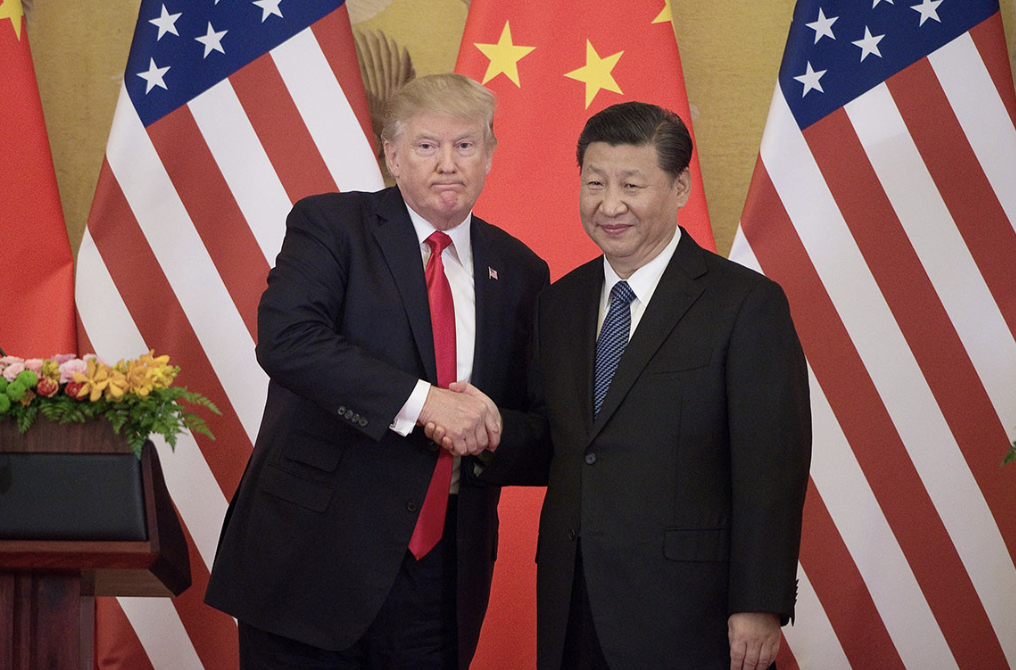
China-US situation warms up: Double-strength easing boosts market risk appetite
U.S. President Donald Trump's meeting with Xi Jinping in Busan announced a number of trade concessions that signaled a real easing of relations between the world's two largest economies. China agreed to suspend restrictions on rare earth exports, while the U.S. lowered tariffs on some Chinese imports and China pledged to buy large quantities of U.S. soybeans and agricultural products. Trump described the outcome of the talks as 12 out of 12, reflecting positive signals on the political and trade fronts. The market reacted quickly to the news, with Bitcoin price recovering from its lows and ending a short period of consolidation, while mainstream tokens also rebounded in tandem with the return of risk sentiment. The US-China meeting has been a key turning point in recent market psychology. As trade friction cools and demand for risk aversion declines, liquidity pressures on the US dollar have eased, with capital flowing back into asset classes with growth potential. Historical experience has shown that capital tends to return to risky markets quickly after geopolitical risks subside, such as when Bitcoin rallied to nearly 20% in three weeks when a trade deal was reached in 2019, and the current market structure has similar conditions: volatility is falling, the macro environment is stable, and policy expectations are turning positive. As the US-China economic and trade talks continue to progress, if a formal agreement can be signed, the market's risk appetite is expected to expand further, kick-starting the next phase of crypto's uptrend.

U.S. Government Shutdown Officially Ends: Policy Uncertainty Lifted
The U.S. government shutdown officially came to an end on November 12, when President Donald Trump signed legislation to end the longest shutdown in history, which lasted 43 days, bringing a clear turning point for battered federal services and market confidence. According to Reuters, after the House of Representatives passed the bill by a vote of 222 to 209, Trump completed his signature late that night, meaning that hundreds of thousands of federal workers who were forced to stop work due to the shutdown will return to work the next day, and the airport air traffic control system, food assistance, and the release of key government statistics will also gradually resume. After losing more than 0.1 percentage points of U.S. GDP each week during the shutdown, which also interfered with air traffic control pressures and household spending, market expectations for a recovery in liquidity and activity are rapidly rising as the political stalemate is lifted. The greatest significance of the end of the shutdown lies in the dissipation of policy uncertainty, which provides an immediate psychological recovery effect for risky assets. After the government resumes full operation, the normal release of economic data will provide investors with transparent benchmarks again, improving the panic risk aversion in the previous information vacuum. From a macro perspective, when federal spending restarts and consumer confidence stabilizes, the market will naturally turn from conservative to positive, resulting in a short-term improvement in liquidity and a recovery in risk appetite. After the policy risk is lifted, the pressure on risky assets is significantly reduced, and the market is standing at the starting point of declining macro uncertainty and accelerating sentiment recovery.

Wall Street effect kicks in: Mainstream banks may follow suit on digital asset financing
JPMorgan Chase has announced plans to allow institutional customers to borrow against Bitcoin (BTC) and Ethereum (ETH) as collateral by the end of 2025, marking a major breakthrough in the acceptance of crypto assets by traditional finance. The move by JPMorgan, a global bank with $4 trillion in assets under management, not only expands its crypto integration footprint, but also follows up on its June partnership with BlackRock to test crypto-collateralized lending. The program will reportedly secure the tokens through a third-party custodian and will be rolled out globally. Historically, whenever JPMorgan Chase has taken the lead in adopting an innovative financial model, other Wall Street banks such as Goldman Sachs and Morgan Stanley have often followed suit within a few months, creating a chain reaction that has driven structural change in the overall market. The strategic implications of this move are far-reaching. When mainstream financial institutions begin to accept BTC and ETH as compliant collateral, it means that crypto assets are moving from being speculative commodities to being institutionalized as an asset class. This not only has the potential to increase market liquidity and leverage, but also opens the door to a new era of Tokenized Finance. If Wall Street banks follow suit, the boundaries between DeFi and TradFi will be further blurred, driving the efficient allocation of capital along the chain. Meanwhile, regulators such as the CFTC have begun to promote USDT and USDC as collateral in the derivatives market, signaling that crypto assets will be fully integrated into the mainstream financial system in the future. JPMorgan Chase's pioneering action is likely to be the beginning of the next round of financial infrastructure chaining.
Related Post:
Best Cryptocurrency Trading Platform for Hong Kong Users?2025 Latest Bitcoin Tips for Beginners
2025 Coin Ring Newbie Guide Lazybones|Chained Ecology Entry Guide
2025 Must Read for Newbies! Use these six data indicators to learn how to judge buying opportunities.
Chained Data Analysis:
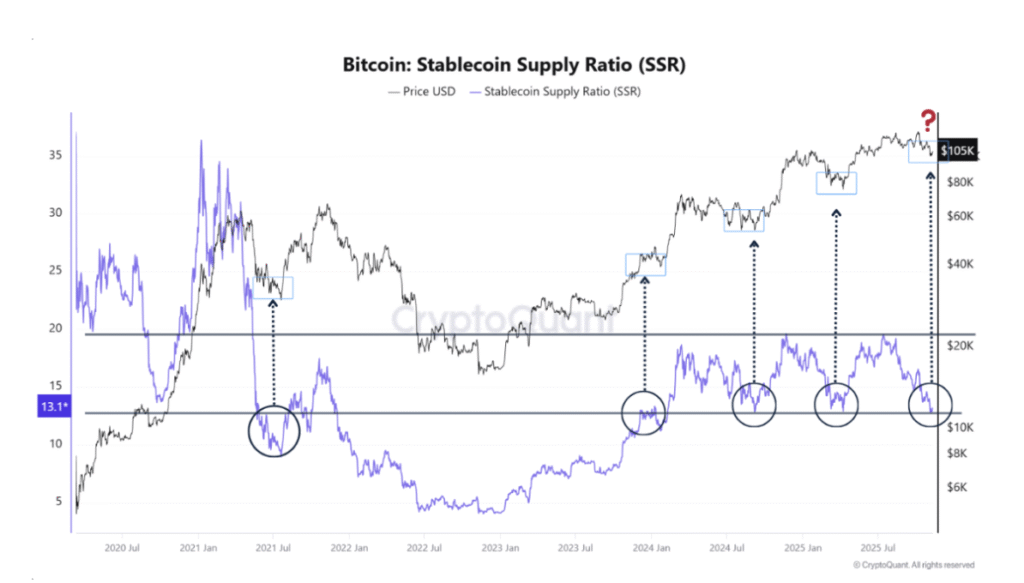
Stabilized Currency Liquidity Return: A Potential Precursor to a Wave 5 Outbreak
The Stabilization Supply Ratio (SSR) has recently dipped again to an all-time low of around 13, indicating a significant expansion of the Stabilization Pool relative to Bitcoin's market capitalization. As can be seen from the chart, each dip in the SSR since 2020 has coincided with the emergence of a structural bottom for Bitcoin in mid-2021, late 2023 and early 2024. At these times, the market tends to be in a phase of low volume and declining volatility, followed by a strong rebound in price driven by the return of capital. At this stage, Bitcoin is trading sideways at around US$105,000, while stable currency reserves continue to rise, replicating the liquidity pattern of the four previous bull markets, suggesting that the market is building up energy and waiting for a directional breakout. The SSR pullback implies that potential purchasing power has yet to be unleashed, and while the market is weak in the short term, it is structurally closer to an energy reset in the later part of the cycle. If history repeats itself, this will likely precipitate the fifth wave of the cycle, the final period of acceleration from stabilized liquidity to cash demand. At this stage, investor sentiment is generally cautious and subdued, yet the subsequent liquidity shift is more likely to trigger an unexpected upswing precisely because of the lack of a clear frenzy. On the other hand, if the SSR fails to stay at the bottom and is forced to move up, it would mean that capital momentum is drying up and prices may be reevaluated. The market is now at the threshold of a dilemma, and the next move will reveal whether it is a potential unleashing spree or the beginning of a structural pullback.
Loss of key support: Breakdown of short-term cost line triggers structural retracement
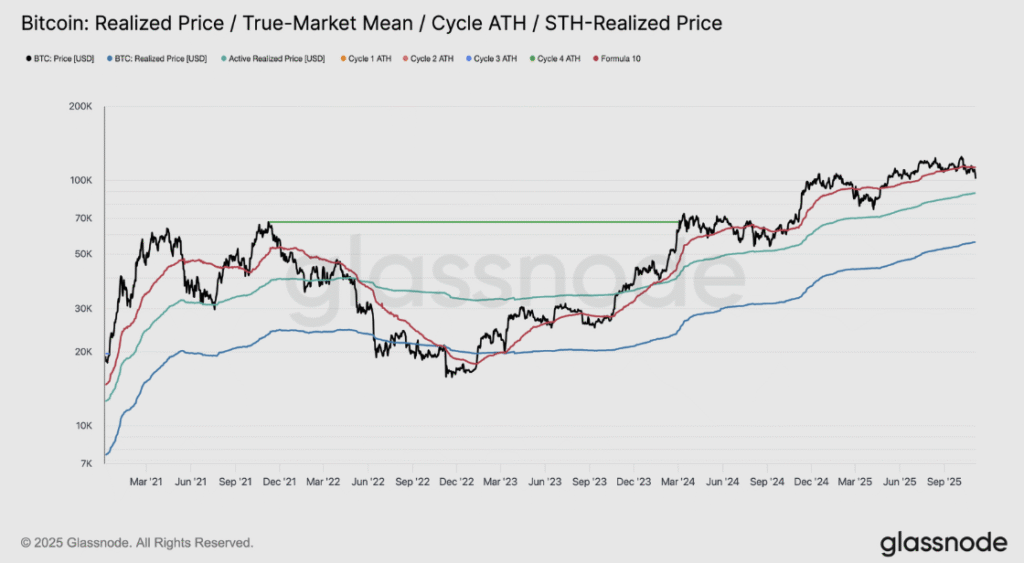
In the last two weeks, Bitcoin has clearly failed to hold the STH Realized Price of ~US$112,500, with the price falling from the top of the range right back down to ~US$100,000, a loss of 11%. Looking at Glassnode's Realized Price structure, the market is currently trading between the short-term and intermediate-term cost zones, indicating weakening short-term bullish momentum, while deeper below is the important dynamic support of the Active Realized Price of ~US$88,500. Looking at Glassnode's Realized Price structure, the market is currently falling between the short and intermediate term cost bands, suggesting a weakening of short term long term momentum, with deeper and more important dynamic support below at the Active Realized Price of $88,500. Historically, when discounts have occurred at similar levels (e.g. mid-2021 and early 2022 bear market), prices have been known to retest further into this cost band to re-establish support. Therefore, the loss of 112.5K is not a mere technical correction, but rather a stage signal of short-term profit-taking and a weakening market rhythm. However, this does not mean a full-blown bear market. Unlike past cycles, there has not been a major withdrawal of medium- and long-term capital (e.g., ETFs and institutional positions), and the cost curve for long-term holders remains steadily upward, suggesting that the market structure has not been disrupted. In other words, this phase is more likely to be a low volatility correction rather than a trend reversal. Against the backdrop of a general correction in the sector and a fear-based sentiment, capital will no longer flow in a generalized upward direction, but rather in sub-segments with policy imagery, storylines and clear business models. For investors, the focus is not on chasing a rebound, but on identifying strong tracks with sustained capital commitments, and patiently accumulating positions at low discounts in the market. If we look at past cycles, true trend reversals are often accomplished quietly in the midst of fear and calm allocations, rather than at the height of sentiment.
Emotional Frenzy: The Watershed Between Upsurge and Turnaround
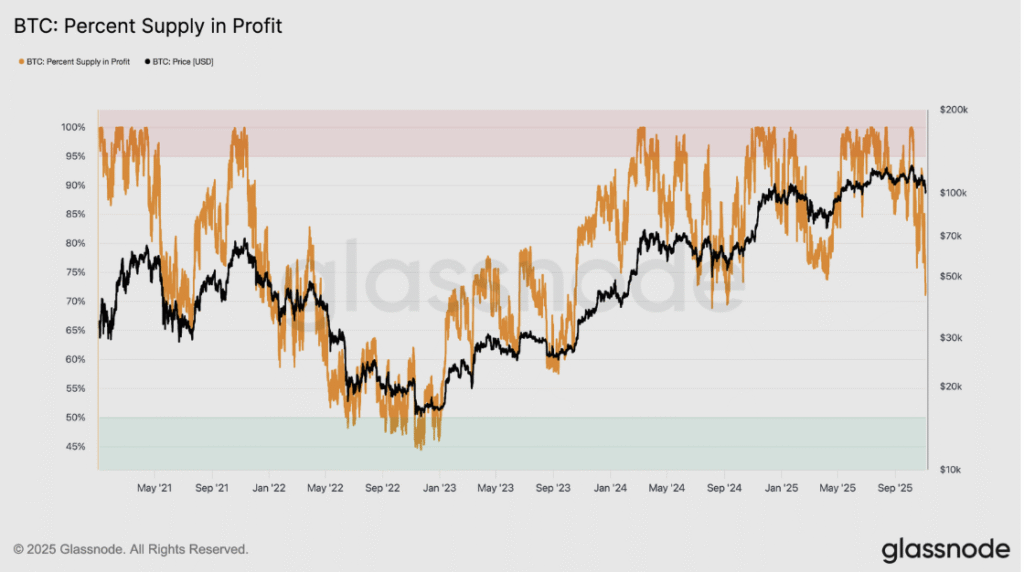
Bitcoin's recent pullback to about 100K has brought the overall supply of profits back down to about 70%, which is right in the middle of the 70% to 90% equilibrium zone in past cycles. As can be seen from the chart, when the profit-taking supply approaches 90%, the market tends to be under pressure to top out at some stage; on the other hand, when it falls below the 70% threshold, the market tends to turn to a deeper liquidation and re-accumulation period. The structure at this stage is similar to that of June last year and February this year, with prices oscillating in the mid-axis region, the direction of which is undetermined, and the market at a critical point between a rebound and an accelerated downturn. With no significant outflows from institutions and ETFs, current volatility is significantly more subdued compared to the previous cycle, suggesting that the sell-off has not evolved into a full-blown capitulation and that the market still retains the potential for an upward re-start. If demand recovers in the high-cost zone, the market could pull back from current levels to short-term cost benchmarks and even push for a new round of accelerated upward movement. Conversely, if profit-taking supply falls below 70% and continues to expand, the market will enter a deeper downtrend cycle, and enter a period of long-term re-pricing and bargain-settlement. Before there is an obvious emotional frenzy and large-scale retail price chasing, this cycle is more likely to still have unreleased upward momentum, the key lies in the next capital preference and plate allocation ability, rather than blindly chasing prices or panic out of the market.
Short-term volatility is expanding sharply, the main force is at the end of the fund-raising period.
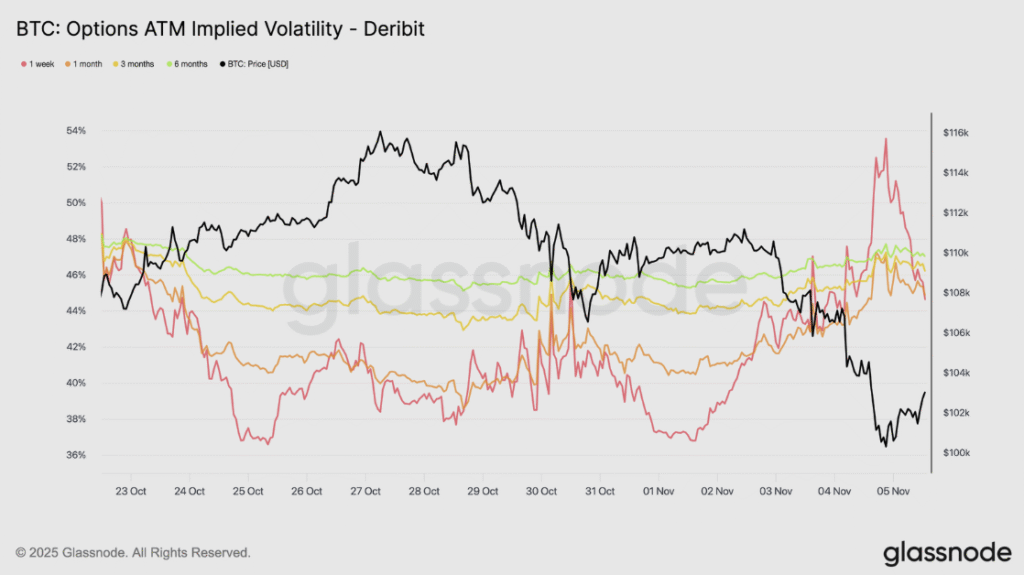
Short-term implied volatility (IV) rose sharply after Bitcoin fell below US$110,000, with one-week IV surging from 46% to 54%, reflecting panic pricing at the beginning of the pullback. Long-term volatility has also risen, with one-month and six-month periods up by 4 and 1.5 volatility points respectively, indicating that not only are short-term traders increasing their demand for risk aversion, but also medium- and long-term funds are beginning to reassess potential risks. As seen in the chart, when Bitcoin fell rapidly at the end of October, the volatility of all maturities was clearly off the lows, showing the classic inverse relationship between price and volatility. This structure demonstrates that the market has entered a highly sensitive phase, with each sharp price drop triggering sharp option pricing swings, in line with the volatility of sentiment in a typical risk-on environment. Sharp rise and fall of volatility is actually a signal for the main force to absorb chips. When the short-term IV rises and then falls, it means that panic orders are cleared out and chips are re-concentrated in the hands of large investors. Recently, high-capitalization tokens such as Uniswap have risen more than 50% in a single day, reflecting the rapid rotation of capital in a highly volatile environment, which is a typical overheated characteristic of a risk-averse market. The sharp volatility at this stage is not a reversal of trend, but a necessary stage in the process of price changing hands and redistribution. As short-term traders are forced out of the market and the majors finish sucking in the lows, market supply will contract significantly. The key trigger point for a renewed uptrend will be when volatility subsides and sentiment stabilizes.
Long-term positions loosened: profit-taking pressure surfaced
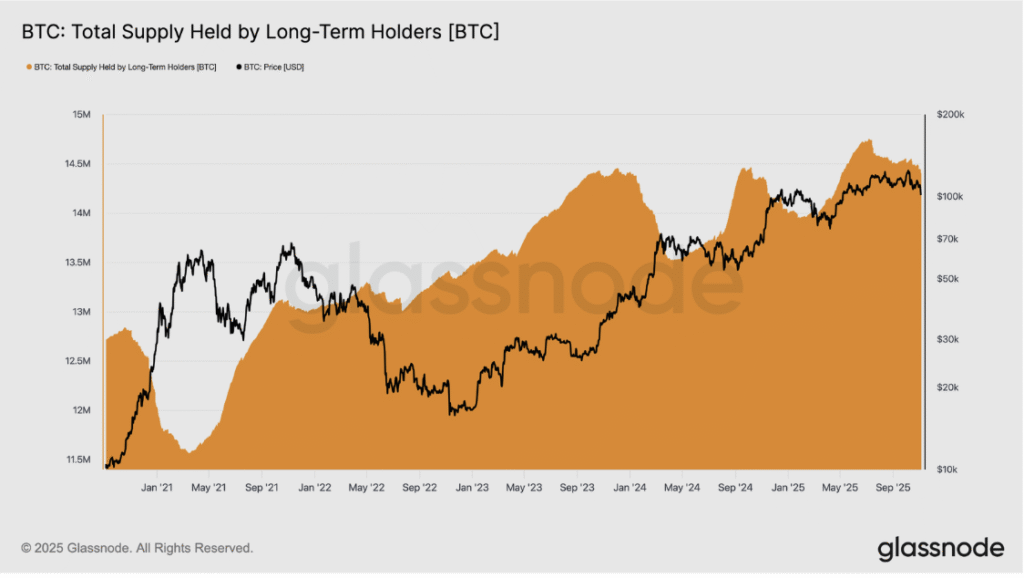
According to the Glassnode chart, long-term positions have been rising since 2023, gradually forming a pattern of highly contracting supply, but have started to fall back significantly after hitting a new high in 2025, with a reduction of around 300,000 pieces in the last few months, closely synchronized with the rhythm of the sideways consolidation of the price from its high area. It is worth noting that this round of reductions is not a typical top-of-the-cycle momentum sell-off, but rather a structural profit-taking realization against a backdrop of a lack of new capital inflows and a stagnant narrative, suggesting that early accumulators are becoming more sensitive to the prevailing risk-reward ratio. In other words, although the market has not suffered a macro panic or sudden shock, the patience of long-term chips is fading, reflecting the fact that investors in the central equilibrium zone have not formed a coherent directional expectation of the subsequent trend. Long-term holders tend to reduce their positions as the trend matures, and a retreat in their positions usually signals a natural digestion of sentiment and momentum. The slow, panic-free nature of this selling pressure suggests that the market is under pressure but not yet in capitulation; however, if this mild selling pressure continues and there is a lack of new capital to take it on, the sideways range will be stretched out and could move lower to re-attract marginal buying. On the other hand, if there is a subsequent inflow of capital and a revitalization of the Bitcoin narrative, the redistribution of chips at this stage will in turn enhance the efficiency of the next uptrend and make it more sustainable. Therefore, the market is currently in a transitional stage between the gradual exit of profit-takers and the new consensus yet to be formed, and the key to the trend will depend on whether the demand side strengthens again.
Conclusion
Most Popular Cryptocurrency Trading Platforms
Hong Kong People's Top Choice for Bitcoin and Ether Trading 》 【2025 Introduction】OSL Registration Benefits, Security, Deposit and Withdrawal, Special Features
Suitable for traditional Hong Kong investors to buy and sell stocks and currencies at the same time. [2025 Introduction] What is Victory Securities? Security, Deposit and Withdrawal, Features
More choices of contract currencies, suitable for buying fake coins in cash. Trade on MEXC and enjoy 500x leverage and many other benefits!
Related Post:
Best Cryptocurrency Trading Platform for Hong Kong Users?2025 Latest Bitcoin Tips for Beginners
2025 Coin Ring Newbie Guide Lazybones|Chained Ecology Entry Guide
2025 Must Read for Newbies! Use these six data indicators to learn how to judge buying opportunities.

Disclaimer
The content of this article is for reference only, investors should exercise independent judgment, invest prudently and at their own risk, this article does not provide or attempt to persuade the audience to do trading or investment basis, the content is for sharing purposes only, and should not be regarded as investment advice.It does not represent the views and position of Monsterblockhk.All information and opinions are current as of the date of the judgment. In addition, if a judgment is rendered on aIn this siteAny content related to virtual asset trading platforms that have not yet obtained a license to operate virtual asset trading platforms in Hong Kong, including but not limited to text introductions, pictures, offers, events, etc., are only available to users outside the Hong Kong Special Administrative Region.
According to the Hong Kong Anti-Money Laundering and Counter-Terrorist Financing (Amendment) Ordinance 2022, after June 1, 2023, all centralized virtual asset trading platforms operating in Hong Kong or actively promoting their services to Hong Kong investors will be licensed and regulated by the SFC, and any related unlicensed activities will be a criminal offence. For more information and details of the legislation, users may refer to the SFC website.