

MANTRA is an upstart labeled "RWA (Real World Assets)" - in short, "Real World Assets on a Chain". Whether it's real estate, bonds, or state-issued asset securities, they can be packaged and put on a chain. However, on April 13, MANTRA, the RWA project featuring "real assets on the chain", suffered a catastrophic plunge, with its token $OM dropping from $6.35.37 to $0.37 in just one day, plunging more than 90%, triggering an uproar in the market. Many investors called out "OM to OMG", and some even questioned: even with the endorsement of "Real Assets", can't it save this wave of zeroing?
This incident quickly drew attention and made the market rethink the real value of the RWA (Real World Assets) circuit: can uploading real assets such as real estate, bonds and accounts receivable really bring the next wave of growth in the crypto world? Or is it just another leek-cutting scheme under a glamorous package? In this article, we will start from the basic principles of RWA and analyze three representative projects to help you understand the potential and risks of RWA.
Written By Samson
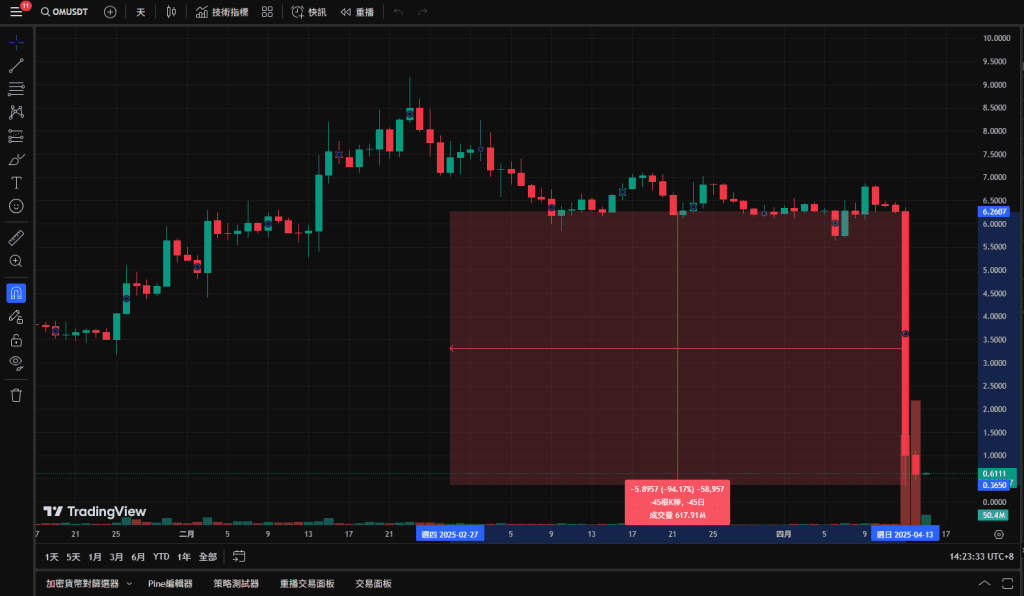
This incident quickly drew attention and made the market rethink the real value of the RWA (Real World Assets) circuit: can uploading real assets such as real estate, bonds and accounts receivable really bring the next wave of growth in the crypto world? Or is it just another leek-cutting scheme under a glamorous package? In this article, we will start from the basic principles of RWA and analyze three representative projects to help you understand the potential and risks of RWA.
What is RWA?
"RWA stands for Real World Assets, which means Real World Assets. Simply put, it means that all kinds of assets in the real world (real estate, bonds, gold...you name it) can be moved onto the blockchain through tokenization. Imagine turning your home's real estate certificate into an NFT on Ether, or splitting a government bond into digital tokens that can be traded online at any time - that's the basic concept of RWA. Through this tokenization technology, the value of traditional financial markets can be injected into the blockchain.
As interest rates in the DeFi world have moved closer to those of traditional finance, smart capital has begun to look for new sources of income. Bringing in real assets" became a popular idea: real-world assets are usually backed by stable yields and credit, such as real estate rents, interest on government bonds, and long-term gold guarantees.
By bringing these benefits to the blockchain, DeFi investors have the opportunity to receive more stable returns that are insulated from the volatility of the pure crypto market. Meanwhile, for asset holders, RWA can lower the financing barrier - small business owners can package their accounts receivable in tokens to borrow money, instead of having to turn to the bank; homeowners may be able to pledge NFT-enabled deeds to finance their homes on the DeFi platform.
As a result, RWAs are seen as a key bridge between crypto and traditional finance, and even Larry Fink, CEO of BlackRock, the world's largest asset management firm, has hailed tokenization of assets as the "next step" in the financial industry.
Next, we'll take a few of the most representative RWA projects as examples, and discuss with you rationally how to play RWA projects, what are the highlights, and what are the potholes.
Quick summary: RWA refers to the conversion of real-world assets (e.g. real estate, bonds, gold, etc.) into tradable digital tokens through blockchain technology. This not only enables DeFi to connect with traditional financial assets, but also provides investors with a more stable, low volatility revenue stream, making it a new trend in the crypto market.
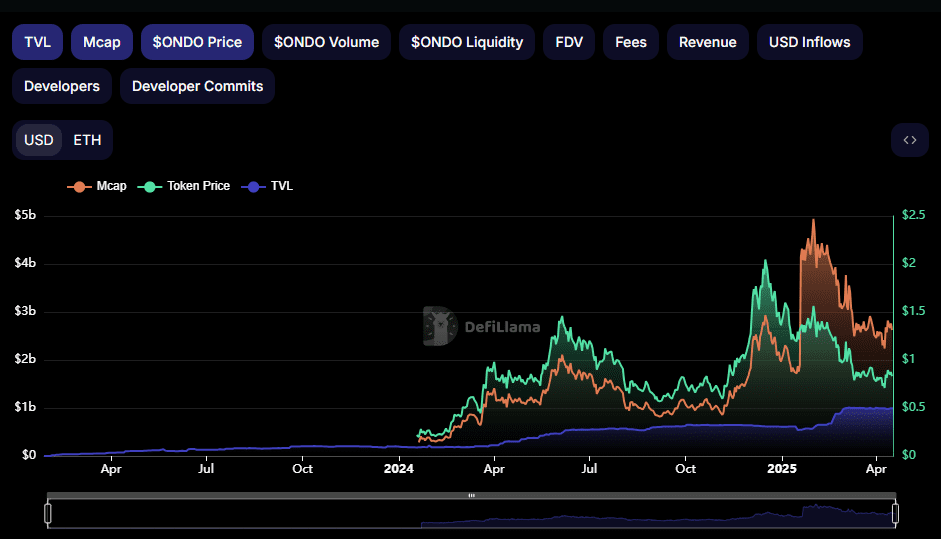
Ondo Finance: A Compliant and Strict Asset Bridge with a Focus on U.S. Bond Yield
Ondo Finance is an RWA platform launching in 2021, founded by ex-Wall Streeters with the goal of creating an institutional platform that allows traditional market assets to be linked. Ondo focuses on the tokenization of highly creditworthy and liquid assets, and is currently best known for linking U.S. Treasury securities (U.S. Bonds) to money market funds: for example, its USDY is a yield note backed by a short-term U.S. Bond and a bank deposit. For example, USDY is a yield note backed by short-term U.S. Treasuries and bank deposits, while OUSG (Ondo Short-Term US Government Bond Fund) is linked to a short-term U.S. bond fund. In short, Ondo puts a digital veneer on solid traditional assets and offers investors in the chain a shortcut to a 4-5% annualized "risk-free" interest rate (which is quite attractive compared to the DeFi interest rate winter at the time).
Ondo has a strong focus on regulatory compliance. It works with regulated trusts, such as Ankura Trust, which holds the assets in custody and conducts daily audit reports to ensure that the tokens are backed by real assets. Investors are also required to go through a KYC/AML process to access these restricted tokens, adding a layer of traditional financial compliance protection to DeFi. Ondo has also developed its own lending protocol, Flux Finance, which allows users to collateralize RWA tokens such as OUSG to borrow money, but adopts a whitelist licensing system for such collateral to ensure that only qualified people can participate and to avoid illegal securities issuance.
One interesting aspect of Ondo's technical mechanism is the provision of tiered income products. For example, in some structured products, a tiered tranche design is introduced, similar to that of traditional finance: investors can choose between a low-risk tranche with a fixed income or a high-risk tranche with a variable income, to suit different risk appetites. This allows both conservative and aggressive investors to get what they want from the same pool, somewhat like the preferred/sub-prime tranche in traditional financial products.
The Ondo platform has its own governance token, $ONDO. $ONDO holders can vote on protocol upgrades and parameter adjustments, however, $ONDO itself does not directly provide interest or guaranteed returns to holders, but is more of a bet on the future development of the platform. $ONDO's current revenues come from traditional financial rates such as product management fees, and its long-term value depends on the ability of the Ondo platform to scale and generate stable cash flow support. $ONDO's long-term value depends on whether Ondo's platform can expand on a large scale and generate stable cash flow to support it. In terms of risk, Ondo faces regulatory uncertainty: if the regulator gives a red light to "on-chain treasury bonds", Ondo's business will be greatly affected. Also, even with a strong asset, the $ONDO currency price can go up and down depending on market sentiment - after all, it's a project token, not a national bond.
Quick summary: Ondo Finance is a platform focused on tokenizing high-credit, traditional financial assets such as U.S. Treasuries, with a focus on solid yields and a strict compliance process. It manages assets through regulatory-qualified custodians and offers a tiered income structure to satisfy investors with different risk appetites. However, it is important to be aware of the business risks that may arise from changes in the regulatory environment.
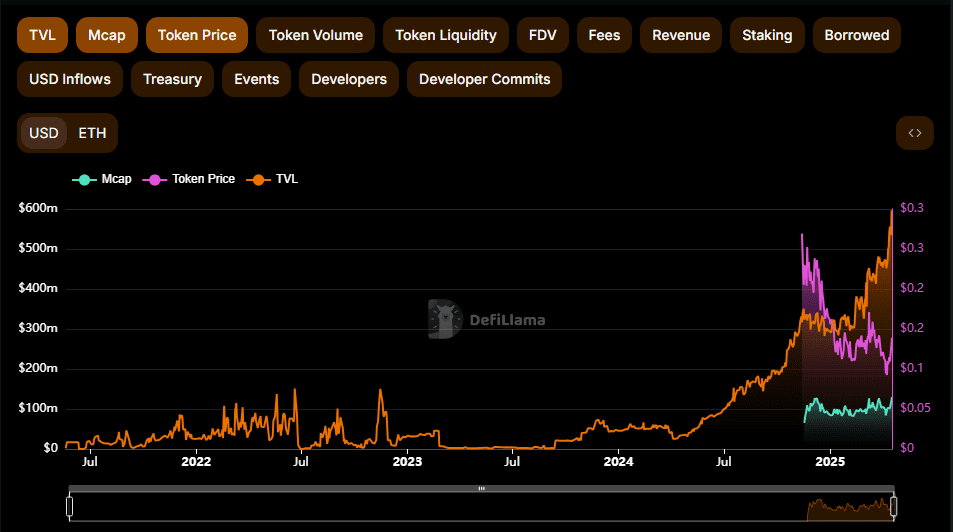
Maple Finance: Institutional Lending Bridge, the Double Edge of DeFi Credit
Maple Finance is another "traditional + blockchain" pioneer in the DeFi industry. It is positioned as a marketplace for on-chain institutional credit, and was created specifically for institutional-grade lending. Simply put, instead of requiring excess collateral like Aave, Maple allows trusted borrowers to borrow money with low or no collateral - similar to traditional bank loans, only on-chain. Its core participants are a group of organizations called Pool Delegates, who create the pool, screen borrowers and set the terms of the loan. Investors can deposit stable currencies such as USDC into these pools to earn interest, and the Pool Delegate will help you lend the money to organizations in need of funds.
Maple initially provided working capital loans to companies in the crypto industry (e.g., market makers, trading firms), and has recently ventured into RWAs, such as launching cash management pools for investing in U.S. Treasury securities, which allow DAOs and qualified investors to buy U.S. debt. In terms of regulatory compliance, Maple has taken a pragmatic approach, and in 2023 it applied for a SEC Reg D 506(c) exemption for its US bond pools, allowing qualified US investors to participate in its Treasury products (which were previously unavailable to US nationals due to securities law restrictions). In other words, Maple is attempting to legally offer security-based token investments under the private placement exemption.
Of course, most of the lending business is still decentralized, borrowers and lenders usually have to go through KYC verification, but are not openly sold to retailers. the Maple team also understands the importance of trust, emphasizing the transparency of its lending process and the existence of a risk control mechanism, such as requiring borrowers to provide financial reports, and the Pool Delegate to play the role of due diligence in order to reduce the risk.
In terms of technology and operation mechanism, Maple is different from the general DeFi agreement in that its loans are not automatically matched, but with human risk control. The "Pool Delegate" model is actually like moving traditional creditors up the chain. These managers, which may be specialized investment firms, pledge a certain amount of Maple Primitive Tokens (MPLs) as collateral for the risk, and then are responsible for vetting loan applications, setting interest rates, and setting collateral requirements for the pool.
If a borrower defaults on a loan, the reputation of the Pool Delegate and the pledged tokens will be jeopardized, forming an incentive and constraint mechanism. In terms of interest rate setting, Maple offers a relatively fixed and stable interest rate because most of the borrowings are medium to long term, with negotiated interest rates, unlike Aave, which fluctuates with market supply and demand. This means that Maple investors' returns are less sensitive to fluctuations in the crypto market, making it a popular choice for those seeking stable returns.
Maple's native token is $MPL. MPLs are primarily used for governance and revenue sharing: holders can vote on protocol parameters and pledge MPLs to receive a share of the platform's revenue. According to the official design, Maple rewards the pledgees with a portion of the loan interest and handling fees on the repurchase of the MPLs, which is equivalent to a share of the platform's revenue for the MPL holders. However, the MPL has also sparked controversy in the community, as in 2023 the community passed a proposal to issue more tokens: the MPL, which was originally capped at 10 million tokens, was decided to issue an additional 10% (about 1 million tokens) over three years, with an additional 5% allocated to the vault each year. Although it was said that this was for the purpose of enriching capital and stimulating growth, the additional supply might dilute the value of coin holders, which led to the worry of "inflationary dilution".
In terms of potential risk, Maple gives people the impression of a "sound lending platform", but don't think that there is no risk because real borrowers are involved. In fact, when Maple was hit by the FTX storm at the end of 2022, there were a number of tragedies involving borrower defaults: first, Babel Finance failed to repay a USDC 10 million loan, and then Orthogonal Trading, a major borrower, defaulted due to funding difficulties, resulting in losses for Maple's investors. These events highlight the risks of the unsecured lending model: when the borrower falls, the investors who lent the funds can only rely on legal recourse without any collateral to liquidate the loan immediately. So while Maple brings traditional credit lending up the chain, the age-old problem of credit risk hasn't disappeared.
In addition, Maple's strategy of deep penetration into the institutional market, while sound, may also result in a lack of liquidity and a high barrier to entry (not easy for small retail capital to participate directly). For MPL Currency, the biggest test is whether the platform can continue to expand the scale of loans and generate revenue to support its value, otherwise the best revenue-sharing mechanism will be futile without a source of revenue.
Quick summary: Maple Finance brings the traditional institutional credit lending model to the blockchain, allowing qualified businesses to borrow money with low or no collateral and risk control through a professional organization. While this model provides a stable interest rate return, it also exposes investors to direct credit default risk, such as losses from the FTX event in 2022.
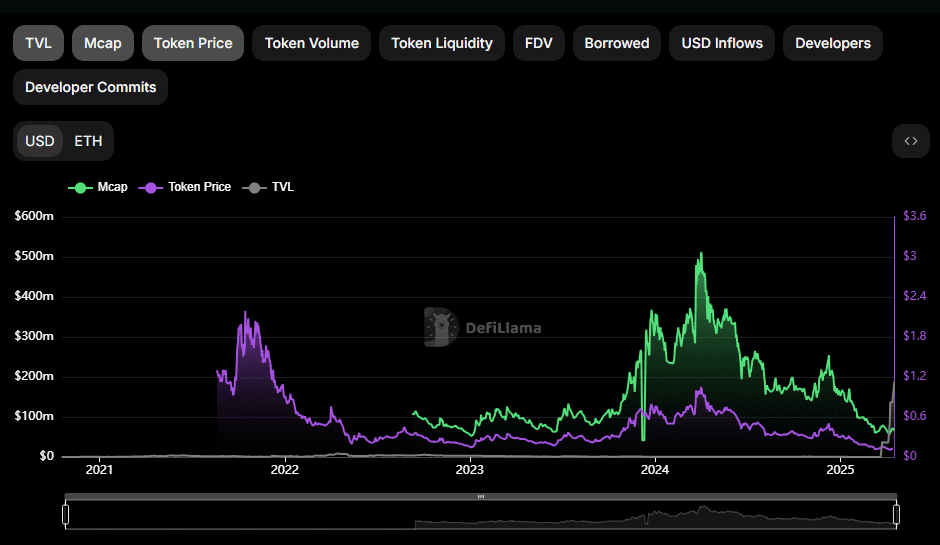
Centrifuge: The path to blockchain financing for SMEs
Centrifuge is a veteran of the RWA space and has been hailed as the infrastructure that puts any asset on the chain. It has a big vision: to create a universal marketplace for on-chain asset finance that is not limited to one or two asset classes. The key products to realize this vision are TinlakeThe dApp is an open marketplace dApp built on the Centrifuge blockchain.
Tinlake works a bit like traditional financial asset securitization: an asset holder (e.g., a small business) can convert real assets into NFTs (Tokenized Certificates containing relevant legal documents), which are then used as collateral to create an asset pool on Tinlake. The pool then issues two tokens - DROP and TIN - corresponding to senior and junior positions.
In this two-tier structure, DROP token holders are like senior creditors in traditional finance: they enjoy a fixed interest rate return, have priority in the distribution of the pool's income, and have a lower risk profile, while TIN token holders are the secondary risk takers: after taking out the senior's income, the rest of the profit goes to the TIN holders, who are the ones who have to bear the losses accordingly. In this way, investors with different risk preferences can choose whether to be a prudent "DROP earner" or a risky "TIN risk-taker".
For example, for an asset pool targeting SMEs' accounts receivable, DROP investors may receive a fixed annualized 5%, while TIN investors may receive 8-10%, but if the enterprise defaults, the TIN portion will have to absorb the loss first. This design provides flexibility in asset financing and introduces a market mechanism for risk sharing.
The Centrifuge is particularly suitable forSME Loan、Accounts Receivable Financing、Real Estate Mortgage、royalty incomeIt is designed to help holders of these assets to raise capital at a lower cost because they can access global investors directly on Tinlake without having to go through intermediaries like banks. It is designed to help these asset holders raise capital at a lower cost, as they have direct access to global investors on Tinlake without the need for intermediaries such as banks. For DeFi investors, there is an additional investment pipeline linked to real economic returns, with the promise of stable interest income that is not tied to the crypto market.
Because Centrifuge involves securitized loans, it usually has a legal entity (SPV, Special Purpose Vehicle) behind each pool of assets to hold the assets and enter into legal contracts to protect investors' interests. For example, an accounts receivable pool may have a company incorporated in the state of Delaware that specializes in the pool's assets, ensuring that borrowers have legal recourse in the event of default. Investors are often required to undergo KYC/Qualified Investor Approval to purchase DROP or TIN tokens, as these are likely to be legally treated as securities or notes.
Centrifuge itself runs on a parallel chain in the Polkadot ecology (it is moving from a standalone chain to a Polkadot parallel chain to take advantage of Polkadot's security and cross-chain capabilities). By using a self-contained blockchain, Centrifuge can incorporate compliance management modules into its protocol layer design, such as limiting which addresses can participate in specific pool interactions.
Centrifuge's native token, $CFG, is the fuel and governance tool for the entire blockchain operation. $CFG is used for: paying transaction fees, pledging to participate in node consensus (similar to PoS blockchain pledge mining), and community governance voting. As the assets and transaction volume on the platform grows, the demand for $CFG will theoretically increase (to pay for more fees, to pledge for network security, etc.). However, it is important to note that $CFG itself is not directly linked to the performance of the pools: for example, a profitable Tinlake pool does not automatically pay dividends to $CFG holders; the value of $CFG is more dependent on the development of the blockchain ecosystem of the Centrifuge and investor confidence that it will become a leading player in the RWA infrastructure. Demand for $CFG could be affected if competitors rise or the market for loan receivables cools.
Centrifuge brings a bright future, but the risks should not be ignored. First of all, credit risk. The default rate of SME loans is not low, and if a large number of borrowers fail to repay, the investors of the Tinlake asset pool will still suffer. Although DROP priority is protected, it is not omnipotent, and in extreme cases, the priority may also suffer a loss of principal.
Secondly, there is the risk of legal enforcement. How can blockchain token holders ensure their corresponding legal contractual rights? This relies on the traditional legal system for enforcement, and in the event of cross-border or legal gray areas, enforcement payback may be delayed or even fail. Liquidity is also an issue, as Tinlake's tokens usually have limited liquidity. After all, this is not a meme currency market for public speculation, and those who want to sell may find few buyers, resulting in a discount. So while Centrifuge offers an innovative way to bring real assets to DeFi, investors need to be prepared for a long-term commitment and low liquidity.
Quick Summary: Centrifuge assists SMEs to raise capital by tokenizing low liquidity physical assets (e.g. accounts receivable) through asset securitization. The platform provides layered risk tokens (DROP and TIN) to meet the needs of different investors in terms of return and risk. However, investors need to be aware of the credit risk and asset liquidity of SMEs.

Recommended Cryptocurrency Trading Platforms
Hong Kong People's Top Choice for Bitcoin and Ether Trading 》 OSL is the first licensed exchange company in Hong Kong, enjoy up to HKD 10,088 bonus when you open an account.
Suitable for traditional Hong Kong investors to buy and sell stocks and currencies at the same time. Victory Securities: Open an account and get a free ticket to Tokyo and Taipei, and a concert flight.
More choices of contract currencies, suitable for buying fake coins in cash. Trade on MEXC and enjoy 400 times leverage and many other benefits!
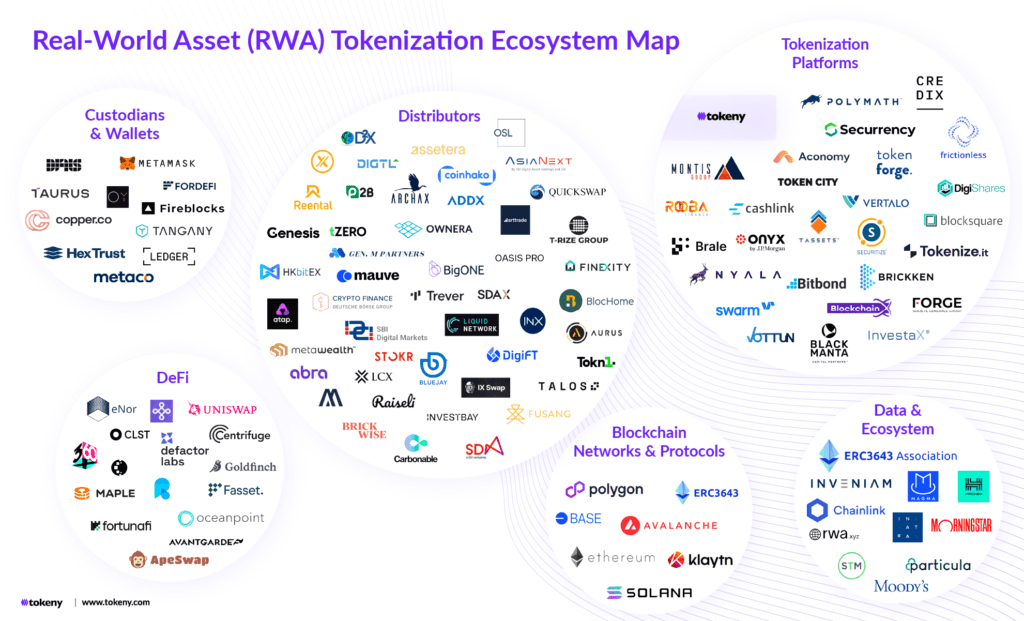
The Truth About RWA Tracks: Opportunities and Pitfalls
After looking at the above representative projects, do you have a preliminary understanding of RWA? Overall, the RWA circuit has really injected a breath of fresh air into the crypto world: it has made DeFi less of a self-serving virtual economy, and more of a link to the real value of real estate, bonds, corporate loans, and stocks. For investors, this means richer asset allocation options and more stable income streams (e.g., treasury interest, rental income, etc.). It's no wonder that starting in 2023, the market for on-chain tokenized treasuries has skyrocketed, growing six-fold in size to nearly $700 million in just one year. According to Defillama, the TVL of the RWA circuit has now reached 11 billion(6). Even traditional financial giants are starting to invest: Larry Fink says tokenization is the future, and JPMorgan Chase and Goldman Sachs are also investing in related fields. On the surface, RWA has the potential to be the next pivot point in the cryptocurrency bull market.
However, in the heat of the moment, we must also look at the potential pitfalls. First, there are always compliance costs and restrictions. In order to comply with the law, RWA projects often require investors to be qualified institutions and conduct KYC, which is contradictory to DeFi's emphasis on open and inclusive finance. Too many restrictions may discourage retail investors, and it is still difficult for RWA assets to be truly accessible to all for the time being. Secondly, the centralized trust issue is still prominent in RWA - you have to trust that the companies issuing tokens are really holding the assets properly, and that the borrowers will keep their promises to pay back the money. If these intermediaries fail, RWA tokens will also crash. And as we've analyzed earlier, each project has its own business model risks: credit default risk, securitized products subject to market volatility, and a wide range of legal enforcements - none of which can be magically eliminated by blockchain technology.
Furthermore, the returns on RWA programs may not be so high as to be appealing. To be honest, if you put treasury bonds on the chain, what you get is only 4-5% annualized interest rate; corporate loans may be higher, but it's only in the single-digit to dozens of percent, with corresponding risks. For many players who are accustomed to DeFi's "high yield", RWA's return may seem boring. If you don't have large capital and long-term allocation plans, many retail investors would rather fight meme currency than locking up their money to get a few % interest. As a result, liquidity becomes a problem: RWA tokens may be poorly traded and not as smooth as mainstream coins.
So, is RWA the future or not? In the author's opinion, it is definitely a pole in the crypto world that cannot be ignored. As regulations become clearer, RWA is expected to attract tens of billions of dollars of traditional capital, as organizations are more willing to invest in token products with a physical base than pure crypto assets. Until then, however, many projects and investors are in the exploratory phase of feeling their way across the river.
For the average investor, there are certainly opportunities: getting an early look at quality RWA projects could be the next step in the trend. But be wary of over-hype: don't forget the joke about OM currencies: even with the "real world asset" label, they will still crash. Ultimately, investment should be based on the nature of the asset and the risk-return ratio, so don't be fooled by fancy words, lest you have to work at McDonald's.
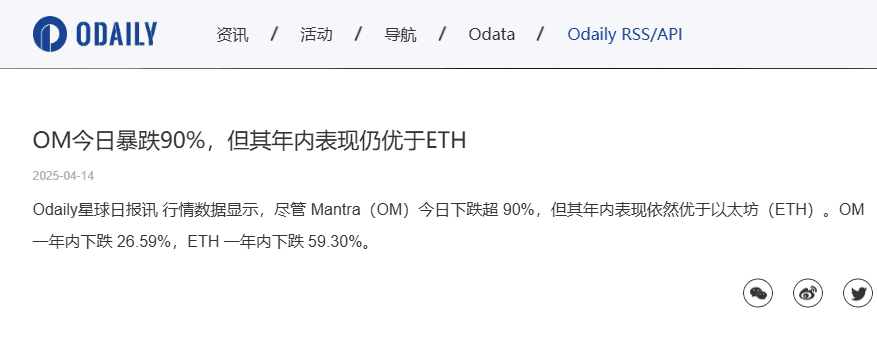
Incidentally, I'd like to share with you the latest joke in the currency world: $OM, even though it has plummeted 90%, is still doing better than $ETH this year! 😂
Recommended Cryptocurrency Trading Platforms
Hong Kong People's Top Choice for Bitcoin and Ether Trading 》 OSL is the first licensed exchange company in Hong Kong, enjoy up to HKD 10,088 bonus when you open an account.
Suitable for traditional Hong Kong investors to buy and sell stocks and currencies at the same time. Victory Securities: Open an account and get a free ticket to Tokyo and Taipei, and a concert flight.
More choices of contract currencies, suitable for buying fake coins in cash. Trade on MEXC and enjoy 400 times leverage and many other benefits!
Disclaimer
The content of this article is for reference only, investors should exercise independent judgment, invest prudently and at their own risk, this article does not provide or attempt to persuade the audience to do trading or investment basis, the content is for sharing purposes only, and should not be regarded as investment advice.It does not represent the views and position of Monsterblockhk.All information and opinions are current as of the date of the judgment. In addition, if a judgment is rendered on aIn this siteAny content related to virtual asset trading platforms that have not yet obtained a license to operate virtual asset trading platforms in Hong Kong, including but not limited to text introductions, pictures, offers, events, etc., are only available to users outside the Hong Kong Special Administrative Region.
According to the Hong Kong Anti-Money Laundering and Counter-Terrorist Financing (Amendment) Ordinance 2022, after June 1, 2023, all centralized virtual asset trading platforms operating in Hong Kong or actively promoting their services to Hong Kong investors will be licensed and regulated by the SFC, and any related unlicensed activities will be a criminal offence. For more information and details of the legislation, users may refer to the SFC website.