

An inmate serving a 25-year sentence who made a single investment before he was incarcerated is probably worth more than the market capitalization of any publicly traded company in the entire cryptocurrency industry.
It's no exaggeration to say that in April 2022, Sam Bankman-Fried (SBF), through its Alameda Research subsidiary, invested $500 million in Anthropic, an AI company that few people had heard of at the time. Anthropic was valued at about $2.5 billion at the time, and SBF took a stake of nearly 8%.
As of February 2026, Anthropic had just completed a $30 billion round of financing, valuing it at $380 billion, making it the third largest unlisted technology company in the world behind OpenAI and SpaceX. 8%'s holdings would be worth more than $30 billion today in theoretical terms if SBF's original shares had not been sold by the FTX bankruptcy and liquidation team. If SBF's shares had not been sold by the FTX liquidation team, 8%'s holdings would be worth more than $30 billion today.
A more intuitive comparison: OKB, considered the leader of the cryptocurrency industry, currently has a market capitalization of only about $2 billion. The return on a single investment by a single prisoner has far exceeded the market value of the tokens of the top exchanges in the industry.
This fact in itself is enough to make one stop and think about the question: how is it that a convicted fraudster can bet earlier, more accurately, and more aggressively on the AI track than almost any other participant in the cryptocurrency industry?
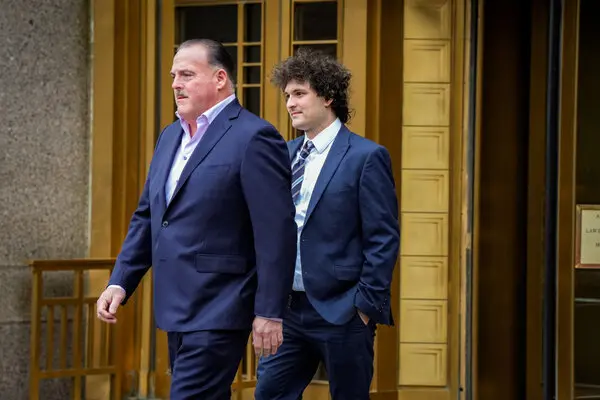
From Jane Street to Alameda: The Path to Quantitative Genius
To understand how SBF was able to make such an investment judgment, it is first necessary to go back to the beginning of his career.
In 2014, SBF graduated from the Massachusetts Institute of Technology (MIT) and joined Jane Street Capital, one of the top proprietary quantitative trading firms on Wall Street. Jane Street is not your typical financial institution; its core business is high-frequency trading in the global markets using mathematical models and algorithms. Jane Street is no ordinary financial institution, its core business is high-frequency trading in global markets using mathematical models and algorithms, and it handles trillions of dollars in trade volume each year.
SBF's performance at Jane Street was exceptional. His bosses reportedly rated him as the best trader of his time and paid him $300,000 in his first year. By his third year, he was on the verge of a $1 million year-end bonus, and the firm told him that if he stayed, he could earn at least $15 million a year within 10 years.
But what's more noteworthy is not how much money he made, but what he learned at Jane Street.
While at Jane Street, SBF was responsible for international ETF trading, which required a simultaneous understanding of price correlations, liquidity structures and risk transmission mechanisms across multiple markets. He once discovered an interesting trading pattern: traders at one bank would focus on South Korean orders before the end of the day, and then push Japanese trades to their colleagues in Japan. This micro-structural insight across markets and time zones was the basis of his thinking in designing the FTX Cross Margin System and Global Risk Engine.
More notably, SBF was in charge of the firm's quantitative modeling of the election during the 2016 U.S. presidential election. The model he built predicted Trump's victory before the mainstream media did, but the firm still lost about $300 million on election night by shorting the S&P 500. The experience taught him one thing: Even when models are right, markets can react in ways that are completely unexpected. This "deep understanding of uncertainty" left a clear mark on his later investment decisions.
Recent Recent Posts:
2026 Latest 6 Free Coin Ring Tools Inventory|Where to find the data on the chain?
2025 Latest OKX Web3 Wallet Tutorial: Does it work? How to create it? A Guide to Safe Operation, Multi-Link Support, and Time-Limited Airdrops
2026 Latest Polymarket Tutorial|How to find out the insiders and realize the high win rate!
2025 New DeFi Beginner's Guide|Teaching you to earn stable money passive income! Introducing 3 popular programs, DeFiLlama tool tutorial!
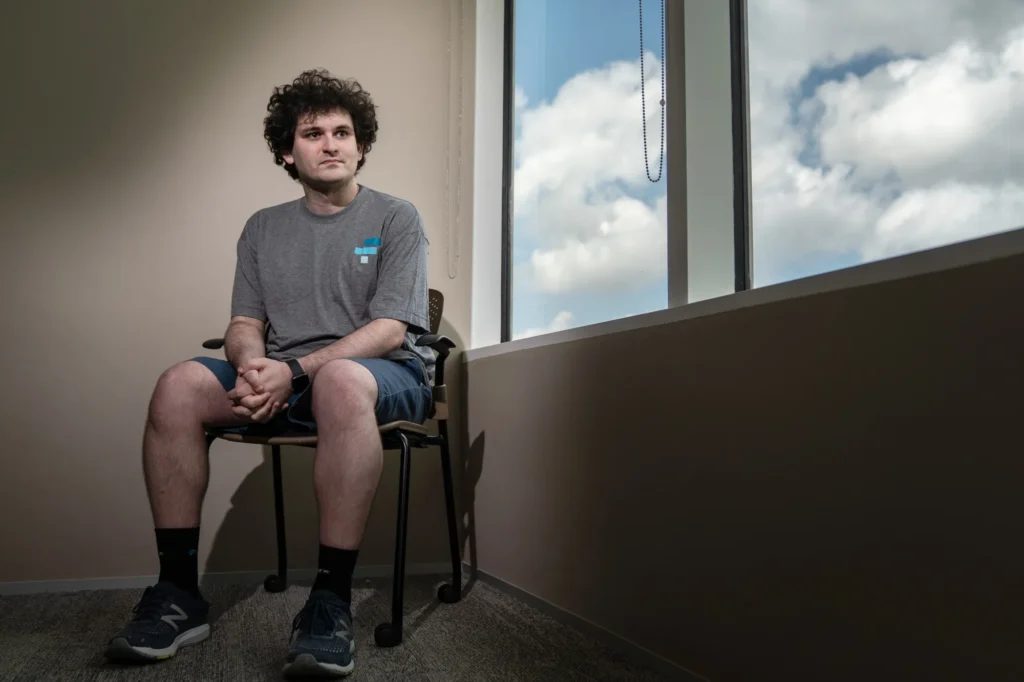
Getting off Wall Street and into cryptocurrencies
In 2017, SBF gave up a million dollar bonus and certainty of career prospects at Jane Street to start Alameda Research, and the opportunity he saw was simple: huge price differentials between cryptocurrency exchanges around the globe, especially the 'kimchi premium' in the Japanese and Korean markets - the same bitcoin can vary by 10% or more from one market to the next. -The price of the same Bitcoin on different markets can vary by 10% or more.
For a quant trader trained at Jane Street, this spread arbitrage opportunity is almost textbook, and Alameda Research quickly amassed a large amount of capital through cross-exchange arbitrage in the early days, becoming one of the largest market makers in the cryptocurrency market.
In 2019, SBF further created the FTX exchange. Unlike existing exchanges in the market, the core selling point of FTX is not the wide variety of tokens or low handling fees, but its innovation in the underlying technical architecture.
Is FTX's technology innovation more than just an exchange?
Many people remember FTX as a "scam" and a "crash," but if you go back to the technology, FTX did introduce a number of industry-leading innovations at the time. Understanding these innovations is critical to understanding why SBF later invested in Solana, Pyth, and on-chain order books. Traditional cryptocurrency exchanges use a "position-by-position" margin system - each trading pair requires a separate margin, and users can't use all the assets in an account to back all their positions. This design is extremely inefficient for capital, especially for institutional traders, and means that large amounts of capital are locked up in different positions with no flexibility to deploy it.
FTX has launched a global cross-margining system that allows users to put USDC, BTC, ETH, and even stock tokenized assets in the same wallet and calculate the margin uniformly. This means that all assets in an account can be backed by each other, dramatically increasing capital efficiency.
Also, the FTX liquidation engine utilizes a progressive liquidation mechanism, rather than a full liquidation once the maintenance margin has been hit, as is the case on other exchanges. This design significantly reduces the risk of "socialized losses" (i.e., spreading the losses of a blown position to other users) due to high market volatility.
Behind these technological innovations lies one of SBF's core beliefs about financial infrastructure: that the future of trading belongs to a high-speed, low-friction, unified clearing layer across asset classes. This belief is the key to understanding all of his subsequent investment decisions.
Why Solana and why Pyth?
SBF's investment in Solana is one of the earliest and most forward-looking bets in the history of cryptocurrency.
Buying SOL at $0.20 According to SBF's own testimony during the 2023 trial, Alameda Research purchased a large number of SOL tokens at $0.20 each during the earliest stages of Solana. At the peak of the bull market in 2021, the price of SOL topped $260, which meant that the maximum return on this investment was over 130,000%.
But SBF's logic for investing in Solana was not simply "buy low, sell high". He was interested in Solana's technical architecture: high throughput (theoretically thousands of trades per second), low latency (out-of-block time of about 400 milliseconds), and extremely low transaction fees (typically less than $0.01).
Why are these technical parameters so important? Because SBF's ultimate vision is not to build an ordinary exchange, but to build a "chain-wide Central Limit Order Book (CLOB)". The core infrastructure of traditional financial markets - the New York Stock Exchange, the Chicago Mercantile Exchange - is based on CLOBs. In the cryptocurrency world, the vast majority of decentralized exchanges (DEXs) use an automated market maker (AMM) model, which is far less efficient in terms of capital and price discovery than a CLOB.
To run CLOBs on a blockchain, you need a very fast, very low-cost chain. That's exactly where Solana fits in. Pyth: Real-world data for on-chain finance SBF's support for the Pyth Network follows the same logic: Pyth is a network of high-speed predictors designed to provide low-latency financial market data to DeFi applications. While traditional predictors such as Chainlink are typically updated on a minute-by-minute basis, Pyth is capable of sub-second updates.
Why is this important? Because if you're going to run a CLOB on a chain similar to a traditional exchange, you need the price data to be updated at a rate that matches the speed at which orders are aggregated. A prediction machine that updates prices every few minutes is simply not going to be able to support a high-frequency trading scenario.
It's no coincidence that FTX and Alameda Research were both early supporters and data providers of Pyth, and that SBF is building not just an exchange or a public chain, but a whole "chained financial infrastructure" - from the underlying public chain (Solana), to the data layer (Pyth), to the application layer (Serum DEX and FTX), to the clearing layer (Cross Margin System). SBF is building not just an exchange or a public chain, but an entire "on-chain financial infrastructure" - from the underlying public chain (Solana), to the data layer (Pyth), to the application layer (Serum DEX and FTX), and to the clearing layer (Cross Margining System).
In retrospect, every piece of this infrastructure happens to be all the components needed for today's AI Agent automated transactions.
Recent Recent Posts:
2026 Latest 6 Free Coin Ring Tools Inventory|Where to find the data on the chain?
2025 Latest OKX Web3 Wallet Tutorial: Does it work? How to create it? A Guide to Safe Operation, Multi-Link Support, and Time-Limited Airdrops
2026 Latest Polymarket Tutorial|How to find out the insiders and realize the high win rate!
2025 New DeFi Beginner's Guide|Teaching you to earn stable money passive income! Introducing 3 popular programs, DeFiLlama tool tutorial!
https://www.youtube.com/watch?v=zju51INmW7U&pp=ygUJYW50aHJvcGlj
Anthropic: The Most Underrated Lump Sum Investments
In 2021, siblings Dario and Daniela Amodei left OpenAI to found Anthropic, at a time when the AI industry was far from what it is today - ChatGPT won't be officially released until November 2022, and the vast majority of investors were still skeptical about the business prospects of large-scale language modeling (LLM). The vast majority of investors were still on the fence about the business prospects of large-scale language modeling (LLM).
SBF, through Alameda Research, invested $500 million in Anthropic's Series B round, representing the majority of the $580 million raised in that round, acquiring a stake of approximately 8%. This is a classic "pokie" bet - focusing nearly all of the available capital on an area that is not yet widely recognized by the market.
To understand how amazing this investment is, you need to look at a few numbers. Anthropic's annualized revenue reached approximately $10 billion in 2025, making it one of the fastest tech companies in human history to reach this revenue milestone. By early 2026, Anthropic's annualized revenue had climbed to $14 billion. Its latest round of funding valued the company at $380 billion, and if the company goes public, its market capitalization is likely to top a trillion dollars.
If SBF's 8% shares had not been sold in the FTX bankruptcy proceeding, they would have been worth more than $30 billion at current valuations. Instead, the FTX bankruptcy liquidation team sold these shares in tranches in 2024, recovering a total of only about $1.4 billion - less than 5% of their theoretical value.
In other words, SBF's mistake (misappropriation of client funds) resulted in the loss of his freedom and what is probably the largest single loss of investment opportunity in the history of cryptocurrency.
Does he really understand AI?
Some may ask: Is SBF's investment in Anthropic just a lucky break? Looking at his overall investment portfolio, the answer is probably no. FTX Ventures was $2 billion when it was founded in 2022, and has invested in more than 100 projects across AI, healthcare, gaming, and infrastructure, etc. Anthropic isn't the only bet he's made in AI, but rather the largest of a series of AI-related investments.
More importantly, SBF's investment in Anthropic comes at a time - late 2021 to early 2022 - when large-scale language models are beginning to show transformative potential, but when the vast majority of investors have yet to realize their commercial value. window in which large-scale language models are beginning to show transformative potential, but most investors have yet to realize their commercial value. To make such a large bet at this point in time at least suggests that he has a better-than-industry-average understanding of the trajectory of AI technology.
Combined with his work on Solana, Pyth, and on-chain CLOBs, a clearer investment logic emerges: SBF likely saw the AI Agent era coming years ago - machines need to autonomously execute trades, manage assets, and participate in governance on the chain. All you need to make this happen is a high-speed, low-cost public chain, sub-second price data, and a chain-wide order book system.
He's not investing in AI and Crypto separately; he's investing in the "intersection of AI and Crypto".
Structural Problems Facing the Currency Circle
After understanding the investment logic of SBF, there is a strong sense of contrast when looking at the current state of the cryptocurrency industry today.
As VC-backed cryptocurrency projects continue to mow down the leeks, retailer trust in token economics has dropped to freezing point. The Bitcoin halving cycle, once considered the core narrative of the industry, is failing - the halving in 2024 did not result in the expected bull market. Bitcoin ETFs are in place, and the narrative of a national strategic reserve is fading.
At the same time, AI is "bleeding" the cryptocurrency industry of capital and attention in all directions. Bitcoin mines around the world are undergoing a historic transformation, shifting their computing power from mining to AI data center operations. Even MARA, a listed mining company that once claimed to "never sell coins," has recently changed its terms and started selling its bitcoin positions.
The core problem in the cryptocurrency industry is not a lack of capital or a lack of users, but a lack of a top-level design that can truly integrate AI and cryptocurrency.SBF's investment logic - from the underlying infrastructure to the data layer to the application layer to AI - is a prototype of this top-level design. SBF's investment logic - from the underlying infrastructure to the data layer to the application layer to AI - is the prototype of this top-level design. But the creator of that design is now in prison.
The SBF story tells us a few things.
First, the next big opportunity for the cryptocurrency industry is likely to be not in the "coin" itself, but in the intersection of AI and blockchain infrastructure. aI Agents need an on-chain settlement layer, they need high-speed prognosticators, and they need automated order aggregation systems - the very things that SBF started building a few years ago! SBF has been building this for years.
Second, true investment insight is not about chasing the current hot spot, but about making a judgment when a field is not yet recognized by the market. when SBF invested in Anthropic in 2021, ChatGPT did not yet exist and "large-scale language modeling" was still an academic concept to most people.
Thirdly, even the brightest minds have zero talent once they cross the legal and ethical red lines. SBF's Anthropic investment could have recovered all or even more of the losses for FTX's creditors, but because of his criminal behavior, the shares were forced to be liquidated at the most unfavorable time, and in the end, less than 5% of the theoretical value was recovered. Cryptocurrency Industry What the cryptocurrency industry needs is not more cryptocurrency projects or more exchange tokens, but builders who understand AI, financial infrastructure, and cross-domain integration. Such talents are extremely scarce in the whole industry.
And after SBF, where will the next person with this kind of cross-disciplinary vision come from?
Our Telegram Community Every day, our members share market opportunities and event updates to help you avoid blind betting and quickly adjust your strategy, now you can join us for free~!
Recent Recent Posts:
2026 Latest 6 Free Coin Ring Tools Inventory|Where to find the data on the chain?
2025 Latest OKX Web3 Wallet Tutorial: Does it work? How to create it? A Guide to Safe Operation, Multi-Link Support, and Time-Limited Airdrops
2026 Latest Polymarket Tutorial|How to find out the insiders and realize the high win rate!
2025 New DeFi Beginner's Guide|Teaching you to earn stable money passive income! Introducing 3 popular programs, DeFiLlama tool tutorial!
Disclaimer
The content of this article is for reference only, investors should exercise independent judgment, invest prudently and at their own risk, this article does not provide or attempt to persuade the audience to do trading or investment basis, the content is for sharing purposes only, and should not be regarded as investment advice.It does not represent the views and position of Monsterblockhk.All information and opinions are current as of the date of the judgment. In addition, if a judgment is rendered on aAny content on this website that relates to virtual asset trading platforms that have not yet obtained a license to operate virtual asset trading platforms in Hong Kong, including but not limited to text introductions, pictures, offers, events, etc., is only available to users outside the Hong Kong Special Administrative Region.
According to the Hong Kong Anti-Money Laundering and Counter-Terrorist Financing (Amendment) Ordinance 2022, after June 1, 2023, all centralized virtual asset trading platforms operating in Hong Kong or actively promoting their services to Hong Kong investors will be licensed and regulated by the SFC, and any related unlicensed activities will be a criminal offence. For more information and details of the legislation, users may refer to the SFC website.